Key Points
- A new Hope Not Hate report, based on Survation polling, found that 43% of Britons would be “unhappy” if Nigel Farage became prime minister.
- Survation’s constituency-level MRP projection identified 95 “fragile Reform” seats, where Reform UK’s lead over its nearest rival is three percentage points or less.
- Another 199 seats are projected to go to Reform UK, largely because opposition votes are split between rival parties.
- Reform UK’s polling lead has narrowed considerably, with Labour closing the gap and overtaking Reform in some surveys following what has been described as a “Burnham bounce.”
- The Conservatives remain competitive in third place in many polls, often only a few percentage points behind Labour and Reform, raising the prospect of three-way contests.
- The Liberal Democrats and Green Party continue to have strong support in specific regions, adding further complexity to the electoral picture.
- Hope Not Hate chief executive Nick Lowles said millions of voters across Britain are prepared to vote tactically to prevent a Reform government.
- Lowles referred to comments by Reform-supporting commentator Tim Montgomerie, who has previously warned that Reform’s strength depends on a divided opposition.
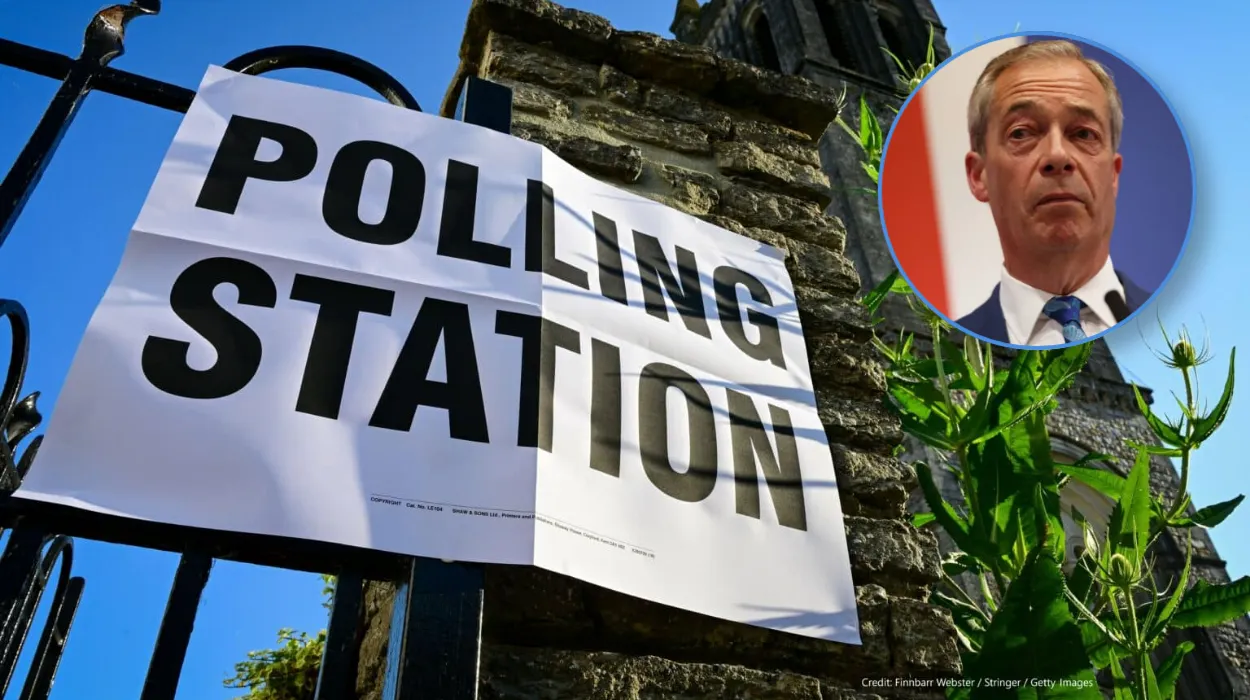
London (Britain Today News) — August 27, 2026 — Nigel Farage’s path to Downing Street faces a significant obstacle in the form of widespread tactical voting, according to a new report published by Hope Not Hate. The research, based on polling conducted by Survation, has found that 43% of the British public would be “unhappy” to see the Reform UK leader become prime minister, with the party’s own internal fragility potentially compounding the threat. Survation’s constituency-level MRP projection has identified 95 “fragile Reform” seats across the country, defined as constituencies where the party’s lead over its nearest challenger sits at three percentage points or less, alongside a further 199 seats the party is currently projected to win only because opposition votes remain split.
- Key Points
- What Does The Hope Not Hate Report Reveal About Reform UK’s Prospects?
- How Many Seats Are At Risk For Reform UK Due To Tactical Voting?
- Why Has Reform UK Lost Its Lead In The Opinion Polls?
- Is Britain Heading For A Three-Way General Election Battle?
- What Role Could The Liberal Democrats And Greens Play In Blocking Reform?
- What Did Nick Lowles Say About The State Of The Reform Vote?
- Could Reform UK’s Own Supporters Become A Source Of Weakness?
- What Is A “Fragile Reform” Seat, And Where Are They Located?
- How Does Survation’s Constituency-Level MRP Model Work?
- What Might Tactical Voting Mean For Nigel Farage’s Premiership Hopes?
What Does The Hope Not Hate Report Reveal About Reform UK’s Prospects?
The report, compiled by Hope Not Hate using Survation polling data, paints a picture of a party whose apparent strength in national polling masks considerable vulnerability at constituency level. While Reform UK has enjoyed periods of clear polling leads over the past year, the report suggests that translating this support into parliamentary seats is far from guaranteed. The 43% figure representing those who would be “unhappy” with a Farage premiership indicates that opposition to the Reform leader personally, and not just to his party’s policies, remains a powerful and potentially unifying force among voters who might otherwise support different parties.
How Many Seats Are At Risk For Reform UK Due To Tactical Voting?
According to Survation’s constituency-level MRP projection cited in the report, 95 seats currently fall into the “fragile Reform” category, meaning Reform’s advantage over the second-placed candidate is three percentage points or less. A further 199 seats are projected to go to Reform primarily because the anti-Reform vote is currently divided between Labour, the Conservatives, the Liberal Democrats and the Greens. Taken together, this suggests that close to 300 seats could be vulnerable to a coordinated tactical voting effort, should opposition-minded voters coalesce behind whichever candidate is best placed to defeat the Reform contender in their area.
Why Has Reform UK Lost Its Lead In The Opinion Polls?
Reform no longer holds the significant polling lead it once enjoyed, with Labour having narrowed the gap considerably and, in some polls, moved ahead of Reform entirely. This shift has been attributed in part to what has been termed a “Burnham bounce,” a reference to the apparent boost in Labour’s fortunes linked to the profile of Greater Manchester Mayor Andy Burnham. The narrowing of Reform’s lead comes at a critical moment for the party, as it suggests that its earlier dominance in the polls may not be as durable as previously assumed.
Is Britain Heading For A Three-Way General Election Battle?
The polling data referenced in the report also raises the possibility of a genuine three-horse race at the next general election. The Conservative Party, despite trailing in third place in many surveys, has often found itself within just a couple of percentage points of both Labour and Reform. This tight clustering of the top three parties suggests that the outcome in a substantial number of constituencies could hinge on relatively small shifts in voter sentiment, making tactical considerations more consequential than in a straightforward two-party contest.
What Role Could The Liberal Democrats And Greens Play In Blocking Reform?
Beyond the traditional three main parties, the Liberal Democrats and the Green Party retain strong pockets of support in particular parts of the country. While neither party is likely to challenge for outright victory nationally, their regional strength means that in certain constituencies they, rather than Labour or the Conservatives, could emerge as the best-placed challenger to a Reform candidate. This adds a further layer of complexity to any tactical voting strategy, as the identity of the “anti-Reform” candidate is not uniform across the country and will vary significantly from seat to seat.
What Did Nick Lowles Say About The State Of The Reform Vote?
Nick Lowles, chief executive of Hope Not Hate, offered a direct assessment of Reform’s current polling position. He said:
“Whether it’s the Burnham bounce or the Farage flop taking effect, Reform UK is doing worse in the polls now than they were last year.”
Lowles went on to highlight the scale of voters willing to act tactically, stating:
“At the same time, millions of voters across Britain are ready to vote tactically against Reform.”
His comments frame the report’s findings not simply as a snapshot of public opinion, but as evidence of a mobilised segment of the electorate specifically organised around opposition to Reform.
Could Reform UK’s Own Supporters Become A Source Of Weakness?
Perhaps one of the more striking elements of Lowles’ analysis is his suggestion that concerns about Reform’s fragility are shared even by figures sympathetic to the party. He said:
“Even Reform enthusiasts like Tim Montgomerie are warning that Reform is only strong when its opposition is divided.”
This is a notable admission, given that Montgomerie has been associated with support for Reform’s broader political project. Lowles added:
“Our research shows that Montgomerie is right to worry: Reform’s opposition can close ranks around election time.”
This suggests that the risk to Reform is not merely a product of anti-Reform campaigning, but is also acknowledged, to some extent, within circles favourable to the party itself.
What Is A “Fragile Reform” Seat, And Where Are They Located?
A “fragile Reform” seat, as defined within Survation’s constituency-level MRP model, is one where Reform UK’s projected lead over the second-placed party is three percentage points or less. These 95 seats represent the constituencies most likely to change hands should even a modest number of voters coordinate around a single alternative candidate. Although the report does not name each of the 95 constituencies individually in the material reviewed, the classification itself indicates that Reform’s overall seat projection is heavily reliant on a relatively narrow margin of support in a substantial number of areas, rather than commanding seats.
Explore More about Politics:
Edinburgh Primary 1 students to get free school bags – UK first
Khan v Cunningham: Reform Poised to Challenge Labour in London Mayor Race
How Does Survation’s Constituency-Level MRP Model Work?
Survation’s approach relies on a technique known as multilevel regression and post-stratification, commonly referred to as MRP, which uses large-scale polling data combined with demographic and geographic information to produce estimates of voting intention at the level of individual parliamentary constituencies, rather than relying solely on national polling averages. This method allows researchers to identify not just a party’s overall national standing, but the specific seats where its position is strongest or weakest, providing the granular detail behind the report’s identification of both the 95 “fragile” seats and the further 199 seats currently reliant on a divided opposition.
What Might Tactical Voting Mean For Nigel Farage’s Premiership Hopes?
Taken as a whole, the findings set out by Hope Not Hate suggest that Nigel Farage’s ambition of becoming prime minister faces a substantial structural challenge that goes beyond simple polling numbers. With 43% of the public saying they would be unhappy with him in Number 10, and with close to 300 seats identified as either fragile or reliant on a split opposition vote, the report indicates that coordinated tactical voting could materially alter the outcome of the next general election. Lowles summarised the organisation’s position on this point directly, stating:
“Our job is to guide anti-Reform voters to back a party that will deliver Reform defeat.”
Whether such coordination materialises at scale on polling day remains to be seen, but the report adds to a growing body of evidence suggesting that Reform’s headline poll ratings may overstate its eventual parliamentary strength.