


Key Points
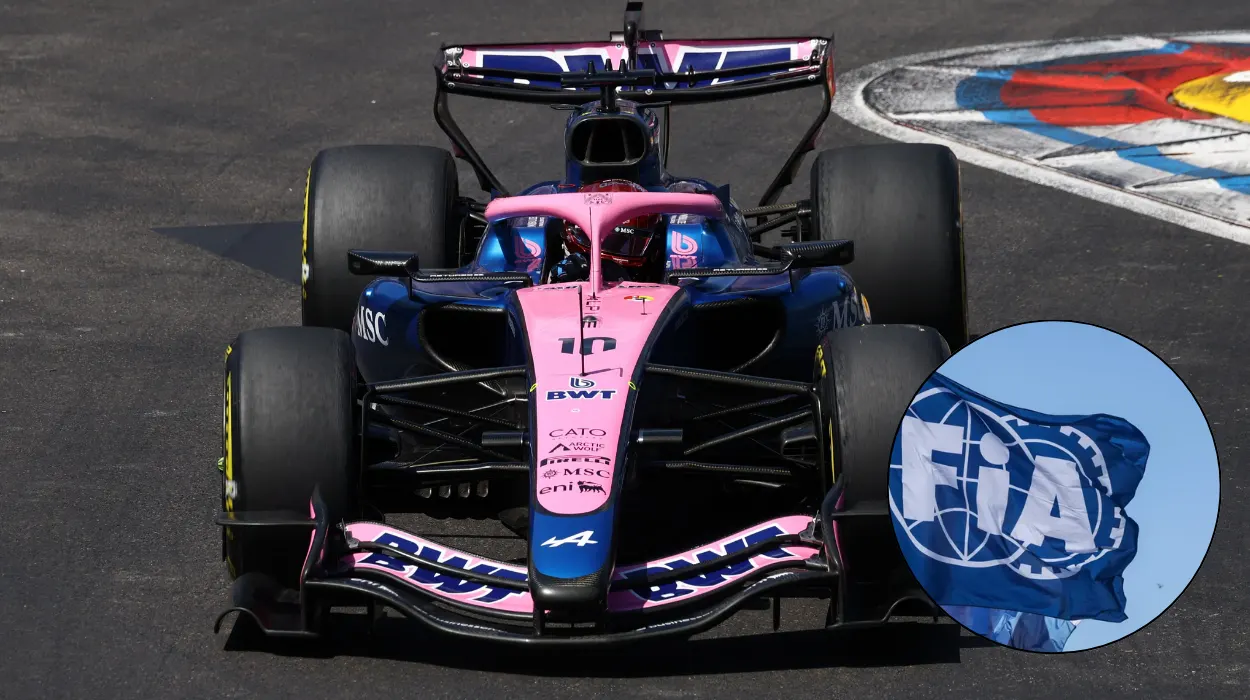
- The Monaco Grand Prix saw Pierre Gasly clear two of his pit lane speeding penalties after the event, but the FIA International Court of Appeal (ICA) has now declined to confirm this.
- Gasly falls to seventh overall.
- Isack Hadjar climbs up to third place to book his first Formula 1 podium position and Red Bull’s first podium of the period since joining.
- The issue was two five-second penalties given to Gasly for going over the pit lane speed limit.
- In a review, Alpine had previously managed to successfully establish that the length of the pit lane had been measured incorrectly, possibly leading to drivers being incorrectly recorded as speeding in the lane.
- The stewards agreed with Alpine’s review and lifted Gasly’s penalties, which would return him to third place.
- McLaren and Red Bull challenged that, and took it to the FIA International Court of Appeal.
- A hearing was held in Paris on 25 August, and the court has decided in favour of the two teams.
- Under the rules as they stand, other drivers who committed the same lane violation in the pit (such as Franco Colapinto, Oscar Piastri and George Russell) will not be impacted, since their penalties were already issued during the race and could not be retroactively enforced.
- Kimi Antonelli is now in first place on the podium, followed by Lewis Hamilton and Hadjar.
Paris (Britain Today News) September 04, 2026 – Monaco has once again become the scene of a Formula 1 controversy, as the FIA International Court of Appeal has ruled in favour of McLaren and Red Bull, reversing an earlier decision that had cleared Pierre Gasly of two pit lane speeding penalties. The ruling relegates the Alpine driver from third to seventh place in the final Monaco Grand Prix classification, while Red Bull’s Isack Hadjar is elevated to third, claiming his maiden Formula 1 podium.
- Key Points
- What Did the FIA International Court of Appeal Decide?
- Why Was Gasly Handed Penalties in Monaco?
- What Caused the Timing Error in the Pit Lane?
- How Did Alpine’s Review Change the Podium?
- Why Did McLaren and Red Bull Challenge the Ruling?
- What Happened at the Paris Hearing?
- How Does This Affect Isack Hadjar and Red Bull?
- What About Other Drivers Penalised for Pit Lane Speeding?
- What Are the Revised Final Standings for the 2026 Monaco Grand Prix?
- What Happens Next for Gasly and Alpine?
- Could This Case Influence Future FIA Penalty Reviews?
What Did the FIA International Court of Appeal Decide?
The FIA International Court of Appeal has overturned a stewards’ decision that had previously cancelled two five-second penalties given to Gasly during the Monaco Grand Prix. The court’s ruling, which came after a hearing in Paris, restores the original penalties and confirms that Gasly should not have been returned to the podium places. As a direct result, the final classification of the race has been amended, with Gasly now placed seventh rather than third.
Why Was Gasly Handed Penalties in Monaco?
Gasly was originally penalised twice during the Monaco Grand Prix for exceeding the pit lane speed limit. Each infringement carried a five-second time penalty, amounting to a combined ten-second penalty applied to his race time. On the road, Gasly had crossed the finish line in third place, but once the penalties were applied in the provisional results, he dropped to seventh.
What Caused the Timing Error in the Pit Lane?
Following the race, new information emerged suggesting that the pit lane’s length had been measured incorrectly by the official timing system. This inaccuracy meant that drivers could be recorded as travelling above the 60 km/h pit lane speed limit even in cases where they had not actually done so. Crucially, the stewards who issued Gasly’s original penalties did not have access to this information at the time of their decision, raising questions about the validity of the penalties themselves.
How Did Alpine’s Review Change the Podium?
Alpine formally requested a review of Gasly’s penalties once the timing discrepancy came to light. The team’s case centred on the argument that the pit lane measurement error could have unfairly penalised drivers who had not breached the speed limit. The stewards accepted Alpine’s review submission and, as a result, cancelled both of Gasly’s five-second penalties. This decision returned him to third place in the Monaco Grand Prix results, restoring the podium finish he had originally crossed the line for.
Why Did McLaren and Red Bull Challenge the Ruling?
Although the stewards’ review favoured Gasly and Alpine, the decision did not go unchallenged. McLaren and Red Bull, both of whom had drivers affected by the shifting classification, opted to contest the outcome by taking the case to the FIA International Court of Appeal. Their objection effectively argued that the original review process, or its conclusions, should not stand, setting up a legal battle over Gasly’s Monaco result weeks after the race itself had concluded.
What Happened at the Paris Hearing?
The appeal was heard by the FIA International Court of Appeal in Paris on 25 August. Such hearings allow teams to present evidence and arguments before a panel of judges independent of the race stewards, and are typically reserved for disputes of significant sporting consequence. Following deliberation, the court ruled in favour of McLaren and Red Bull, effectively reinstating Gasly’s original penalties and undoing the stewards’ earlier review decision.
How Does This Affect Isack Hadjar and Red Bull?
The most immediate beneficiary of the ruling is Isack Hadjar, who moves up to third place in the final Monaco Grand Prix classification. This marks Hadjar’s first podium finish in Formula 1, and also represents Red Bull Racing’s first podium finish since Hadjar joined the team. The promotion is a significant milestone for the young driver and offers a boost to Red Bull following a difficult Monaco weekend that also saw Max Verstappen fail to finish the race.
What About Other Drivers Penalised for Pit Lane Speeding?
Gasly was not the only driver penalised for exceeding the pit lane speed limit during the Monaco Grand Prix. Franco Colapinto, Oscar Piastri and George Russell also received penalties for the same infringement. However, their situations differ fundamentally from Gasly’s, as those penalties were already served during the race itself, typically through time added directly to their race time or via a drive-through-style penalty. Under current FIA regulations, there is no mechanism to retroactively restore time that has already been served as part of a penalty, meaning these drivers’ results remain unaffected by the timing error or the subsequent appeal.
What Are the Revised Final Standings for the 2026 Monaco Grand Prix?
The amended results confirm Kimi Antonelli as the race winner, driving for Mercedes, with Lewis Hamilton of Ferrari finishing second, 6.271 seconds behind. Isack Hadjar completes the podium in third for Red Bull Racing, 23.394 seconds off the pace. Oscar Piastri of McLaren takes fourth, followed by Racing Bulls duo Liam Lawson in fifth and Arvid Lindblad in sixth. Gasly, now demoted, sits seventh for Alpine, ahead of Alexander Albon in eighth for Williams, Esteban Ocon in ninth for Haas, and Fernando Alonso rounding out the top ten for Aston Martin.
Further down the order, Gabriel Bortoleto finished eleventh for Audi, George Russell twelfth for Mercedes, and Nico Hulkenberg thirteenth for Audi. Franco Colapinto, Gasly’s teammate at Alpine, finished fourteenth, with Sergio Perez fifteenth for Cadillac. Six drivers failed to finish the race: Carlos Sainz of Williams, Charles Leclerc of Ferrari, Lance Stroll of Aston Martin, Lando Norris of McLaren, Oliver Bearman of Haas, Valtteri Bottas of Cadillac, and Max Verstappen of Red Bull Racing.
Explore More about Sports:
Matthew Brennan Wins Third Vuelta Stage as Lewis Askey Takes Tour of Britain Lead
Toby Samuel’s Remarkable Rise From World No 1,871 to the US Open Second Round
What Happens Next for Gasly and Alpine?
With the FIA International Court of Appeal’s decision now final, Gasly’s seventh-place finish in Monaco is expected to stand as the definitive result, barring any further procedural developments. For Alpine, the ruling represents a setback after the team had successfully argued its case at stewards’ level, only to see that outcome reversed on appeal. The episode also raises broader questions about the reliability of pit lane timing measurements at street circuits such as Monaco, and whether similar disputes could arise at future events if measurement inaccuracies are found elsewhere on the calendar.
Could This Case Influence Future FIA Penalty Reviews?
The Monaco pit lane dispute highlights the complexities that can arise when technical or measurement errors intersect with sporting penalties applied in real time during a Grand Prix. While the FIA’s review process allowed Alpine to present new evidence and initially overturn Gasly’s penalties, the subsequent appeal by McLaren and Red Bull demonstrates that such decisions remain open to challenge through the sport’s formal legal channels. How the FIA addresses pit lane measurement accuracy going forward may determine whether similar disputes emerge at other circuits in the remainder of the 2026 season.
The reversal leaves Gasly and Alpine to reflect on a podium finish gained and then lost through a lengthy appeals process, while Hadjar and Red Bull Racing can celebrate a milestone result that now stands as official. The case underscores how technical details, such as the precise measurement of a pit lane, can have significant sporting consequences long after the chequered flag has fallen.