Key Points
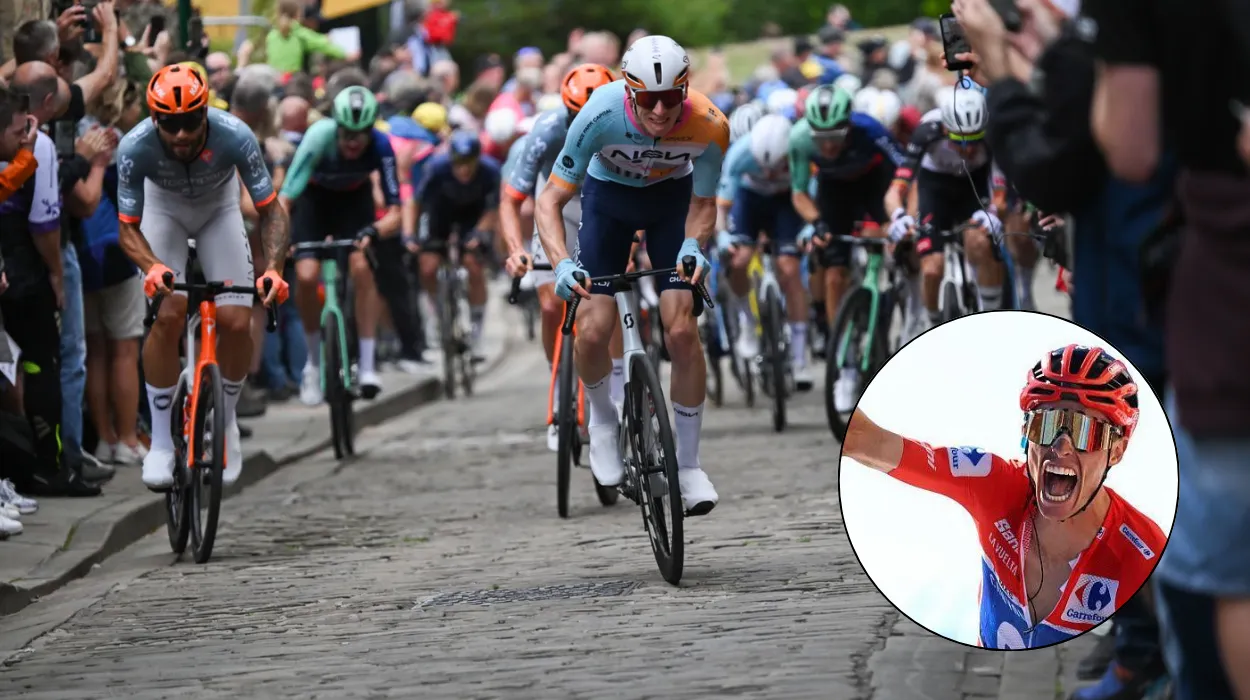
- Matthew Brennan picked up his third stage win of the Grand Tour in Stage 11 of the 2026 Vuelta a España on Wednesday.
- The 21-year-old British rider triumphed on the largely flat 153.8km route from Cartagena to Lorca.
- Brennan has won all three of his victories in Stages 2, 5 and 11 of the first stage of his debut Vuelta.
- His success is his first on his first Grand Tour since Tadej Pogacar in 2019.
- Brennan is also the youngest rider ever to win multiple stages of the Vuelta, since Pogacar.
- Brennan lauded the commitment of Team Visma-Lease a Bike to take him down the straight.
- Pogacar has also finished three stages at this year’s Vuelta until he crashed and was hit by a fractured left collarbone.
- Enric Mas continues to hold the Vuelta overall lead, having swapped with Pogacar.
- Leading the race is Mas, who is 1min 18sec ahead of Primoz Roglic, who is chasing a record fifth Vuelta title.
- The mountain test of Velefique and Calar Alto will be part of Stage 12, which will take the tour back into the mountains.
- Britain’s Lewis Askey’s attack on the cobbled Michaelgate climb saw him take the victory in Stage 1 of the Tour of Britain in Lincoln.
- Askey beat Filipino Ganna by two seconds, with Tim Wellens in third place.
- Askey’s victory also put him into the early overall lead of the Tour of Britain.
- Askey’s decisive effort came when a small group came together in the final moments, reported Cycling Weekly’s James Shrubsall.
- According to Cyclingnews’ Owen Rogers, the Lincoln win was the third of the year for Askey.
- Askey put extra emphasis on the win, as his grandparents were there.
Cartagena (Britain Today News) September 02, 2026: Matthew Brennan strengthened his remarkable debut at the Vuelta a España by winning Stage 11 and completing a hat-trick of victories in his first Grand Tour. The 21-year-old British rider from Team Visma-Lease a Bike prevailed in the sprint at the end of the 153.8km route between Cartagena and Lorca, adding another major result to an already extraordinary three-week campaign. The Guardian’s report, published under the byline Agencies, confirmed that Brennan became the first cyclist since Tadej Pogacar seven years earlier to win three stages on his maiden Grand Tour.
- Key Points
- How significant is Matthew Brennan’s third Vuelta victory?
- Why does Brennan’s record stand out among Grand Tour sprinters?
- How did Tadej Pogacar’s withdrawal change the Vuelta?
- What is Enric Mas’s position in the overall Vuelta standings?
- Why could Stage 12 be decisive for the general classification?
- How did Lewis Askey win the Tour of Britain opening stage?
- What did Lewis Askey say after winning in Lincoln?
- Why was Michaelgate crucial to Askey’s victory?
- Did Askey already have the Tour of Britain general classification lead?
- Why was Askey’s victory celebration unusual?
- What do Brennan and Askey’s victories mean for British cycling?
- What happens next in the Vuelta a España and Tour of Britain?
Brennan’s latest success came after a demanding Stage 10, but the young Briton and his team again took control of the race when it mattered. Rather than waiting passively for the closing kilometres, Visma-Lease a Bike committed to positioning and pace-setting before delivering Brennan into the decisive finale.
Brennan explained the team’s approach after the finish.
“We took the initiative today again,” Brennan said.
He added that his teammates continued to work despite the physical demands of the previous day.
“The boys pulled as hard as they could even after a tough day in the legs yesterday. We still went full gas.”
The victory continued a breakthrough Vuelta campaign for Brennan, whose first Grand Tour has rapidly developed into one of the defining individual stories of the race.
How significant is Matthew Brennan’s third Vuelta victory?
Brennan’s three stage victories carry considerable historical significance. The British rider has won Stages 2, 5 and 11, meaning he has repeatedly demonstrated that his first success was not an isolated result.
The Guardian reported that Brennan is the first cyclist since Pogacar in 2019 to win three stages on a debut Grand Tour. Pogacar achieved three Vuelta stage victories during his own breakthrough campaign seven years ago, establishing the benchmark Brennan has now matched in terms of stage-winning impact.
The achievement is particularly notable because Brennan is only 21. His performances have placed him among the youngest riders in modern Vuelta history to collect multiple stage wins.
The sprint victories have also highlighted the versatility of his team. Visma-Lease a Bike contains riders with Grand Tour podiums, Grand Tour victories and major one-day race successes, giving Brennan access to considerable experience and strength during the closing phases.
Brennan acknowledged the importance of that support.
“It’s massive [to have won three stages],” Brennan said.
He continued:
“I’m with a team full of massive champions.”
Brennan specifically praised riders who have achieved major results themselves but have nevertheless committed their efforts to his opportunities.
“The fact they go for me is an amazing opportunity. I’m really thankful that they go full gas for me.”
Those comments underline the collective nature of his success. Although Brennan is the rider crossing the finishing line first, his victories have been built around a team prepared to control the race and protect his position before the sprint.
Why does Brennan’s record stand out among Grand Tour sprinters?
Brennan’s achievement is also notable when placed in the context of recent Grand Tour sprinting. According to The Guardian’s Agencies report, the last sprinter to win at least three stages in a maiden Grand Tour was Fernando Gaviria at the 2017 Giro d’Italia.
That places Brennan’s performance in a relatively exclusive category.
A Grand Tour places different demands on riders across three weeks, with repeated transfers, difficult mountain stages, changing weather, crashes and accumulated fatigue. For a young rider making his debut, producing three stage-winning performances requires not only sprinting ability but also the capacity to survive the demanding stages that precede and follow opportunities for fast finishes.
Brennan’s three victories therefore represent more than a sequence of successful sprints. They demonstrate that he and his team have identified opportunities and executed their plans repeatedly.
His latest victory also arrived at a moment when the overall race had changed significantly following Pogacar’s withdrawal.
That combination has given Brennan’s performances additional prominence, even though his ambitions are separate from the general-classification battle being contested by Mas and Roglic.
How did Tadej Pogacar’s withdrawal change the Vuelta?
Pogacar’s departure fundamentally altered the overall complexion of the Vuelta. The Slovenian had already won three stages during this year’s race and was holding a substantial advantage in the general classification when he crashed on Saturday.
The Guardian reported that Pogacar fractured his left collarbone in the incident and was unable to continue. His withdrawal ended his attempt to pursue a career sweep of victories across all three Grand Tours.
Before the crash, Pogacar had been one of the central figures of the race. His stage victories had demonstrated the depth of his form, while his overall advantage had made him the rider to beat in the classification.
His absence has instead opened the competition for the red jersey.
Enric Mas of Movistar Team inherited the overall lead and has retained it. The Spaniard now has a 1min 18sec advantage over Primoz Roglic of Red Bull-Bora-Hansgrohe.
The change has shifted attention from Pogacar’s dominance towards a much more open fight for the final general-classification positions.
What is Enric Mas’s position in the overall Vuelta standings?
Mas enters the next stage as the race leader, but his advantage over Roglic remains small enough to keep the general-classification contest open.
The Spaniard’s lead became particularly important following Pogacar’s abandonment because the race immediately moved from one dominated by a clear favourite to a contest involving riders with substantial Grand Tour experience.
Roglic’s pursuit adds another layer to the battle. The Red Bull-Bora-Hansgrohe rider is seeking a record fifth Vuelta title, making every mountain stage crucial to his ambitions.
The 1min 18sec gap gives Mas a meaningful cushion but does not remove the threat posed by Roglic.
The next major test is therefore expected to come in the mountains rather than in a sprint.
Why could Stage 12 be decisive for the general classification?
The Vuelta’s 12th stage is scheduled to provide a sharp change in the nature of the competition. After the predominantly flat Stage 11 that suited Brennan, riders will face a difficult mountain route in southern Spain.
The route includes the traditional double climb of Velefique and Calar Alto, making it a significant test for riders competing for the general classification.
The contrast between the two stages is important. Brennan’s latest win was decided on a route suited to a fast finish, while the following stage is designed to expose differences between the strongest climbers.
Mas will therefore have to defend his lead against Roglic and the other general-classification contenders.
Roglic, meanwhile, will have the opportunity to apply pressure in terrain more suited to his overall ambitions.
The Vuelta is scheduled to conclude in Granada on 13 September, leaving considerable racing still to come.
How did Lewis Askey win the Tour of Britain opening stage?
Lincoln, England — Cycling Weekly, 2 September 2026: Lewis Askey produced another major British cycling storyline on Wednesday by winning the opening stage of the Tour of Britain Men.
Cycling Weekly journalist James Shrubsall reported that the NSN Cycling rider attacked on the cobbled Michaelgate climb in Lincoln and ultimately held off an elite group containing Filippo Ganna and Tim Wellens. Ganna finished second, two seconds behind Askey, while Wellens took third.
The 182.5km stage started and finished in Lincoln and featured five ascents of Michaelgate, a short but demanding cobbled climb closely associated with the Lincoln Grand Prix.
The decisive phase developed during the closing 40km. A long-standing six-rider breakaway was caught before the second passage of Michaelgate, after which the race became increasingly aggressive.
According to Shrubsall’s Cycling Weekly report, Matteo Trentin and Askey were among the first riders to attack as the race reached the cobbles. They helped form a select group that included Ganna, Vermeersch, Wellens and Jasper Stuyven.
The group worked together until the final 10km, when attacks intensified.
Wellens attempted to break away, but his move did not stick. Florian Vermeersch then launched what appeared to be the decisive attack with two kilometres remaining.
Askey responded on Michaelgate.
He caught Vermeersch and moved clear, leaving himself alone over the top of the climb with roughly 400 metres remaining. Ganna and Wellens chased, but Askey maintained enough of an advantage to secure victory.
What did Lewis Askey say after winning in Lincoln?
Askey’s victory carried particular emotional significance because his grandparents were present at the finish.
Cycling Weekly reported his reaction after the race, including his explanation that he had come close to victory several times during the season.
“I’ve been pretty close quite a few times this year, like at Nationals,” Askey said.
He added:
“I’ve had a couple of seconds, a couple of thirds. So to come away with a win and put my hands up in the air, I think that’s why I ride my bike.”
Askey also said he was happy to achieve another victory during the year.
Cyclingnews journalist Owen Rogers provided additional detail on the significance of the result, reporting that the Lincoln victory was only the third professional win of Askey’s career. His previous victory had come at the 4 Jours de Dunkerque the previous year.
Rogers also reported that Askey had already demonstrated strong form during 2026. His results had included fourth place on Stage 17 of the Tour de France, two top-10 finishes at Paris-Nice, third at Tro Bro Léon and second at the British Road Nationals.
The Lincoln victory therefore represented the conversion of a series of strong performances into a major win.
Why was Michaelgate crucial to Askey’s victory?
Michaelgate was central to the outcome because its steep cobbles provided the terrain on which the strongest riders could create decisive gaps.
The course included five ascents of the climb, with the finish positioned close enough to the final ascent to make an attack there particularly dangerous for the rest of the field.
Cyclingnews reported that Askey made his initial decisive move on the second ascent, helping to create the winning group. He then caught Vermeersch on the final passage of Michaelgate after the Belgian appeared to be heading towards victory.
The climb also has a deep connection with British cycling. Cycling Weekly noted that Michaelgate has featured in the British national championships and is the signature ascent of the Lincoln Grand Prix.
Askey was therefore not simply winning a stage on familiar roads; he was doing so on one of the most recognisable climbs in the British domestic calendar.
The setting also contributed to the atmosphere surrounding the victory, with the home rider receiving strong support as he powered towards the finish.
Did Askey already have the Tour of Britain general classification lead?
Yes. Askey’s stage victory placed him at the top of the provisional general classification.
Cycling Weekly’s results showed Askey leading Ganna by nine seconds in the overall standings, with Wellens third at 11 seconds. Daan Hoole was fourth at 20 seconds, followed by Matteo Trentin at 21 seconds and Jasper Stuyven at 22 seconds.
The time gaps were significant because the stage produced separation among riders who had entered the race with ambitions of challenging for the overall title.
Cyclingnews reported that representatives from all five WorldTour teams competing in the race were present in the late breakaway, leaving the chasing peloton without the full strength of those squads to organise a successful pursuit.
Askey’s advantage therefore gives him an early opportunity to compete for the overall title rather than simply targeting individual stages.
He explained that the general classification had been part of his plan before the race began.
“I came here with an eye on the GC in the first place,” Askey said.
He added that he understood the opening stage could have a major influence on the week.
“I knew that this stage was going to kind of decide the whole week.”
Askey’s performance delivered precisely the result he needed.
Why was Askey’s victory celebration unusual?
Askey’s celebration became another notable element of the Lincoln victory.
Cyclingnews reported that the 25-year-old had made a bet with his girlfriend after an old video emerged of him performing the Gangnam Style dance on rollers when he was around seven years old. Askey had promised to repeat the celebration when he next won a bike race.
After securing the stage victory, he honoured that promise.
The unusual celebration provided a lighter moment after a hard-fought stage and added a personal detail to an otherwise highly competitive race.
More importantly, it showed the difference between the pressure of professional racing and the personal satisfaction Askey experienced after finally converting a strong run of performances into victory.
He had previously finished second and third on several occasions during the season. This time, he had managed to stay ahead of two world-class riders in Ganna and Wellens on a demanding final climb.
What do Brennan and Askey’s victories mean for British cycling?
The simultaneous victories by Brennan in Spain and Askey in England created a notable day for British men’s road cycling.
Brennan’s result came on one of cycling’s three-week Grand Tours, where he has already won three stages at the age of 21. Askey’s victory came in his home Tour of Britain, where he immediately assumed the overall lead after beating a field containing established international names.
The circumstances are different, but both results share an important feature: neither rider merely benefited from a late opportunity. Both were supported by teams that committed to decisive racing.
Brennan’s Visma-Lease a Bike team repeatedly created opportunities for its young sprinter, while Askey used aggressive positioning and an attack on Michaelgate to force the outcome of his stage.
For Brennan, the immediate challenge is to maintain his performance through the remaining Vuelta stages while Visma-Lease a Bike continues to balance stage-winning opportunities with the wider demands of the Grand Tour.
For Askey, the priority changes towards defending the overall Tour of Britain lead as the race moves beyond its opening stage.
The two results also underline the depth of British cycling talent currently competing at the highest levels of the sport.
Explore More about Sports:
Great Britain Tops Historic Lausanne Adapted Grand Slam Medal Table
Toby Samuel’s Remarkable Rise From World No 1,871 to the US Open Second Round
What happens next in the Vuelta a España and Tour of Britain?
The Vuelta a España now moves into a crucial mountain phase, with Stage 12’s climbs of Velefique and Calar Alto expected to place greater emphasis on the general classification.
Mas will begin the stage in the red jersey, holding a 1min 18sec lead over Roglic. The Spaniard must now defend that advantage against a rider targeting a record fifth Vuelta victory.
Brennan, meanwhile, has already established himself as one of the major stage-winning stories of the race. His three victories give him a remarkable platform for the remainder of his debut Grand Tour.
The Vuelta is due to finish in Granada on 13 September.
In Britain, Askey begins the Tour of Britain with the overall lead after his victory in Lincoln. Ganna sits nine seconds behind him in the provisional classification, while Wellens is 11 seconds back.
Askey’s next task will be to defend that advantage while facing riders and teams that now have a clear reason to attack the race leader.
His performance on Michaelgate has already demonstrated that he can compete with experienced WorldTour opposition. The coming stages will determine whether his opening victory develops into a sustained challenge for the overall title.
For now, however, Wednesday belongs to two British riders.
Brennan’s third Vuelta stage victory continued a remarkable Grand Tour debut, while Askey’s home victory placed him at the centre of the Tour of Britain. Together, their results provided one of the strongest British stories of the day’s international cycling action.