Key Points
- Great Britain came out on top in the medal table after winning the debut Ecole Mont-Olivet Lausanne Adapted Judo Grand Slam, having won 8 gold, 5 silver and 3 bronze medals.
- The tournament, which took place on 28 August 2026 in Lausanne, Switzerland, was the first in which adaptive judokas and World Judo Tour players competed at the level of a Grand Slam.
- British gold medal winners were Ilyas Khan, Idris Khan, Rebecca Lamb, Saffiyah Khan, Sean Allan, George Light, Siobhan Lloyd and Skye Westwood.
- Medals silver won by Thomas Mawdsley, Stanley Walker, Christopher Murphy, Solomon Rice and Nikki McDermott; bronze by Rowan Kinsella, Kyle Jones and Dominic Beesley.
- Israel placed second in the adapted medal table with 2 gold, 1 silver and 1 bronze; Australia – third with 2 gold medals.
- Kerry Tansey, member of the IJF Inclusion Commission and lead divisioner, said that the event was “a monumental step for Adapted Judo”.
- The competition adopted the system of divisioning used by the EJU whereby the athletes compete within weight categories classified into Levels 1 and 2.
- In addition to the awarding of medals, the competition had the underlying themes of inclusiveness, safety and the slogan “Every Body Has a Place in Judo.”
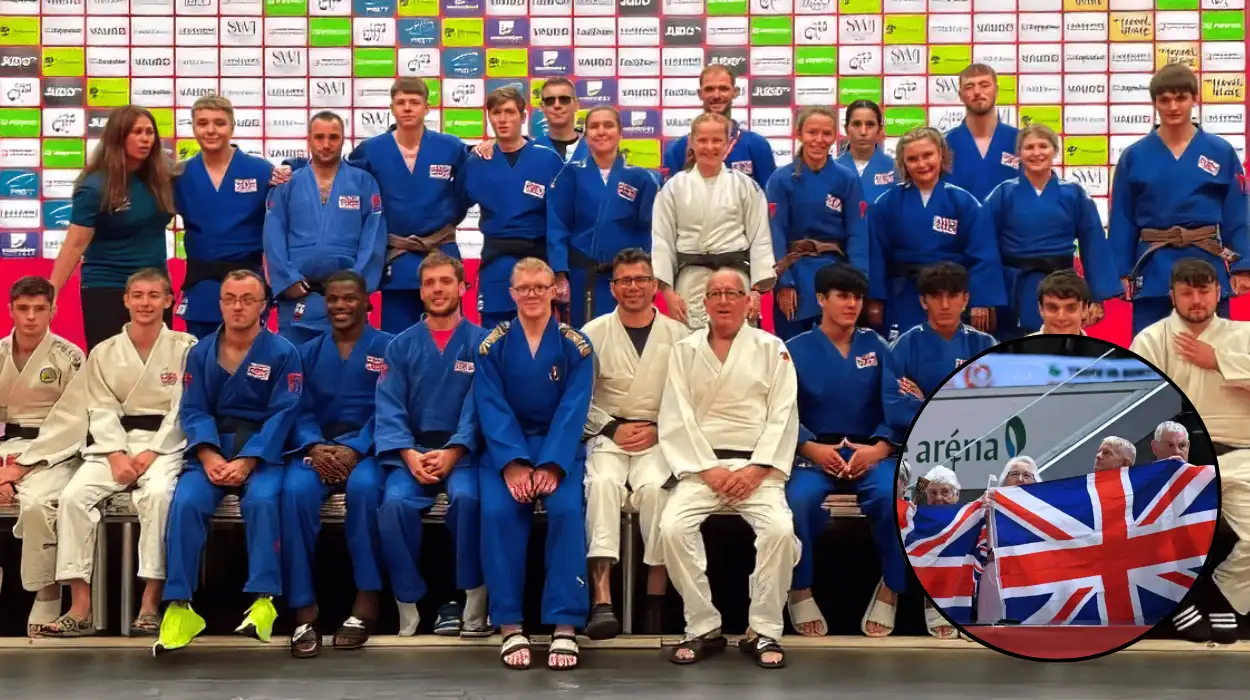
London (Britain Today News) September 01, 2026 – LausanneA historic milestone for inclusive sport unfolded as Great Britain’s adaptive judo squad dominated the medal standings at the Ecole Mont-Olivet Lausanne Adapted Judo Grand Slam, the first International Judo Federation (IJF) World Tour event to integrate adaptive athletes on the same stage as elite senior competitors, in Lausanne, Switzerland. The British team secured eight gold, five silver and three bronze medals, finishing ahead of Israel and Australia in the adapted judo standings, while sharing the Vaudoise Arena with World Judo Tour stars in a landmark demonstration of unity across ability levels.
- Key Points
- What Made the Lausanne Adapted Grand Slam Historic?
- How Did Great Britain Perform in Lausanne?
- Which Athletes Won Gold for Great Britain?
- Who Were the Level 1 Gold Medallists?
- Who Were the Level 2 Gold Medallists?
- How Did the Rest of the Medal Table Shape Up?
- Why Was This Event a Milestone for Adaptive Judo?
- How Does the Five-Level Divisioning Model Work?
- What Did Officials Say About Inclusion and Safety?
- How Did Athletes Experience Competing on the World Tour Stage?
- What Does This Mean for the Future of Adaptive Judo?
What Made the Lausanne Adapted Grand Slam Historic?
The Ecole Mont-Olivet Lausanne Adapted Judo Grand Slam represented a breakthrough in international judo programming, as it was the first Grand Slam on the IJF World Tour to host adaptive judoka within the same event framework as senior world tour athletes. Held on the opening day of the three-day Lausanne Grand Slam, the adapted competition brought together 56 Level 1 and Level 2 athletes from 13 nations to contest official men’s and women’s weight categories under the European Judo Union’s (EJU) structured divisioning system.
As reported by Nicolas Messner of the International Judo Federation, the event
“brought meaningful competition, strong performances and a powerful demonstration of inclusion to the Vaudoise Arena”.
confirming that
“every judoka has a place on the tatami”.
The integration of adapted judo into a Grand Slam environment meant athletes competed in the same arena, under the same spotlight and anthems, as Olympic and world medallists—an unprecedented step for the sport’s inclusion pathway.
How Did Great Britain Perform in Lausanne?
Great Britain’s 25-strong adaptive squad delivered its most commanding international team performance to date, topping the adapted medal table with 16 podium finishes. The eight gold medals came across men’s and women’s categories in both Level 1 and Level 2 divisions, underlining the depth of British adaptive judo.
Great Britain’s gold medallists were: Ilyas Khan (-66kg L1), Idris Khan (-81kg L1), Rebecca Lamb (-57kg L1), Saffiyah Khan (-63kg L1), Sean Allan (-73kg L2), George Light (+90kg L2), Siobhan Lloyd (-57kg L2) and Skye Westwood (-63kg L2). Five silver medals were won by Thomas Mawdsley (-66kg L1), Stanley Walker (-73kg L1), Christopher Murphy (-81kg L1), Solomon Rice (-90kg L1) and Nikki McDermott (-57kg L2). Bronze medals went to Rowan Kinsella (-73kg L1), Kyle Jones (-73kg L2) and Dominic Beesley (-90kg L1).
The British Judo Association had earlier confirmed a 25-athlete squad comprising one judoka from Wales, six from Scotland and 18 from England, coached by Paul Tansey, Louise Rennicks and Beth O’Connor, with Kerry Tansey serving as lead delegate.
Which Athletes Won Gold for Great Britain?
Who Were the Level 1 Gold Medallists?
In Level 1 men’s categories, Ilyas Khan won gold at -66kg, defeating fellow Briton Thomas Mawdsley in an all-GB final, while Idris Khan took the -81kg title ahead of Christopher Murphy. In women’s Level 1 action, Rebecca Lamb secured gold at -57kg and Saffiyah Khan at -63kg, both building on podium finishes at the 2025 EJU Open European Adapted Championships.
Who Were the Level 2 Gold Medallists?
At Level 2, Sean Allan won the men’s -73kg division, George Light claimed the +90kg crown, while Siobhan Lloyd and Skye Westwood took gold in the women’s -57kg and -63kg categories respectively. Westwood and Lloyd had both been highlighted by British Judo as 2025 European medallists heading into the event.
How Did the Rest of the Medal Table Shape Up?
Beyond Great Britain’s dominance, Israel finished second in the adapted standings with two gold, one silver and one bronze, while Australia secured two gold medals to take third place. Hungary and Romania each won one gold, with the Netherlands, Belgium and France collecting two silver apiece. Switzerland, as host nation, celebrated three bronze medals on home soil, joined on the podium by Germany, Brazil and Spain.
The IJF’s published results show additional international winners including Robert Girdwood (Australia, -90kg L1), Marko Gergely (Hungary, -81kg L2) and Andrei Miki Giuliano Zlătaru (Romania, -90kg L2), alongside Lillee Wakefield (Australia, +70kg L1 women).
Why Was This Event a Milestone for Adaptive Judo?
Kerry Tansey, a member of the IJF Inclusion Commission and the event’s lead divisioner, framed the Lausanne adapted competition as a turning point for the discipline. In an interview with the European Judo Union, Tansey said:
“This is a monumental step for Adapted Judo and an incredible opportunity for Level 1 and Level 2 athletes to showcase the quality of their judo on this stage.”
She added:
“The EJU and other organisations have been developing opportunities for judoka of all levels for many years, and to now see the IJF and Swiss Judo Federation embrace this challenge is truly exciting. I am extremely proud to be part of this journey.”
For Tansey, the significance lay not only in the competitive outcomes but in the visible realisation of a long-term inclusion strategy:
“Everybody has a place in judo, absolutely everybody.”
How Does the Five-Level Divisioning Model Work?
The Lausanne event operated under the EJU’s five-level divisioning model for adapted judo, with competition focused on Level 1 and Level 2 athletes. As explained by Tansey in coverage by the IJF, adapted judo is “judo for every disability”, with athletes classified according to functional and support needs once a disability is identified.
Level 1 athletes typically train in mainstream clubs and are fully integrated with other judoka, while Level 2 athletes may require more time to process information and respond in competition. The model aims to ensure safe, meaningful contests by grouping athletes with similar profiles, rather than separating them unnecessarily.
“It is not a matter of separating people but of creating the conditions in which every athlete can compete safely, confidently and meaningfully.”
Tansey said.
Rules for Levels 1 and 2 remain close to standard judo, with limited adaptations such as restrictions on dropping movements, sutemi-waza and armlocks to reduce injury risk for athletes with reduced sensation. As classification levels increase, further rule modifications can be applied according to specific disabilities, all within a single international framework.
What Did Officials Say About Inclusion and Safety?
Tansey emphasised that harmonising previously disparate national approaches had improved both consistency and athlete welfare.
“We have developed a very strong collaboration.”
She told the IJF.
“The aim was to harmonise the very good work that everyone was doing in their own way. By working together more effectively, we have also been able to increase safety for the athletes.”
She also highlighted progress in recognising less visible disabilities, noting that past systems sometimes failed to provide pathways for athletes whose challenges were not immediately apparent.
“Those people did not fit into any box.”
Tansey said.
“Through the work of everyone involved, we have been able to create those boxes, to the benefit of all.”
The Lausanne Grand Slam, in her view, proved that the model could operate at the highest level of international competition.
Explore More about Sports:
Kyla’s Do You Mind crowned TikTok’s UK song of the summer
Forest Sign Delap From Chelsea In Club-Record Deal
How Did Athletes Experience Competing on the World Tour Stage?
For many participants, Lausanne offered a first taste of the World Judo Tour environment. As reported by Nicolas Messner of the IJF, the event gave Great Britain’s L1 and L2 judoka
“the opportunity to compete at an event they have never previously had the chance to be part of”.
fighting alongside Olympic and world medallists.
Tansey described the atmosphere as familial and empowering:
“It is a family. They all play together. They went together to see the lake. They are a real family. Together, they gain confidence and recognition.”
She added that being in Lausanne was “a challenge for them, but they are rising to it”, underscoring the personal growth dimension alongside sporting achievement.
What Does This Mean for the Future of Adaptive Judo?
The successful integration of adapted judo into a Grand Slam sets a precedent for future IJF World Tour events. Tansey told the EJU she wants
“more events like Lausanne, more education, more co-operation with national federations and more opportunities for judoka everywhere”.
British Judo’s pre-event statement framed the Lausanne Grand Slam as “a big day for adaptive judo”, noting it was the first IJF World Tour event to host adaptive judoka alongside the sport’s biggest names. With Great Britain’s squad demonstrating both depth and consistency, the result strengthens the case for expanded international calendars and continued investment in coaching, classification and competition pathways for adaptive athletes.