Key Points
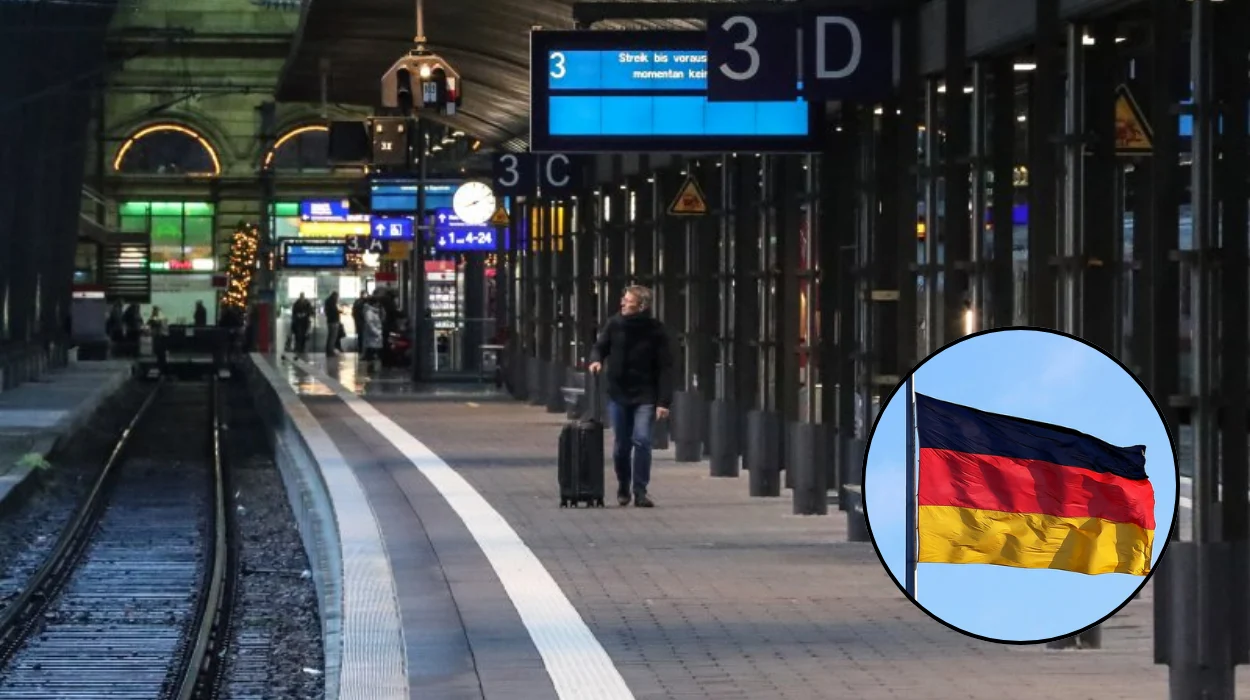
- Deutsche Bahn, Germany’s state-owned rail operator, suffered a nationwide outage that held trains at stations for more than two and a half hours on Tuesday night.
- The fault originated in the digital railway station network, specifically the GSM-R system used for communication between train drivers and traffic control.
- Philipp Nagl, head of Deutsche Bahn’s infrastructure division, said the disruption followed a scheduled component swap and that the cause was being investigated urgently.
- Some passengers remained stuck inside stranded trains during the outage, while others waited at stations.
- Many travellers criticised the lack of information from Deutsche Bahn, with the company unable to confirm at the time how many trains were affected or when services would resume.
- Long queues formed at stations as passengers searched for alternative routes or overnight accommodation.
- Deutsche Bahn apologised for the disruption and offered taxi and hotel vouchers to those left stranded.
- By Wednesday, the company reported that train services were running largely without further disruption, though it warned additional delays could still occur.
- Deutsche Bahn’s network spans more than 20,000 miles and includes over 5,000 stations, with roughly 50,000 trains running daily.
- Oliver Krischer, regional transport minister for North Rhine-Westphalia, described the outage as a “new low” and called for measures to prevent a repeat.
Frankfurt (Britain Today News) June 24, 2026 — Deutsche Bahn, Germany’s government-owned rail system operator, has confirmed that a nationwide outage which left thousands of passengers stranded for hours was caused by workers switching out a component of the network’s digital signalling system. The disruption, which unfolded late on Tuesday evening, brought much of the country’s rail network to a standstill and triggered widespread criticism over the lack of communication with affected travellers.
- Key Points
- What Happened During Deutsche Bahn’s Nationwide Outage?
- What Caused the Rail Network to Fail?
- How Did Passengers Experience the Disruption?
- Why Did Passengers Complain About a Lack of Information?
- What Compensation Has Deutsche Bahn Offered?
- What Services Does Deutsche Bahn Operate Across Germany?
- What Has the Political Reaction Been to the Outage?
- What Happens Next for Deutsche Bahn?
What Happened During Deutsche Bahn’s Nationwide Outage?
Trains were held at stations for more than two and a half hours late on Tuesday after a fault struck the digital railway station network that underpins train operations across Germany. The outage affected both regional and long-distance services, as well as S-Bahn trains, which connect major cities with surrounding suburbs. Passengers across the country found themselves unable to continue their journeys, with some services suspended entirely while others were delayed indefinitely.
Because the fault sat within a system shared across the entire network rather than a single line or region, the effects were felt simultaneously in many parts of the country rather than building up gradually from one location outward. This meant that, within a short period of the fault occurring, Deutsche Bahn was dealing with a disruption that touched commuters, regional travellers and long-distance passengers all at once, rather than a more contained, localised problem that might have been easier to isolate and resolve.
The scale of the disruption was significant given the size of the network involved. Deutsche Bahn operates more than 20,000 miles of rail line and over 5,000 train stations, with approximately 50,000 trains running across the system on a typical day. An outage affecting the digital signalling infrastructure therefore had the potential to ripple across the entire country within a short space of time, which is largely what occurred on Tuesday night. For a network of this size, even a fault lasting a few hours can affect a substantial proportion of the day’s scheduled services, particularly when it strikes during the evening period when many long-distance and commuter trains are still in transit.
What Caused the Rail Network to Fail?
The fault was traced to the Global System for Mobile Communication for Railways, commonly known as GSM-R, which is the wireless communication system used to maintain contact between train drivers and traffic control centres. When this system failed, the knock-on effect was an inability to safely coordinate train movements, prompting Deutsche Bahn to halt services as a precaution.
GSM-R underpins the basic safety-critical link between those operating trains and those directing traffic from control centres. Without a functioning version of this system, train drivers and traffic controllers lose the standard channel through which instructions, warnings and updates are passed between them. Given the importance of that link to safe operation, Deutsche Bahn’s decision to hold trains at stations rather than allow them to continue running reflects a precautionary approach to a fault of this nature, even though it meant lengthy delays for passengers.
Philipp Nagl, head of Deutsche Bahn’s infrastructure division, confirmed that the component swap which led to the fault had been planned in advance rather than being an emergency repair. He said:
“We are analysing with the highest priority how exactly this led to the fault.”
Nagl’s statement indicates that while the maintenance work itself was routine, the resulting failure was not anticipated, and the company is now examining precisely how a scheduled procedure escalated into a nationwide shutdown of train services. The fact that the swap was scheduled, rather than carried out in response to an existing fault, will likely be a central point of Deutsche Bahn’s internal review, since it raises questions about how a planned maintenance task was able to trigger such a widespread outage rather than being completed without incident.
How Did Passengers Experience the Disruption?
For those caught up in the outage, the experience varied depending on where they were at the time the fault struck. Some travellers were already on board trains when services were halted and remained stranded inside stationary carriages for the duration of the outage, uncertain when they would be able to continue their journey. Others were left waiting at stations, watching departure boards that offered little clarity on what was happening or how long the disruption might last.
For passengers stuck inside stranded trains, the situation carried its own particular difficulties. Unlike those waiting at a station, where at least some movement, food or shelter options might be available, those held on board a halted train had comparatively limited options beyond waiting for an update on when the service might resume or be evacuated. The two-and-a-half-hour timeframe in which trains were held at stations gives some indication of how long certain passengers may have been left waiting, though individual experiences would have varied depending on the specific service and location involved.
As the hours passed, long queues began to form at stations as passengers attempted to work out alternative ways to reach their destinations, or sought overnight accommodation if continuing their journey that night was no longer possible. The combination of halted trains, uncertain timelines and crowded stations created a difficult night for thousands of travellers across the network. For many, the outage meant not only a delayed arrival but a complete change of plan, with some forced to consider staying overnight in a city they had not intended to remain in, while others faced the prospect of missing connections that depended on the disrupted services.
Why Did Passengers Complain About a Lack of Information?
Beyond the disruption itself, one of the most consistent criticisms raised by passengers concerned the absence of clear communication during the outage. At the time the fault occurred, Deutsche Bahn was unable to say how many trains had been affected or when normal services might resume. This left many travellers without the basic information needed to make decisions about their journeys, whether that meant waiting it out, seeking alternative transport, or arranging somewhere to stay overnight.
This absence of detail meant that passengers were, in effect, left to make decisions about their evening without the information that would normally guide such choices. Someone deciding whether to wait at a station for a further hour, find a hotel, or attempt an alternative route entirely would ordinarily rely on at least an estimated resumption time or an indication of which services were affected. Without either, many were left guessing, which appears to have been a significant source of the frustration described during the disruption.
The lack of detail compounded the frustration already caused by the delays themselves, with passengers describing a sense of being left in the dark at a moment when timely updates would have made the situation considerably easier to manage. For a network the size of Deutsche Bahn’s, where tens of thousands of trains run daily, the absence of even basic situational updates during a fault of this scale left a considerable number of travellers without the means to plan around the disruption.
What Compensation Has Deutsche Bahn Offered?
Deutsche Bahn issued an apology for the disruption caused to passengers and confirmed that it had offered taxi and hotel vouchers to those affected by the outage. This was intended to assist travellers who were unable to reach their final destination that night, particularly those left without onward transport options once services were suspended.
For passengers whose journeys ended unexpectedly part-way, vouchers of this kind provide a practical, if limited, form of support, covering the immediate cost of an alternative way to reach their destination by road or a place to stay until rail services could resume. This kind of response is typically reserved for disruptions judged severe enough to leave passengers genuinely stranded, rather than simply delayed, which gives some indication of how Deutsche Bahn itself assessed the severity of Tuesday night’s outage.
The offer of vouchers reflects an acknowledgement from the company of the scale of inconvenience caused, although it does not address the underlying criticism that information during the outage itself was insufficient. An apology and financial gesture after the fact, however welcome to those affected, does not resolve the difficulty passengers faced in the moment, when decisions about whether to wait, travel by alternative means, or find overnight accommodation had to be made without clear guidance from the company running the affected services.
Has Deutsche Bahn’s Rail Network Recovered Since the Outage?
By Wednesday, Deutsche Bahn reported that trains were running largely without further disruption across the network, though the company cautioned that additional delays remained possible as services returned fully to normal. The recovery suggests that whatever underlying issue caused the GSM-R fault has since been resolved or worked around, allowing the digital railway station network to function again as intended.
A return to largely normal operations within roughly a day of the original fault indicates that the problem, while severe enough to halt trains nationwide for several hours, was not one that required an extended period to address. This timeline will likely form part of the context for Deutsche Bahn’s ongoing review into how the scheduled component swap led to the fault in the first place, since a relatively swift recovery may help narrow down where in the system the underlying issue occurred.
However, the warning that further delays could still occur indicates that Deutsche Bahn is treating the situation with some caution rather than declaring the network fully stabilised, likely as engineers continue to assess any residual effects of Tuesday’s fault. Passengers travelling in the days following the outage may therefore still encounter some disruption, even as the bulk of services return to their usual schedules.
Explore More about World:
Bank of Canada Minutes Show Agreement to Keep Monetary Policy Responsive
Dettol Apologises in China After ‘Toxic Men’ Advertisement Sparks Public Backlash
What Services Does Deutsche Bahn Operate Across Germany?
Deutsche Bahn’s responsibilities extend across several layers of Germany’s rail transport. The company runs regional trains that connect towns and smaller communities, long-distance transportation linking major cities, and S-Bahn services that provide rapid transit between urban centres and their surrounding suburbs. This breadth of operation means that a fault in a core piece of shared infrastructure, such as the GSM-R communication system, can simultaneously affect commuters, regional travellers and long-distance passengers alike.
Each of these categories of service serves a different type of passenger with different expectations. Long-distance travellers may have been on journeys spanning several hours, with onward connections or accommodation booked at their destination, while S-Bahn commuters may simply have been trying to get home after work. Regional services, meanwhile, often connect smaller towns where alternative transport options are more limited than in major cities. An outage affecting the entire network at once therefore created very different practical problems depending on which type of service a given passenger happened to be using at the time.
Given the network’s size, more than 20,000 miles of track, over 5,000 stations and around 50,000 daily train services, the outage illustrated how a single technical fault within a shared digital system can cascade across an entire national transport network within hours. The scale of Deutsche Bahn’s operation is part of what makes incidents of this kind notable: a fault that might be contained to a single line on a smaller network instead affected services nationwide, simply because the GSM-R system in question underpins train communication across the whole of the operator’s infrastructure.
What Has the Political Reaction Been to the Outage?
The outage drew a sharp response from regional politicians, including Oliver Krischer, the transport minister for the state of North Rhine-Westphalia. Krischer described the disruption as a “new low” for the rail network and said that measures were needed to prevent similar incidents from occurring again. He said:
“People rely on reaching their destination at least somewhat punctually by rail.”
Krischer’s description of the outage as a “new low” suggests that, in his assessment, this disruption stood out even against a backdrop of existing concerns about punctuality and reliability on Germany’s railways. His call for preventative measures points to an expectation among regional authorities that Deutsche Bahn should take concrete steps, rather than treating the outage as an isolated technical incident, to reduce the likelihood of a similarly widespread fault occurring in future.
Krischer’s comments reflect a broader concern among regional authorities about the reliability of Germany’s rail infrastructure, particularly when a single technical fault is capable of disrupting services on the scale seen on Tuesday night. As a minister responsible for transport within one of Germany’s most populous states, his remarks carry weight in terms of the political pressure now facing Deutsche Bahn to demonstrate that lessons have been learned from the incident.
What Happens Next for Deutsche Bahn?
With services reported to be largely back on track by Wednesday, attention is now likely to turn to Deutsche Bahn’s internal investigation into how the scheduled component swap led to such a widespread fault. Nagl’s confirmation that the matter is being analysed “with the highest priority” suggests that findings may emerge in the coming days or weeks, particularly given the political pressure from regional ministers such as Krischer for preventative measures to be put in place.
The outcome of that investigation is likely to determine what, if any, changes Deutsche Bahn makes to how it carries out maintenance work on systems as critical as GSM-R in future. Given that the fault stemmed from a planned procedure rather than an unexpected breakdown, the company may face particular scrutiny over whether its existing safeguards for scheduled maintenance were sufficient, and whether additional checks are needed before similar component swaps are carried out across the network going forward.
For passengers, the immediate concern will be whether the warned possibility of further delays materialises, and whether Deutsche Bahn improves its communication procedures should another disruption of this scale occur in future. The criticism levelled at the company over its handling of information during Tuesday’s outage suggests that, alongside the technical investigation into the GSM-R fault itself, questions will also be asked about how Deutsche Bahn keeps passengers informed when major incidents affect the network, and whether the systems in place for doing so need to be improved.