Key Points
- A limited number of residents have returned to Nabatiyeh following a US-Iran truce.
- The agreement is expected to influence the Israel-Hezbollah conflict in southern Lebanon.
- Airstrikes have reduced but not completely ceased in the region.
- Many homes and businesses in Nabatiyeh remain destroyed or severely damaged.
- Civilians continue to face unsafe living conditions due to ongoing shelling and lack of infrastructure.
- Emotional accounts from returning residents highlight personal loss and devastation.
- Hospitals in the region report hundreds of deaths and thousands of injuries.
- Lebanese authorities have restricted access to certain areas due to Israeli troop presence.
- Residents remain sceptical about the durability of the ceasefire.
- Cultural and historical significance of Nabatiyeh adds to the tragedy of its destruction.
Nabatieh (Britain Today News) June 16, 2026 – A fragile calm has descended upon the war-scarred city of Nabatiyeh in southern Lebanon, as a small number of displaced residents cautiously return following a recently announced truce between the United States and Iran. However, despite diplomatic efforts aimed at halting broader hostilities, the situation on the ground remains volatile, with intermittent shelling and widespread devastation continuing to shape daily life.
- Key Points
- Why Are Residents Returning Despite Ongoing Risks?
- How Severe Has the Destruction Been in Nabatiyeh?
- What Human Toll Has the Conflict Taken?
- How Are Families Coping With Loss and Displacement?
- What Is the Historical Significance of Nabatiyeh?
- What Are the Conditions on the Ground for Returning Residents?
- Will the US-Iran Deal Bring Long-Term Stability?
- What Lies Ahead for Nabatiyeh and Its People?
The truce, brokered after escalating tensions between Washington and Tehran, is also expected to bring an end to the prolonged Israel-Hezbollah conflict in Lebanon. While the agreement has led to a noticeable reduction in airstrikes, fighting has not entirely ceased, leaving civilians uncertain about their future.
Why Are Residents Returning Despite Ongoing Risks?
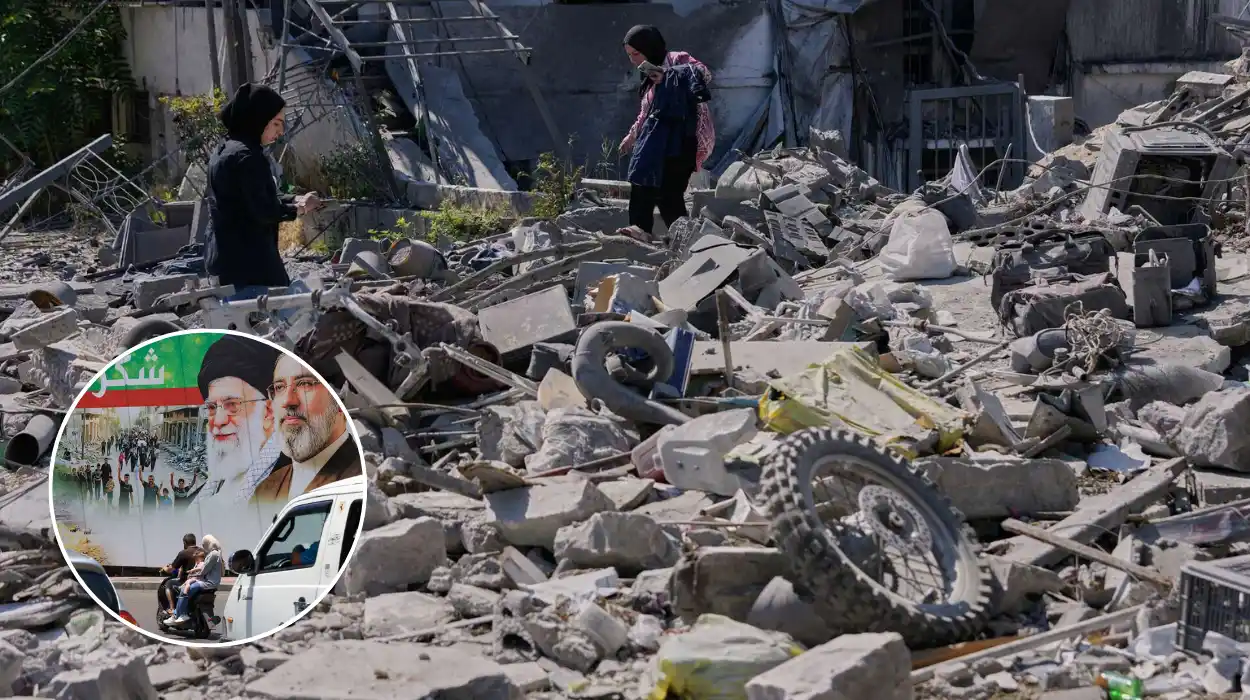
In the early hours of Tuesday, Aida Jleilati and her daughter, Sukaina al-Muhtadi, sifted through the rubble of what once was their home. Their return symbolises a broader, albeit limited, movement of residents seeking to assess damage and recover belongings.
“What can I say? All that we have gathered in our life has been wasted,” Jleilati said, expressing the despair shared by many.
The pair had lived in a six-apartment building that collapsed following an Israeli airstrike in late May. Despite knowing the extent of destruction through social media images, the emotional weight of witnessing it firsthand proved overwhelming.
Their search was not only practical but deeply personal. While Jleilati managed to recover some of her husband’s scuba diving equipment and clothing, her daughter’s primary concern was finding a cherished childhood photo album.
How Severe Has the Destruction Been in Nabatiyeh?
Nabatiyeh, once a thriving commercial and cultural hub, has endured relentless bombardment since the early stages of the Israel-Hezbollah conflict. The city’s famous market, historically bustling with traders from surrounding villages, now lies in ruins.
Heavy machinery, including bulldozers, has been deployed to clear debris as residents cautiously return. Entire neighbourhoods have been flattened, with infrastructure such as electricity, telecommunications, and internet services rendered inoperative.
At the city centre, 75-year-old businessman Kamel al-Kamel surveyed the remains of his supermarket and coffee roastery, both reduced to ashes.
“Thank God we are still alive,”
he said, estimating his losses at approximately $2.5 million.
Having lived through Lebanon’s civil war, Israel’s 1982 invasion, and multiple conflicts, al-Kamel described the current war as the most devastating he has experienced.
Is the Ceasefire Holding in Southern Lebanon?
While the US-Iran agreement has led to a decrease in large-scale strikes, the ceasefire remains fragile. Previous attempts at halting hostilities, including one initiated on April 17, failed to produce lasting peace.
On Tuesday alone, Israeli artillery targeted areas on the outskirts of Nabatiyeh, while Hezbollah responded with rocket fire towards Israeli positions. Explosions echoed across the city, underscoring the precarious nature of the truce.
Israeli forces have advanced significantly into southern Lebanon, reportedly reaching areas just 4 kilometres southeast of Nabatiyeh. Their strategic objective includes controlling elevated terrain such as the Ali Taher hill, which provides a commanding view over the region.
Lebanese troops have responded by closing roads leading to active conflict zones, limiting civilian movement and access.
What Human Toll Has the Conflict Taken?
The human cost of the conflict has been staggering. According to Lebanon’s Health Ministry, more than 3,800 people have been killed in the latest wave of violence.
Medical facilities in Nabatiyeh have been overwhelmed. Dr. Shafi Fouani, medical director of Najdeh El Chaabiyeh Hospital, revealed that the facility alone has handled approximately 500 fatalities and treated nearly 1,200 injured individuals.
“It was a very harsh war,” he stated, noting that many critically wounded patients required transfer to hospitals in Beirut or Sidon.
On the Israeli side, official figures indicate that 30 soldiers and a defence contractor have been killed in or near southern Lebanon, along with two civilian casualties in northern Israel.
How Are Families Coping With Loss and Displacement?
For many residents, the return to Nabatiyeh is marked by grief rather than relief.
Samar Zuraik found her home still standing but damaged. However, her personal loss far outweighed material concerns. Her 27-year-old son, Ali, was killed in an airstrike near the city.
“I wish I lost my house and my son stayed alive,” she said, capturing the profound emotional toll of the conflict.
Despite the truce, Zuraik described the city as “unlivable,” citing ongoing shelling and the absence of basic services.
Thousands of displaced families remain in temporary accommodations, including Beirut suburbs, waiting for signs of lasting stability before considering a permanent return.
What Is the Historical Significance of Nabatiyeh?
The destruction of Nabatiyeh carries not only humanitarian implications but also cultural and historical ones.
Established as a key centre in the predominantly Shiite Jabal Amel region, the city has long been associated with religious scholarship and cultural exchange. Its connections to Shiite holy cities such as Najaf and Karbala underscore its importance in the Islamic world.
Nabatiyeh also serves as a focal point for Ashoura commemorations, marking the martyrdom of Imam Hussein. The annual mourning period, deeply embedded in the city’s identity, is set to begin shortly, adding a poignant dimension to the current crisis.
What Are the Conditions on the Ground for Returning Residents?
Residents returning to Nabatiyeh face severe challenges. Essential services remain disrupted, with no reliable access to electricity, telecommunications, or clean water in many areas.
Housing shortages are acute, as entire buildings have been destroyed. Some families are considering renting temporary accommodation within the city, while others remain displaced.
Security concerns persist due to the proximity of active conflict zones. The presence of Israeli troops in parts of southern Lebanon has further complicated the situation.
Explore More about World:
Russian Warship Fires Warning Shots Near British Yacht in English Channel
Iran Pact Signed, U.S. Officials Say: Strait of Hormuz Traffic Set to Surge
Will the US-Iran Deal Bring Long-Term Stability?
The agreement between the United States and Iran represents a significant diplomatic development, with potential implications beyond Lebanon. However, its effectiveness in ensuring lasting peace remains uncertain.
Residents like Jleilati and al-Muhtadi are adopting a wait-and-see approach. After recovering what they could from their destroyed home, they plan to return to their temporary residence in Beirut, hoping conditions will improve.
“We cannot live outside Nabatiyeh,” al-Muhtadi said, reflecting a deep attachment to their hometown despite the risks.
What Lies Ahead for Nabatiyeh and Its People?
As Nabatiyeh begins the slow process of recovery, the resilience of its residents stands in stark contrast to the scale of destruction they face.
Reconstruction efforts will require substantial resources and sustained peace, both of which remain uncertain. The international community’s role in supporting rebuilding initiatives and ensuring compliance with ceasefire agreements will be crucial.
For now, the city exists in a state of limbo—caught between the hope of peace and the reality of ongoing conflict.
The return of even a few residents signals a desire to rebuild and reclaim normalcy. Yet, until the guns fall silent and stability is restored, Nabatiyeh’s future hangs in the balance.