Key Points
- United States and Iran have signed a Memorandum of Understanding (MoU) to end a near four-month conflict
- The MoU has been signed by U.S. President Donald Trump, Vice President JD Vance, and Iranian Parliament Speaker Mohammad Bagher Qalibaf
- A formal signing ceremony is expected to take place on Friday
- U.S. officials expect shipping traffic through the Strait of Hormuz to increase significantly but gradually
- Any sanctions relief for Iran will depend on progress in nuclear-related commitments
- Frozen Iranian assets may be partially released as goodwill gestures if Tehran cooperates
- The deal provides a framework for future U.S.–Iran relations but leaves nuclear negotiations unresolved
- Israel’s withdrawal from Lebanon is not a condition of the agreement
- Energy markets reacted positively, though long-term risks remain
- Strait of Hormuz reopening will begin immediately but normal traffic levels may take weeks to return
Washington D.C. (Britain Today News) June 15, 2026 – The United States and Iran have formally signed a Memorandum of Understanding (MoU) aimed at ending a near four-month conflict that has destabilised the Middle East, disrupted global energy supplies, and triggered sharp volatility in international markets. According to senior U.S. officials speaking in a briefing with reporters on condition of anonymity, the agreement marks a “significant but cautious breakthrough” in diplomatic relations between Washington and Tehran, with immediate implications for maritime trade through the Strait of Hormuz and future negotiations on Iran’s nuclear programme.
- Key Points
- What does the U.S.–Iran Memorandum of Understanding include?
- Why is the Strait of Hormuz central to the agreement?
- How will shipping and global energy markets be affected?
- What sanctions relief is being offered to Iran?
- What role does Iran’s nuclear programme play in the deal?
- Is Israel’s position included in the agreement?
- What led to the conflict between the U.S. and Iran?
- How have global markets reacted to the announcement?
- What happens next in the diplomatic process?
The development, described by officials as a
“framework for de-escalation rather than a final peace treaty”,
comes after weeks of intense negotiations involving high-level representatives from both nations. The MoU has reportedly been signed by U.S. President Donald Trump, Vice President JD Vance, and Iranian Parliament Speaker Mohammad Bagher Qalibaf, signalling what officials describe as “a rare convergence of political will” after months of hostility.
A formal signing ceremony is scheduled for Friday, where the agreement will be publicly presented. However, officials emphasised that the deal remains conditional and reversible depending on compliance by both sides, particularly Iran’s commitments related to nuclear transparency and regional security assurances.
What does the U.S.–Iran Memorandum of Understanding include?
Senior U.S. officials explained that the MoU is designed as a staged diplomatic roadmap rather than a comprehensive peace treaty. It outlines mechanisms for reopening maritime trade routes, managing sanctions relief, and establishing a dialogue structure for future nuclear negotiations.
As reported in the briefing by a senior U.S. official,
“The memorandum of understanding will provide a structure for how the U.S.–Iran relationship will operate in the future.”
The official further emphasised that the agreement is not unconditional.
“Any benefits to Iran such as sanctions relief and release of Tehran’s frozen funds would only come based on their willingness to work with Washington on their nuclear programme and not fund what we describe as radicalism in the region,”
the official said.
This conditionality reflects ongoing U.S. concerns regarding Iran’s regional influence and nuclear ambitions, which remain unresolved despite the diplomatic breakthrough.
Why is the Strait of Hormuz central to the agreement?
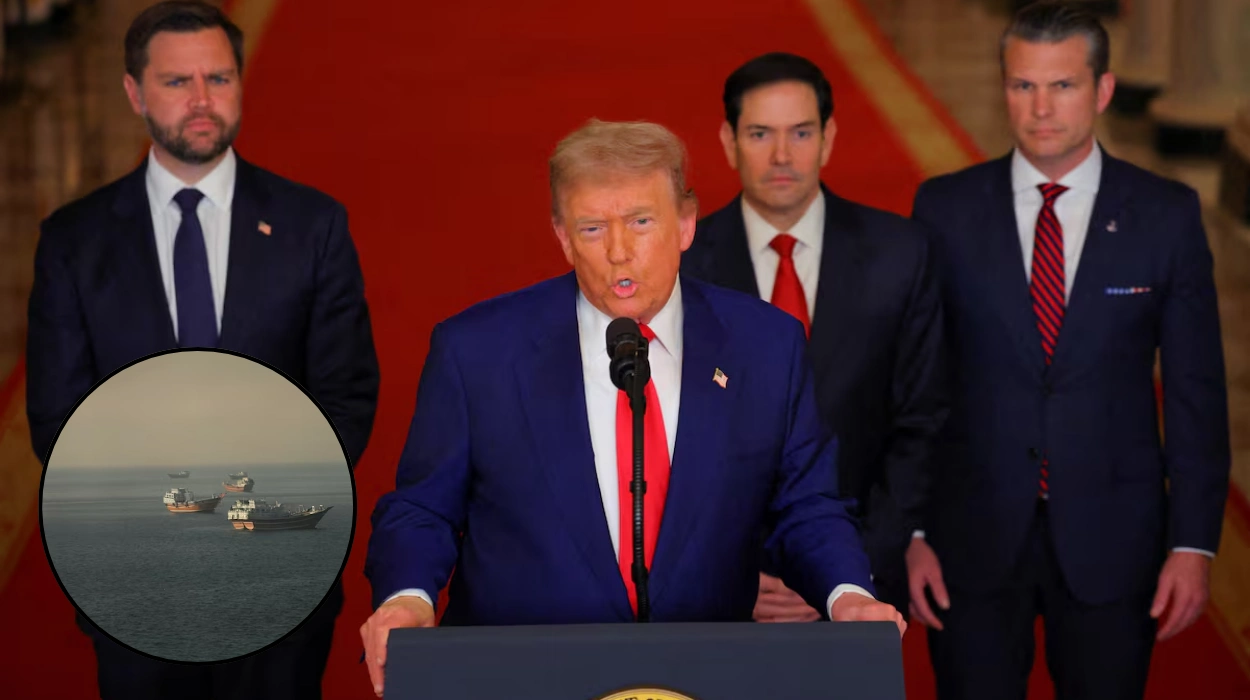
The Strait of Hormuz, one of the world’s most strategically significant maritime chokepoints, lies at the heart of the agreement. Roughly a fifth of global oil shipments pass through the narrow waterway, making it critical to international energy security.
According to officials, the MoU will allow for the gradual reopening of the Strait, which has experienced severe disruptions during the conflict period.
As stated by a senior U.S. official,
“You will see a significant increase in traffic in the Strait of Hormuz, actually starting already, and that will ramp up slowly over time.”
However, officials cautioned against expectations of an immediate return to normality.
“We probably won’t return to normal in two weeks, but we will see a significant increase in strait traffic,”
the official added.
The phased reopening is intended to reduce risk while restoring confidence among global shipping companies, insurers, and energy exporters who had largely rerouted vessels due to security concerns.
How will shipping and global energy markets be affected?
Energy markets reacted positively following the announcement, with traders interpreting the agreement as a stabilising factor in a region that has been volatile since the outbreak of hostilities earlier this year.
The conflict, which began following joint U.S.–Israeli strikes on Iran in February, had severely disrupted crude oil exports and led to sharp price fluctuations across global commodities markets. Analysts expect that even a partial reopening of the Strait of Hormuz could ease supply constraints and stabilise prices in the short term.
However, experts remain cautious. The agreement does not immediately resolve underlying tensions or guarantee long-term security in the region.
Shipping companies are expected to gradually resume operations, with insurers still likely to impose elevated premiums until stability is fully restored.
What sanctions relief is being offered to Iran?
One of the most closely watched aspects of the agreement is the potential easing of U.S. sanctions on Iran, along with the possible release of frozen Iranian assets held abroad.
Officials stressed that such measures would be strictly conditional.
As one senior U.S. official said,
“We are prepared to release frozen funds and we are prepared to relieve sanctions, and we’ll do some small gestures of that in the beginning if they make some small gestures to us that show that they’re willing to meet their commitments as well.”
This phased approach is intended to incentivise compliance while maintaining leverage over Tehran’s future actions.
Economists note that even limited sanctions relief could have significant effects on Iran’s economy, particularly in stabilising currency markets and improving access to international trade systems.
What role does Iran’s nuclear programme play in the deal?
Although the MoU represents a diplomatic breakthrough, it deliberately defers detailed negotiations on Iran’s nuclear programme, which remains one of the most contentious issues between the two countries.
Officials confirmed that future sanctions relief and broader normalisation of relations will depend heavily on Iran’s willingness to engage constructively on nuclear restrictions and verification mechanisms.
The agreement does not include binding limits on Iran’s nuclear activity, instead establishing a framework for future talks.
Diplomatic analysts suggest that this could either serve as a foundation for a long-term settlement or become a point of renewed tension if negotiations stall.
Is Israel’s position included in the agreement?
One notable clarification from U.S. officials is that Israel’s military and political actions are not a formal condition of the U.S.–Iran agreement.
As explicitly stated by a senior U.S. official,
“Israel’s withdrawal from Lebanon is not a condition of a pact between the United States and Iran.”
The official further emphasised that Israel retains the right to defend itself against any attacks from Hezbollah or other regional actors.
This separation of issues suggests that while the U.S. is pursuing diplomatic de-escalation with Iran, broader regional conflicts involving Israel remain outside the scope of the current agreement.
What led to the conflict between the U.S. and Iran?
The current agreement follows nearly four months of escalating hostilities that began after joint military strikes by the United States and Israel on Iranian targets in February.
The strikes triggered retaliatory measures, leading to a cycle of escalation that disrupted shipping lanes, increased military presence in the Gulf region, and intensified global diplomatic tensions.
Thousands of casualties have been reported across the broader conflict zone, with significant economic damage to infrastructure and trade routes.
The MoU is widely viewed as an attempt to prevent further escalation and stabilise a region critical to global economic security.
Explore More about World:
UK to Ban Fuel Made from Russian Crude by January 2027
UN approves first-ever labour treaty for gig economy platform workers
How have global markets reacted to the announcement?
Financial markets responded with cautious optimism following news of the agreement. Oil prices stabilised after weeks of volatility, while shipping stocks saw moderate gains.
Investors, however, remain wary of the deal’s conditional nature. The absence of a binding peace treaty and unresolved nuclear issues mean that geopolitical risk remains elevated.
Analysts describe the MoU as a “market stabiliser rather than a full resolution”, noting that sustained improvements will depend on implementation over the coming weeks.
What happens next in the diplomatic process?
The next stage of the agreement involves the formal signing ceremony scheduled for Friday, followed by phased implementation of maritime reopening and initial confidence-building measures.
Officials indicated that the MoU will be made public within 24 to 48 hours, allowing international stakeholders to review its provisions.
Future negotiations are expected to focus on nuclear compliance, sanctions architecture, and long-term regional security arrangements.
Diplomats caution that while the agreement marks progress, the path ahead remains uncertain and heavily dependent on mutual trust-building.
A fragile but significant diplomatic shift
The U.S.–Iran Memorandum of Understanding represents one of the most significant diplomatic developments in recent years, offering a structured but conditional pathway toward de-escalation in a region long defined by conflict.
While the reopening of the Strait of Hormuz and easing of tensions provide immediate relief to global markets, the unresolved nature of nuclear negotiations and regional security concerns means the agreement remains fragile.
As one senior U.S. official summarised,
“This is the beginning of a process, not the end of a conflict.”