Key Points
- Two Ebola-related deaths confirmed in Kpangba displacement camp in eastern Congo, according to UNHCR
- The victims were internally displaced people—a mother and daughter who died on May 31 and June 1, 2026
- Kpangba camp hosts approximately 30,000 refugees in highly crowded conditions with tarp-walled tents
- The outbreak has spread across three provinces: Ituri, South Kivu, and North Kivu
- These provinces house over 5 million displaced people and have been devastated by decades of conflict
- WHO declared the outbreak a public health emergency of international concern on May 17, 2026
- As of Friday, Congo reported 676 confirmed Ebola cases and 136 deaths
- The outbreak has spread to neighbouring Uganda, which has reported 19 cases
- The outbreak involves the rare Bundibugyo strain of Ebola
- There is no approved treatment or vaccine for the Bundibugyo strain
- The disease went undetected for weeks, with first responders playing catch-up
- Aid workers warn transmission risks are extremely high in crowded refugee sites
- Cramped conditions include poor hygiene facilities, sometimes hundreds sharing one toilet and open defecation
- Caitlin Brady, interim country director for Danish Refugee Council in Congo, expresses serious concern about rapid spread and panic
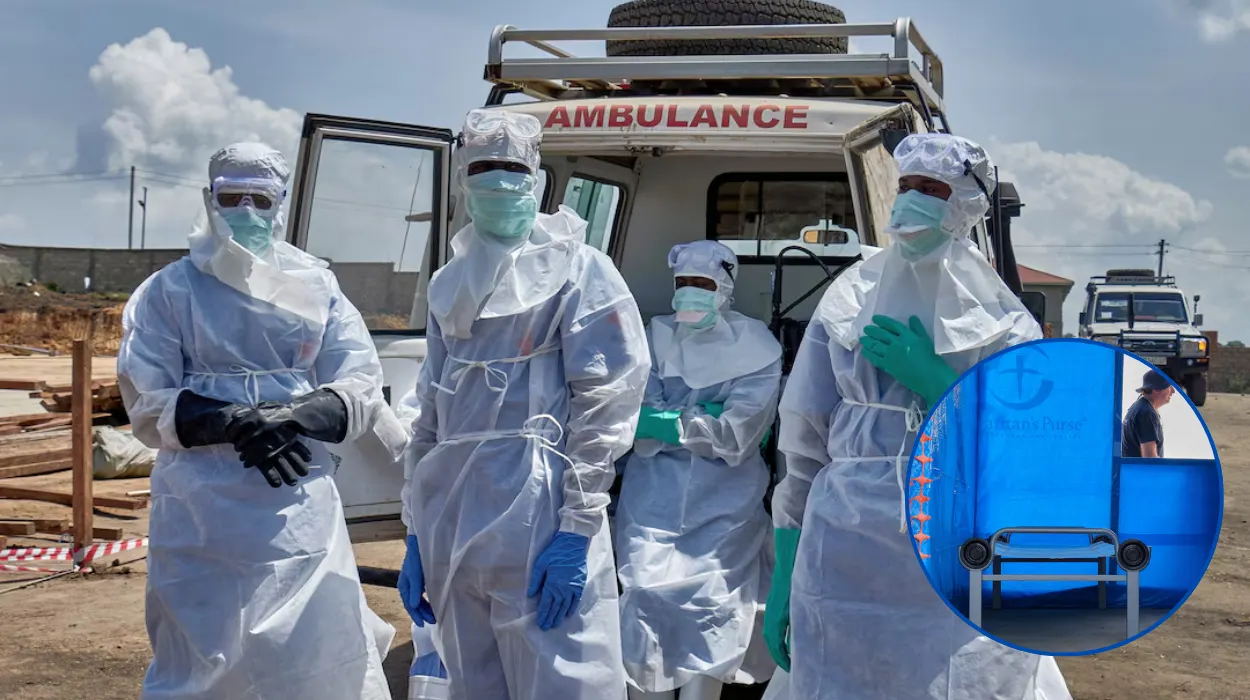
Congo (Britain Today News) June 12, 2026 — Two Ebola-related deaths have been confirmed in a displacement camp in eastern Congo, the U.N. refugee agency said, with aid workers warning the risk of the disease spreading quickly in crowded refugee sites was high and worrying.
- Key Points
- What Are the Key Details of the Recent Ebola Deaths in Congo?
- Why Is the Ebola Outbreak Particularly Dangerous in Displacement Camps?
- How Has the Ebola Outbreak Spread Across Congo’s Provinces?
- What Is the Current Scale of the Ebola Outbreak in Congo and Uganda?
- Which Ebola Strain Is Causing This Outbreak and Why Is It Particularly Concerning?
- Why Are First Responders Saying They Are Playing Catch-Up?
- What Are the Specific Hygiene and Sanitation Challenges in Kpangba Camp?
- How Does Caitlin Brady’s Warning Reflect the Broader Concerns Among Aid Workers?
- How Do the Decades of Conflict in These Provinces Contribute to Ebola Vulnerability?
- What Are the Implications of the Outbreak Spreading to Uganda?
- What Support Is Needed to Contain This Outbreak?
What Are the Key Details of the Recent Ebola Deaths in Congo?
The two victims were internally displaced people living in the Kpangba camp, which hosts 30,000 refugees, the UNHCR said in the report published on Thursday. As reported by the journalist covering the UNHCR report, the two victims were a mother and daughter who died on May 31 and June 1, and who were tested for Ebola by the World Health Organisation after they died, an aid worker told Reuters.
The Kpangba camp represents one of the most vulnerable settings for disease transmission in eastern Congo. The camp’s 30,000 residents live in extremely cramped conditions, with tents separated only by tarp walls that offer no real isolation capabilities.
“It’s a highly populated area so the risks of transmission are obviously higher and worrying,”
the source said to Reuters.
“These are tents with tarp walls, where do you isolate if you have symptoms?”
Why Is the Ebola Outbreak Particularly Dangerous in Displacement Camps?
Aid workers describe cramped conditions at the camps with poor hygiene facilities, with sometimes hundreds of people sharing a toilet and open defecation. These conditions create an environment where infectious diseases can spread exponentially faster than in typical community settings. The lack of proper sanitation infrastructure, combined with the sheer density of residents, means that basic public health measures become nearly impossible to implement effectively.
“We are all really worried that Ebola in these camps will spread extremely quickly and that there will be panic and people will flee all over whether or not they’re contacts, whether or not they’re ill,”
Caitlin Brady, interim country director for the Danish Refugee Council in Congo, told Reuters. Brady’s statement captures the dual threat facing the camps: the biological risk of rapid viral transmission and the social risk of panic-driven displacement that could spread the outbreak even further.
The Danish Refugee Council has been working extensively with displaced populations in Congo, and Brady’s warning comes from direct experience with the conditions in these camps. Her organization has witnessed how quickly panic can spread among vulnerable populations who already face extreme insecurity and uncertainty about their future.
How Has the Ebola Outbreak Spread Across Congo’s Provinces?
The virus has now spread across three provinces since the WHO declared the outbreak a public health emergency of international concern on May 17. The three provinces – Ituri, South Kivu and North Kivu – have been devastated by decades of conflict and house over 5 million displaced people.
Ituri Province, located in the north of the Democratic Republic of Congo, has long been a hotspot for conflict and humanitarian crises. The province’s displacement camps house populations who fled violence in their home regions, creating the same dangerous conditions seen in Kpangba. South Kivu and North Kivu provinces, situated in eastern Congo along the borders with Uganda, Tanzania, and Rwanda, have experienced repeated cycles of violence and displacement over the past three decades.
The concentration of over 5 million displaced people across these three provinces creates what public health experts call a “perfect storm” for infectious disease transmission. Displaced populations often arrive at camps with limited resources, inadequate nutrition, and compromised immune systems, making them more vulnerable to infection and less able to recover from illness.
What Is the Current Scale of the Ebola Outbreak in Congo and Uganda?
As of Friday, Congo reported 676 confirmed cases and 136 deaths in an outbreak that has also spread to neighbouring Uganda, which has reported 19 cases. The death rate of approximately 20% (136 deaths from 676 cases) reflects the severity of the outbreak and the challenges in providing adequate medical care to affected populations.
The spread to Uganda represents a significant international concern, as it demonstrates the outbreak’s capacity to cross national borders. Uganda has previously experienced Ebola outbreaks and has established response protocols, but the 19 cases reported so far indicate that the virus is actively spreading beyond Congo’s borders. The proximity of the affected Congolese provinces to Uganda, particularly North Kivu and South Kivu which border the country, creates multiple pathways for viral transmission.
International health organizations are now coordinating response efforts across both countries, recognizing that containing the outbreak requires a regional approach rather than a purely national one. Border communities face particular risk, as people frequently cross between Congo and Uganda for trade, family visits, and other purposes.
Which Ebola Strain Is Causing This Outbreak and Why Is It Particularly Concerning?
The outbreak involves the rare Bundibugyo strain of Ebola, for which there is no approved treatment or vaccine. This distinguishes the current outbreak from previous Ebola emergencies, including the massive 2014-2016 West Africa outbreak which involved the Zaire strain and for which vaccines and treatments have since been developed.
The Bundibugyo strain was first identified in 2007 in the Bundibugyo district of western Uganda, where it caused an outbreak with approximately 230 cases and 92 deaths. The strain is considered rare because it has caused far fewer outbreaks compared to the Zaire and Sudan strains of Ebola virus. The lack of approved treatment or vaccine for Bundibugyo means that medical personnel can only provide supportive care—managing symptoms, maintaining hydration, and treating complications—rather than targeting the virus itself.
The absence of a vaccine is particularly problematic for outbreak response, as vaccination campaigns have proven to be one of the most effective tools for containing Ebola transmission. Without this option, health workers must rely entirely on traditional public health measures: contact tracing, isolation of cases, safe burial practices, and community education. These measures are exponentially more difficult to implement in crowded displacement camps where isolation is nearly impossible.
Why Are First Responders Saying They Are Playing Catch-Up?
The disease went undetected for weeks and first responders say they are playing catch-up. This delay in detection allowed the virus to spread silently through communities, establishing multiple chains of transmission before health officials became aware of the outbreak. By the time the outbreak was identified and declared a public health emergency on May 17, the virus had already spread across three provinces and infected hundreds of people.
Several factors contributed to this detection delay. First, the affected regions have limited healthcare infrastructure, with many communities lacking even basic diagnostic capabilities. Second, the ongoing conflict and insecurity in these provinces have disrupted routine health surveillance systems. Third, displaced populations often move frequently between locations, making it difficult to track illness patterns and identify outbreaks quickly.
The “playing catch-up” situation means that response teams are now trying to contain an outbreak that has already achieved widespread transmission. Contact tracing efforts must identify and monitor thousands of people who may have been exposed to the virus, quarantine measures must be implemented in communities that have already experienced extensive spread, and healthcare facilities must be prepared for a surge in cases that may have already been building for weeks.
What Are the Specific Hygiene and Sanitation Challenges in Kpangba Camp?
Aid workers describe cramped conditions at the camps with poor hygiene facilities, with sometimes hundreds of people sharing a toilet and open defecation. These conditions represent a catastrophic failure of basic sanitation infrastructure that creates multiple pathways for disease transmission.
The ratio of toilet facilities to camp residents in Kpangba is estimated to be far below international standards for refugee camps. When hundreds of people share a single toilet facility, the queues become enormous, people wait for extended periods, and the facilities become overwhelmed with use. The resulting overcrowding at toilet sites creates additional close-contact situations where transmission can occur.
Open defecation—when people must defecate in open areas due to lack of toilet facilities—creates additional contamination of the environment. In a camp setting where people live in close proximity, open defecation areas may be near living tents, water sources, or food preparation areas. This contamination can persist in the environment and contribute to disease transmission through multiple mechanisms.
The tarp-walled tents that house camp residents offer no protection against environmental contamination and provide no means for isolating sick individuals. When someone develops Ebola symptoms, there is no appropriate place to isolate them within the camp structure. Families may attempt to care for sick members in their tents, but the thin tarp walls provide no barrier to viral transmission, and family members caring for sick relatives face extremely high risk of infection.
How Does Caitlin Brady’s Warning Reflect the Broader Concerns Among Aid Workers?
“We are all really worried that Ebola in these camps will spread extremely quickly and that there will be panic and people will flee all over whether or not they’re contacts, whether or not they’re ill,”
Caitlin Brady, interim country director for the Danish Refugee Council in Congo, told Reuters. Brady’s statement encapsulates the comprehensive nature of the threat facing displacement camps.
The concern about rapid spread reflects the biological reality of Ebola transmission in crowded settings. Ebola spreads through direct contact with blood, secretions, organs, or other bodily fluids of infected people, and through surfaces and materials contaminated with these fluids. In a camp where hundreds of people share toilet facilities, where water sources may be contaminated, and where living spaces are extremely close together, the opportunities for transmission multiply exponentially.
The concern about panic and fleeing represents a secondary but equally serious threat. When people panic, they may make decisions that worsen the outbreak rather than containing it. If people flee the camps—whether they are contacts, whether they are ill, or whether they are simply frightened—they can carry the virus to new communities,Establishing new chains of transmission far from the original outbreak location. This type of uncontrolled movement makes contact tracing nearly impossible and can transform a localized outbreak into a regional or even international crisis.
Brady’s position as interim country director for the Danish Refugee Council gives her authority to speak on behalf of the organization’s extensive work with displaced populations in Congo. The Danish Refugee Council operates in multiple provinces across the country, working directly with displaced communities and witnessing the conditions that create such vulnerability to disease outbreaks.
The source said to Reuters that the transmission risks in these highly populated areas are “obviously higher and worrying” due to the physical constraints of the camp environment. The question of isolation becomes particularly acute when considering the physical structure of the camps:
“These are tents with tarp walls, where do you isolate if you have symptoms?”.
This fundamental lack of isolation capacity represents a critical gap in outbreak response capabilities. Standard Ebola protocol requires that suspected and confirmed cases be immediately isolated in specialized treatment facilities to prevent further transmission. However, when communities lack the physical infrastructure to isolate sick individuals, the virus continues to spread within households and communities even as response teams work to identify cases.
Explore More about World:
Princess Bajrakitiyabha, Second in Line to Thai Throne, Dies at 47
Trump Warns Iran of Severe Military Strikes
How Do the Decades of Conflict in These Provinces Contribute to Ebola Vulnerability?
The three provinces – Ituri, South Kivu and North Kivu – have been devastated by decades of conflict and house over 5 million displaced people. This history of conflict has created multiple layers of vulnerability that make Ebola response exponentially more difficult than in stable regions.
Decades of conflict have destroyed or severely degraded healthcare infrastructure in these provinces. Hospitals and clinics have been damaged or destroyed, medical personnel have fled violence, and routine health services have been disrupted. The result is that communities have limited access to even basic healthcare, making early detection and treatment of illnesses nearly impossible.
Conflict has also disrupted the social fabric of communities, destroying trust in authorities and external organizations. In regions where armed groups have repeatedly exploited civilian populations, communities may be hesitant to engage with health workers or accept medical interventions. This distrust can undermine contact tracing efforts, vaccination campaigns (where available), and community education programs that are essential for outbreak containment.
The displacement of over 5 million people represents a massive humanitarian crisis that has occurred independently of the Ebola outbreak. These displaced populations have fled violence, lost their homes, and abandoned their livelihoods. They arrive at camps with compromised nutrition, limited resources, and often with untreated medical conditions. This baseline vulnerability makes them more susceptible to infection and less able to recover if they become ill.
What Are the Implications of the Outbreak Spreading to Uganda?
The outbreak that has also spread to neighbouring Uganda, which has reported 19 cases. This cross-border transmission represents a significant escalation in the outbreak’s scope and complicates response efforts considerably.
Uganda’s 19 cases indicate that the virus has established transmission chains within Ugandan territory, likely through movement of people across the border from affected Congolese provinces. The border between North Kivu/South Kivu and Uganda is porous, with frequent movement of people for trade, family visits, and other purposes. This movement creates multiple opportunities for viral transmission across national boundaries.
The spread to Uganda requires coordinated international response efforts that involve both countries’ health ministries, international organizations, and neighboring states. Containment strategies must account for cross-border movement, requiring coordination of contact tracing, quarantine measures, and public health messaging across national boundaries.
Uganda has experienced previous Ebola outbreaks and has developed response capacities over time, including the establishment of Ebola treatment units and training of health workers. However, the Bundibugyo strain’s lack of approved vaccine or treatment means that Uganda faces the same fundamental challenges as Congo, regardless of its previous experience with Ebola.
What Support Is Needed to Contain This Outbreak?
The combination of factors surrounding this outbreak—crowded displacement camps, lack of vaccine or treatment, delayed detection, cross-border spread, and decades of conflict—creates a scenario that requires massive international support to contain effectively.
Immediate priorities include establishing isolation facilities that can accommodate Ebola patients away from displacement camps, expanding diagnostic capacity to identify cases quickly, implementing rigorous contact tracing and monitoring programs, and providing comprehensive community education about Ebola transmission and prevention. Health workers need adequate protective equipment to prevent infection among those providing care, and communities need clear, accessible information about how to protect themselves.
Longer-term needs include rebuilding healthcare infrastructure in the affected provinces, improving sanitation and water facilities in displacement camps, establishing sustainable health surveillance systems that can detect outbreaks early, and addressing the root causes of displacement through conflict resolution and Peacebuilding efforts.
The international community faces a critical test of its ability to respond to infectious disease outbreaks in the most challenging humanitarian contexts. The stakes extend beyond Congo and Uganda, as uncontrolled spread of Ebola could transform this into a regional or international crisis with far-reaching consequences for global health security.