Key points
- President Donald Trump is scheduled to visit Walter Reed National Military Medical Center for his third in‑person medical examination since beginning his second term.
- The president will turn 80 next month and remains the oldest person ever elected to the presidency.
- This will be Trump’s third visit to Walter Reed in just over a year, following examinations in April and October 2025.
- He has also had two dental appointments in West Palm Beach this year, the latest a follow‑up earlier this month.
- Trump frequently asserts that he is in “excellent health,” framing his stamina and energy as a core campaign argument over his rivals.
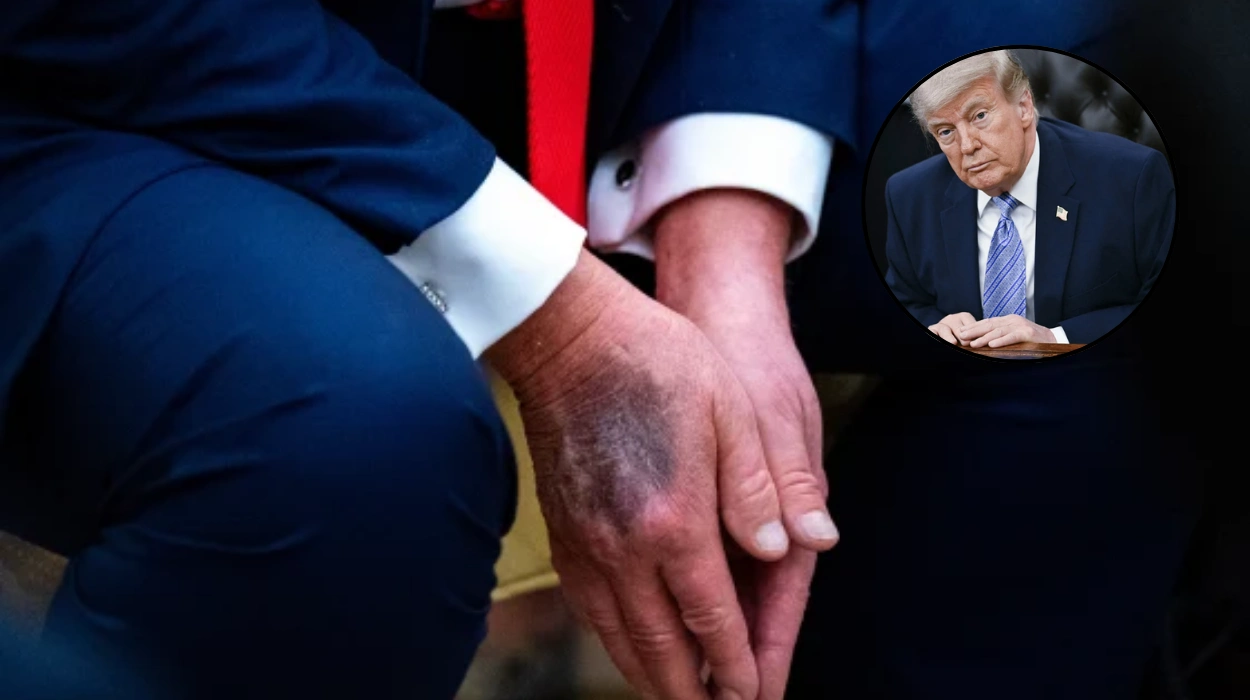
- Moments that observers have interpreted as apparent drowsiness, along with a visibly bruised hand, have generated public speculation about his wellbeing.
- The White House has attributed the bruising to frequent hand‑shaking and to aspirin use, which has been prescribed by his doctors as a blood thinner.
- Last year it was revealed that Trump has been diagnosed with chronic venous insufficiency, after clinicians examined mild swelling in his legs.
Washington DC (Britain Today News) May 25,2026 – President Donald Trump is due to return to Walter Reed National Military Medical Center for his third in‑person medical examination since the start of his second term, underscoring both the heightened scrutiny of his age and the White House’s repeated assertions that he remains in vigorous health. At 79, the president will turn 80 next month, making him the oldest person ever elected to the presidency, a fact that has intertwined his personal health story with the broader political narrative of his administration.
This visit to Walter Reed will be his third in just over a year, after previous examinations in April 2025 and October 2025, when the White House emphasised that each trip was a routine check‑up rather than a reaction to any acute illness. In addition, Trump has had two dental appointments in West Palm Beach so far this year—one in January and a follow‑up earlier this month—further rounding out the public picture of his ongoing medical and dental care. These appointments, while framed as standard, have become part of a larger conversation about how the president’s health is monitored and communicated to the American public.
Why is this Walter Reed visit attracting attention?
Trump’s age and his repeated insistence on his own vitality have placed his health firmly inside the political spotlight, both during his campaign and into his second term. The president has routinely described himself as being in “excellent health,” a claim he elevated into a central motif of his re‑election bid, where he contrasted his energy with the image of his 2024 opponent, Joe Biden, whom he often mocked as “Sleepy Joe Biden.” That juxtaposition has helped crystallise a public perception that Trump’s stamina is a political asset, which in turn has made any hint of diminished clarity or physical strain a matter of intense media interest.
Even as the White House publicly downplays concern, moments captured on camera—such as periods that some observers have interpreted as apparent drowsiness—have fed speculation about his condition. These episodes, while not accompanied by formal medical disclosure, have been scrutinised by journalists and opposition figures alike, who argue that greater transparency about the president’s health is warranted given his age and the responsibilities of the office. The administration, however, has sought to deflect such scrutiny by restating that the president receives regular, routine care and that no serious health issues have been disclosed beyond what has already been made public.
What do we know about Trump’s medical history?
Beyond the scheduled visits to Walter Reed, the White House has released only limited medical information about Trump, but what has emerged has contributed to the ongoing narrative around his health. Last year, it was revealed that the president had been diagnosed with chronic venous insufficiency, a condition affecting the circulation in the veins of the legs, after doctors examined mild swelling he had reported. That diagnosis was described as a manageable, non‑acute issue, yet it nonetheless added to a catalogue of health details that have accumulated over Trump’s years in public life.
Also prominent in the public record is the White House’s explanation for a notably bruised hand that appeared in televised footage. The bruising resulted from the president’s frequent hand‑shaking and the fact that he takes aspirin as a blood thinner, a prescription regimen his doctors have endorsed. While the administration has stressed that neither the bruising nor the circulatory condition represents a medical emergency, critics have pointed out that such details, when stacked together, heighten the desire for a fuller medical profile.
Medical experts interviewed by Washington DC News have noted that age alone is not a disqualifier for leadership, but that advancing years often increase the importance of clear, consistent disclosure so the public can realistically assess a leader’s fitness for office. Some commentators have suggested that, given Trump’s age and the precedent‑setting nature of his presidency, more detailed and regular health updates would better serve transparency expectations, even if current protocols lean toward a minimalist approach.
Explore More about World:
Ebola Outbreak in Congo Meets Rising Hostility Toward Health Workers
Pakistan’s Munir Advances Iran Deal Through Tehran Mediation 2026
How does the White House frame these routine check‑ups?
The White House has consistently framed the president’s visits to Walter Reed as ordinary, preventive examinations rather than responses to any crisis. White House officials have reiterated that the president undergoes regular screenings and that his doctors have reported no significant health risks beyond the known conditions already disclosed. They have also emphasised that Trump maintains a demanding schedule of travel, rallies, policy meetings, and public appearances, which they argue belies claims of physical frailty.
Officials have, however, declined to release a comprehensive medical report beyond the short summaries issued after his prior visits, a stance that has frustrated some lawmakers and health‑care advocates. Democratic lawmakers quoted by Washington DC News have questioned why the president does not provide the kind of detailed, itemised physical report that several recent predecessors have offered, arguing that the public’s right to know is heightened not only by Trump’s age but also by the intensity of the current global challenges his administration faces. The White House has in turn maintained that privacy and security considerations, as well as the limited precedent for full disclosure, justify the current level of information.
How are Trump’s age and health shaping his political image?
Trump’s age and his assertions of robust health have become tightly woven into the branding of his second term, with aides and allies frequently highlighting his energy and resilience. Senior advisers in the president’s inner circle have described him as “enthusiastic,” “focused,” and “high‑energy” in private meetings, a portrayal they seek to project outward to counter any narratives of decline. Supporters at rallies often echo this line, praising Trump for what they describe as his stamina and resilience in the face of political and legal challenges.
At the same time, opponents and some independent analysts have warned that age‑related risks are not eliminated by visible activity, and that cognitive and physical changes can be subtle and gradual. They have pointed to the circulation‑related diagnosis and the bruising incident as reminders that even ritually healthy‑seeming leaders may face underlying conditions that warrant closer scrutiny. Some public‑health commentators quoted by Washington DC News have suggested that the conversation around Trump’s health reflects a broader, unresolved question in American politics: how to balance the privacy of an ageing head of state with the public’s legitimate interest in understanding the physical and mental capacity of the person directing the nation’s response to crises.
What will this latest visit mean for the presidency?
The upcoming visit to Walter Reed is unlikely to alter the formal structure of the presidency, but it may add another layer to the public debate about Trump’s fitness for office. The examination itself is expected to follow the same pattern as the earlier Walter Reed trips: a routine check‑up, a brief medical summary, and a White House briefing that stresses normalcy and continuity. However, given the president’s age and the intense scrutiny that has already surrounded his prior visits, even minor new details could be parsed closely by journalists, medical experts, and political opponents.
In the absence of a major disclosure, the visit may instead reinforce the existing dynamics: a White House emphasising stability and resilience, and a segment of the public and media persistently questioning whether the information provided is sufficient. For Trump, the repeated medical check‑ups have become part of a broader political script—one in which his age is acknowledged but framed as less significant than his energy, drive, and perceived connection with his base. For the country, the recurring focus on Walter Reed and on the president’s health continues to underscore the reality that the age of the commander‑in‑chief has, for the first time in modern history, become a central topic in the national conversation about leadership.