Key Points
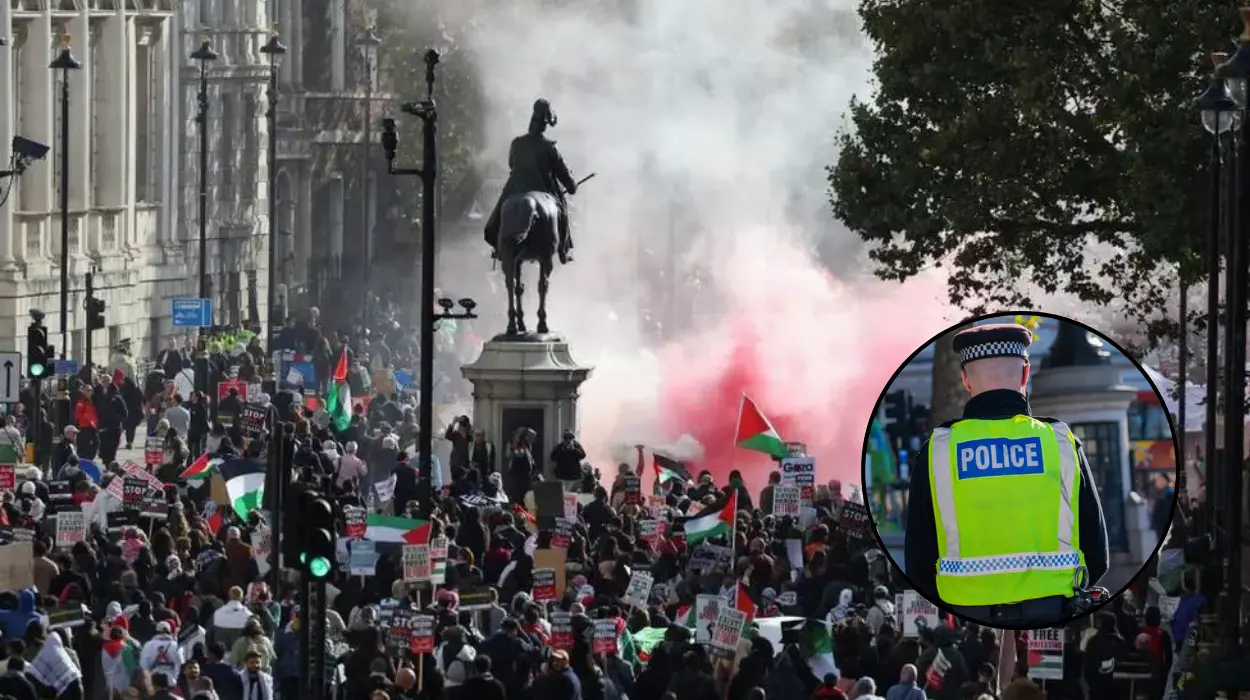
- The Metropolitan Police is preparing one of its largest protest‑security operations in recent memory to manage rival demonstrations in central London on the same day as the FA Cup final at Wembley.
- More than 4,000 officers are expected to be deployed, backed by armoured Sandcat vehicles, drones, helicopters, horses, dogs and live‑facial‑recognition technology.
- The far‑right “Unite the Kingdom” (UTK) march, led by Stephen Yaxley‑Lennon (Tommy Robinson), is expected to draw up to 50,000 people along a route from Kingsway through Aldwych, the Strand, Trafalgar Square, Whitehall and Parliament Square.
- A separate pro‑Palestinian Nakba‑Day rally, organised by the Palestine Solidarity Campaign and others, will move from Green Park to Pall Mall, with authorities estimating around 30,000 participants.
- Police have imposed strict conditions on both marches, including fixed routes, timings and responsibilities for organisers to ensure speakers do not breach hate‑speech or extremism laws.
- The Met has warned of a “risk of disorder and criminality” and is particularly concerned about football hooligans travelling to London for the FA Cup final joining the far‑right protest.
- Prosecutors are now more likely to pursue charges over antisemitic chants such as “globalise the intifada”, with three people already charged under that slogan.
- The Muslim Council of Britain has warned the marches put Muslims “at risk of increased violence and hatred”, citing speakers at the last UTK rally who openly incited anti‑Muslim animosity.
- Nick Lowles of Hope Not Hate has described Yaxley‑Lennon as “a phenomenon” who can mobilise more people onto the streets than almost any other public figure, though he remains unpopular with a majority of the public.
- Robinson has recorded appeal‑style videos urging supporters to remain calm, avoid bringing anger, and to “win by smiling” rather than confronting police.
London (Britain Today News) May 15, 2026 – The Metropolitan Police is preparing to mount one of its largest‑scale protest‑security operations in recent memory as tens of thousands of far‑right demonstrators and pro‑Palestinian activists are expected to march through central London on the same day as the FA Cup final at Wembley.
- Key Points
- How big will the protests be?
- What powers are being given to officers?
- Why are the two marches so sensitive?
- What has the Muslim Council of Britain said?
- Who is mobilising the far‑right march?
- How vocal is the pro‑Palestinian movement on the day?
- What has the prime minister said about the far‑right threat?
- Are football fans complicating security?
- What is being done about hate speech and incitement?
- What tone has Tommy Robinson set for Saturday?
Authorities have drafted in more than 4,000 officers, along with armoured vehicles, drones, helicopters, horses, dogs and live‑facial‑recognition units, to keep the two rival demonstrations apart and to manage the additional security burden created by thousands of football fans converging on the capital.
How big will the protests be?
Police and organisers estimate that the far‑right “Unite the Kingdom” march led by Stephen Yaxley‑Lennon – better known as Tommy Robinson – could attract up to 50,000 people along a route from Kingsway through Aldwych, the Strand, Trafalgar Square, Whitehall and Parliament Square.
The rival pro‑Palestinian Nakba‑Day rally, organised by the Palestine Solidarity Campaign and other groups, is expected to begin at 1pm in Green Park and terminate in Pall Mall, with authorities putting its turnout at around 30,000 demonstrators.
Combined, the two events could see more than 80,000 people on the streets at roughly the same time the FA Cup final kicks off between Manchester City and Chelsea at Wembley, prompting what senior officers have described as an “unprecedented” policing operation.
What powers are being given to officers?
The Met has issued strict conditions for both marches, fixing start times, routes and end‑points, and for the first time making organisers personally responsible for ensuring that invited speakers do not breach anti‑extremism and hate‑speech laws.
Officers will also be granted enhanced public‑order powers, including the ability to stop and search individuals deemed potential troublemakers, to disperse crowds and to use live‑facial‑recognition technology to identify known offenders.
As reported by the Metropolitan Police, Assistant Commissioner Nick Harman stated that the force would “deploy very significant resources” and take a “zero‑tolerance approach” supported by specialist units, including armed officers on standby.
Why are the two marches so sensitive?
The Unite the Kingdom march in September 2025 stunned both organisers and police when more than 150,000 people gathered in Parliament Square, with far‑right and extremist speakers using the stage to denounce Islam and promote Christian nationalism.
This time, authorities fear that a similarly large crowd could be used to amplify anti‑Muslim and anti‑refugee rhetoric in close proximity to the pro‑Palestinian rally, which is timed to mark the 78th anniversary of the Nakba – the mass displacement of Palestinians during the creation of Israel.
As reported by the Muslim Council of Britain, the group warned that the Unite the Kingdom march
“puts Muslims at risk of being subjected to increased violence and hatred”.
What has the Muslim Council of Britain said?
Addressing the planned demonstrations, Dr Wajid Akhter, secretary general of the Muslim Council of Britain, stated that the last Unite the Kingdom event
“featured speakers who openly incited hatred, chanted anti‑Muslim slogans and unashamedly encouraged violence and civil disobedience on Britain’s streets”.
Dr Akhter added:
“Nobody should be forced to walk Britain’s streets in fear of their safety. But when irresponsible political rhetoric, toxic social media algorithms and double standards in policing continue to act as enabling factors for open racism, and violence is promoted on Britain’s streets, the downward spiral will accelerate.”
The council has urged Muslims and others concerned about safety to avoid central London on the day of the marches, particularly near the Whitehall and Parliament Square corridors.
Who is mobilising the far‑right march?
Stephen Yaxley‑Lennon, who has been branded a far‑right activist and anti‑Islam campaigner, is the central figure behind the Unite the Kingdom march.
Promotion material for the event includes an AI‑generated video that denounces Muslims and portrays Yaxley‑Lennon as a hero being adored by a crowd of tens of thousands, alongside the line:
As reported by Hope Not Hate’s Nick Lowles, polling indicates that more than 80% of respondents recognise Yaxley‑Lennon by name, and while many dislike him, around 17% actively like him.
Lowles told authorities and media outlets:
“Lennon can put more people on the streets than any other person. He is a phenomenon.”
How vocal is the pro‑Palestinian movement on the day?
The pro‑Palestinian Nakba‑Day march is being framed by organisers as both a commemoration of Palestinian displacement and a direct counter‑mobilisation against the far‑right event.
In a statement, the Palestine Solidarity Campaign said the rally would move from Green Park to Pall Mall, with speeches devoted to Palestinian rights and opposition to far‑right extremism.
Organisers have also advertised participation from anti‑racist and faith‑based groups who view the day as a chance to
“stand united against racism and Islamophobia”
in the face of large‑scale far‑right mobilisation.
What has the prime minister said about the far‑right threat?
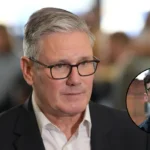
Ahead of the marches, Prime Minister Keir Starmer has warned that the rise of the far right represents
“a fight for the soul of this country”,
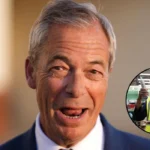
amid a broader shift in the political landscape following Nigel Farage’s Reform UK securing the largest share of the vote in recent English council elections.
Starmer’s comments have been cited by police and civil‑society groups as underlining the national sensitivity of allowing far‑right figures to mobilise large crowds in the heart of London, particularly around able‑bodied institutions in Whitehall and Parliament Square.
Explore More about London:
Mouse Poo and Gnawed Food Packets Found in London School Kitchen 2026
London museum to return sacred Jain texts over unethical acquisition 2026
Are football fans complicating security?
The Met has explicitly warned that football hooligans who have previously supported Robinson may travel to London for the FA Cup final, raising fears they could join or provoke clashes at the Unite the Kingdom march.
As reported by the Metropolitan Police, officers have noticed social‑media videos featuring calls for “football yobs” to attend the far‑right protest, increasing pressure on the 4,000‑strong deployment to manage three overlapping flows of people: fans heading to Wembley, far‑right demonstrators, and pro‑Palestinian activists.
What is being done about hate speech and incitement?
The Met has signalled that prosecutors are now more likely to pursue charges for slogans and chants deemed antisemitic, including the phrase “globalise the intifada”, which has already led to three people being charged.
As reported by senior police sources, officers are prepared to seek prosecutions not only against speakers at both marches but also against organisers for potential conspiracy, if speeches from the stage are judged to incite hatred or criminality.
This approach reflects a broader tightening of enforcement around hate‑speech offences at major demonstrations, following criticism that authorities have in the past been reluctant to prosecute certain slogans.
What tone has Tommy Robinson set for Saturday?
In a series of online videos released ahead of the march, Stephen Yaxley‑Lennon has appealed to attending officers not to rush to draw their batons, saying:
“We’re not coming for a big battle … the people that are there tomorrow, are the people at the school gates with you.”
He has also urged supporters to stay calm if provoked and to “win by smiling at them”, adding:
These messages have been widely circulated by his supporters, but they sit alongside more inflammatory rhetoric from past speeches and promotion material that have alarmed civil‑rights groups and Muslim organisations.