Key Points
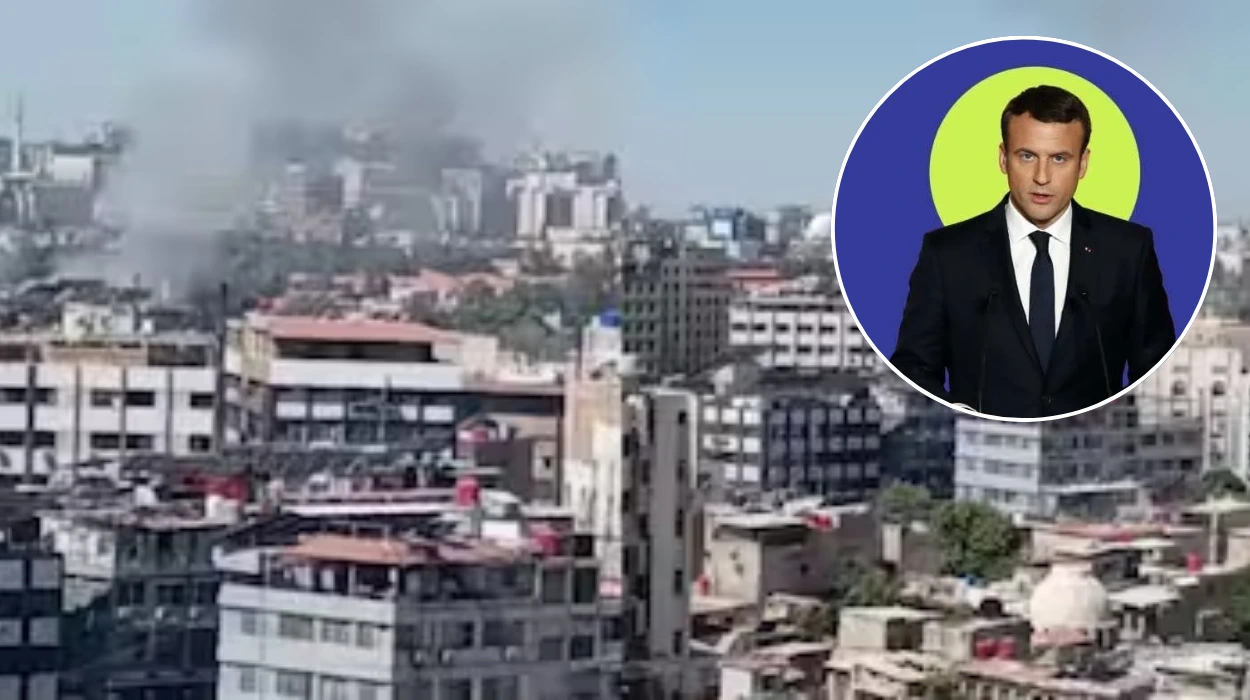
- Two explosive devices detonated in central Damascus on Tuesday, shortly after French President Emmanuel Macron’s motorcade left the Four Seasons Hotel for the presidential palace.
- Syria’s Interior Ministry said 18 people, including four police officers, were wounded; no deaths have been reported.
- The Élysée Palace confirmed Macron did not hear the explosions and was unharmed, going ahead with his scheduled meeting with Syrian President Ahmed al-Sharaa.
- One device was concealed in a parked car and the other in a rubbish bin near the hotel, close to the Tourism Ministry and the National Museum, according to Syrian authorities.
- No group has claimed responsibility for the attack, though the Islamic State group has claimed a series of prior operations against al-Sharaa’s government.
- The blasts come days after a bombing at a Damascus café killed several people and wounded more than 20 others.
- Macron is the first Western European head of state to visit Syria since the fall of Bashar al-Assad in December 2024.
- Macron and al-Sharaa addressed reporters after the explosions, with both leaders discussing economic reconstruction and bilateral ties.
- Macron was due to travel onward to Ankara, Türkiye, for the 36th NATO Heads of State and Government Summit.
- The NATO summit, chaired by Secretary-General Mark Rutte, is being held on 7–8 July at the Beştepe Presidential Complex and is expected to focus on defence spending, Ukraine and burden-sharing among allies.
Damascus (Britain Today News) — July 07, 2026: French President Emmanuel Macron escaped unharmed on Tuesday after two explosive devices detonated in central Damascus, moments after his motorcade departed the Four Seasons Hotel for a landmark meeting with Syrian President Ahmed al-Sharaa. Syrian authorities said 18 people were wounded in the blasts, which struck a busy commercial district near the Tourism Ministry and the National Museum, in the most serious security scare to accompany a foreign leader’s visit to Syria since the collapse of Bashar al-Assad’s government in December 2024.
- Key Points
- What happened near the hotel hosting Macron in Damascus?
- Where exactly did the explosions take place?
- What caused the explosions, according to Syrian authorities?
- Why is Macron’s visit to Syria historically significant?
- What did Macron say following the explosions?
- What did Ahmed al-Sharaa say about relations with France?
- Why does Syria remain a security concern despite Assad’s fall?
- What is on the agenda at the NATO summit in Ankara?
The explosions, which sent plumes of black smoke over the Syrian capital and prompted police to seal off surrounding roads, occurred as Macron’s delegation was already en route to the presidential palace for talks with al-Sharaa. His office moved quickly to reassure the public that the president was safe and that the visit — the first by a Western European head of state to post-Assad Syria — would proceed as planned.
What happened near the hotel hosting Macron in Damascus?
Two blasts tore through a stretch of central Damascus on Tuesday morning, close to the Four Seasons Hotel where Macron had spent the previous night. Footage broadcast by Reuters showed flames and thick smoke rising from a rubbish bin, followed moments later by a second explosion near a parked ambulance where a crowd of roughly two dozen people had gathered. Emergency crews worked to extinguish the resulting fire as sirens rang out across the district and security forces cordoned off nearby streets.
Syria’s Interior Ministry said in a statement carried by the state news agency SANA that the explosions were caused by two improvised explosive devices — one hidden inside a car parked at the roadside and the other placed inside a rubbish container. The ministry added that the devices detonated “while preparations were under way” to dismantle them, suggesting security personnel may have already identified the threat before it fully materialised.
Was President Macron injured in the explosions?
No. The Élysée Palace confirmed that Macron was unhurt and had already left the hotel for the presidential palace before the devices went off. According to journalists travelling with the French delegation, the convoy did not hear the blasts en route. Macron proceeded directly to his scheduled meeting with al-Sharaa at the People’s Palace, and hotel security reportedly asked members of his entourage who remained on site to move to an underground car park as a precaution.
How many people were wounded in the Damascus blasts?
Syrian officials put the number of casualties at 18, including four police officers. No fatalities were reported in the immediate aftermath, and an investigation into the source of the devices was launched at the scene. Photographers working near the Tourism Ministry, situated opposite the hotel, reported seeing shattered windows and damage consistent with the force of the blasts, though the surrounding area remained under heavy security in the hours that followed.
Where exactly did the explosions take place?
The first device exploded close to the Four Seasons Hotel, on a thoroughfare separating the Tourism Ministry from the National Museum in the historic heart of Damascus. The second blast occurred near Victoria Bridge, roughly two hundred metres from the hotel. Both locations sit in one of the capital’s busiest districts, raising concern among security analysts that the devices may have been planted along a route anticipated to be used by Macron’s convoy.
What caused the explosions, according to Syrian authorities?
Syria’s Interior Ministry attributed the blasts to improvised explosive devices rather than any form of aerial or artillery strike. Investigators were examining the scene to determine whether the devices had been remotely detonated or set on timers, and whether they had been placed overnight, before the presidential convoy’s movements were finalised. Kamal Abdeo, a political researcher at the University of Idlib, suggested the attack appeared to have targeted Macron directly, with explosives believed to have been laid along roads his convoy was expected to use.
Why is Macron’s visit to Syria historically significant?
Macron’s trip marks the first time a Western European head of state has set foot in Syria since al-Sharaa’s rebel coalition ousted Bashar al-Assad in December 2024, bringing more than five decades of Assad family rule to an end. The French president arrived in Damascus on Monday evening accompanied by an economic delegation, with plans to sign memorandums of understanding aimed at drawing investment into a country whose infrastructure has been devastated by roughly 14 years of civil war. Macron was greeted at Damascus airport by Syrian Foreign Minister Asaad al-Shibani. Writing on social media platform X after his arrival, Macron said he had come to Syria
“to express France’s commitment to the Syrian people,”
adding:
“Let us open a new chapter of stability and peace.”
Before travelling to the presidential palace, Macron held a series of meetings with members of Syrian civil society, though his office did not disclose further details of those discussions. Macron has been among the most prominent Western advocates for lifting sanctions on Syria, having pushed both European governments and Washington to ease restrictions imposed during the Assad era in order to support the country’s reconstruction.
What did Macron say following the explosions?
Speaking on X shortly after the blasts, Macron wrote that
“nothing can suppress the aspirations of the Syrian people to live in a fully sovereign, secure, pluralistic and united Syria.”
He said his morning meetings with a range of Syrians had left him struck by their “dignity, courage and determination.” At a joint press conference alongside al-Sharaa later on Tuesday, Macron said that France wanted to contribute to rebuilding Syria’s economy, including its banking sector, underlining Paris’s intention to remain engaged in the country’s reconstruction despite the security scare.
What did Ahmed al-Sharaa say about relations with France?
Al-Sharaa, addressing the same press conference, said he envisioned France as a “primary partner” for Damascus. He suggested France could play a significant role in global transit given recent disruption to shipping through the Strait of Hormuz, framing the relationship with Paris as central to Syria’s efforts to reintegrate into the international economy. Al-Sharaa, a former commander with the group Hayat Tahrir al-Sham, has spent the months since taking power building relationships with Western and Middle Eastern governments that had shunned Assad, even as some world leaders remain wary of his Islamist-rooted background.
Explore More about World:
Erling Haaland Shines as Brazil Crash Out of World Cup
Millions Mourn Khamenei as Iran’s Funeral Fuels Revenge Calls, US Standoff
Has anyone claimed responsibility for the attack?
As of Tuesday, no group had claimed responsibility for the explosions, and Syrian investigators had not publicly identified any suspects. Analysts noted that the timing and positioning of the devices, apparently along the route of Macron’s convoy, pointed to the French delegation as a probable target, though officials cautioned that the inquiry remained at an early stage. The Islamic State group has claimed a series of attacks on Syrian government forces since February, when it announced what it described as a new phase of operations against al-Sharaa’s administration.
Why does Syria remain a security concern despite Assad’s fall?
Tuesday’s blasts came less than a week after a bombing at a café near the Justice Palace in Damascus killed several people and wounded more than 20 others, with no group claiming responsibility for that earlier attack either. While Damascus has been comparatively calm through much of the transitional period since Assad’s ouster, Syria’s new authorities have continued to grapple with sporadic violence involving rival armed factions as they work to consolidate control across the country. The civil war that preceded Assad’s fall killed close to half a million people and displaced millions more, leaving Syria’s infrastructure in ruins and its economy in need of hundreds of billions of dollars in reconstruction funding, even as foreign governments and businesses have pledged support.
What is Macron’s schedule after Damascus?
Following his talks with al-Sharaa, Macron was scheduled to travel with the Syrian president to Ankara, Türkiye, for the NATO summit. The Élysée Palace indicated the itinerary would continue “as planned” despite the morning’s explosions, though it remained unclear immediately afterwards whether al-Sharaa’s own onward travel to Türkiye would go ahead in light of the security incident. Macron’s agenda in Damascus also included a session with his accompanying business delegation on investment opportunities and regional security, according to Syria’s state-run SANA news agency.
What is on the agenda at the NATO summit in Ankara?
The 36th NATO Heads of State and Government Summit opened in Ankara on Tuesday, hosted by Turkish President Recep Tayyip Erdoğan and chaired by NATO Secretary-General Mark Rutte, bringing together leaders of all 32 alliance members alongside partners including Ukrainian President Volodymyr Zelenskyy and South Korean President Lee Jae-myung. The gathering, held over two days at the Beştepe Presidential Complex, opened with a Defence Industry Forum focused on expanding joint procurement, industrial capacity and supply-chain cooperation among allies.
US President Donald Trump arrived in Ankara for the summit amid ongoing friction with several NATO allies over defence spending, having criticised Germany’s military budget as “ridiculous” on the eve of the gathering. Trump is expected to hold bilateral talks with both Erdoğan and Zelenskyy, and to meet al-Sharaa on the sidelines, alongside working sessions dedicated to Ukraine’s military needs and the alliance’s broader defence posture. NATO foreign ministers are also scheduled to meet counterparts from Bahrain, Kuwait, Qatar and the United Arab Emirates during the summit, in addition to a separate dinner discussion involving Ukraine’s foreign minister and the European Union’s foreign policy chief. Leaders are expected to reaffirm pledges of military equipment, assistance and training for Ukraine running into 2027, with funding drawn largely from existing bilateral commitments and a European Union loan facility rather than new US contributions.