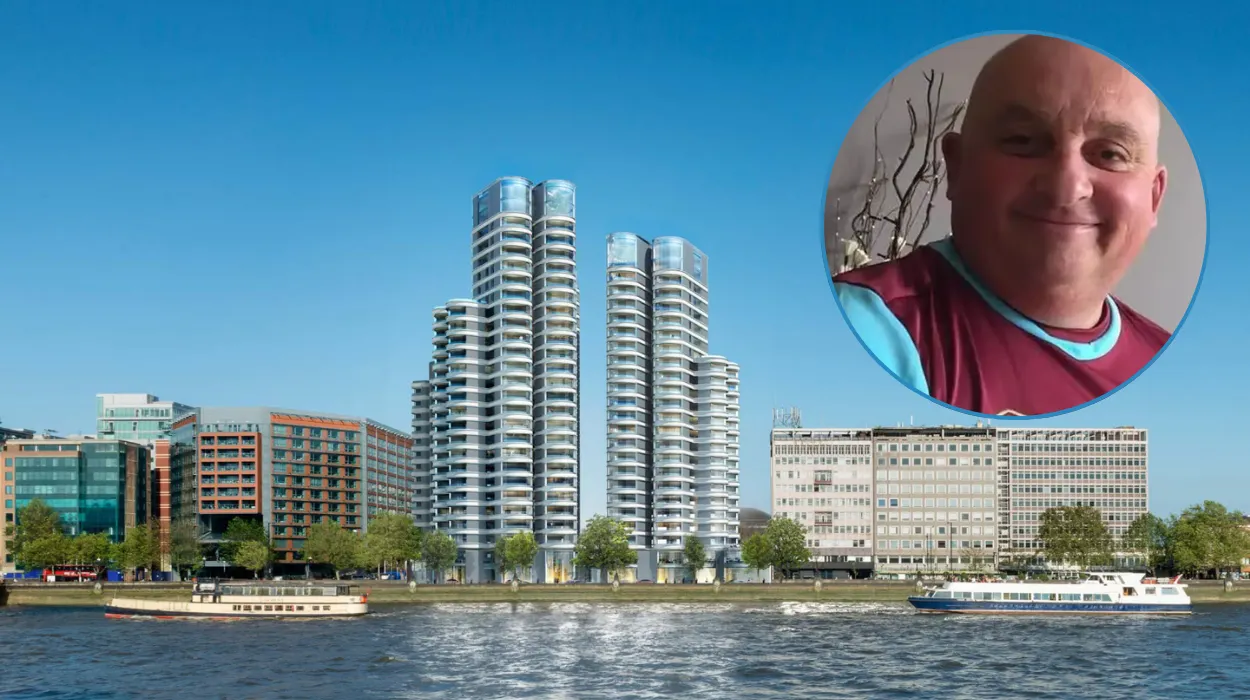
Key Points
- Foster + Partners is now acquitted of the manslaughter of coach driver Mick Ferris, who died in 2018 due to a window which fell from the penthouse of the property The Corniche.
- St James, the managers of the project, and Lindner Prater, the engineering contractors for the project, have been convicted of safety breaches in accordance with the Health and Safety at Work Act 1974.
- Design engineers Wintech for the building were found not guilty, along with Foster + Partners.
- The accident happened to Ferris when he died instantly on 2 October 2018 as a window weighing 130 kilograms fell from The Corniche at Albert Embankment.
- There was an almost identical case before that in August 2017 where a window fell without causing any injury, and there were no design changes made even after that.
- According to the prosecution from the Health and Safety Executive, it was a foreseeable disaster, and designers ignored the risks associated with the outward-opening windows.
- Jurors learned about twelve “missed opportunities” in which the risk associated with the side-hung windows could have been re-evaluated.
- Windows had been designed initially to be opened inwards, but to avoid any conflict with the ceiling, which contained wires and pipes, they were changed to be opened outwardly.
- After the accident involving Ferris, the windows were redesigned to be opened inwards.
- Four companies named as defendants were denying the charges against them, stating that all reasonable practicability was taken care of.
London (Britain Today News) August 06, 2026 – Foster + Partners, the internationally renowned architecture practice founded by Lord Norman Foster, has been cleared by a jury of responsibility for the death of a man who was struck and killed by a window that plummeted 90 metres from a newly built London penthouse. The verdict, delivered at Inner London Crown Court, followed a lengthy trial examining how a 130kg pane of glass came to fall from the upper floors of The Corniche, a luxury riverside tower block on Albert Embankment, in October 2018.
- Key Points
- What Happened at The Corniche in 2018?
- Who Was Mick Ferris?
- What Did the Court Rule About Foster + Partners?
- Why Were St James and Lindner Prater Found Guilty?
- Had There Been a Previous Warning Sign at the Building?
- What Went Wrong With the Window Design?
- What Did the Prosecution Argue During the Trial?
- How Did the Defendants Respond to the Charges?
- What Have Foster + Partners and Wintech Said Since the Verdict?
- What Happens Next for St James and Lindner Prater?
- What Does This Case Mean for the Construction Industry?
While Foster + Partners and the design engineering firm Wintech were acquitted, the jury found the project’s managers, St James, and its engineering contractor, Lindner Prater, guilty of breaching their duties under the Health and Safety at Work Act 1974. The case has drawn scrutiny across the construction and architecture industries, given Foster + Partners’ global reputation as the practice behind landmark buildings including the Gherkin in the City of London, as well as major renovation works at the British Museum and Germany’s Reichstag.
What Happened at The Corniche in 2018?
The tragedy unfolded on the morning of 2 October 2018, when Mick Ferris, a 53-year-old coach driver, was walking back towards his vehicle on Albert Embankment, close to the Thames in central London. A window weighing 130kg (287lbs), measuring approximately 85cm wide and 190cm tall, detached from the penthouse level of The Corniche and fell around 90 metres before striking him. Ferris was killed instantly at the scene.
The Corniche, a mixed-use riverside development comprising two clusters of towers ranging between 15 and 27 storeys, had only recently been completed at the time of the incident. The scheme, designed by Foster + Partners, includes 253 apartments alongside offices, a residents’ bar, a gym, a pool and spa, with two triplex penthouses topping the towers featuring double-height atriums and curved glass walls.
Who Was Mick Ferris?
Ferris, a grandfather in his fifties, had worked for the coach firm Clarkes of London for around two decades and was widely described by colleagues as a well-liked and popular driver. He was returning to his coach, which had been parked near The Corniche, when the falling window struck him. A woman walking nearby, who was pushing a wheelchair, narrowly avoided being hit by the falling glass, jurors were told during the trial. His death sent shockwaves through the local community and prompted a joint investigation by the Metropolitan Police and the Health and Safety Executive.
What Did the Court Rule About Foster + Partners?
After more than 11 hours of deliberation, the jury at Inner London Crown Court cleared Foster + Partners of any criminal liability in connection with Ferris’s death. The practice had been charged with failing to discharge a duty under the Health and Safety at Work Act 1974, alongside three other companies involved in the development. Lawyers acting for Foster + Partners told the court that the firm’s involvement in the project was limited, and that its role was focused on the visual and architectural aspects of the design rather than the technical engineering decisions that governed how the windows opened and were secured. The design engineering firm Wintech was cleared alongside Foster + Partners.
Why Were St James and Lindner Prater Found Guilty?
The jury found that St James, which acted as the project’s managers, and Lindner Prater, the engineering contractor responsible for the windows, had failed in their duty to protect public safety. Both companies were convicted of breaching the Health and Safety at Work Act 1974. The court heard that St James had taken on the role of “principal designer” for the development in 2015, a position that carried a specific responsibility to coordinate health and safety matters across the project. Prosecutors argued that this responsibility had not been properly discharged in relation to the outward-opening penthouse window vents that were ultimately linked to Ferris’s death.
Had There Been a Previous Warning Sign at the Building?
The trial heard that the fatal incident was not the first time a window had come loose from The Corniche. In August 2017, more than a year before Ferris was killed, a casement window fell from an upper floor of the same development, narrowly missing two carpenters working below. No one was injured in that earlier incident. A spokesperson for St James Property Developers, part of the Berkeley Group, confirmed at the time that a full investigation had been carried out following the 2017 incident, after which the window design was said to have been
“amended in accordance with the expert advice received.”
However, the prosecution told the court that despite this earlier near-miss, no changes were made that addressed the underlying risk, and the same category of failure was allowed to recur with fatal consequences a year later.
What Went Wrong With the Window Design?
Central to the case was the way the penthouse windows had been designed to open. The court heard that the windows had originally been intended to open inwards, an approach regarded within the industry as simpler and safer. However, the design was changed so that the windows opened outwards instead, in order to avoid the glass clashing with an internal ceiling coffer that contained wiring and pipework. It was this outward-opening, side-hung design that ultimately proved fatal. A restrictor mechanism, which had been fitted specifically to prevent a window from swinging fully open and detaching from its hinges, had been removed from the unit involved in Ferris’s death. Prosecutors argued that the “catastrophic” consequences of this restrictor failing or being removed had not been properly considered by those responsible for the design. It was only after Ferris’s death that the windows at The Corniche were changed back to an inward-opening configuration.
What Did the Prosecution Argue During the Trial?
The prosecution was brought by the Health and Safety Executive and led by Gordon Menzies. Menzies told the jury that Ferris’s death should be understood as a preventable tragedy rather than an unforeseeable accident, arguing that a similar failure had already taken place at the same building in August 2017 and that the risk of it happening again had not been properly addressed. He said the wind on the day of the incident was strong enough to blow the window open beyond its intended limit, causing the glass to strike the frame and the hinges to be forced off. Menzies said,
“Originally these windows had been designed to open inwards”,
pointing out to the jury that this was a simpler and, in the prosecution’s view, safer configuration than the outward-opening system that was ultimately installed.
The prosecution also told jurors that the designers had failed to properly account for the “fulcrum effect” that could occur when an 85cm-wide window was forced off its hinges by wind pressure, and pointed to twelve distinct occasions during the design and construction process, which the prosecution described as “missed opportunities,” where the risks associated with the outward-opening windows should have prompted a reassessment.
How Did the Defendants Respond to the Charges?
All four companies charged in connection with the case, Foster + Partners, St James, Lindner Prater and Wintech, denied the allegations against them and argued throughout the trial that they had taken all steps that were reasonably practicable to ensure the safety of the public. Lawyers representing Foster + Partners maintained that the firm’s responsibilities on the project did not extend to the detailed technical specification of the window mechanisms, and that its contribution was centred on the building’s external appearance and overall architectural concept rather than its structural or engineering performance. The trial, which began in early July 2026 at Inner London Crown Court, examined evidence and testimony over several weeks before the case was put to the jury.
What Have Foster + Partners and Wintech Said Since the Verdict?
Following the jury’s decision, a spokesperson for Foster + Partners issued a statement acknowledging the impact of the case on Ferris’s family. The spokesperson said,
“Our thoughts remain with Mr Ferris’s family,”
adding that the firm recognised this had been the case since October 2018, and said the practice was grateful to the jury for the care taken in reaching its verdict.
A spokesperson for Wintech also responded to the outcome, acknowledging that the court’s conclusion did not diminish the seriousness of what had occurred. The spokesperson said,
“The tragedy of what happened remains,”
and added that the company remained committed, alongside the wider industry, to reflecting on the case and strengthening safety standards to help prevent similar incidents from happening again in future.
Explore More about London:
Boy George Pulls Out of Jesus Christ Superstar at London Palladium
British Court Dismisses Legal Challenge Against Chinese Mega-Embassy In London
What Happens Next for St James and Lindner Prater?
With St James and Lindner Prater now convicted of breaching their duties under the Health and Safety at Work Act 1974, both companies face sentencing at a later date to be set by Inner London Crown Court. Health and safety breaches of this kind can result in substantial financial penalties, particularly in cases involving loss of life, and courts are typically guided by sentencing frameworks that take into account the degree of culpability, the harm caused, and the size and financial position of the organisations involved. Further details of sentencing arrangements are expected to be confirmed by the court in due course.
What Does This Case Mean for the Construction Industry?
The case has been closely watched across the architecture, construction and property development sectors, not least because of Foster + Partners’ prominence as one of the world’s best-known architecture practices. The verdict draws a clear legal distinction between the architectural design of a building and the technical, engineering and project-management responsibilities that govern how that design is actually implemented and maintained on site. For St James and Lindner Prater, the convictions serve as a reminder of the legal obligations placed on those managing major developments and their engineering contractors to identify and act upon safety risks, particularly where a similar incident, such as the August 2017 window fall at The Corniche, has already provided an early warning that went unheeded.
The Corniche remains a prominent riverside development on Albert Embankment, close to the Thames in central London, and continues to house hundreds of residents. The case has reignited broader questions within the industry about the design and maintenance of high-rise glazing systems, restrictor mechanisms and the processes by which near-miss incidents on construction sites are investigated and acted upon before they result in tragedy.