Key Points
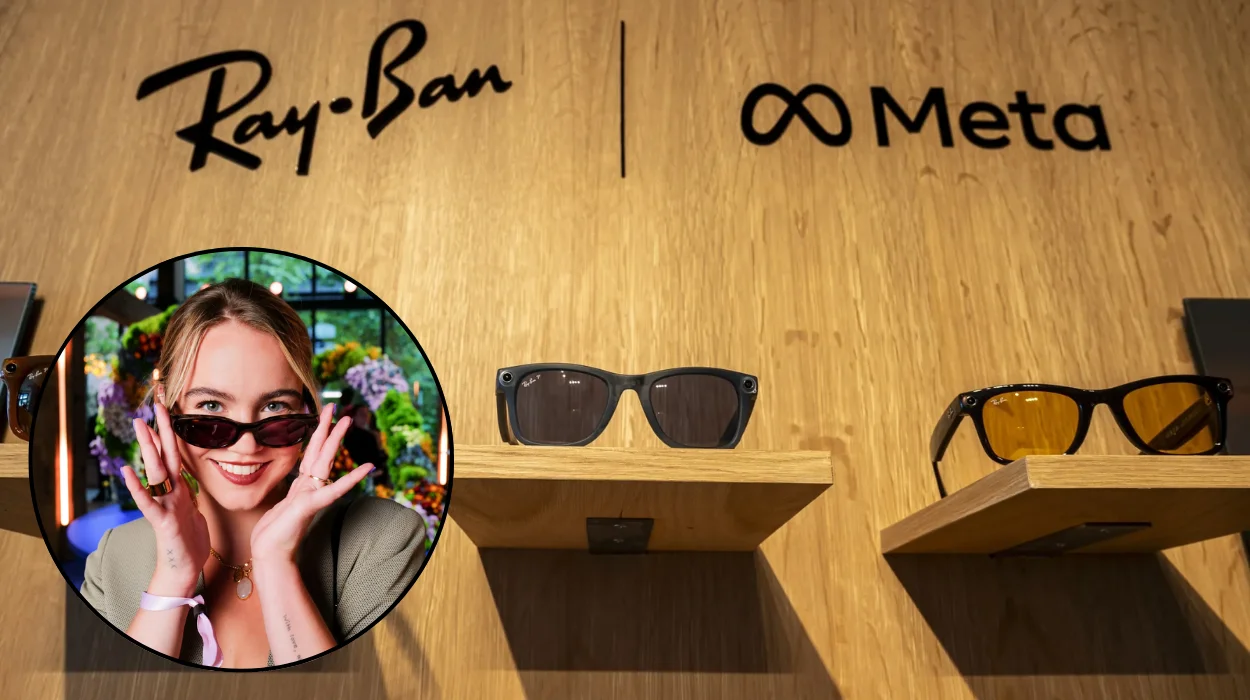
- According to rumours, sales of Meta’s Ray-Ban smartglasses exceeded 7 million pairs in 2025, making them the most popular wearable device globally.
- The advantages of the product include changes that are brought to photography, personal safety, and accessibility.
- Critics believe that the ability to film secretly makes these glasses more dangerous than smartphones with a camera because the device is not visible to the filmed person.
- Servaas, the Meta smartglasses user from The Hague, uses these glasses each day to capture photos and videos of his walks and bike rides.
- One time he had an unpleasant situation while visiting a government building when security officers stopped him because of concerns about being recorded.
- For Nikki, the blind woman from Devon, the smartglasses are “a real game-changer” as their AI recognises objects and situations in front of her.
- In Nikki’s opinion, critics who speak about privacy issues can make the technology unavailable to people with disabilities who need it desperately.
- Karen Walter, 84, from San Diego, used the glasses to see live subtitles; however, she faced difficulties in understanding what others were saying in noisy places when several people were talking.
- The woman from the West Midlands, Kiki, admits that cameras hidden in these glasses have increased her caution in public spaces.
- Pete, 44, from Northampton, admits that he is more worried about collecting data and the destination of the pictures than filming secretly.
- It is evident that users and critics admit the advantages of the technology but have different opinions concerning privacy and safety.
London (Britain Today News) August 06, 2026 – The debate over Meta’s Ray-Ban smartglasses is no longer limited to technology enthusiasts. With reportedly more than 7 million pairs sold in 2025, the devices are increasingly being worn in ordinary public spaces, turning a once experimental product into a visible part of everyday life.
- Key Points
- How Does the Technology Affect Everyday Users?
- Are Users Concerned About Privacy?
- Can Smartglasses Transform Accessibility?
- Do Live Captions Work Reliably?
- Why Do Some People Feel Unsafe Around the Glasses?
- Could Smartglasses Improve Personal Safety?
- Is Data Collection a Bigger Concern Than Filming?
- Should Stronger Safeguards Be Introduced?
- Can Regulation Keep Pace With Wearable AI?
- What Do Meta’s Smartglasses Mean for Public Trust?
- What Is the Future of Meta’s Smartglasses?
Meta’s smartglasses combine the appearance of conventional eyewear with a built-in camera, microphones, speakers and artificial intelligence features. Users can photograph and record what they see, ask the glasses questions, receive spoken responses and, in some circumstances, use accessibility functions such as object recognition and live captions.
That combination has created sharply different reactions. For some users, the glasses are a practical and discreet alternative to a phone. They can capture a moment without requiring the wearer to hold a device, while voice commands can make certain tasks easier and more immediate.
For others, the same features create serious concerns. A person standing near someone wearing the glasses may not know whether they are being filmed, photographed or analysed by an artificial intelligence system. Unlike a smartphone, the glasses can appear to be ordinary eyewear, making the presence of a camera less obvious.
The disagreement has become particularly intense because the glasses sit at the intersection of several sensitive issues. They are consumer electronics, but they can also function as cameras, recording devices, communication tools and accessibility aids. Their users may see them as life-changing, while people nearby may experience them as intrusive.
How Does the Technology Affect Everyday Users?
Servaas, who is based in The Hague in the Netherlands, wears his Meta smartglasses every day. He bought them mainly because of the built-in camera rather than the artificial intelligence functions.
He uses the glasses to photograph and film walks and bike rides. Instead of reaching for a mobile phone, he can record his surroundings while continuing to move naturally. For him, the experience is more immediate and engaging than traditional photography.
“It’s an immersive experience,”
Servaas says.
“I love everything tech and have done my whole life.”
The glasses allow him to document outdoor activities from his own perspective. That first-person viewpoint is one of the main attractions of wearable cameras. The wearer does not need to interrupt an activity, stop to take out a phone or hold a camera in front of their face.
However, Servaas also recognises that people may not realise they are being filmed. He says the camera is discreet enough that most people do not notice he is wearing smartglasses.
That discretion is central to the controversy. It helps users record moments naturally, but it can also make others feel vulnerable. A phone being raised in front of someone is usually easy to identify as a potential recording. A camera built into a frame of glasses can be far less obvious.
Servaas encountered this concern while attending an event in a government building. Security staff stopped him because they feared he might be recording. He was surprised by the reaction and did not believe the glasses automatically meant he was attempting to spy on anyone.
“For some reason, security didn’t understand. They were very scared of them [the glasses],”
He says.
“People said I should have expected that, but I didn’t agree with them because it’s not like I’m spying.”
His experience reflects a wider problem: even when a wearer has no intention of recording secretly, other people may not be able to determine that intention. The result can be uncertainty, suspicion and confrontation.
Are Users Concerned About Privacy?
Privacy remains one of the biggest questions surrounding Meta’s smartglasses. The glasses can gather images and audio from the wearer’s surroundings, while their artificial intelligence features may process information to answer questions or describe what is in front of the user.
Servaas says he understands that Meta has a strong interest in user data, but he has not been deterred from using the glasses. His own recordings, he explains, have mainly been made outdoors during walks and bike rides.
“I know Meta loves your data [but] I’m not worried about my privacy because I’ve only used them to record outside,”
he says.
His position illustrates why some users are comfortable with the technology. They may see their use as limited, practical and harmless. Recording a landscape, a cycling route or a personal experience may feel no different from using an action camera or a mobile phone.
Yet privacy concerns are not restricted to what the wearer records intentionally. People nearby may appear in the background without knowing it. A recording may also capture private conversations, personal information on signs or screens, or individuals who do not want to be included in a video.
The controversy has been intensified by allegations that workers employed by a Kenyan outsourcing company connected with Meta viewed private footage recorded on the glasses. The allegations have raised questions about who may access recorded material and what safeguards exist around it.
Even users who are not personally worried about privacy may therefore be asking a broader question: can individuals trust the companies operating these devices to handle their images and recordings responsibly?
Can Smartglasses Transform Accessibility?
For Nikki, a 59-year-old from Devon, the benefits of the glasses are much more significant than convenience. She has been blind since birth because of an inherited retinal disease and received the smartglasses as a Christmas present in 2024.
She describes the technology as “a real game-changer”. The glasses can respond to voice commands and provide information about objects or situations that she cannot visually identify.
Nikki recalls walking towards her village shop when she heard activity ahead of her. She asked the glasses to examine the scene and explain what was happening.
“I could hear something going on ahead of me as I was walking down to the village shop,”
She says.
“I said: ‘Hey Meta, look and tell me what’s in front of me.’ It told me there was a van unloading scaffolding.”
For Nikki, the value lies in gaining information about her surroundings at the moment she needs it. The glasses do not replace all forms of assistance, but they can provide an additional layer of awareness during daily activities.
“It’s things like that that I find absolutely amazing,”
She says.
Her experience highlights the potential of wearable artificial intelligence for people with visual impairments. A voice-controlled device that can describe objects, identify obstacles or provide environmental information may offer greater independence in certain situations.
Nikki also believes public criticism of smartglasses should take account of the people who depend on their accessibility functions. She acknowledges that privacy concerns are legitimate, but she questions why similar worries are not always directed at other recording technologies.
“What about dashcams? What about camera doorbells? What about action cameras like GoPros? People don’t complain about them,”
She says.
Her concern is that widespread criticism could make the glasses more difficult to use in public or lead to rules that do not distinguish between accessibility and casual recording.
“I kind of worry that if people start going on about privacy and safety, it will be harder for those of us who genuinely benefit from the glasses,”
Nikki says.
Do Live Captions Work Reliably?
The experience of Karen Walter, an 84-year-old from San Diego, shows that the accessibility benefits are not universal. Walter has lived with severe hearing loss for more than 20 years and purchased the glasses specifically because of their live-caption function.
She hoped the captions would make it easier to follow conversations in noisy environments and when several people were speaking. Even with advanced hearing aids, Walter says she struggles to understand speech unless the speaker is close and talks directly to her.
“Even with state-of-the-art hearing aids, I have a great deal of difficulty understanding what people are saying unless the person is very close to me and speaking directly to me,”
She says.
Her initial demonstration appeared promising. In a quiet Best Buy store, she tested the glasses with one staff member who was standing directly in front of her at a distance of about two feet. Under those controlled conditions, the captions worked well.
The problems emerged when she used the glasses in the situations for which she had bought them. Conversations involving several people and background noise proved much more difficult.
“I expected [the glasses] would be a great help in noisy environments and when I was trying to keep up with conversations involving more than two people,”
Walter says.
However, she says the feature failed when she tried it with groups ranging from three to seven people.
“I have tried the glasses when in a group of three up to a group of seven and the caption feature just doesn’t work,”
She says.
“There were too many people talking and too much surrounding noise.”
Walter’s experience demonstrates the gap that can exist between a product demonstration and everyday use. Technology may function effectively in a quiet environment with one speaker, but real conversations are often unpredictable. People interrupt one another, speak from different directions and talk over background noise.
For users who purchase the glasses primarily as an assistive tool, those limitations can be especially disappointing. The promise of greater participation in social situations may not match the reality of the device’s performance.
Why Do Some People Feel Unsafe Around the Glasses?
Kiki, from the West Midlands, does not believe discreet cameras should become normal in ordinary public settings. She describes the idea of cameras being built into familiar-looking eyewear as “pervasive”.
Her concerns are particularly focused on women and children, whom she believes may feel exposed when they cannot tell whether they are being recorded.
“If you try to take a picture with your phone, at least it’s pretty obvious,”
She says.
“With the glasses, you have no choice, as the camera is much harder to spot.”
The uncertainty has influenced how she behaves in public. When she sees someone wearing the glasses, she says she may wonder whether the person is looking at her through the camera or recording her without consent.
“When someone’s just looking at you through their glasses, it worries me,”
Kiki says.
She believes a wearer could activate the camera in a movement that appears entirely normal, such as adjusting their hair or touching a hat. That possibility has made her more cautious in public spaces.
“I imagine taking images secretly is far easier [than on phones],”
She says.
“You could just pretend to adjust your hair or cap, and press the button in a passing gesture.”
Kiki recalls seeing someone wearing the glasses in a café and moving away because she felt uncomfortable. Her reaction shows how the devices may affect people who never use them themselves. The issue is not simply whether a recording takes place; it is also whether people feel they can identify and respond to a potential recording.
She accepts that smartglasses could provide legitimate benefits, including helping people with disabilities. She also recognises that workers may use them for protection in difficult situations.
“For accessibility, absolutely,”
She says.
“But what bothers me is regulations often lag so far behind technology.”
Could Smartglasses Improve Personal Safety?
Although Kiki is uneasy about the glasses, she can also see circumstances in which a built-in camera could help people feel safer. She points to employees who work alone in shops late at night and may face harassment or threatening behaviour.
In such situations, the ability to take a photograph quickly could help preserve evidence. A wearer might not need to reach for a phone, which could be difficult or risky during a confrontation.
Kiki says people working alone could feel safer if they were able to take a picture of someone harassing them. This potential benefit complicates the argument for strict restrictions.
A device that can be used to record strangers without their knowledge may also allow vulnerable people to document abuse, intimidation or dangerous behaviour. The same feature can therefore be viewed as either a threat to privacy or a tool for protection, depending on the circumstances.
That tension makes simple rules difficult. A complete ban on recording would prevent some beneficial uses, while a completely permissive approach could leave members of the public with little control over how they are filmed.
The challenge is to establish clear expectations around consent, public recording and the responsibilities of the wearer. Users may need to understand when recording is inappropriate, while businesses and public venues may decide whether the glasses can be worn on their premises.
Is Data Collection a Bigger Concern Than Filming?
Pete, 44, from Northampton, is less troubled by the physical presence of a camera than by the possibility that artificial intelligence-powered glasses could collect and distribute large amounts of personal information.
He says he has always supported technological progress, rejecting the idea that his concerns are based on an automatic fear of innovation.
“I’m not an old man shaking my fist at the clouds,”
He says.
“I’ve been onboard with technological advancement all my life, but with AI and Meta glasses, I’m drawing the line.”
For Pete, the critical issue is what happens after an image has been captured. He wants to know who receives the material, how it is stored, whether it is analysed and whether it could be sold or shared.
“I don’t know who’s getting the pictures at the end and what they’re doing with them,”
He says.
“Whether they’re not doing anything or they’re selling it to someone, and then what those people are doing with it.”
His concerns reflect a broader distrust of technology companies that gather personal data. A user may believe they are simply taking a photograph, but the device may also be connected to cloud services, artificial intelligence systems and accounts that process or retain information.
For critics such as Pete, the issue is not just whether a person is secretly filmed in a café or on a street. It is whether society is becoming accustomed to devices that continuously observe, interpret and store details about the world around them.
Should Stronger Safeguards Be Introduced?
Pete accepts that the glasses could be transformative for blind people and other disabled users. He does not argue that the technology should be abandoned. Instead, he believes stronger safeguards are needed before such devices become a routine part of public life.
“I would like things like this to be of benefit to us,”
He says.
“I just don’t trust it.”
His position is shared in different ways by both users and non-users. Nikki wants people who rely on accessibility functions to retain access to the technology. Kiki wants stronger protection for people who may be recorded without consent. Walter wants manufacturers to ensure that advertised accessibility functions work in realistic environments. Servaas wants to use the glasses without being treated automatically as a spy.
These positions are not entirely incompatible. The debate is not necessarily between people who support technology and people who oppose it. Instead, it concerns the conditions under which the technology should be used.
Possible safeguards could include clearer indicators showing when recording is active, stronger controls over data storage, improved explanations of how images are processed and clearer rules for use in schools, workplaces, shops and government buildings.
The glasses already contain a recording light, but concerns remain about whether people nearby can see or understand it. The more ordinary the design becomes, the more difficult it may be for bystanders to distinguish smartglasses from conventional eyewear.
Can Regulation Keep Pace With Wearable AI?
Kiki’s warning that regulation often lags behind technology captures one of the central challenges raised by the glasses. Products can enter the market quickly, while laws and social norms may take years to adapt.
Existing expectations around cameras were largely shaped by smartphones, security cameras and dedicated recording equipment. Smartglasses add another layer because the recording device is worn on the face and can be used while the wearer appears to be looking normally at the world.
This creates uncertainty in places where people may reasonably expect a degree of privacy. A café, workplace, medical setting or private event may have different rules from a public street, but users and bystanders may not always know what applies.
Accessibility adds another complication. If regulations are too broad, they may prevent blind or visually impaired users from using features that help them navigate their surroundings. If rules are too weak, people may have little protection from unwanted recording.
The experiences of the users interviewed show why regulation must account for different circumstances. A person recording a bike ride, a blind user asking what is ahead, a hearing-impaired person seeking captions, and a worker documenting harassment are not using the glasses for the same purpose.
Any future safeguards will need to distinguish between these uses without creating rules that are impossible to understand or enforce.
Explore More about Technology:
Leicester Square, please guv’: Self-driving taxis cleared for London streets ‘later this summer’
UK Government Investments Suffers Major Data Breach Exposing Officials’ Details
What Do Meta’s Smartglasses Mean for Public Trust?
The success of Meta’s Ray-Ban smartglasses suggests that wearable cameras and artificial intelligence are becoming more familiar to consumers. As sales rise, members of the public are likely to encounter the glasses more frequently.
That increased visibility could eventually reduce some of the suspicion surrounding them. People may become more familiar with the design, the recording indicator and the situations in which the glasses are commonly used.
However, normalisation could also create new concerns. If people become accustomed to cameras being present everywhere, they may feel pressure to accept recording even when they are uncomfortable with it. The social expectation may shift from asking for consent to assuming that filming is unavoidable.
The experiences of Servaas, Nikki, Walter, Kiki and Pete show that the glasses do not have one single social meaning. They can represent freedom, independence and creativity for one person, while suggesting surveillance, uncertainty and loss of control to another.
The future of the technology may therefore depend not only on battery life, artificial intelligence performance or sales figures, but also on whether users and manufacturers can build public trust.
For now, the disagreement remains clear. Supporters see smartglasses as powerful tools for photography, accessibility and safety. Critics see devices that could make nonconsensual filming and data collection easier. Between those positions lies a growing demand for transparency, reliable features and safeguards that protect both the wearer and everyone around them.
What Is the Future of Meta’s Smartglasses?
Meta’s smartglasses are likely to remain controversial as long as their benefits and risks develop together. Their ability to describe surroundings, provide captions, capture images and respond to voice commands gives them practical uses that conventional glasses cannot offer.
At the same time, the discreet design raises questions that cannot be answered by technology alone. People need to know when they are being recorded, how data is handled and what rights they have in spaces where smartglasses are present.
The users interviewed offer no single verdict. Servaas considers the glasses an immersive way to record the world. Nikki regards them as an important accessibility tool. Walter believes the live-caption feature has not met her needs. Kiki feels more wary in public, while Pete remains concerned about trust and data collection.
Their accounts suggest that the future debate will not be about whether smartglasses are simply good or bad. It will focus on who benefits, who carries the risks and what responsibilities should apply when a camera and artificial intelligence system are worn in public.
As the technology becomes more common, the distinction between personal convenience and public privacy will become increasingly difficult to ignore. The success of Meta’s smartglasses may ultimately depend on whether the company and its users can show that innovation does not have to come at the expense of consent.