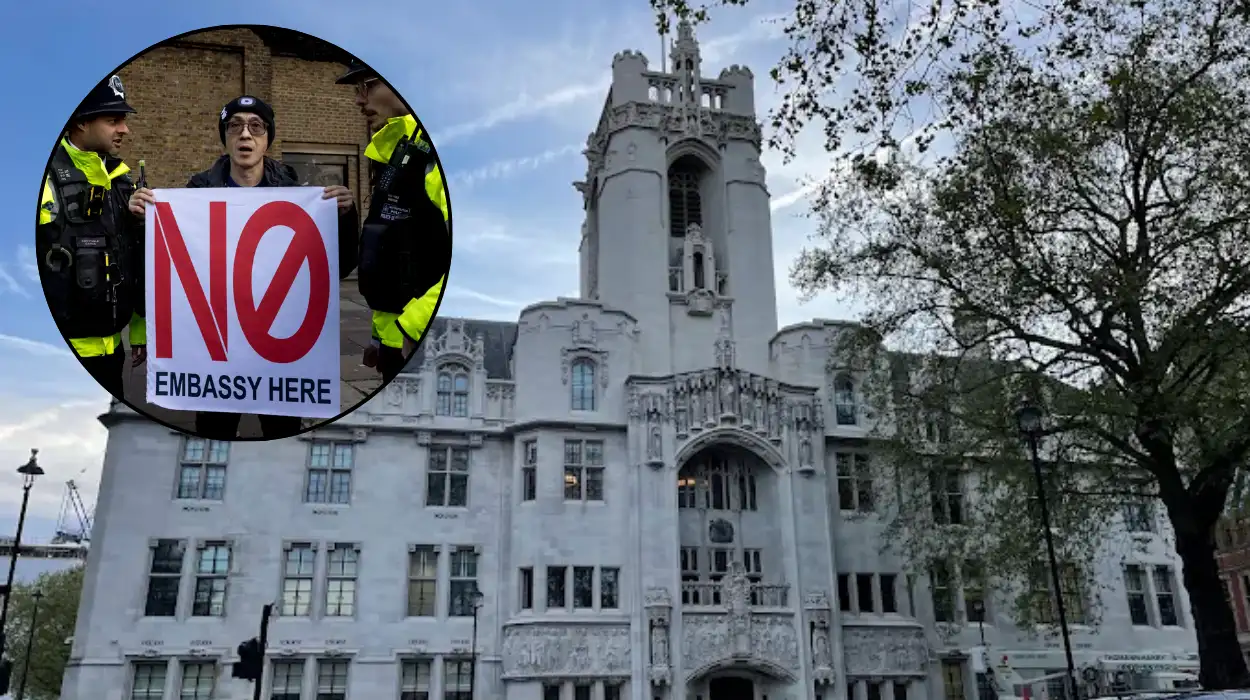
Key Points
- A British High Court has dismissed a legal challenge against planning permission granted for China’s proposed new “mega” embassy in central London.
- Two judges ruled remotely that the claims brought by local residents and businesses were “dismissed”, finding that the housing minister and Tower Hamlets council had acted lawfully.
- The Royal Mint Court Residents Association has said it will seek permission to appeal, with hopes of taking the case to the UK Supreme Court.
- The group has relaunched crowdfunding efforts to cover further legal costs.
- Campaigners argue the embassy, sited beside the Tower of London, would heighten risks of terrorism, espionage and harassment of dissidents.
- China purchased the former Royal Mint site in 2018 for a reported US$327 million (S$420.23 million).
- Planning permission was granted in January under Sir Keir Starmer’s government, shortly before his visit to Beijing.
- At 235,000 sq ft, the site is expected to become the largest embassy complex in Britain by area, and potentially the largest Chinese embassy anywhere in Western Europe.
- Unredacted planning documents previously indicated the presence of a “concealed chamber” and “secret rooms” beneath the site, near sensitive underground communications cables.
- The government has said security risks associated with the development are being “appropriately managed”.
Central London (Britain Today News) July 31, 2025 – A British court has thrown out a legal challenge against planning permission for a new Chinese “mega” embassy in central London, in a ruling delivered on Thursday, though residents opposed to the contentious development have vowed to continue fighting the decision through the courts.
- Key Points
- What Did The High Court Rule On The Chinese Embassy Case?
- What Did Luke Pollard Say About The Ruling?
- Why Was Planning Permission Originally Delayed?
- How Large Will The New Chinese Embassy Be?
- What Security Concerns Have Been Raised About The Embassy?
- What Has The British Government Said About Security Risks?
- What Happens Next In The Legal Dispute?
The Royal Mint Court Residents Association, a campaign group representing local residents and businesses, had taken its case to the High Court, arguing that the vast new embassy site, positioned next to the Tower of London, would increase the risk of a terror attack, as well as raising the prospect of espionage and the harassment of dissidents and protesters on British soil.
Following a hearing held in July, two judges ruled remotely that the residents’ “claims are… dismissed”, concluding that the housing minister and the London borough of Tower Hamlets had acted lawfully when they granted planning permission for the project in January.
What Did The High Court Rule On The Chinese Embassy Case?
The High Court’s ruling centred on whether the process by which planning permission was granted for the embassy complied with UK law. The two presiding judges found no fault in the decision-making of either the housing minister or Tower Hamlets council, both of whom had been named in the residents’ legal challenge.
The judgment represents a significant, though not necessarily final, victory for Beijing in its long-running effort to establish a new diplomatic compound on the banks of the Thames. The ruling clears one of the last major legal obstacles standing between China and construction of the embassy, although opponents have made clear that Thursday’s decision will not be the end of the matter.
Will Campaigners Appeal The Decision To The Supreme Court?
The Royal Mint Court Residents Association confirmed on Thursday that it intends to apply for permission to appeal against the ruling, with the ultimate ambition of having the case heard by the UK Supreme Court.
The group also said it had relaunched its crowdfunding campaign in order to finance the continuing legal costs associated with the fight, signalling that opponents of the embassy are preparing for a prolonged legal battle rather than accepting Thursday’s outcome as final.
What Did Luke Pollard Say About The Ruling?
Luke Pollard, who heads the Inter-Parliamentary Alliance on China, issued a strongly worded statement following the judgment, making clear that campaigners regarded the court’s decision as merely one stage in a longer dispute rather than a conclusion.
“Beijing thinks this judgment is the final word. It isn’t. The appeal is already in the works,”
Pollard said.
He went on to warn that opponents of the embassy had no intention of backing down, framing the dispute in terms of sovereignty over the British capital.
“If they expect us to roll over and allow our own capital to become a CCP power centre, they have completely misjudged the strength of opposition to this mega embassy,”
Pollard said.
His remarks reflect a broader unease among some parliamentarians and campaigners about the scale and symbolism of the proposed development, situated as it is within sight of one of London’s most recognisable historic landmarks.
Where Is The Proposed Chinese Embassy Site Located?
The site earmarked for the new embassy is the former Royal Mint Court, positioned directly beside the Tower of London in the heart of the capital. Beijing purchased the site in 2018, paying a reported US$327 million, equivalent to approximately S$420.23 million.
The location holds considerable historical significance, having previously served as the home of the Royal Mint, the body historically responsible for producing the United Kingdom’s coinage. Its proximity to the Tower of London, one of the country’s most visited heritage sites, has added to the sensitivity surrounding the proposed redevelopment.
Why Was Planning Permission Originally Delayed?
China’s plans to relocate its embassy to the Royal Mint Court site have faced repeated delays since diplomatic consent was first granted. The initial diplomatic go-ahead came from Boris Johnson during his time as foreign secretary, but the subsequent planning process proved far more protracted.
Fierce opposition from nearby residents, human rights organisations and critics of China’s ruling Communist Party repeatedly held up progress on the scheme, much to the frustration of the Chinese government, which has pressed for the project to be approved and completed.
It was not until January this year that the plan was finally granted planning permission, under the government of Sir Keir Starmer. The approval came shortly before the Prime Minister undertook a visit to Beijing, a timing that attracted criticism from opposition politicians, human rights groups, and even from United States President Donald Trump.
How Large Will The New Chinese Embassy Be?
According to planning documents published by the British government, the projected floor space of the new embassy will exceed 50,000 square metres, spread across a site totalling 235,000 sq ft.
This scale would make the Royal Mint Court development London’s largest embassy by area, surpassing the new United States embassy, a 12-storey building situated approximately 5.1km to the south-west.
The proposed complex would also become the largest Chinese embassy anywhere in Western Europe and is likely to be the largest embassy belonging to any nation within the wider region, based on floor space alone.
What Security Concerns Have Been Raised About The Embassy?
Security concerns have formed a central plank of opposition to the embassy throughout the planning process. Previously published, unredacted planning documents indicated that Beijing’s plans included the construction of a “concealed chamber” among a number of “secret rooms” beneath the embassy building.
These below-ground spaces were reported to be positioned close to sensitive underground communications cables that run beneath the site, fuelling concerns among critics that the location could be used for intelligence-gathering purposes rather than purely diplomatic functions.
Explore More about London:
Best Spots In London To Watch August’s Rare Solar Eclipse
TfL Expands Routemaster ‘Ding-Ding’ Bell Trial After Safety Success
What Has The British Government Said About Security Risks?
Then Security Minister Dan Jarvis addressed these concerns directly when questioned by MPs, telling Parliament that “any risks are being appropriately managed.”
Jarvis referenced assessments made by the heads of Britain’s intelligence agencies, stating that they had assisted in developing a “range of measures” designed to manage any risks associated with the embassy’s construction and operation.
He further argued that the development carried certain security benefits, noting that Beijing would consolidate its seven existing London sites into a single location as part of the move, a change that he said would bring “clear security advantages” by reducing the number of separate Chinese diplomatic and consular premises scattered across the capital.
What Happens Next In The Legal Dispute?
With the High Court having dismissed the residents’ claims, the immediate legal focus now shifts to whether the Royal Mint Court Residents Association will be granted permission to appeal. Should permission be granted, the case could ultimately be heard by the UK Supreme Court, extending a dispute that has already run for several years since Beijing first acquired the site in 2018.
In the meantime, the group’s renewed crowdfunding drive suggests campaigners are bracing for further legal expenses, while ministers and Chinese officials will be hoping that Thursday’s ruling paves the way for construction to finally proceed after years of planning wrangles and political controversy.
The case continues to attract close attention from parliamentarians, human rights campaigners and diplomatic observers alike, given its implications for UK-China relations, questions of sovereignty over sensitive land in central London, and the broader debate over how Britain balances diplomatic ties with Beijing against domestic security and civil liberties concerns.
For now, the ruling stands as a legal win for the British government and Chinese authorities, even as opponents make clear that Thursday’s judgment will not deter them from pursuing every available avenue to block the embassy’s construction.