Key Points
- London is set to witness the largest partial solar eclipse in over 25 years on Wednesday, 12 August 2026.
- Around 90% of the sun will be obscured by the moon during the peak of the event.
- The eclipse will begin at 6:17pm, peak at 7:13pm, and conclude by 8:06pm for those watching from London.
- Cornwall remains the best viewing location in the UK, with areas such as Land’s End and The Lizard Peninsula expected to see up to 95% coverage.
- The next total solar eclipse visible from the UK will not occur until 2090, a 64-year wait.
- Royal Museums Greenwich has issued strict safety guidance, warning against looking directly at the sun without appropriate filters.
- Seven London vantage points have been identified as ideal locations to watch the eclipse: Greenwich Park, Telegraph Hill, Primrose Hill, Parliament Hill, Alexandra Palace and Crystal Palace.
- High ground with unobstructed westward views is recommended for the best experience of the celestial event.
London (Britain Today News) July 29, 2026 – Sky watchers across London are preparing for a rare celestial spectacle next month, with the capital set to experience the largest partial solar eclipse in over a quarter of a century. Although Londoners will not be treated to the full totality experienced in Greenland, Iceland and northern Spain, the event on Wednesday, 12 August will still see approximately 90% of the sun obscured by the moon, creating a striking natural phenomenon visible across the city.
- Key Points
- What Exactly Is A Solar Eclipse?
- Why Is This Eclipse Considered So Rare?
- Where Is The Best Place In The UK To See The Eclipse?
- What Time Will The Solar Eclipse Begin In London?
- How Can Londoners Watch The Eclipse Safely?
- What Makes Telegraph Hill A Quieter Alternative?
- What Views Can Be Expected From Parliament Hill?
- Why Was Alexandra Palace Chosen As A Prime Viewing Spot?
- What Should Eclipse Watchers Keep In Mind On The Day?
What Exactly Is A Solar Eclipse?
A solar eclipse is a celestial event that occurs when the sun, moon and Earth fall into precise alignment. According to Royal Museums Greenwich, which includes the historic Royal Observatory,
“a solar eclipse occurs when the Earth, moon and sun align. The moon passes in front of the sun and blocks its light, casting a small shadow on Earth.”
This alignment, though relatively rare, produces a dramatic dimming of daylight and a partial or total obscuring of the sun depending on the observer’s location on Earth. For London, the August event will fall firmly into the partial category, though the scale of coverage still makes it one of the most notable astronomical events to grace the capital’s skies in decades.
Why Is This Eclipse Considered So Rare?
The scarcity of this event is what has generated significant public interest. The observatory has confirmed that it will be a 64-year wait until 2090 for the next total solar eclipse visible from the UK, underlining just how valuable an opportunity this August presents for stargazers, families and casual observers alike.
The last comparable total eclipse experienced in the UK took place 27 years ago in 1999, when Cornwall became the epicentre of national attention. While this year’s event will not replicate that totality for London, the scale of the partial eclipse still marks it as the most significant of its kind to be witnessed in the capital for more than 25 years.
Where Is The Best Place In The UK To See The Eclipse?
Just as was the case in 1999, Cornwall is forecast to be the best place in the entire UK to observe the eclipse. Spectators gathering at popular coastal locations such as Land’s End and The Lizard Peninsula are expected to be treated to approximately 95% coverage of the sun, making the south-westernmost tip of England the prime national destination for eclipse chasers this year.
However, for the millions of Londoners unable to travel to the coast, the capital’s hills and open spaces are still expected to provide impressive vantage points from which to observe the spectacle unfold.
What Time Will The Solar Eclipse Begin In London?
According to the timings issued for the capital, this year’s solar eclipse will begin at 6:17pm on 12 August for those based in London. The eclipse is then expected to reach its height, with maximum coverage of the sun, at 7:13pm. The full event will last approximately one hour and 49 minutes, drawing to a close by 8:06pm as the moon moves away from its position in front of the sun.
Given the evening timing, many of the capital’s best vantage points are also expected to double as prime sunset-watching locations, adding an extra layer of visual drama as the eclipse coincides with the descending sun in the western sky.
How Can Londoners Watch The Eclipse Safely?
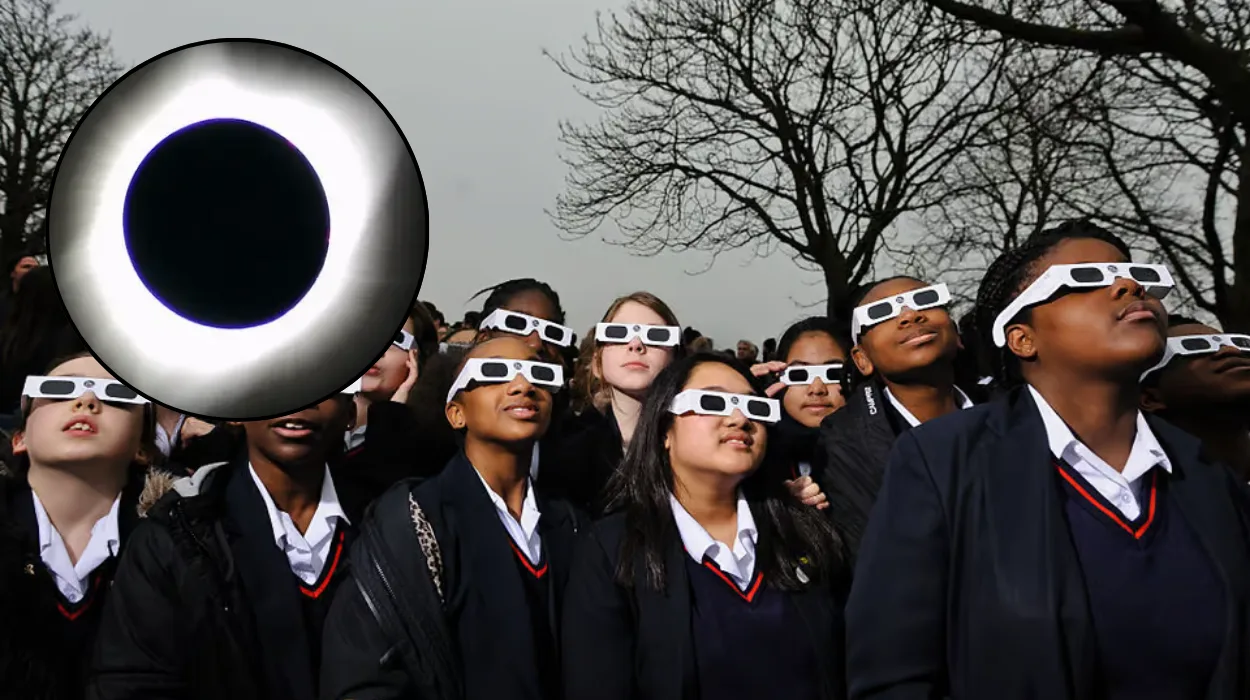
Safety remains a paramount concern for anyone hoping to catch a glimpse of the eclipse. The Royal Observatory has been explicit in its guidance, stating that a person should never look directly at the sun without the appropriate filters. The observatory has also published detailed information on how to watch the event safely, recommending certified solar viewing glasses or pinhole projection methods rather than the naked eye, sunglasses or standard camera lenses, none of which offer adequate protection from the sun’s harmful rays.
Anyone planning to photograph the eclipse is similarly advised to use solar filters designed specifically for cameras and telescopes, as pointing unfiltered equipment towards the sun can cause permanent damage to both eyesight and camera sensors.
Is Greenwich Park The Best Vantage Point In London?
Greenwich Park stands out as arguably the most fitting location in London to watch the eclipse, given its historic ties to astronomy. With the Royal Observatory and the Prime Meridian line situated on one side, and sweeping views of the London skyline on the other, this beauty spot in the south-east of the city is expected to combine a genuinely impressive vantage point with a lively, celebratory atmosphere.
Positioned to offer a wide vista as the sun descends in the west, Greenwich Park is likely to attract large crowds of both casual observers and dedicated astronomy enthusiasts on the evening of 12 August.
What Makes Telegraph Hill A Quieter Alternative?
For those based in south-east London who would prefer to avoid the crowds expected at Greenwich, Telegraph Hill offers a compelling alternative. Situated near Nunhead, this spot still provides that valuable east-to-west sightline required to track the eclipse’s progress, while sitting slightly further away from the tourist-heavy hub surrounding the Royal Observatory.
Its relatively local, community feel makes it an appealing option for residents seeking a more relaxed setting from which to watch the moon’s shadow pass across the sun.
Why Is Primrose Hill A Popular Choice For Eclipse Watchers?
In north London, Primrose Hill is expected to be one of the most popular gathering points for the event. Offering sweeping views over London Zoo and well beyond towards the city skyline, this section of Regent’s Park has long been a favourite among Londoners looking to take in the capital’s celestial and meteorological displays, and is expected to draw significant numbers eager to catch a glimpse of the powerful solar display.
What Views Can Be Expected From Parliament Hill?
Rising to 98 metres, Parliament Hill is recognised as one of London’s highest natural points, offering panoramic views across the entire city skyline. Visitors gathering on Hampstead Heath on 12 August will be able to contrast man-made brilliance with natural beauty, taking in the effect of the eclipse while also picking out major London landmarks including St Paul’s Cathedral and the Gherkin on the horizon.
The combination of elevation and clear sightlines makes Parliament Hill one of the standout locations for those hoping to capture both the eclipse and the wider London cityscape in a single view.
Explore More about London:
TfL Expands Routemaster ‘Ding-Ding’ Bell Trial After Safety Success
British Airways Flight ‘Seconds From Disaster’ Over London
Why Was Alexandra Palace Chosen As A Prime Viewing Spot?
Slightly further out from central London, Alexandra Palace sits atop a hill between Muswell Hill and Wood Green. This elevated position was famously chosen by the BBC when it first transmitted television signals from the site in 1936, owing to its height above the surrounding landscape.
That same natural advantage is expected to make it a fine location from which to watch the partial solar eclipse, with the palace’s elevated perch sitting well above the tree canopy line and offering clear, unobstructed views of the sky over London.
Does Crystal Palace Offer A Suitable Vantage Point?
The high elevation of Crystal Palace, situated on the Norwood Ridge, is expected to provide an open, elevated view towards the west, precisely where the eclipse will reach its peak. The upper Italian terraces of this south London landmark, along with the open grass areas of its surrounding park, should offer visitors plenty of space to find a clear spot from which to watch the sun and moon align, without the interference of tall buildings blocking the view.
What Should Eclipse Watchers Keep In Mind On The Day?
With several of London’s most popular outdoor spaces expected to draw large crowds on the evening of 12 August, those planning to attend any of the locations listed are advised to arrive early to secure a clear, unobstructed sightline towards the western sky. Weather conditions will also play a significant role in visibility, as cloud cover could obscure the event regardless of vantage point.
Given the rarity of the occasion, and with the next total eclipse visible from the UK not due until 2090, this August’s partial eclipse represents a genuinely uncommon opportunity for Londoners to witness a dramatic astronomical event without leaving the city.