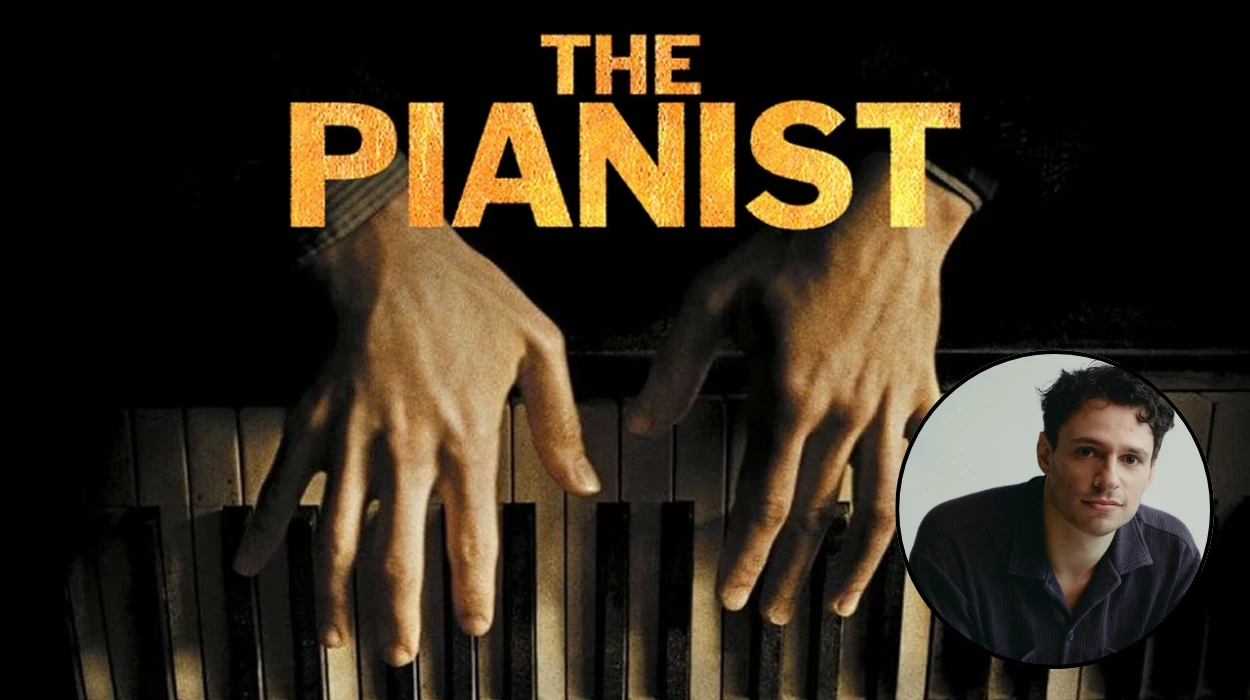
Key Points
- Daniel Krikler will play Wladyslaw Szpilman in the London production of The Pianist
- The production is based on Szpilman’s memoir and the 2002 Academy Award-winning film
- Limited engagement at Mayflower Studios in Southampton runs September 9-12, 2026
- London performances at Park Theatre begin October 15 and run through November 28, 2026
- The musical features Szpilman’s own compositions with new arrangements by Simon Lee
- Written and directed by Thom Southerland, the show follows Szpilman’s life as Holocaust survivor and celebrated composer
- Two-time Grammy nominee Carol Connors, Grammy-nominee Michael Ruff, and Szpilman’s son Andreas Szpilman among the songwriters
- Simon Lee provides orchestrations; Karen Bruce handles choreography and movement direction
- Set and video design by Andrzej Goulding; lighting by Robbie Butler; sound by Gareth Tucker for Autograph Sound
- Costume design by Jonathan Lipman; musical direction by Malcolm Forbes-Peckham
- Casting by Ginny Schiller with casting assistance by Ben Armstrong
- DEM Productions provides executive producing and general management
- Krikler expresses honor in bringing Szpilman’s life to stage through his own compositions
- Southerland emphasizes the humanity and compassion at the story’s heart
- The Szpilman family collaborated closely with the production team
London (Britain Today News) June 11, 2026 – Daniel Krikler is set to star in the London production of The Pianist, bringing to stage for the first time the extraordinary story of Wladyslaw Szpilman, whose memoir became the basis for both the new musical and Robert Gliński’s 2002 Academy Award-winning film of the same name. The production will play a limited engagement at Mayflower Studios in Southampton from September 9-12 before making its London bow at Park Theatre from October 15 through November 28, 2026.
- Key Points
- What Makes Daniel Krikler’s Role in The Pianist Significant?
- When and Where Will The Pianist Perform in 2026?
- Who Created The Pianist Stage Production?
- Why Does Szpilman’s Story Continue Resonating Across Generations?
- What Songs and Writers Feature in The Pianist?
- How Did the Szpilman Family Collaborate With the Production?
- What Does Daniel Krikler Say About Playing Szpilman?
- Which Creative Team Members Support The Pianist Production?
- What Historical Context Surrounds Szpilman’s Survival Story?
- How Does The Pianist Address Contemporary Social Issues?
- What Can Audiences Expect From The Pianist Experience?
- Why Is This The First Stage Production of Szpilman’s Story?
What Makes Daniel Krikler’s Role in The Pianist Significant?
As reported by the official Playbill announcement, Daniel Krikler will play Wladyslaw Szpilman, a Polish Jew who survived the Holocaust and became one of Poland’s most celebrated composers and pianists. The musical brings Szpilman’s story to the stage for the first time, featuring his own compositions with new music arrangements by Simon Lee, marking a groundbreaking theatrical presentation of this historically significant narrative.
The significance of Krikler’s casting extends beyond mere performance. According to the production details, The Pianist represents the first time Szpilman’s memoir has been transformed into a stage musical, creating a unique opportunity for audiences to experience the composer’s own music alongside his extraordinary survival story. Simon Lee’s orchestrations will bring Szpilman’s compositions to life with phenomenal live musicians, creating an authentic musical experience that celebrates the composer’s artistic legacy.
When and Where Will The Pianist Perform in 2026?
The production schedule reveals a carefully planned trajectory for The Pianist‘s British debut. As reported in the Playbill coverage, the show will play a limited engagement at Mayflower Studios in Southampton from September 9-12, 2026, providing an important pre-London testing ground for the production. This Southampton engagement serves as a crucial preview before the show’s main London presentation.
Following the Southampton run, performances will begin at London’s Park Theatre on October 15, 2026, with the production scheduled to run through November 28, 2026. This limited engagement of approximately 44 days at Park Theatre indicates the production’s special nature as a focused theatrical event rather than an open-running show. The Park Theatre, located in North London’s Crouch End area, has become known for hosting innovative and critically acclaimed productions, making it an fitting venue for The Pianist‘s London debut.
Who Created The Pianist Stage Production?
Thom Southerland serves as both writer and director of The Pianist, bringing his extensive experience in musical theatre to this emotionally charged production. As reported by Playbill, Southerland expressed deep personal connection to the material, stating:
“The Pianist is a story that has lived with me for many years, and I feel deeply honored to be bringing it to the stage.”
Southerland’s vision for the production emphasizes the humanity that shines through Szpilman’s extraordinary journey of survival. According to his press statement,
“At its heart is Wladyslaw Szpilman’s extraordinary journey of survival, but what moves me most is the humanity that shines through the darkest of circumstances. It is a story about compassion, courage, and the moments of kindness that can change the course of a life.”
The creative team extending beyond Southerland includes Simon Lee, who provides both new music arrangements and orchestrations for Szpilman’s compositions. Karen Bruce handles choreography and movement direction, while Andrzej Goulding designs both set and video elements. Robbie Butler creates the lighting design, and Gareth Tucker provides sound design for Autograph Sound. Jonathan Lipman designs costumes, and Malcolm Forbes-Peckham serves as musical director with Josh Whatsize as assistant director.
Why Does Szpilman’s Story Continue Resonating Across Generations?
The historical significance of Wladyslaw Szpilman’s story forms the foundation of The Pianist‘s enduring relevance. As Thom Southerland explained in his press statement,
“As we prepare to share The Pianist with audiences, I am reminded of why this story continues to resonate across generations. In a world that can often feel divided, it reminds us of the resilience of the human spirit and the power of art to sustain us, connect us, and, at times, save us.”
Szpilman’s memoir provides the basis for both the stage production and the critically acclaimed 2002 film, creating a multi-layered artistic legacy. The musical distinguishes itself by featuring Szpilman’s own compositions, allowing audiences to experience the composer’s music directly rather than through interpretation alone. This approach creates an authentic connection between Szpilman’s artistic voice and contemporary audiences.
Southerland emphasizes the universal lessons embedded in Szpilman’s experience:
“I hope audiences are moved not only by what Szpilman endured, but by what he created, and by the enduring belief that even in the darkest moments, humanity and beauty can prevail.”
The production serves as both historical documentation and artistic celebration, honoring Szpilman’s dual identity as Holocaust survivor and celebrated musician.
What Songs and Writers Feature in The Pianist?
The musical’s song roster includes contributions from multiple acclaimed writers, creating a diverse musical landscape that supports Szpilman’s narrative. As documented in the Playbill production details, the show features songs from two-time Grammy nominee Carol Connors, David Batteau, Wendy Lands, Jim Gillard, Grammy-nominee Michael Ruff, Marcy Heisler, and notably, Szpilman’s son Andreas Szpilman.
This inclusion of Andreas Szpilman among the songwriters creates a powerful familial connection to the production, allowing the composer’s son to contribute artistically to telling his father’s story. The combination of Szpilman’s own compositions with new songs from established writers creates a rich musical tapestry that supports the narrative’s emotional depth.
Simon Lee’s role extends beyond arrangement to include full orchestrations, ensuring that Szpilman’s compositions are presented with professional musical sophistication. The production’s emphasis on “phenomenal live musicians and orchestrations” indicates a commitment to musical authenticity and quality that supports the dramatic narrative.
How Did the Szpilman Family Collaborate With the Production?
The collaboration between the production team and the Szpilman family represents a crucial element of the show’s authenticity and ethical approach. As Thom Southerland stated in his press announcement,
“Throughout this process, it has been a genuine privilege to collaborate with the Szpilman family. Their trust in us to tell Wladyslaw’s story is something I carry with great responsibility, and their insight has been invaluable in helping us bring him to life not only as a survivor, but as an artist, a father, and a man whose music was inseparable from who he was.”
This family collaboration ensures that Szpilman is portrayed with dignity and accuracy, honoring both his survival experience and his artistic legacy. The inclusion of Andreas Szpilman as a songwriter demonstrates the family’s active participation in the creative process, creating a multi-generational artistic contribution to telling their father’s story.
The production’s responsibility to the Szpilman family extends beyond mere consultation to genuine creative partnership, with Southerland describing the family’s insight as “invaluable” in achieving authentic representation of Szpilman’s complete identity.
What Does Daniel Krikler Say About Playing Szpilman?
Daniel Krikler’s personal connection to the role reveals his deep commitment to honoring Szpilman’s legacy. As reported in the Playbill announcement, Krikler shares in his press statement:
“I couldn’t be more honored and excited to be bringing Wladyslaw’s life to the stage, especially in a way that truly celebrates his own compositions through phenomenal live musicians and orchestrations.”
Krikler’s statement emphasizes two crucial elements: the honor of representing Szpilman’s life and the significance of celebrating Szpilman’s own compositions through live musical performance. This approach distinguishes the stage production from other adaptations by prioritizing the composer’s authentic musical voice.
Krikler further explains the story’s broader significance:
“As well as being a timely reminder of what happens when we dehumanise a particular section of society, Szpilman’s story demonstrates the true universality and power of music.”
This statement connects Szpilman’s historical experience to contemporary concerns about dehumanization while emphasizing music’s universal power to transcend division and create connection.
Which Creative Team Members Support The Pianist Production?
The production’s extensive creative team demonstrates the complexity and professional scope of The Pianist. Beyond the primary creator Thom Southerland, the team includes Simon Lee for orchestrations, Karen Bruce for choreography and movement direction, Andrzej Goulding for set and video design, Robbie Butler for lighting design, and Gareth Tucker for sound design at Autograph Sound.
Jonathan Lipman provides costume design, bringing visual authenticity to the production’s historical setting. Malcolm Forbes-Peckham serves as musical director, working alongside Krikler and the ensemble to ensure musical excellence. Josh Whatsize provides assistant direction, supporting Southerland’s overall directorial vision.
The casting team includes Ginny Schiller as principal casting director with Ben Armstrong providing casting assistance, ensuring that all performers meet the production’s artistic standards. DEM Productions handles executive producing and general management, providing the organizational infrastructure necessary for the production’s successful execution.
What Historical Context Surrounds Szpilman’s Survival Story?
Wladyslaw Szpilman’s experience as a Holocaust survivor forms the historical foundation of The Pianist. As a Polish Jew who survived the Holocaust, Szpilman witnessed and endured the systematic dehumanization and destruction of Jewish communities during World War II. His survival represents one of the many extraordinary stories of resilience during this catastrophic period.
Szpilman’s dual identity as both Holocaust survivor and celebrated composer creates a unique narrative that combines historical documentation with artistic celebration. His music became inseparable from his identity, providing both personal expression and professional achievement despite the circumstances of his survival.
The 2002 Academy Award-winning film established Szpilman’s story in popular culture, but the stage musical distinguishes itself by featuring Szpilman’s own compositions rather than relying solely on interpretation. This approach creates a more direct connection between the composer’s artistic voice and contemporary audiences.
Explore More about London:
Shoplifting Gang Attacks Staff at North London Supermarket in Shocking Incident
Wayve Autonomous Rides Coming to Uber Customers
How Does The Pianist Address Contemporary Social Issues?
Daniel Krikler’s statement connects Szpilman’s historical experience to contemporary concerns about social dehumanization. As he noted,
“As well as being a timely reminder of what happens when we dehumanise a particular section of society, Szpilman’s story demonstrates the true universality and power of music.”
This connection between historical trauma and contemporary social issues gives The Pianist relevance beyond mere historical documentation. The production serves as a warning about the dangers of dehumanization while offering music as a counterforce that creates connection and understanding across divided communities.
Thom Southerland expands on this theme by emphasizing art’s power to sustain and connect people:
“In a world that can often feel divided, it reminds us of the resilience of the human spirit and the power of art to sustain us, connect us, and, at times, save us.”
This statement positions the production as both historical memorial and contemporary intervention.
What Can Audiences Expect From The Pianist Experience?
Audiences attending The Pianist will experience a multi-layered theatrical presentation combining dramatic narrative with authentic musical performance. The production’s emphasis on Szpilman’s own compositions, presented through “phenomenal live musicians and orchestrations,” creates an authentic musical experience that celebrates the composer’s artistic legacy.
The combination of Szpilman’s memoir-based narrative with songs from multiple acclaimed writers creates a rich musical landscape supporting the dramatic story. Simon Lee’s orchestrations ensure professional musical quality while maintaining authenticity to Szpilman’s compositional style.
The production’s limited engagement format creates an exclusive theatrical event, with audiences having a specific window to experience this groundbreaking presentation. The Park Theatre venue provides an intimate setting appropriate for the emotionally charged narrative, while the Southampton pre-London engagement offers early access for regional audiences.
Why Is This The First Stage Production of Szpilman’s Story?
The transformation of Szpilman’s memoir into a stage musical represents a significant artistic milestone, marking the first time his story has been presented in this format. While the 2002 film established Szpilman’s story in popular culture, the stage musical distinguishes itself through its direct use of Szpilman’s own compositions.
This first-time stage presentation creates unique opportunities for audiences to experience Szpilman’s music directly rather than through film interpretation. The musical format allows for live performance of Szpilman’s compositions, creating an intimate connection between the composer’s artistic voice and contemporary audiences.
The production’s timing in 2026 suggests continued relevance for Szpilman’s story, with contemporary audiences finding meaning in his experience of survival, artistic achievement, and the power of music to transcend division and create connection.
Daniel Krikler’s starring role in The Pianist represents a significant theatrical event bringing Szpilman’s extraordinary story to London audiences through the first stage musical adaptation of his memoir. The production’s limited engagement at Park Theatre from October 15-November 28, 2026, following Southampton’s September 9-12 preview, offers audiences a focused opportunity to experience this groundbreaking presentation celebrating both Holocaust survival and artistic achievement.