Key Points
- London is preparing to host a comprehensive series of LGBTQIA+ events stretching from late June through to August, highlighting the capital’s commitment to visibility, diversity, and grassroots activism.
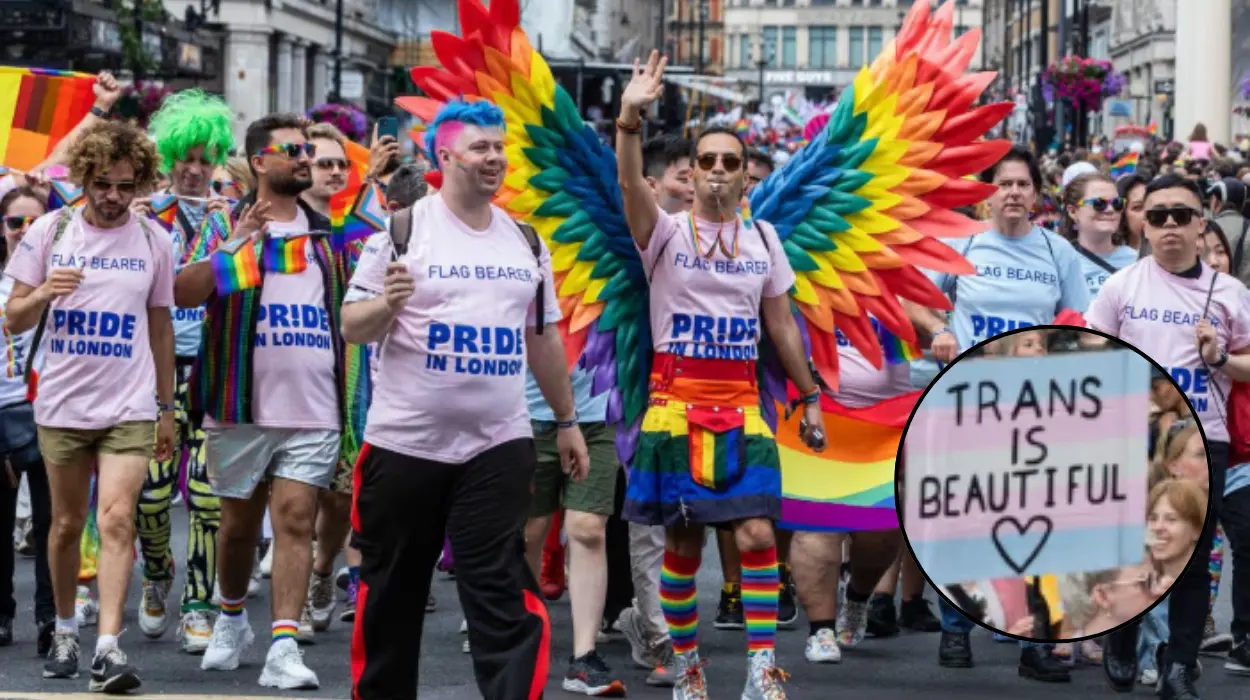
- The historic centrepiece parade is confirmed to take place on Saturday, 4 July 2026, charting its traditional pathway through the heart of Westminster with an estimated attendance of over one million spectators.
- Entering its eighth consecutive year, London Trans+ Pride will take to the streets on Saturday, 25 July 2026, under the rallying banner of “Our Future, Our Fight” amid an increasingly challenging political climate.
- The return of the non-commercial London Dyke March on Saturday, 20 June 2026, and the Queer Migrant Pride Fest on Sunday, 21 June 2026, signal a significant shift toward intersectional, community-led mobilisations.
- Major institutions, including the Queer Britain museum in King’s Cross, are launching bespoke historical exhibitions to commemorate two decades of systemic progress led by organisations such as UK Black Pride.
London (Britain Today News) June 6, 2026 – A multi-layered series of major Pride celebrations, cultural festivals, and political demonstrations honoring the LGBTQIA+ communities will officially return to the streets of London this summer. Attracting an aggregate audience expected to exceed one million people, the capital’s upcoming season features a vast network of mobilisations spanning from late June through to late August. The expansive schedule is anchored by the historic Pride in London parade through Central London, alongside rapidly expanding grassroots movements including London Trans+ Pride, UK Black Pride, and the long-awaited return of the London Dyke March. As the capital transforms into a stage for vibrant costumes, towering floats, and artistic expression, these coordinated events seek to balance joyful celebration with urgent socio-political advocacy during a highly scrutinized period for legislative reform in the United Kingdom.
- Key Points
- What Are the Core Route and Logistical Plans for the Main Pride in London Parade 2026?
- Why Is London Trans+ Pride Mobilising Under the Banner of “Our Future, Our Fight” 2026?
- How Are Grassroots and Intersectional Marches Redefining the Capital’s Pride Season 2026?
- What Role Do Institutional Exhibitions Play in Documenting Two Decades of UK Black Pride 2026?
- How Are Outer London Boroughs Expanding Localized Queer Infrastructure 2026?
- What Commercial and Cultural Programming Is Shaping the Soho Ecosystem 2026?
The summer pipeline officially begins to accelerate in mid-June with independent community activations before culminating in the massive, free, and unticketed central parade. While commercially integrated events continue to draw unprecedented global tourism to landmarks such as Trafalgar Square and Piccadilly Circus, the 2026 landscape is distinctly characterized by a surge in non-corporate, intersectional demonstrations. These localized manifestations aim to elevate marginalized voices within the broader queer ecosystem, focusing heavily on trans rights, queer migrant welfare, and historical preservation. Local authorities and transport executives have already initiated comprehensive strategic planning to mitigate severe logistical disruptions across the London Underground and municipal road networks as hundreds of separate community organisations finalize their marching contingencies.
What Are the Core Route and Logistical Plans for the Main Pride in London Parade 2026?
The main Pride in London parade is officially scheduled to occupy the absolute centre of the capital, serving as the seasonal benchmark for public visibility and municipal logistical orchestration. As detailed in the operational outlines published by the event planning division of Jackery UK, the historic march will commence precisely at 12:00 PM on Saturday, 4 July 2026. The infrastructure required to facilitate the extensive procession of floats, musical performance rigs, and walking blocks necessitates an intricate series of rolling road closures authorized across the City of Westminster and surrounding boroughs.
According to the official parade logistics brief distributed by the executive committee of Pride in London, the physical route will establish its assembly point in the vicinity of Green Park and Hyde Park Corner. From this western gateway, the visual spectacle will chart an eastward trajectory directly along Piccadilly, moving fluidly past high-density spectator zones towards Piccadilly Circus. Upon reaching the junction, the procession will pivot south down Haymarket, a location designated to host the primary spectator grandstands for which tickets are traditionally made available to the public shortly before the event. From Haymarket, the marching rows will advance past the architectural backdrop of Trafalgar Square—the long-standing site of the festival’s primary performance stages—before entering its final straight down Whitehall, ultimately concluding outside the Palace of Westminster near Big Ben at approximately 6:00 PM.
To guarantee equitable access across the expansive public viewing areas, organizers have confirmed that general admission along the entire route remains entirely free and unrestricted. However, strict operational parameters govern those participating within the formal ranks of the parade itself. The administrative timelines managed by the Pride in London board dictated that formal corporate, charitable, and public-sector registration applications were conclusively terminated on March 28, 2026, with allocation notifications distributed in mid-April. Approved entities are required to complete secure wristband collections between June 27 and July 2, 2026, ensuring that field safety marshals can effectively oversee the thousands of individuals moving inside the secure perimeter of the moving column.
Why Is London Trans+ Pride Mobilising Under the Banner of “Our Future, Our Fight” 2026?
Beyond the mainstream commercial celebrations, the regional socio-political landscape is bracing for a historic demonstration as London Trans+ Pride finalizes preparations for its eighth annual march through the capital. As reported by the political correspondence team at Babystep Magazine, the demonstration will return to the streets of central London on Saturday, 25 July 2026, navigating a profoundly charged national conversation surrounding healthcare access, institutional policy changes, and legal protections for gender non-conforming individuals.
The manifestation arrives directly on the heels of controversial regulatory actions across the British civil service and medical establishments, notably including the implementation of a permanent prohibition on puberty blockers for transgender youth and the introduction of highly contested draft Codes of Practice by the Equality and Human Rights Commission (EHRC). Organizers assert that these concurrent institutional shifts have systematically fostered an increasingly adversarial environment for non-binary and trans communities throughout the United Kingdom. In direct response to these external pressures, the executive planning committee has formally adopted the operational theme of “Our Future, Our Fight” to galvanize both grassroots activists and institutional allies.
Prominent community organizer EM Williams emphasized the underlying philosophy driving the 2026 demonstration, stating that:
“Why do we keep fighting? Because there is hope. Our Future is that hope, with the catalyst of love, believing in genuine human empathy and the desire for everyone to be treated with respect, dignity, equality and equity.”
The upcoming demonstration is projected to shatter previous logistical records. The 2025 iteration drew an unprecedented assembly of over 100,000 participants, establishing it definitively as the largest single trans-focused gathering ever recorded globally. The 2026 march is widely expected by civil safety coordinators to exceed that threshold due to the heightened political stakes. The public assembly is scheduled to commence at 1:00 PM at Trafalgar Square, with the physical march commencing at 2:00 PM. The planned route will mirror portions of previous historical pathways, processing up Cockspur Street, advancing onto Pall Mall, passing through Piccadilly Circus, and terminating at the Wellington Arch near Hyde Park Corner by 5:30 PM for a sequence of keynote speeches and community assemblies.
The organizational push has garnered public endorsements from an array of influential cultural figures, human rights advocates, and political representatives. High-profile personalities utilizing their platforms to validate the demonstration include actors Paul Mescal and Michaela Coel, musicians Mel B and Jessie Ware, media figures Jameela Jamil and Munroe Bergdorf, alongside prominent political leaders such as Jeremy Corbyn and London Mayor Zoë Garbett. As reported by the editorial desk of Babystep Magazine, acclaimed actor Paul Mescal issued his inaugural public proclamation regarding regional gender politics in tandem with the event’s launch, explicitly asserting that “trans rights are human rights.”
Concurrently, institutional architects of the movement are working to decouple the public perception of the trans community from sensationalized media tropes. As detailed by founding committee member Lewis G.:
“We are teachers, carers, artists, parents, neighbours and friends who simply want to live safely and peacefully in our communities. ‘Our Future, Our Fight’ is a reminder that our future is something worth fighting for.”
Organizers are systematically shifting their messaging toward systemic structural reform, imploring cisgender allies to transition from passive digital solidarity to active systemic intervention. Dani St James, representing the prominent non-profit organization Not A Phase, publicly urged supporters to embed their advocacy within the corporate and civic frameworks of everyday British life, noting that meaningful defense of trans individuals must extend directly into regional workplaces, school boards, and local community spaces well beyond the physical duration of the July march.
How Are Grassroots and Intersectional Marches Redefining the Capital’s Pride Season 2026?
A distinct characteristic of the current summer calendar is the resurgence of localized, non-commercial events designed to counter what critics view as the over-commercialization of corporate-sponsored pride festivals. Foremost among these initiatives is the proud return of the London Dyke March, which is officially scheduled to occupy the streets on Saturday, 20 June 2026. As highlighted by regional arts and culture editors at Time Out London, this demonstration serves as an explicit revitalization of the radical Lesbian Strength marches that originally populated the capital during the 1980s, marking a deliberate return to non-corporate, grassroots street activism following brief, isolated iterations in 2012 and 2013.
The organizers of the London Dyke March have engineered the event to function as an entirely non-commercial, explicitly trans-inclusive space dedicated to the visibility of dykes and their immediate political allies. Operating independently of municipal corporate underwriting, the march relies purely on community donation models and volunteer logistics networks. While the granular minutiae of the assembly points remain subject to final metropolitan police authorization, the collective has issued an open call for independent activist blocs, musical drumming groups, and individual community members to prepare signage reflecting historical lesbian visibility and contemporary intersectional class struggles.
Simultaneously, the East End will play host to specialized intersectional programming via the Queer Migrant Pride Fest, set to unfold on Sunday, 21 June 2026. Staged within the community facilities of St Margaret’s House in Bethnal Green, this localized festival intersects directly with national Refugee Week initiatives. The single-day festival is carefully structured to provide localized support infrastructure, psychiatric well-being clinics, creative workshops, and cinematic screenings tailored specifically by and for queer asylum seekers, refugees, and undocumented migrants navigating the complexities of the British immigration apparatus. The event will also feature advocacy stalls operated by regional legal defense funds and grassroots health collectives, providing critical resources for vulnerable sub-sects of the capital’s population.
Explore More about London:
Authorities crack down on illegal swimming in Heath ponds
SXSW London Festival Shaped by Protests, Bans, and Gaza War Debate
What Role Do Institutional Exhibitions Play in Documenting Two Decades of UK Black Pride 2026?
As communities navigate the physical spaces of the city’s streets, major museum institutions are working in parallel to formalize the historical preservation of racialized queer movements. A primary focal point of this institutional documentation is the special summer exhibition launched at the Queer Britain museum, situated in the heart of King’s Cross. As documented by cultural archivists reporting for Time Out London, the exhibition explicitly charts twenty years of continuous operational history achieved by UK Black Pride, Europe’s largest definitive celebration for LGBTQIA+ individuals of African, Asian, Caribbean, Middle Eastern, and Latin American descent.
Curated directly by UK Black Pride co-founder and prominent civil rights advocate Lady Phyll, the specialized exhibition aggregates an extensive assortment of historical artifacts, including original protest banners from the mid-2000s, archival photography, personal journals, and multimedia oral histories. The installation traces the systemic evolution of the movement from its highly modest genesis as a localized bus outing to Southend-on-Sea into a massive, multi-stage municipal festival that routinely commands attendance from tens of thousands of global visitors.
While the exact operational dates and geographical location for the main outdoor UK Black Pride 2026 festival are slated for an independent press release later this summer, the museum exhibition functions as a permanent educational hub. It illuminates how the organization has continuously challenged homogeneous representations of queer life in Britain, ensuring that the intersection of racial justice and sexual liberation remains deeply embedded within the historical consciousness of the state.
How Are Outer London Boroughs Expanding Localized Queer Infrastructure 2026?
The geographic distribution of Pride celebrations is also undergoing a permanent expansion, moving away from its traditional concentration within the central commercial corridors of Zone 1 and into the outer residential boroughs. The most significant architectural example of this decentralization is the formal launch of a brand-new LGBTQ+ pride festival situated in East London. As reported by municipal correspondent Phoebe Cooke of the East London and West Essex Guardian Series, the Waltham Forest Pride Collective, in strategic alignment with the Walthamstow Trades Hall, will debut an expansive two-week festival operating from July 6 to July 18, 2026.
The sub-regional initiative represents a conscious effort to establish sustainable queer infrastructure outside of central London’s nightlife districts. The programming is designed to penetrate multiple neighborhoods throughout the borough, with events formally distributed across Walthamstow, Leyton, Leytonstone, Highams Park, and Chingford. Funding for the festival has been structurally secured through the Waltham Forest Council’s Fellowship Fund, marking a notable deployment of municipal public resources to elevate marginalized community visibility.
The Mayor of Waltham Forest, Councillor Marcelo Hart-Camus, formally contextualized the civic importance of the implementation, stating that:
“Let’s celebrate our LGBTQ+ community and their contribution to our borough.”
The operational framework of the Waltham Forest festival is heavily anchored in community storytelling and environmental education. Key highlights of the program include the “Queer Lives of Waltham Forest” photography initiative, which invites local residents to submit visual documentation of everyday queer life in the suburbs before a firm deadline of June 30, 2026, culminating in a multi-venue public art exhibition. Furthermore, the collective has partnered with the Walthamstow Wetlands to host specialized “queer botany walks,” blending ecological education with community building, alongside extensive zine-making workshops, spoken-word poetry events, and specialized family-oriented craft sessions distributed throughout the borough’s public library network.
What Commercial and Cultural Programming Is Shaping the Soho Ecosystem 2026?
As political demonstrations and borough-wide festivals reconfigure the urban landscape, the commercial heart of London’s historical queer district in Soho is transforming its hospitality and cinematic programming to handle the seasonal influx of consumer traffic. Independent businesses and specialized cultural venues are curating distinct programming designed to offer alternatives to large-scale public street gatherings.
A highly specialized independent cinema located in Bermondsey. Named systematically in honor of Dorothy Arzner, the pioneering queer female filmmaker who dominated early Hollywood studio systems, the venue operates as London’s premier dedicated LGBTQ+ cinema space. For the duration of the summer season, the cinema’s programming directors have enacted a rigorous retrospective screening schedule designed to contextualize the historical trajectory of queer liberation movements. Key cinematic works scheduled for exhibition include the celebrated historical documentary Are You Proud?, the landmark 1980s lesbian gothic horror film The Hunger, and Josef von Sternberg’s boundary-breaking 1930 pre-code masterpiece Morocco.
The culinary and nightlife sectors are aligning their operational outputs with the cultural themes of the festival season. On Charing Cross Road, the prominent Middle Eastern restaurant Kapara—conceived by former Ottolenghi culinary strategist Chef Eran Tibi—has introduced a specialized, high-concept menu calibrated directly for the Soho Pride crowds. The establishment has integrated complex culinary updates, including the deployment of a specialized “Pride Babka” constructed with artisanal cherry compote, lemon thyme crème anglaise, and vibrantly hued pistachios, alongside highly tailored mixology programs designed to attract international tour groups and local marching contingencies alike. These commercial adaptations underscore the dual nature of London’s contemporary summer season: a complex space where radical political demonstration, historical institutional preservation, and high-volume commercial hospitality continuously interact to redefine the public face of the capital.