Key Points
- British Steel has been taken into public ownership by the UK government to protect jobs and preserve what ministers describe as “a vital national capability.”
- The Scunthorpe steelworks employs roughly 2,700 people directly and supports thousands more jobs across north Lincolnshire’s supply chain.
- The government had already taken operational control of British Steel last year, though ownership remained with China’s Jingye Group.
- Nationalisation follows Parliament passing legislation permitting the government to bring steel companies into public ownership where a public interest test is met.
- Jingye Group is seeking compensation, having said the business was losing £700,000 a day; an independent assessor will determine any payout.
- The National Audit Office reported in March that the Scunthorpe plant was costing the government about £1.3 million a day.
- Business Secretary Peter Kyle warned that the alternative to nationalisation was allowing the business to collapse, ending UK primary steel production.
- Unite general secretary Sharon Graham welcomed the move but called for further investment across the wider steel sector.
- The Queen Anne and Queen Bess blast furnaces, dating back to 1954 and 1938 respectively, are nearing the end of their operational lives.
- Industry figures, including Reid Steel’s Simon Boyd, say the government will need to invest heavily and may not see a return for 10 to 20 years.
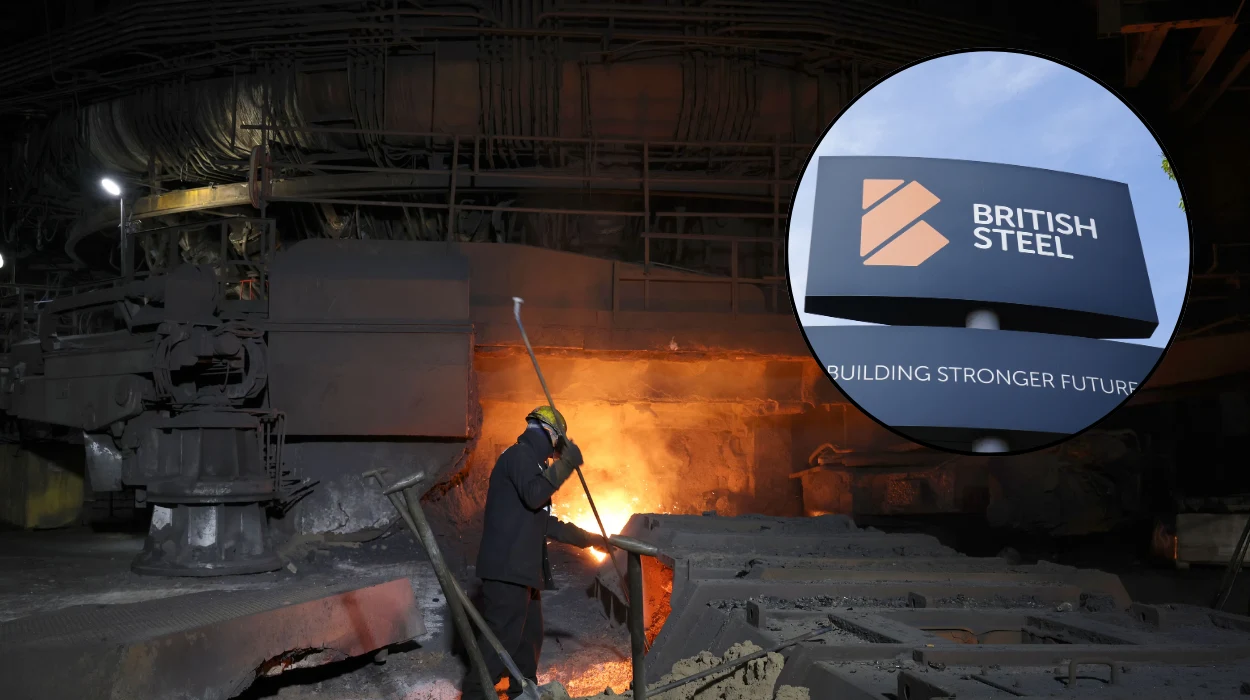
Scunthorpe (Britain Today News) July 16, 2026 – British Steel has been taken into public ownership in a move the government said would protect jobs and safeguard “a vital national capability,” bringing to a head months of uncertainty over the future of the Scunthorpe steelworks, which directly employs roughly 2,700 people and underpins thousands of further jobs across north Lincolnshire’s industrial supply chain.
- Key Points
- Why Did the Government Decide to Nationalise British Steel?
- What Has Happened to the Scunthorpe Steelworks?
- Why Was Jingye Group Unable to Retain Control of the Business?
- What Did Business Secretary Peter Kyle Say About the Takeover?
- Will Jingye Group Receive Compensation for the Nationalisation?
- How Much Is the Scunthorpe Plant Costing UK Taxpayers?
- Why Are the Blast Furnaces So Important to Keep Running Continuously?
- What Is the Significance of the Queen Anne and Queen Bess Furnaces?
- How Does Scunthorpe’s Steel Production Differ From the Rest of the UK?
- How Has the Steel Industry and Trade Unions Reacted to the Nationalisation?
- What Does Nationalisation Mean for Jobs in North Lincolnshire?
- What Is the Long-Term Strategy for UK Steel Production?
The future of the plant had been in question for a considerable period, with concerns mounting over its Chinese ownership, its financial losses and the age of its blast furnaces. The government had already taken control of British Steel’s day-to-day operations in Scunthorpe last year, although ownership of the company remained with China’s Jingye Group, a arrangement that had limited ministers’ ability to determine the plant’s long-term strategy. Nationalisation now gives the government both the time and the authority to decide the site’s future while keeping its blast furnaces running.
Despite taking full control, it is thought unlikely that the government intends to remain the long-term owner of a business currently costing more than a million pounds a day to run. In March, the National Audit Office published a report noting that the Scunthorpe steelworks was costing the government approximately £1.3 million a day, underlining the financial scale of the intervention.
Why Did the Government Decide to Nationalise British Steel?
The nationalisation followed Parliament passing legislation on Wednesday that allowed the government to bring the steel industry into public ownership in circumstances where doing so met a defined public interest test. The move formalised what had, in effect, already been a period of government-directed operations at the Scunthorpe site, converting operational control into full ownership.
Ministers have framed the decision as one of national economic security rather than routine industrial intervention, arguing that allowing Britain’s last integrated steelworks to fail would strip the country of a capability it could not easily rebuild.
What Has Happened to the Scunthorpe Steelworks?
The Scunthorpe plant has been at the centre of prolonged uncertainty, with its ownership structure, financial performance and ageing infrastructure all contributing to doubts about its survival. Although government control over operations began last year, the site continued to be owned by Jingye Group, creating what has been described as a split responsibility that made it difficult for ministers to commit to a long-term plan for the plant.
That ambiguity has now been resolved through nationalisation, which places the business fully under state control and removes the operational limitations that had constrained government decision-making at the site.
Why Was Jingye Group Unable to Retain Control of the Business?
Jingye Group had previously stated that the business was losing £700,000 a day, a scale of loss that placed considerable strain on the company’s willingness or ability to continue investing in the Scunthorpe operation. The BBC reported that it had been unable to obtain a response from Jingye to Thursday’s nationalisation announcement.
The company is now seeking compensation for the nationalisation of its asset. Business Secretary Peter Kyle confirmed that an independent assessor would be appointed to determine whether Jingye should receive compensation, with any payment based on an assessment of the company’s value.
What Did Business Secretary Peter Kyle Say About the Takeover?
As reported by the BBC, Peter Kyle told the broadcaster that the government would need to cover the running costs of British Steel “for the immediate future,” acknowledging the financial burden the state was now assuming.
Kyle framed the decision as unavoidable given the alternative. He said:
“But let me be really clear, there is an alternative here – that we let this business go bust.”
He went on to warn of the wider consequences of inaction, stating:
“If that business disappears, we will lose the ability for primary steel production in our country, we will become entirely dependent on global supply.”
His comments placed the nationalisation within a broader argument about sovereign industrial capability, rather than treating it purely as a rescue of a single struggling company.
Will Jingye Group Receive Compensation for the Nationalisation?
According to the BBC’s reporting, the question of compensation has not been resolved and will instead be determined through an independent assessment process. Peter Kyle indicated that the assessor’s determination would be based on the underlying value of the company at the point of nationalisation, rather than on Jingye’s own stated losses.
This approach is intended to provide an impartial mechanism for resolving what could otherwise become a contentious and legally complex dispute between the government and the plant’s outgoing owner.
How Much Is the Scunthorpe Plant Costing UK Taxpayers?
The financial scale of the intervention has been laid out clearly in official figures. The National Audit Office’s report, published in March, put the daily cost of running the Scunthorpe steelworks to the government at around £1.3 million. That figure illustrates the extent of the ongoing subsidy required to keep the plant operating and explains why ministers have been keen to stress that state ownership is unlikely to be a permanent arrangement.
Why Are the Blast Furnaces So Important to Keep Running Continuously?
Blast furnaces of the kind operated at Scunthorpe are designed to run without interruption. Allowing them to cool causes serious structural damage and requires extensive, costly work to bring them back into operation. Even a planned refurbishment of a blast furnace can cost tens of millions of pounds, making any unplanned shutdown an extremely expensive proposition.
This technical reality was central to the urgency behind the government’s intervention. Once a blast furnace is allowed to go cold, restarting it is not simply a matter of switching the plant back on; it can require a substantial rebuild, a factor that made the prospect of closure at Scunthorpe particularly difficult to reverse.
What Is the Significance of the Queen Anne and Queen Bess Furnaces?
The two remaining blast furnaces at Scunthorpe are notably old. The furnace known as Queen Anne first opened in 1954, while Queen Bess has been in continuous production since 1938. Both furnaces are approaching the end of their operational lives, meaning that restarting them after any cooling would have been financially prohibitive for a company that was already recording substantial losses.
The government’s determination to keep the furnaces running stems from their status as the UK’s last source of “virgin,” or newly produced, steel made directly from iron ore. Should the plant stop producing virgin steel, the United Kingdom would become the only member of the G7 group of leading economies without the domestic capability to manufacture it, a prospect ministers have been unwilling to accept.
How Does Scunthorpe’s Steel Production Differ From the Rest of the UK?
Steel output elsewhere in the country relies on electric arc furnaces, which recycle scrap metal into new steel products rather than producing it from raw iron ore. While the government’s long-term strategy envisages all domestically produced steel eventually coming from electric arc furnaces, which are both cheaper to run and significantly less carbon-intensive, ministers do not want to lose Scunthorpe’s output before viable alternatives are in place.
The Scunthorpe plant produces types of steel not currently manufactured anywhere else in the country, much of which is required by Network Rail and the wider construction industry. Losing this capacity, officials feared, would prove disruptive to those sectors and leave the UK excessively reliant on imported steel, reinforcing the case for keeping the site open until alternative domestic sources of supply become available.
Explore More about Business:
Toolstation London Fundraiser Raises £3,440 for British Heart Foundation
Steel Industry Nationalisation Bill Clears Lords Report Stage
How Has the Steel Industry and Trade Unions Reacted to the Nationalisation?
Unite general secretary Sharon Graham welcomed the announcement, describing nationalisation as a necessary but not sufficient step for the sector. She said it needed to be
“the first step in a journey to transform our steel industry,”
adding that
“we need serious investment on the ground across the industry to create jobs and make Britain a leading producer of green steel.”
Her comments reflect a wider expectation among union leaders that nationalisation should be followed by sustained capital investment rather than treated as a one-off rescue measure.
Simon Boyd, managing director of Reid Steel, a structural steel manufacturer based in Dorset that purchases thousands of tonnes of material from British Steel each year, told the BBC’s Today programme that the nationalisation “had to be done.” Boyd said Jingye had been “sabotaging the infrastructure” at the company, and argued that the government “had to step in” as a result.
Boyd further said that the government would need to invest heavily in British Steel and should not expect to see a financial return for between 10 and 20 years. He said the business “now belongs to the British people,” adding that a sale to private investors would still have required government support and, based on past experience, tended to “benefit the private companies and not the British people.”
What Does Nationalisation Mean for Jobs in North Lincolnshire?
Beyond the roughly 2,700 people directly employed by British Steel at Scunthorpe, the plant supports thousands of additional jobs throughout its supply chain, making it an economic anchor for the wider north Lincolnshire region. An abrupt closure of the blast furnaces could have placed a substantial number of these jobs at risk, both directly at the plant and among the many businesses that depend on it.
By securing the plant’s continued operation, the government has sought to provide reassurance to workers and to the broader local economy that the immediate threat of closure has been averted, even as longer-term questions about the site’s ownership and structure remain unresolved.
What Is the Long-Term Strategy for UK Steel Production?
The government’s stated ambition is for all domestically produced steel in the UK eventually to come from electric arc furnaces rather than blast furnaces, given their lower cost and reduced carbon footprint. However, officials have been clear that this transition cannot happen abruptly, and that Scunthorpe’s blast furnace capacity must be preserved until viable alternatives for producing the types of steel it supplies, particularly for the rail and construction sectors, are established elsewhere.
Business Secretary Peter Kyle’s comments suggest the government sees nationalisation as a transitional measure rather than a permanent solution, designed to buy time for a considered decision on the plant’s future rather than to establish long-term state ownership of the steel industry.