Key Points
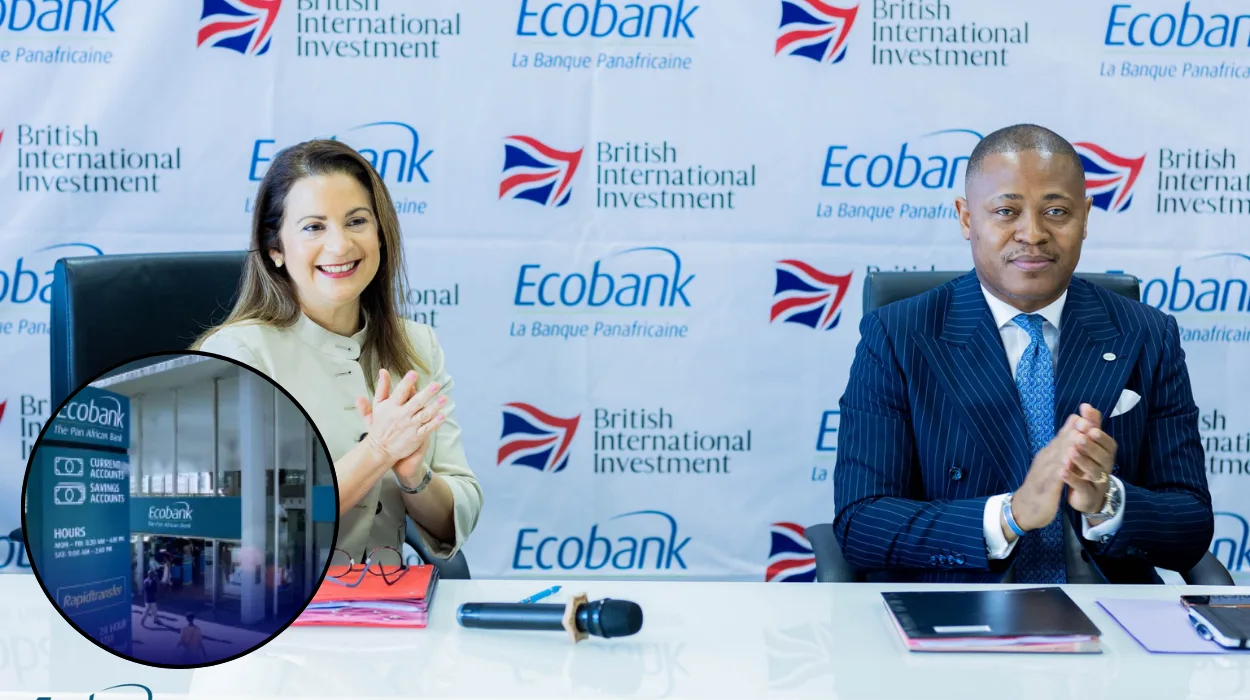
- British International Investment (BII), the UK’s development finance institution, and Ecobank DRC announced a $30 million risk-sharing facility to expand access to finance for small and medium-sized enterprises (SMEs) across the Democratic Republic of Congo (DRC).
- The partnership aligns with BII’s new five-year strategy, committing at least 25% of new investments by value to frontier markets, defined by the UN as Least Developed Countries (LDCs).
- Risk-sharing on new and expanded loans will help Ecobank DRC support businesses facing barriers like collateral requirements and limited credit availability.
- Targeted sectors include agriculture and agro-processing, industrial, infrastructure, climate-aligned projects, renewable energy, and local entrepreneurship, aiming to drive economic development, job creation, and resilient supply chains.
- Chris Chijiutomi, Managing Director and Head of Africa at BII, stated: “Small and medium-sized enterprises are at the heart of economic development and job creation in the DRC, yet many continue to face significant barriers in accessing the capital they need to grow. As part of BII’s focus on frontier markets, our expanded partnership with Ecobank will enable greater and longer-term lending to small businesses in the DRC.”
- Joel Kabuya, Acting Managing Director of Ecobank DRC, stated: “This strategic partnership with British International Investment represents a major step in strengthening our SME financing capabilities in the DRC. It reinforces our commitment to providing long-term support to the private sector, while applying the highest standards in risk management and responsible finance.”
- This is BII’s second risk-sharing facility with the Ecobank Group, following a similar agreement with Ecobank Sierra Leone in 2024.
- The initiative is delivered under the Africa Resilience Investment Accelerator (ARIA), co-funded by BII, FMO, and Proparco to boost invtestment in African frontier markets.
Kinshasa (Britain Today News) May 12, 2026 – British International Investment (BII) and Ecobank DRC unveiled a landmark $30 million risk-sharing facility today, poised to transform access to finance for small and medium-sized enterprises (SMEs) throughout the Democratic Republic of Congo (DRC). This collaboration directly tackles chronic funding shortages in a frontier market plagued by investment barriers, aligning seamlessly with BII’s ambitious five-year strategy to channel at least 25% of new investments into UN-designated Least Developed Countries.
- Key Points
- What Is the $30 Million Risk-Sharing Facility?
- Why Did BII Choose DRC as a Frontier Market Focus?
- Which Sectors Will Benefit from This Partnership?
- What Did BII’s Chris Chijiutomi Say About the Deal?
- How Did Ecobank DRC’s Joel Kabuya Respond?
- Is This BII’s First Collaboration with Ecobank Group?
- What Role Does ARIA Play in This Initiative?
- How Does This Fit BII’s Broader Five-Year Strategy?
- What Challenges Do DRC SMEs Face?
- What Impacts Are Expected on DRC’s Economy?
What Is the $30 Million Risk-Sharing Facility?
The facility enables BII to share risks on new and expanded loans issued by Ecobank DRC, directly addressing key hurdles such as stringent collateral demands and scarce credit options that have long stifled SME growth. As reported in the official announcement covered by Funds Global MENA, this mechanism empowers Ecobank DRC to extend greater and longer-term lending to viable businesses, fostering stability in the real economy.
By mitigating these risks, the partnership unlocks capital for enterprises that form the backbone of DRC’s private sector, where private investment remains notably scarce due to structural challenges. Ecobank DRC’s established expertise in nurturing small businesses complements BII’s impact-driven approach, ensuring funds reach those most in need.
Why Did BII Choose DRC as a Frontier Market Focus?
BII’s new five-year strategy, as detailed in coverage by Africa Private Equity News, mandates that at least 25% of new investments target frontier markets like the DRC, home to over a billion people with immense yet underserved capital needs. These markets suffer from barriers including political instability, weak infrastructure, and limited financial systems, making private sector capital critically scarce.
The DRC exemplifies this, with SMEs central to job creation but often sidelined by mining-dominated financing. Chris Chijiutomi emphasised this priority, noting the facility’s role in enabling sustained lending amid such constraints. This move builds on BII’s broader £15 billion mobilisation goal, half from private sources, sharpening focus on high-impact African economies.
Which Sectors Will Benefit from This Partnership?
Critical sectors earmarked for support span agriculture and agro-processing, vital for food security and rural employment; industrial manufacturing to bolster local production; infrastructure projects enhancing connectivity; climate-aligned initiatives and renewable energy to combat environmental vulnerabilities; and local entrepreneurship fuelling innovation.
These areas promise resilient supply chains, economic diversification beyond mining, and substantial job growth, as highlighted in parallel BII efforts like the Rawbank partnership enabling 1,500 additional SMEs. The facility’s design ensures targeted deployment, amplifying real-economy impacts in a nation where SMEs drive over 80% of non-resource employment.
What Did BII’s Chris Chijiutomi Say About the Deal?
Chris Chijiutomi, Managing Director and Head of Africa at BII, articulated the partnership’s essence: “Small and medium-sized enterprises are at the heart of economic development and job creation in the DRC, yet many continue to face significant barriers in accessing the capital they need to grow. As part of BII’s focus on frontier markets, our expanded partnership with Ecobank will enable greater and longer-term lending to small businesses in the DRC.”
His remarks, echoed across sources, underscore BII’s strategic pivot towards frontier markets, where targeted interventions yield outsized development returns. Chijiutomi’s leadership since 2017 has steered similar Africa-focused deals, reinforcing BII’s credibility.
How Did Ecobank DRC’s Joel Kabuya Respond?
Joel Kabuya, Acting Managing Director of Ecobank DRC, welcomed the alliance:
“This strategic partnership with British International Investment represents a major step in strengthening our SME financing capabilities in the DRC. It reinforces our commitment to providing long-term support to the private sector, while applying the highest standards in risk management and responsible finance.”
Kabuya’s statement reflects Ecobank’s pan-African footprint, building on prior risk-sharing pacts like those with ATI across nine countries including DRC. His role in events like Ambition Africa 2025 highlights Ecobank DRC’s push for robust SME support.
Is This BII’s First Collaboration with Ecobank Group?
No, this marks BII’s second risk-sharing facility with the Ecobank Group, succeeding the 2024 $25 million (approximately £19 million) agreement with Ecobank Sierra Leone. That deal, including technical assistance via BII Plus, targeted renewable energy, agriculture, infrastructure, and manufacturing, boosting local currency loans up to five years.
The Sierra Leone pact expanded Ecobank’s loan book for ambitious SMEs, mirroring DRC ambitions and demonstrating a proven model for frontier growth.
What Role Does ARIA Play in This Initiative?
The facility operates under the Africa Resilience Investment Accelerator (ARIA), a collaborative effort by BII, FMO, and Proparco to accelerate frontier market investments. ARIA pools resources for high-impact deals, enhancing resilience against economic shocks in LDCs.
This framework amplifies the $30 million’s reach, akin to BII’s $25 million Rawbank loan supporting non-mining SMEs amid a $265 million package. ARIA’s focus ensures sustainable, de-risked capital flows.
How Does This Fit BII’s Broader Five-Year Strategy?
BII’s strategy aims to mobilise £15 billion, contributing up to £8 billion, with 25% to frontiers like DRC, Sierra Leone, and Zambia via investments, policy, and partnerships. It elevates climate finance to 40% and gender-lens to 30% under 2X Challenge, targeting financial services, power, and digital infrastructure.
As per Africa Global Funds, £9 billion targets Africa alone, countering scarcity through market-level impacts beyond single firms.
What Challenges Do DRC SMEs Face?
DRC SMEs grapple with collateral shortages, high interest rates, mining bias, and instability, limiting growth despite potential. BII-Ecobank de-risking counters this, like Rawbank’s push for 1,500 more SMEs.
What Impacts Are Expected on DRC’s Economy?
Expect job surges, diversified chains, and inclusive growth, with SMEs gaining long-term finance for expansion. This echoes Sierra Leone’s private sector uplift, promising DRC-wide ripple effects.