Key Points
- U.S. and Israeli strikes hit targets across Iran, including bridges, railways, an airport, a petrochemical plant and power infrastructure, according to the report.
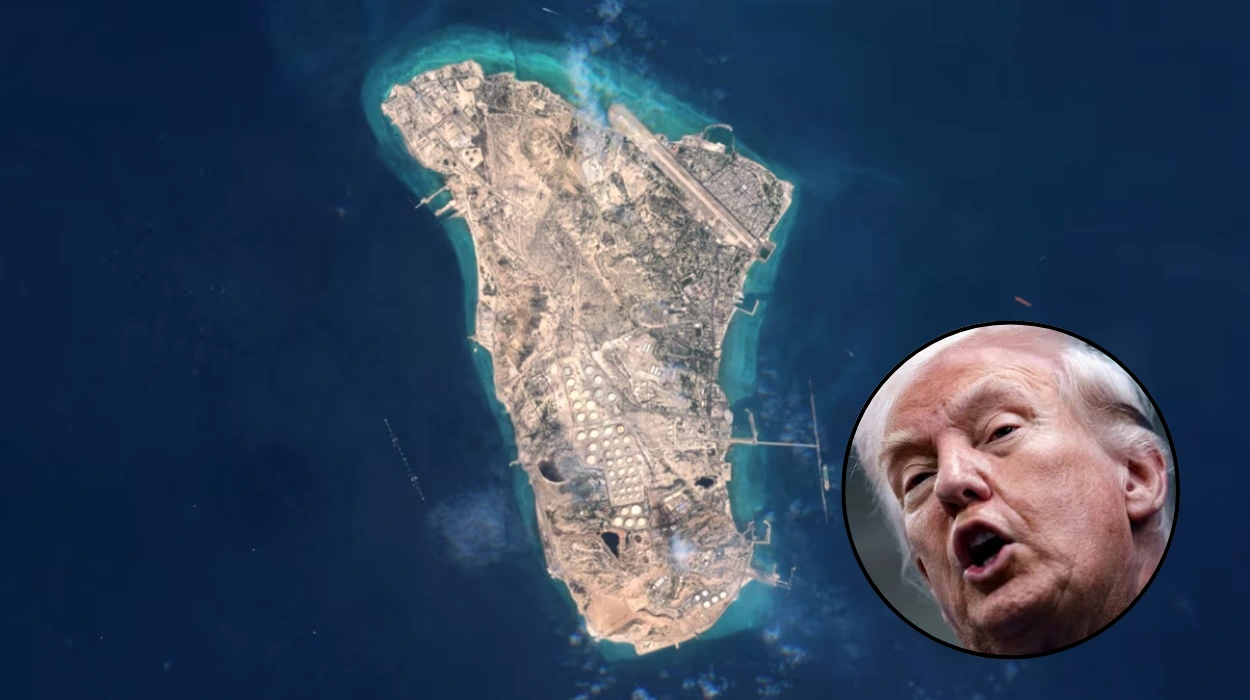
- The reported attacks included Kharg Island, Iran’s main oil export terminal, and Khorramabad International Airport in western Iran.
- Donald Trump gave Iran until 8 p.m. ET on Tuesday to end its blockade of the Strait of Hormuz or face further strikes on civilian infrastructure.
- Iran said it would retaliate against infrastructure in Gulf states and claimed new strikes on ship and industrial facilities linked to the United States and Saudi Arabia.
- Israel said its warplanes struck bridges and railways, claiming they were being used by Iran’s Revolutionary Guard to move materials for weapons.
- A synagogue in Tehran was reported destroyed overnight, with Iranian lawmaker Homayoun Sameh saying Torah scrolls were left beneath the rubble.
- Iran’s Revolutionary Guards said the response would deprive America and its allies in the region of oil and gas for years.
- Democrats in the United States condemned Trump’s remarks, while Canadian Prime Minister Mark Carney called for respect for international law and protection of civilians.
- Mediation efforts continued through Pakistan, but there was no sign of a breakthrough as both sides maintained hardline positions.
- The crisis has sharply raised fears of wider regional escalation, especially for Gulf energy infrastructure and global oil supply routes.
United States (Britain Today News) April 07, 2026 – The military confrontation between the United States, Israel and Iran intensified on Tuesday as strikes spread across Iranian territory and Donald Trump issued a fresh deadline demanding Tehran reopen the Strait of Hormuz or face what he described as devastating attacks on civilian infrastructure. The reported escalation, which included hits on bridges, railways, an airport, a petrochemical plant and power lines, has pushed the conflict into its most dangerous phase yet and raised alarm across the Gulf, Washington and beyond.
What triggered the latest escalation?
The immediate trigger was Trump’s ultimatum that Iran must end what he described as a blockade of Gulf oil traffic by 8 p.m. ET on Tuesday, or the United States would destroy major civilian infrastructure inside Iran within hours. He repeated the warning on social media and at a news conference, saying every bridge and power plant in Iran could be targeted if Tehran did not comply. The threat came as strikes reportedly intensified across the country, with Iranian media describing damage to transport routes, industrial sites and electricity networks.
The latest phase of the confrontation is tied to the wider war over access to the Strait of Hormuz, one of the world’s most strategically important shipping lanes. Iran has effectively restricted passage through the waterway to most vessels except its own, prompting mounting pressure from Washington and allies who fear disruption to global oil and liquefied natural gas flows. The situation has turned the strait into a central bargaining point in a rapidly worsening crisis.
Which targets were hit in Iran?
According to the report, strikes hit railway bridges, a highway bridge, a petrochemical plant, an airport and power transmission infrastructure in parts of Iran. Power outages were reported in Karaj, west of Tehran, after strikes on transmission lines and a substation. Explosions were also reported on Kharg Island, where Iran’s main oil export terminal is located, making the site one of the most sensitive targets mentioned.
Another reported strike hit Khorramabad International Airport in western Iran, while state media said an attack in Alborz province, north-west of Tehran, killed 18 people. Iranian media also said a synagogue in Tehran had been destroyed overnight, with footage showing Hebrew texts scattered in the rubble. The scale and range of the reported strikes suggest a widening effort to degrade both military and civilian-linked infrastructure.
How did Israel describe its role?
Prime Minister Benjamin Netanyahu said Israeli warplanes struck bridges and railways in Iran, arguing that the facilities were being used by the Revolutionary Guard to move materials for weapons production. Israel had earlier issued a Farsi-language warning telling Iranians to avoid trains during the day, suggesting that transport infrastructure was being treated as a likely target. The Israeli account framed the strikes as part of a military effort to interrupt logistics tied to Iran’s armed forces.
That explanation was not immediately matched by an Israeli military comment on the reported destruction of the Tehran synagogue. Iranian lawmaker Homayoun Sameh, who represents the country’s Jewish community, said the building was completely destroyed and that Torah scrolls had been left under the rubble. The report did not say whether Israel had confirmed that incident, leaving questions over the extent of damage to civilian and religious sites.
What is Iran threatening now?
Iran said it would no longer hold back from targeting infrastructure in Gulf neighbours, a major shift in its public stance. The Revolutionary Guards said Tehran’s response would
“deprive America and its allies in the region of oil and gas for years,”
and warned that previous restraint had been abandoned. Iran also claimed fresh strikes on a ship in the Gulf and on Saudi industrial facilities linked to U.S. companies.
The report said a strike on Saudi Arabia’s downstream oil site at Jubail caused smoke and flames, with video verified showing damage at the complex. Iranian officials have made clear they see regional energy infrastructure as a possible retaliatory target if the attacks continue. That raises the stakes for Gulf states, many of which depend on stable power, water and port systems that are vulnerable to disruption.
How are diplomatic efforts unfolding?
Despite the fighting, mediation efforts have continued through Pakistan, which has been acting as the main go-between. A proposal reportedly brokered by Pakistan would call for a temporary ceasefire and the lifting of Iran’s effective blockade of the Strait of Hormuz, while leaving broader peace terms for later talks. But there has been no clear movement towards compromise, and both sides continue to claim they are winning while demanding concessions from the other.
Iran’s ambassador to Pakistan said on Tuesday that efforts by Islamabad to help end the war were reaching a “critical, sensitive stage”, though he gave no further detail. Tehran’s 10-point response, as reported by IRNA on Monday, reportedly demands a permanent end to the war, sanctions relief and reconstruction of damaged sites. It also seeks a new mechanism for governing passage through the strait, replacing the current arrangement that had allowed broad international access.
What reactions came from the United States and Canada?
Trump’s comments drew strong backlash from Democrats in Congress, who condemned his social media post and described his language as dangerously unhinged. House Democratic leadership called for the chamber to be recalled and urged Republicans to put
“patriotic duty over party loyalty”
and help end what they described as a reckless war of choice. California Representative Ted Lieu, a former military prosecutor, went further by urging generals to disobey illegal orders.
Brian Finucane, a former U.S. State Department legal adviser now with the International Crisis Group, said Trump’s remarks could plausibly be interpreted as a threat to commit genocide under U.S. and international law. In Canada, Prime Minister Mark Carney said his government expected all parties in the conflict to respect international law and not target civilians or civilian infrastructure. His remarks came during a domestic event in Brampton, Ontario, and reflected growing concern among Western leaders about the direction of the conflict.
Why does the Strait matter?
The Strait of Hormuz is one of the world’s most important energy chokepoints, carrying a significant share of global oil and liquefied natural gas trade. Any prolonged closure or serious threat to shipping through the waterway can drive up global energy prices and put pressure on international markets. The report says Iran has already made access far more difficult, leaving only its own ships able to pass in normal circumstances.
That is why the confrontation has moved quickly beyond the military sphere into a direct threat to the global economy. Energy facilities, power systems and transport routes have become strategic targets, while diplomacy is struggling to keep pace with events on the ground. For Gulf states in particular, the warning is stark: a wider attack on infrastructure could quickly make civilian life far more difficult and drag the region into a deeper crisis.
What happens next?
The immediate question is whether Iran will comply with Trump’s deadline or respond with further strikes of its own. If the ultimatum expires without progress, the report suggests the United States may expand attacks on infrastructure inside Iran, potentially including power plants and bridges. That would almost certainly trigger further retaliation and risk drawing Gulf neighbours more directly into the conflict.
For now, the situation remains highly fluid, with military action, diplomatic efforts and political condemnation all unfolding at the same time. Both Washington and Tehran are presenting the crisis as a matter of resolve, but the practical consequences are increasingly being felt by civilians, regional states and energy markets. The next few hours are likely to decide whether the confrontation moves towards a ceasefire effort or a much broader regional war.