Key Points
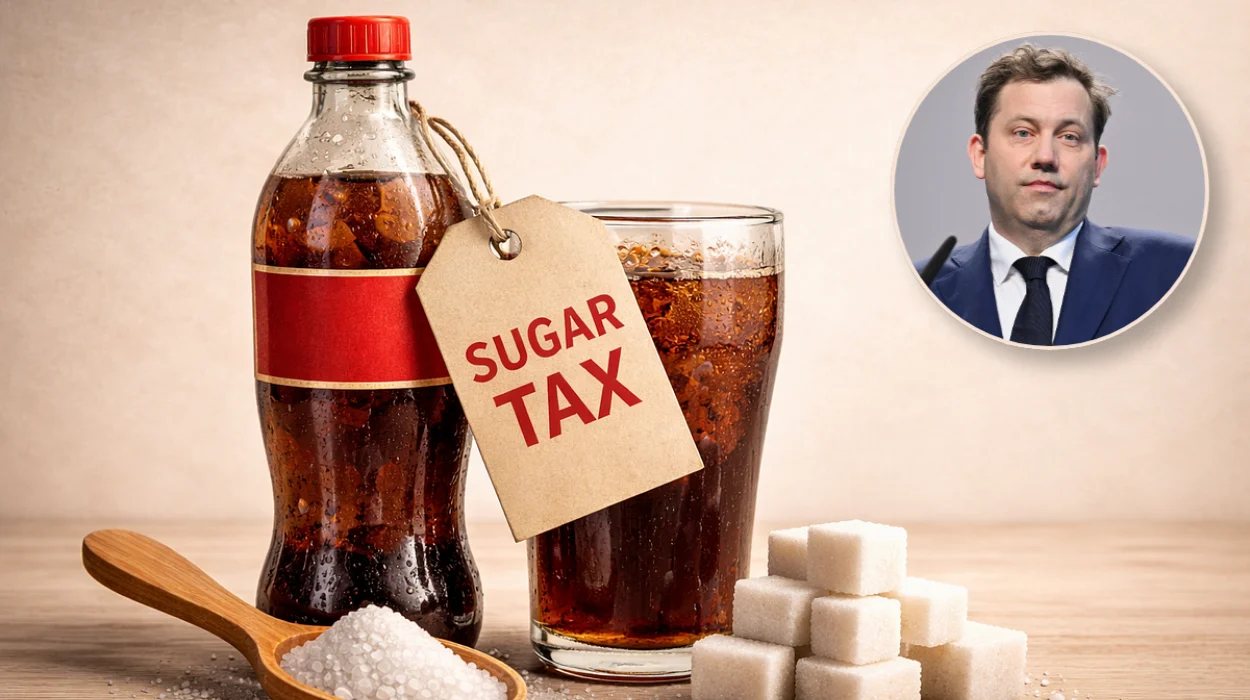
- Germany’s finance ministry has proposed a tiered sugar tax on soft drinks, juices, milk drinks, iced teas, ready-made coffees and sugar-free beverages containing artificial sweeteners.
- The proposed rates are 26 cents per litre for drinks containing 4.5–7 g of sugar per 100 ml, 32 cents for 7–10 g and 38 cents for more than 10 g. Sugar-free drinks containing sweeteners would also face a 26-cent-per-litre tax.
- The tax could take effect in 2027, a year earlier than previously expected, and is forecast to raise about €650 million to help offset cuts to the federal subsidy for health insurance.
- The proposal has caused disagreement within the government, with the agriculture ministry reportedly strongly opposed. Industry groups and consumers have also criticised the inclusion of “zero” drinks.
- Berlin says the tax is intended to improve public health and prevent a UK-style shift from sugar to sweeteners, while critics question whether the measure is primarily a health policy or a way to raise revenue.
Berlin (Britain Today News) August 25, 2026 – Germany’s finance ministry has unveiled draft plans for a broad-based sugar tax that would hit not only classic sugary sodas but also fruit juices, milk-based drinks, iced teas, ready-to-drink coffees and, controversially, beverages sweetened only with artificial sweeteners such as Coca‑Cola Zero. According to documents seen by Bild and reported across German media on 25 August 2026, the levy could come into force in 2027, a year earlier than previously anticipated, and is expected to generate around €650 million to cushion planned cuts to the federal contribution to statutory health insurance.
- Key Points
- What exactly is Germany’s proposed sugar tax?
- Which drinks would be affected by the German sugar tax?
- How much extra will consumers pay under the sugar tax?
- Why is Berlin targeting artificially sweetened drinks?
- When will the sugar tax start and how much revenue is expected?
- Who is proposing the tax and what do coalition partners say?
- How has industry reacted to the sugar tax proposal?
- What do health experts and critics say about the plan?
- How does Germany’s plan compare with the UK sugar tax?
- What happens next for the sugar tax legislation?
What exactly is Germany’s proposed sugar tax?
As reported by multiple outlets including Deutschlandfunk and Handelsblatt, the finance ministry’s “Eckpunktepapier” (key points paper) outlines a tiered excise on drinks “with sugar and/or sweetening agents” as well as sugar- or sweetener-containing granulates. Under the draft, beverages containing 4.5–7 g of sugar per 100 ml would be taxed at 26 cents per litre, those with 7–10 g at 32 cents, and anything above 10 g at 38 cents. Drinks that contain no sugar but are sweetened with artificial sweeteners would also be hit, at a flat rate of 26 cents per litre.
Which drinks would be affected by the German sugar tax?
The scope goes well beyond traditional lemonades. According to Zeit and taz, the proposal covers fruit juices from concentrate, fruit nectars, smoothies, milk and plant-based milk drinks (including oat and soy), iced teas, ready-made coffees, alcohol-free beers and wines, and beer-mix drinks such as Radler. As Handelsblatt and Focus note, even “zero” variants like Coca‑Cola Zero, Sprite Zero and Fanta Orange Zero – which use sweeteners instead of sugar – would fall under the 26 cents-per-litre band.
How much extra will consumers pay under the sugar tax?
Merkur and RT Deutsch have published illustrative examples showing how the tax would translate into shelf prices. Many Radler, oat drinks and iced teas in the 4.5–7 g band would see an added 26 cents per litre; popular sodas such as Fanta and Sprite, along with fruit nectars in the 7–10 g range, would face 32 cents; and high-sugar products like standard Coca‑Cola, some energy drinks and certain ready coffees above 10 g would carry an extra 38 cents per litre. Zero-sugar, sweetener-only drinks would also become more expensive by 26 cents per litre.
Why is Berlin targeting artificially sweetened drinks?
Berlin’s rationale, as framed in reporting by Stuttgarter Zeitung and EADaily, is to prevent a “Britain-style” switch where manufacturers reformulate from sugar to artificial sweeteners to dodge a sugar-only levy, thereby undermining public health goals. By taxing sweetened drinks regardless of whether the sweetness comes from sugar or additives, the government aims to close that loophole and discourage consumption of ultra-processed sweet beverages overall.
When will the sugar tax start and how much revenue is expected?
According to EADaily and Fingerklopfer, the tax could start in 2027, a year earlier than the timeline previously discussed, and is projected to raise about €650 million in that year. The revenue is earmarked to offset a planned reduction in the federal subsidy to the statutory health insurance system, effectively using the levy to help plug a hole in health financing rather than funding new prevention programmes directly.eadaily+1
Who is proposing the tax and what do coalition partners say?
The initiative is being driven by Finance Minister Lars Klingbeil (SPD), whose ministry drafted the key points paper, as reported by Zeit and Deutschlandfunk. However, the plan has triggered internal tension: taz notes that the agriculture ministry is “vehemently” opposed, reflecting broader coalition disagreements over the scope and purpose of the measure. The proposal also goes beyond the recommendations of the government’s own “FinanzKommission Gesundheit”, which had focused more narrowly on sugary soft drinks rather than juices, milk alternatives and alcohol-free beer and wine.
How has industry reacted to the sugar tax proposal?
Industry and consumer reaction has been sharply critical. Business Insider Polska quotes angry social media comments asking
“How much more does this government want to deceive its citizens?”
in response to the inclusion of sweetened “zero” drinks. X posts from Berlin-based reporters describe the move as turning a supposedly health-focused sugar levy into a “general drinks tax” with “absurd consequences”, singling out the taxation of sugar-free Cola Zero. Handelsblatt and Presse.online highlight the surprise element: many had assumed only sugar-sweetened beverages would be targeted, not artificially sweetened ones.
What do health experts and critics say about the plan?
Stuttgarter Zeitung frames the debate as a question of whether the government is pursuing genuine health promotion or “tax maximisation”, given the breadth of products covered and the explicit revenue target. By including fruit juices, milk drinks and plant-based alternatives, critics argue the measure risks penalising products that can form part of a balanced diet, while supporters contend that many of these items are heavily sweetened and contribute to excessive calorie intake. The decision to tax sweeteners as well is presented by Berlin as a way to avoid simply shifting consumption from sugar to additives with uncertain long-term health effects.
Explore More about World:
Volkswagen Boss Warns German Workers of More Job Cuts
France and Saudi Arabia Confirm €6bn Dragon Ball Theme Park Near Paris
How does Germany’s plan compare with the UK sugar tax?
The UK’s Soft Drinks Industry Levy, introduced in 2018, taxes manufacturers based on sugar content but does not explicitly target artificially sweetened drinks in the same way, allowing reformulation to low- or no-sugar recipes to reduce or eliminate the charge. German officials, as cited by EADaily and Stuttgarter Zeitung, explicitly want to avoid replicating that dynamic, hence the inclusion of sweetener-only beverages in the draft law. The German proposal is also broader in product coverage, extending to categories like alcohol-free beer and wine and ready-to-drink coffee that were not central to the UK model.
What happens next for the sugar tax legislation?
As of 25 August 2026, the finance ministry’s paper remains a draft set of key points, not yet law. The next steps will involve inter-ministerial negotiations, coalition discussions and, ultimately, parliamentary scrutiny and approval. Given the reported opposition from the agriculture ministry and the political sensitivity of taxing everyday drinks, further adjustments to the scope, rates or start date remain possible before any final bill reaches the Bundestag.