Key Points
- The Western Cape High Court granted President Cyril Ramaphosa an interim interdict on Friday, 24 July 2026, halting Parliament’s Section 89 impeachment inquiry.
- The interdict will remain in place until Ramaphosa’s separate review application against the independent panel’s findings has been decided.
- A full bench of three judges — Andre le Grange, Matthew Francis and Diane Davis — heard the urgent application over two days.
- Two of the three judgments favoured Ramaphosa; the first judgment found he had not made out a case for interim relief.
- The ruling stems from the “Farmgate” scandal, involving the theft of roughly $580,000 in cash from Ramaphosa’s Phala Phala game farm in February 2020.
- In May 2026, the Constitutional Court ruled that Parliament had acted unlawfully in 2022 when it blocked the impeachment process, reviving the inquiry.
- Ramaphosa’s review of the independent panel’s report is scheduled to be heard from 2 to 4 September 2026.
- The parliamentary impeachment committee, chaired by Makashule Gana and made up of 31 MPs from 16 parties, must now suspend its work.
- Costs of the urgent application will stand over for determination when the review application is heard.
- Ramaphosa has said he “notes and respects” the court’s decision.
South Africa (Britain Today News) — July 24, 2026 – President Cyril Ramaphosa has won a High Court bid to temporarily halt Parliament’s impeachment inquiry into the “Farmgate” scandal, buying him further time as he separately challenges the findings that triggered the process. The Western Cape High Court granted an interim interdict on Friday, ordering that the National Assembly’s impeachment committee may not proceed with public hearings until Ramaphosa’s review application against the independent panel’s report has been finalised.
- Key Points
- What did the Western Cape High Court rule on Friday?
- Why did Ramaphosa seek to halt the impeachment inquiry?
- What is the Phala Phala ‘Farmgate’ scandal?
- How did the Constitutional Court revive the impeachment process?
- What did Ramaphosa’s legal team argue in court?
- What has the composition of Parliament got to do with the case?
- What happens next in Ramaphosa’s legal battle?
- What could this mean for Ramaphosa’s presidency?
- How has the impeachment committee responded to the interdict?
- Why does the September review hearing matter so much?
What did the Western Cape High Court rule on Friday?
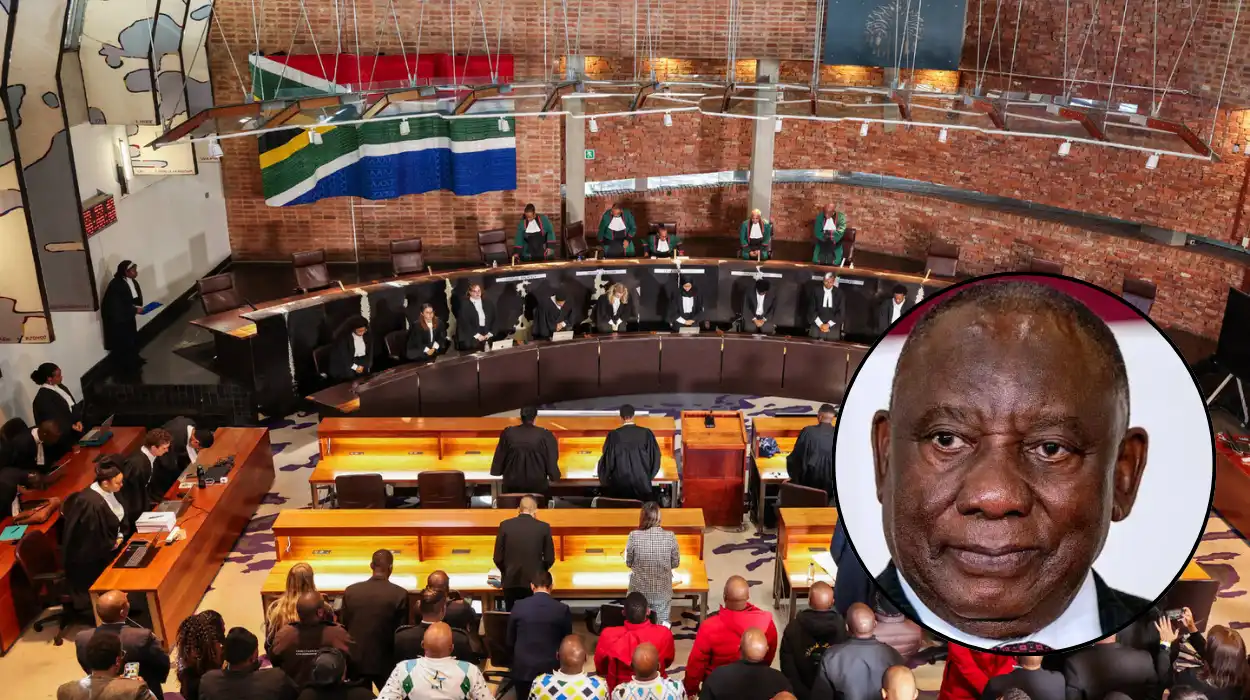
A full bench of the Western Cape High Court, comprising Judges Andre le Grange, Matthew Francis and Diane Davis, delivered three separate judgments on Friday morning after hearing urgent argument over two days. Two of the three judgments came down in Ramaphosa’s favour, meaning the majority ruling granted him an interdict of limited duration. The court found that the president had met the requirements for interim relief and ordered that Parliament’s Section 89 impeachment committee is barred from proceeding with public hearings pending the outcome of Ramaphosa’s separate review case.
Opening the judgment, le Grange said the court had
“carefully considered the weighty arguments advanced by the parties in the limited time available, given the urgency of the matter.”
He went on to explain that the bench had produced three distinct judgments, noting:
“The first judgment concludes, for reasons set out therein, that the president has not made out a case for an interim interdict.”
Despite that dissenting view, the majority of the panel sided with Ramaphosa, and the court ordered that costs of the urgent application stand over for determination by the court that eventually hears the review.
Why did Ramaphosa seek to halt the impeachment inquiry?
Ramaphosa’s legal team approached the Western Cape High Court on an urgent basis, arguing that allowing the impeachment committee to begin its work before the validity of the underlying panel report had been tested would cause the president serious and irreversible harm. Advocate Wim Trengove, representing the president, told the court that subjecting Ramaphosa to a public impeachment inquiry founded on a report that might later be set aside would inflict significant reputational damage.
“Very significant harm will be done to the president if the hearing goes ahead and it is ultimately found that the report was invalid,”
Trengove argued.
Trengove further submitted that a president removed from office under Section 89 of the Constitution forfeits presidential benefits and a pension, and would be barred from holding public office in future, making the consequences of impeachment uniquely serious and difficult to reverse. He also argued that Parliament would suffer little prejudice from a temporary delay, given that Ramaphosa’s review application is due to be heard from 2 to 4 September, with a judgment expected shortly afterwards.
What is the Phala Phala ‘Farmgate’ scandal?
The controversy at the heart of the impeachment proceedings dates back to February 2020, when burglars broke into Ramaphosa’s private game farm at Phala Phala in Limpopo province and stole a large sum of money that had been concealed inside a sofa. Reports at the time put the stolen amount at approximately $580,000, equivalent to roughly R9.6 million. Details of the theft only became public two years later, in 2022, when South Africa’s former spy chief, Arthur Fraser, a close ally of Ramaphosa’s predecessor Jacob Zuma, laid out allegations against the president in a dossier submitted to police. Fraser accused Ramaphosa of concealing the theft from law enforcement and tax authorities. Because the stolen cash was in foreign currency, questions were also raised over whether exchange control regulations had been breached. Ramaphosa has consistently denied any wrongdoing, maintaining that the money came from the legitimate sale of buffaloes from the farm.
How did the Constitutional Court revive the impeachment process?
An independent panel, appointed in 2022 and led by former Chief Justice Sandile Ngcobo, was tasked with examining whether Ramaphosa had committed an impeachable offence in connection with the Phala Phala burglary. In November 2022, the panel found there was prima facie evidence that the president may have violated Section 96(2)(a) of the Constitution and Section 34(1) of the Prevention and Combating of Corrupt Activities Act, in relation to how the burglary investigation was handled. Despite this, MPs voted in December 2022 against establishing a formal impeachment inquiry, a decision that effectively shelved the panel’s findings at the time.
That outcome was later overturned. In May 2026, the Constitutional Court ruled that Parliament had acted unlawfully in blocking the process. Delivering that judgment, Chief Justice Mandisa Maya stated that the National Assembly’s vote of 13 December 2022 was “inconsistent with the Constitution, invalid, and it is set aside.” The Constitutional Court ordered that the independent panel’s report be referred back to a newly established impeachment committee, paving the way for the proceedings that Ramaphosa has now succeeded in pausing.
What did Ramaphosa’s legal team argue in court?
Beyond the argument that proceeding with hearings would cause irreparable reputational harm, Ramaphosa’s legal team built their case around the claim that the independent panel had fundamentally misapplied the correct legal test when reaching its findings. A central plank of the president’s review application is that parliamentary rules required the panel to determine whether there was sufficient evidence of a specific threshold before making its findings, and that the panel had instead applied the wrong standard. Ramaphosa’s broader review case argues that the panel
“misconceived its mandate, misjudged the information placed before it and misinterpreted the four charges advanced against”
him.
What has the composition of Parliament got to do with the case?
The political backdrop to the impeachment process has shifted considerably since the Phala Phala allegations first emerged. Ramaphosa’s African National Congress lost its outright parliamentary majority following the 2024 general election and now governs as part of a coalition government. This changed arithmetic in the National Assembly means the president can no longer rely on the same level of automatic party backing that helped shield him from the impeachment push in December 2022, adding further political weight to the ongoing legal battle.
Who sits on the parliamentary impeachment committee?
Following the Constitutional Court’s May ruling, the National Assembly was required to establish a formal impeachment committee to investigate the allegations further. That committee is made up of 31 members of Parliament drawn from 16 different political parties, reflecting the fragmented, multi-party composition of the current National Assembly. It is chaired by Makashule Gana, chief organiser of Rise Mzansi. Ahead of Friday’s ruling, Gana had indicated that the committee intended to press ahead with its work in the absence of a court order stopping it, telling reporters that the committee would continue “until a court orders otherwise.” Friday’s interdict now compels the committee to suspend its public hearings.
What happens next in Ramaphosa’s legal battle?
With the impeachment committee’s public hearings now paused, attention turns to the Western Cape High Court’s review of the independent panel’s report, which is scheduled to be heard from 2 to 4 September 2026. That hearing will determine whether the panel’s original findings — the same findings that prompted the Constitutional Court to order the impeachment process to resume — were lawfully reached. A judgment in the review is expected relatively soon after the September hearing, according to submissions made in court. The outcome of that review will ultimately decide whether the impeachment committee can resume its work, and on what basis.
How has Ramaphosa responded to the ruling?
Shortly after the judgment was delivered on Friday, the president issued a statement saying he “notes and respects” the court’s decision. The response was notably measured, avoiding overt triumphalism despite the ruling representing a significant, if temporary, legal victory for Ramaphosa in a saga that has dogged his presidency for several years.
What could this mean for Ramaphosa’s presidency?
The interdict does not resolve the underlying allegations against Ramaphosa, nor does it guarantee that the impeachment process will ultimately be abandoned. Instead, it grants the president additional time to attempt to have the independent panel’s findings set aside before facing public impeachment hearings. Should the September review go against him, the impeachment committee would likely resume its work on the original findings. Should it go in his favour, the entire basis for the impeachment inquiry could effectively collapse. Either way, the Phala Phala affair looks set to remain a defining feature of Ramaphosa’s presidency for at least a further two months, with South Africans and the president’s coalition partners watching closely for the outcome of the September hearing.
Explore More about World:
Prof. Nora Ladi Daduut Becomes Nigeria Ambassador to South Korea
US Conditions Saudi Nuclear Deal on Israel Recognition
How has the impeachment committee responded to the interdict?
Ahead of Friday’s judgment, the impeachment committee had been due to meet in the days that followed to continue laying the groundwork for its inquiry, with Gana previously signalling that MPs intended to keep working unless a court explicitly told them to stop. That position has now been overtaken by events. With the interdict in force, the 31-member committee is required to suspend all public hearings connected to the Phala Phala allegations, effectively freezing the impeachment process until the review case is resolved. Parliament has not indicated that it intends to appeal Friday’s ruling, though the interdict itself is described by the court as being of “limited duration,” tying its lifespan directly to the progress of Ramaphosa’s review application.
Why does the September review hearing matter so much?
The three-day hearing scheduled for 2 to 4 September has now become the pivotal moment in the entire Farmgate saga. It is at that hearing that the Western Cape High Court will examine, in detail, whether the Ngcobo-led independent panel correctly interpreted the constitutional and legislative test it was required to apply when it found Ramaphosa had a case to answer in 2022. Because Friday’s interdict is explicitly tied to the outcome of that review, the September hearing will effectively determine whether the impeachment committee’s work resumes, is narrowed, or falls away altogether. Legal analysts have noted that a swift judgment after the hearing would minimise the period of uncertainty for both Ramaphosa and Parliament, though no firm date for a ruling has yet been set.