Key Points
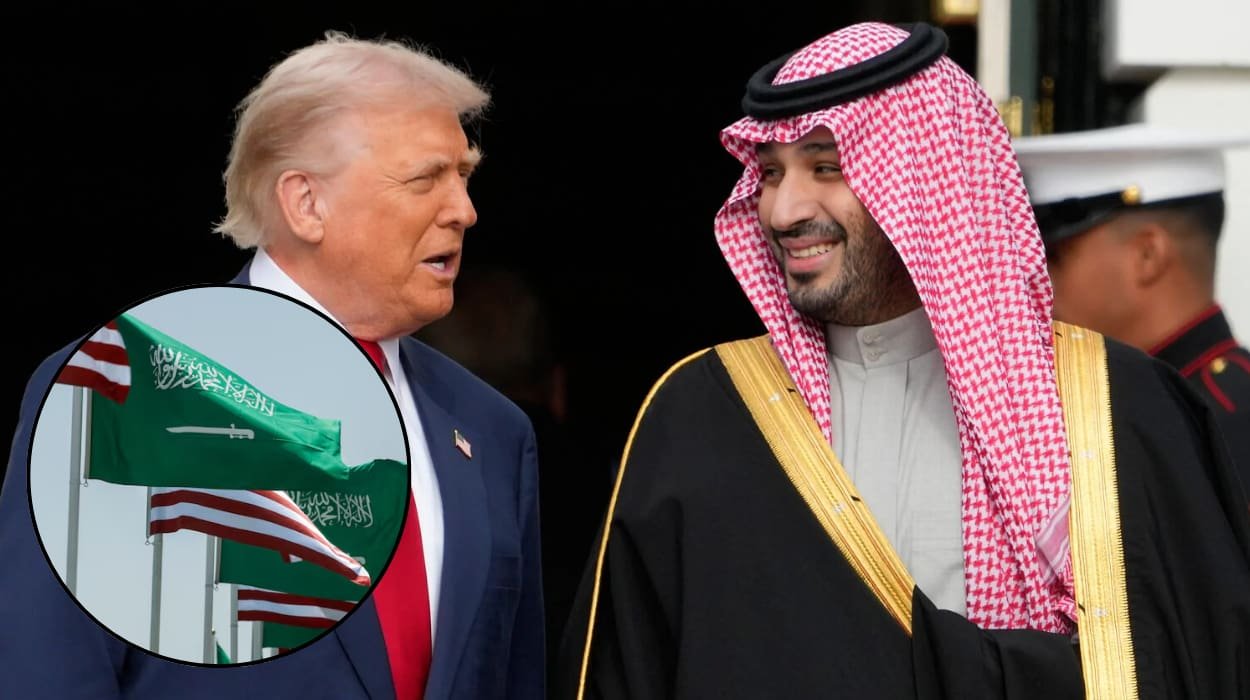
- US President Donald Trump has conditioned a civilian nuclear deal with Saudi Arabia on Riyadh recognising Israel.
- The agreement is tied to Saudi Arabia joining the Abraham Accords.
- Saudi Arabia has historically refused recognition of Israel without a pathway to Palestinian statehood.
- White House Press Secretary Karoline Leavitt confirmed that “the deal is off” if Saudi Arabia declines normalisation.
- The proposed deal allows Saudi Arabia to develop nuclear reactors using US technology.
- It includes controversial provisions permitting uranium enrichment and nuclear waste reprocessing.
- The US Congress will review the agreement over a 90-day period before implementation.
- Israel welcomed the condition, calling it a step forward for Middle East peace.
- Questions remain over whether enrichment will be allowed under the final deal.
- The International Atomic Energy Agency (IAEA) is awaiting formal verification requests.
Washington DC (Britain Today News) July 23, 2026 — The United States has formally tied its proposed civilian nuclear cooperation agreement with Saudi Arabia to the kingdom’s recognition of Israel, marking a significant geopolitical shift that could reshape alliances across the Middle East. President Donald Trump confirmed that the deal would proceed only if Riyadh joins the Abraham Accords, intensifying diplomatic pressure on Saudi leadership while raising new concerns about nuclear proliferation and regional stability.
- Key Points
- What is the US-Saudi nuclear deal about?
- What did the White House say about the condition?
- Why has Saudi Arabia resisted recognising Israel?
- What are the key features of the nuclear agreement?
- How has Israel responded to the announcement?
- What role will the US Congress play?
- What is the role of the IAEA in this deal?
- What happens next in the negotiations?
What is the US-Saudi nuclear deal about?
The proposed agreement between Washington and Riyadh centres on the development of Saudi Arabia’s civilian nuclear energy programme, allowing the kingdom to build reactors with American technology.
As reported by a Reuters journalist, US officials described the deal as part of broader efforts to help Saudi Arabia diversify its energy sources beyond oil while adhering to international safety standards. The agreement also reflects Washington’s strategic intent to counterbalance growing Chinese and Russian influence in the Gulf region.
Saudi Arabia previously stated that the deal would support “the highest international standards” of nuclear safety, security, and non-proliferation, positioning it as a cornerstone of its Vision 2030 economic transformation plan.
Why has the US tied the deal to Israel recognition?
President Donald Trump explicitly linked the nuclear agreement to Saudi Arabia’s participation in the Abraham Accords, a series of normalisation agreements between Israel and several Arab nations.
In a statement shared publicly, Trump wrote:
“The Civil Nuclear Deal… will be approved, but is totally subject to Saudi Arabia joining the very respected and successful Abraham Accords.”
This condition represents a strategic effort to expand the accords, originally brokered during Trump’s first term, which saw the United Arab Emirates, Bahrain, Morocco, and Sudan establish formal ties with Israel.
What did the White House say about the condition?
White House Press Secretary Karoline Leavitt reinforced the administration’s stance during a press briefing.
As reported by Reuters, Karoline Leavitt stated:
“We’ll continue to talk with our Saudi counterparts to get the deal finalised and hopefully see them joining Abraham Accords very soon.”
She added a clear warning:
“If the kingdom does not join them, the deal is off.”
Leavitt also noted that President Trump had raised the issue in previous discussions with Saudi Crown Prince Mohammed bin Salman, although no recent direct conversation had taken place following the latest announcement.
Why has Saudi Arabia resisted recognising Israel?
Saudi Arabia has consistently maintained that it will not normalise relations with Israel without concrete progress towards establishing a Palestinian state.
This long-standing policy aligns with broader Arab consensus and reflects domestic and regional political sensitivities. Riyadh has repeatedly emphasised the importance of a two-state solution as a prerequisite for diplomatic recognition.
The current US condition therefore places Saudi leadership in a complex position, balancing strategic partnerships with Washington against its commitments to Palestinian statehood.
What are the key features of the nuclear agreement?
The proposed deal includes several significant provisions:
- Saudi Arabia would be allowed to build nuclear reactors using US technology.
- The agreement permits uranium enrichment and reprocessing of nuclear waste.
- A two-year feasibility study is planned for enrichment capabilities.
- The deal falls under the US Atomic Energy Act, which enforces strict non-proliferation standards.
However, ambiguity remains over the extent of enrichment allowed.
President Trump stated:
“There will be no enrichment of material!”
but did not clarify whether this referred specifically to weapons-grade uranium or broader enrichment activities.
Why is uranium enrichment controversial?
Uranium enrichment is a central concern because it can serve both civilian and military purposes.
- Low-level enrichment (up to around 6%) is typically used for nuclear reactor fuel.
- High-level enrichment (around 90%) can be used for nuclear weapons.
Allowing Saudi Arabia to enrich uranium raises fears that the programme could eventually be diverted for military use, potentially triggering a regional arms race.
Notably, the United Arab Emirates agreed to forgo enrichment entirely in its 2009 nuclear deal with the United States, setting a precedent that differs from the Saudi proposal.
How has Israel responded to the announcement?
Israel has welcomed the US condition linking the nuclear deal to normalisation.
In an official statement, Israeli Prime Minister Benjamin Netanyahu’s office said:
“Saudi Arabia’s joining of the Abraham Accords would be an historic leap forward for peace in the Middle East.”
Israel has also expressed concerns about the nuclear aspects of the agreement, particularly the possibility that Saudi Arabia could develop capabilities that might destabilise the region.
What role will the US Congress play?
The agreement is subject to congressional oversight under US law.
- Congress will have 90 session days to review the deal.
- Lawmakers can approve, reject, or request modifications.
This review process introduces political uncertainty, as members of Congress may raise concerns over non-proliferation risks and regional security implications.
Explore More about World:
India Student Protests Intensify Pressure on Modi Government
West Africa Signs Off $25bn Nigeria-Morocco Gas Pipeline Deal
What is the role of the IAEA in this deal?
The International Atomic Energy Agency (IAEA) is expected to play a critical role in monitoring and verification.
The agency stated it is awaiting a formal request from both Washington and Riyadh before implementing safeguards and seeking approval from its board of governors.
IAEA oversight would be essential to ensure compliance with global nuclear non-proliferation standards.
How does this fit into wider Middle East diplomacy?
The proposed deal sits at the intersection of several major geopolitical dynamics:
- Expansion of the Abraham Accords.
- US efforts to maintain influence in the Gulf.
- Ongoing tensions involving Iran’s nuclear programme.
- Regional concerns about a potential nuclear arms race.
The linkage between nuclear cooperation and diplomatic recognition represents a significant escalation in US leverage, signalling a more transactional approach to foreign policy under the current administration.
Could this trigger a regional arms race?
Analysts have warned that allowing Saudi Arabia to develop enrichment capabilities could prompt other countries in the region to pursue similar programmes.
Israel has already voiced concerns that the deal might “ignite a Middle East arms race,” reflecting fears that nuclear capabilities could spread across the region.
Such a development would complicate existing security dynamics, particularly given ongoing tensions with Iran.
What happens next in the negotiations?
Diplomatic engagement between the United States and Saudi Arabia is expected to continue in the coming weeks.
Karoline Leavitt indicated that discussions are ongoing, stating:
“We’ll continue to talk with our Saudi counterparts.”
However, the outcome will depend on several key factors:
- Saudi Arabia’s willingness to reconsider its stance on Israel.
- Congressional approval in Washington.
- Clarification of nuclear enrichment provisions.
- International oversight mechanisms.
The Saudi Embassy in Washington has not yet responded publicly to the latest developments, leaving its official position on the conditional deal unclear.