Key Points
- Neighbourhood crime in London has fallen by 15% over the past year, according to City Hall and Metropolitan Police data.
- The figures cover the 12 months up to June 2026.
- Over 35,000 fewer offences were recorded across the capital.
- Westminster saw the largest drop, with crime down by more than one-third and nearly 14,000 fewer offences.
- Phone thefts in the West End have halved following intensified policing operations.
- Theft from the person dropped by 23%, personal robbery by 11%, and vehicle crime by 9%.
- The Metropolitan Police arrested around 1,000 suspects per month as part of targeted operations.
- Business robbery increased by 19.5%, highlighting uneven progress.
- Only eight of London’s 32 boroughs met or exceeded the 15% reduction benchmark.
- Conservative opposition figures argue crime rose significantly in previous years before recent improvements.
- Concerns remain over court backlogs, with some trials delayed until 2030.
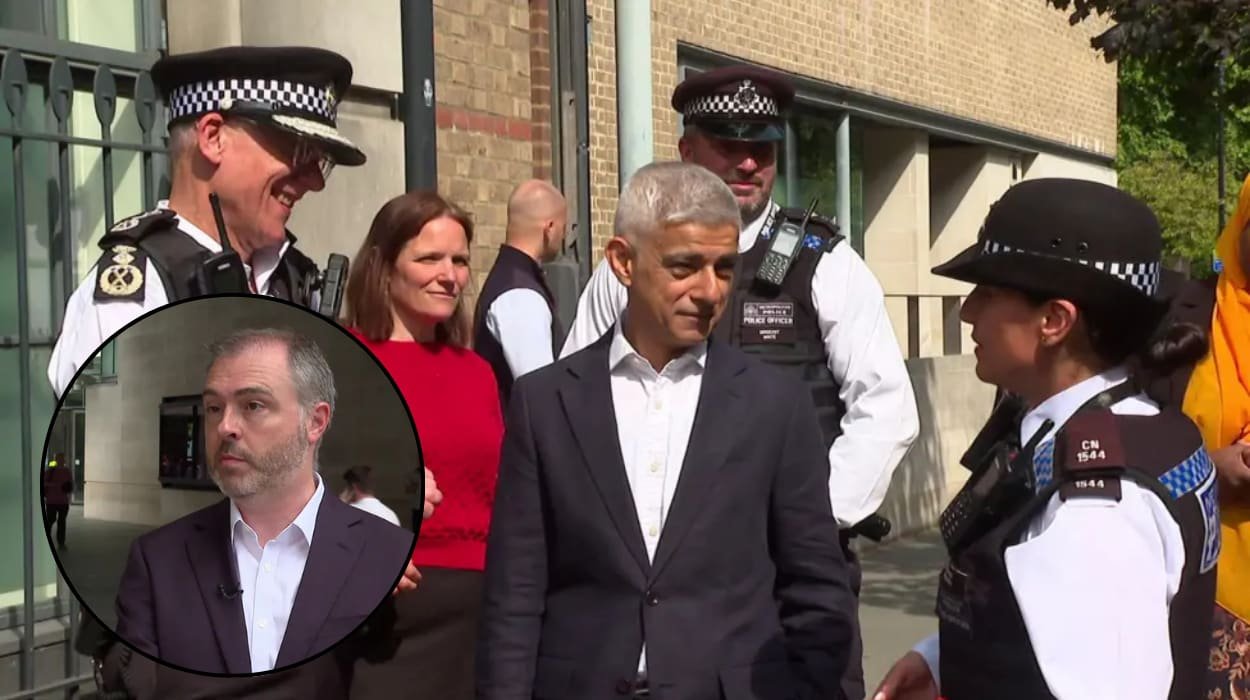
London (Britain Today News) July 23, 2026 – London has recorded a 15% reduction in neighbourhood crime over the past year, according to newly released figures from City Hall and the Metropolitan Police, signalling progress in tackling street-level offences despite ongoing concerns about uneven trends and systemic pressures within the justice system.
- Key Points
- What do the latest figures reveal about crime in London?
- Why has neighbourhood crime fallen by 15%?
- How significant is the drop in Westminster?
- Are all London boroughs seeing the same improvements?
- What has the Mayor of London said about the figures?
- How has the Metropolitan Police responded to the data?
- What crimes are not included in the neighbourhood dataset?
- Why is business robbery increasing despite overall declines?
- What are critics saying about the crime figures?
- How does London compare nationally on crime trends?
- What role does policing strategy play in crime reduction?
- What challenges remain for London’s justice system?
- How is the government addressing court backlogs?
- What does this mean for London’s future safety?
What do the latest figures reveal about crime in London?
The latest dataset, covering the 12 months to June 2026, shows a significant fall in neighbourhood crime across the capital, with more than 35,000 fewer offences recorded. These offences include burglary, robbery, theft from the person, and vehicle crime—categories that collectively represent 22% of all recorded crimes in London.
The reduction has been particularly pronounced in central London, where intensified policing efforts have targeted high-frequency crimes such as mobile phone theft and street robbery.
The Metropolitan Police confirmed that targeted enforcement and visible patrols have contributed to the overall decline. The force described the results as a sign that recent strategies are beginning to deliver measurable outcomes.
Why has neighbourhood crime fallen by 15%?
The primary drivers behind the decline include a marked reduction in theft-related offences and increased police activity in high-risk areas.
Statistics released by the Metropolitan Police show:
- Theft from the person fell by 23%, equating to 23,311 fewer offences.
- Personal robbery dropped by 11%.
- Vehicle crime decreased by 9%.
A major factor has been the crackdown on mobile phone theft, particularly in central London. According to police data, 13,000 fewer phones were stolen across the capital over the past year.
The Metropolitan Police attributed this to its largest-ever operation targeting phone theft, which included doubling patrols in hotspots such as the West End.
How significant is the drop in Westminster?
Westminster has emerged as the focal point of London’s crime reduction efforts, accounting for nearly 40% of the total decline across the capital.
Neighbourhood crime in the borough fell by more than one-third, with close to 14,000 fewer offences recorded. The scale of this reduction underscores the impact of targeted policing in high-density urban areas with heavy footfall and tourism.
However, analysts note that Westminster’s outsized contribution skews the overall figures. When the borough is excluded, the reduction across the rest of London drops to 10.8%, rather than the headline 15%.
Are all London boroughs seeing the same improvements?
The data suggests a mixed picture across London’s boroughs.
While the overall trend is downward, only eight out of 32 boroughs achieved or exceeded the 15% reduction target. The average borough experienced a more modest decline of 8.9%.
Some areas saw increases in neighbourhood crime:
- Newham recorded a 3% rise.
- Kingston experienced a 2% increase.
These variations highlight the uneven distribution of crime trends and suggest that local factors continue to play a significant role in shaping outcomes.
What has the Mayor of London said about the figures?
The Mayor of London has framed the figures as evidence that the capital is becoming safer, despite ongoing criticism.
The Mayor stated:
“We know many people online and across the world have been trying to talk London down, but the evidence is clear – London is one of the safest global cities in the world, crime is falling and we’ll continue working together to build a safer London for everyone.”
The remarks come amid broader debates about London’s global reputation, particularly in the context of online narratives around crime and safety.
How has the Metropolitan Police responded to the data?
Metropolitan Police Commissioner Sir Mark Rowley described the figures as a sign of sustained progress in tackling volume crime.
Sir Mark Rowley said:
“We have momentum which we’re not going to give up on.”
He added that technological advancements are playing an increasingly important role in crime prevention and detection, including:
- Live facial recognition cameras.
- Drones for surveillance and rapid response.
- High-powered e-bikes to pursue suspects in congested areas.
According to the Met, these tools have enabled officers to arrest approximately 1,000 suspects each month, while also seizing knives, drugs, stolen phones, and illegal vehicles.
What crimes are not included in the neighbourhood dataset?
While the 15% reduction is notable, it is important to understand the scope of the dataset.
The definition of “neighbourhood crime” used by City Hall and the Metropolitan Police excludes several major categories, including:
- Violence against the person.
- Sexual offences.
- Fraud.
- Drug-related offences.
- Weapons offences.
Additionally, the dataset does not include shoplifting or business robbery—both of which are significant components of overall crime trends.
This means that the headline figure provides only a partial view of crime in London.
Why is business robbery increasing despite overall declines?
One of the most striking contrasts in the data is the rise in business robbery, which increased by 19.5% over the same period, according to the Metropolitan Police crime dashboard.
This increase suggests that while street-level crimes affecting individuals may be declining, businesses are facing growing risks.
The divergence has raised questions about whether current policing strategies are sufficiently addressing commercial crime, particularly in retail and hospitality sectors.
What are critics saying about the crime figures?
Opposition figures have welcomed the reduction but cautioned against viewing it in isolation.
Neil Garratt, Conservative London Assembly Member for Croydon and Sutton, argued that the improvements follow a period of significant increases in crime.
As reported by BBC News, Neil Garratt said:
“After the pandemic, mayor Khan lost control of crime in London, including a phone-snatching epidemic that saw over 340,000 phones stolen from Londoners and tourists alike.”
He added:
“Nowhere else in the country suffered this problem, as theft is down 53% across the country since 2019 but in London it went the other way – almost doubling before the mayor took action.”
Garratt concluded:
“Today’s impressive figures show that the targeted policing we’ve called for really works.”
These comments reflect broader political disagreements over how crime trends should be interpreted and attributed.
How does London compare nationally on crime trends?
The debate over London’s crime levels is partly shaped by comparisons with national trends.
While theft has declined significantly across the rest of England and Wales since 2019, London experienced an increase during the same period before recent reductions.
This divergence has fuelled criticism that the capital faced unique challenges, particularly in relation to mobile phone theft and tourism-driven crime.
However, recent data suggests that London may now be aligning more closely with national trends, at least in certain categories.
What role does policing strategy play in crime reduction?
The decline in neighbourhood crime highlights the impact of targeted policing strategies.
Key elements include:
- Increased patrols in high-risk areas.
- Intelligence-led operations targeting repeat offenders.
- Use of technology to identify and track suspects.
The Metropolitan Police’s focus on phone theft has been particularly effective, demonstrating how concentrated efforts can yield rapid results.
However, the uneven outcomes across boroughs suggest that a one-size-fits-all approach may not be sufficient.
Explore More about London:
South London Family’s High Court Bid Fails but ‘Secret’ Housing Criteria Exposed Amid Plans for Appeal
Disney Store London Forced to Shut Amid Card Chaos
What challenges remain for London’s justice system?
Despite the positive trends in crime reduction, significant challenges remain within the broader justice system.
Sir Mark Rowley has expressed concern about the strain on courts and the impact on victims.
He said:
“I’m really, really troubled and concerned by the fragility of the justice system at the moment.”
He added:
“We’ve got hundreds of cases that are now listed for trial in 2030. That’s a crazy amount of time to hold a victim in abeyance whilst waiting for justice.”
These delays highlight a critical bottleneck that could undermine public confidence, even as crime rates fall.
How is the government addressing court backlogs?
The government has acknowledged the pressures facing the justice system and has pledged reforms aimed at speeding up court processes.
While specific measures are still being implemented, officials have previously stated that they are “gripping the crisis” through a combination of investment and procedural changes.
However, the scale of the backlog suggests that meaningful improvements may take time to materialise.
What does this mean for London’s future safety?
The latest figures present a cautiously optimistic picture of London’s safety, with clear progress in reducing neighbourhood crime.
However, the data also underscores several complexities:
- Improvements are uneven across boroughs.
- Certain crime categories, such as business robbery, are rising.
- Structural challenges within the justice system persist.
The coming months will be critical in determining whether the current momentum can be sustained and extended to other areas of crime.