Key Points
- U.S. Vice President JD Vance confirms 60-day negotiation window under Iran understanding begins Thursday
- Interim memorandum of understanding approved by President Donald Trump and Iranian leadership
- Vance states “the 60-day period officially started today” during White House briefing
- Focus of talks includes governance and access to the Strait of Hormuz
- U.S. maintains stance that Strait of Hormuz should remain toll-free for oil and gas shipping
- Iran allegedly “effectively closed the waterway during the war,” according to U.S. position
- Negotiations aim to determine post-interim arrangement with no guaranteed long-term resolution
- Final agreement outcomes remain uncertain as key disputes are deferred to next phase
Washington, DC (Britain Today News) June 18, 2026 – A new diplomatic countdown between the United States and Iran has formally begun after U.S. Vice President JD Vance confirmed that a 60-day negotiation window under a recently approved memorandum of understanding is now in effect, marking a critical phase in ongoing efforts to stabilise tensions over maritime access, energy transit routes, and post-conflict governance arrangements involving the Strait of Hormuz.
- Key Points
- What did JD Vance say about the 60-day Iran deal window?
- What is the significance of the Strait of Hormuz in the negotiations?
- Why is the 60-day period important for U.S.–Iran relations?
- What did the White House say about post-60-day outcomes?
- What role does President Donald Trump play in the agreement?
- What happens after the 60-day deadline expires?
- What are the broader geopolitical implications?
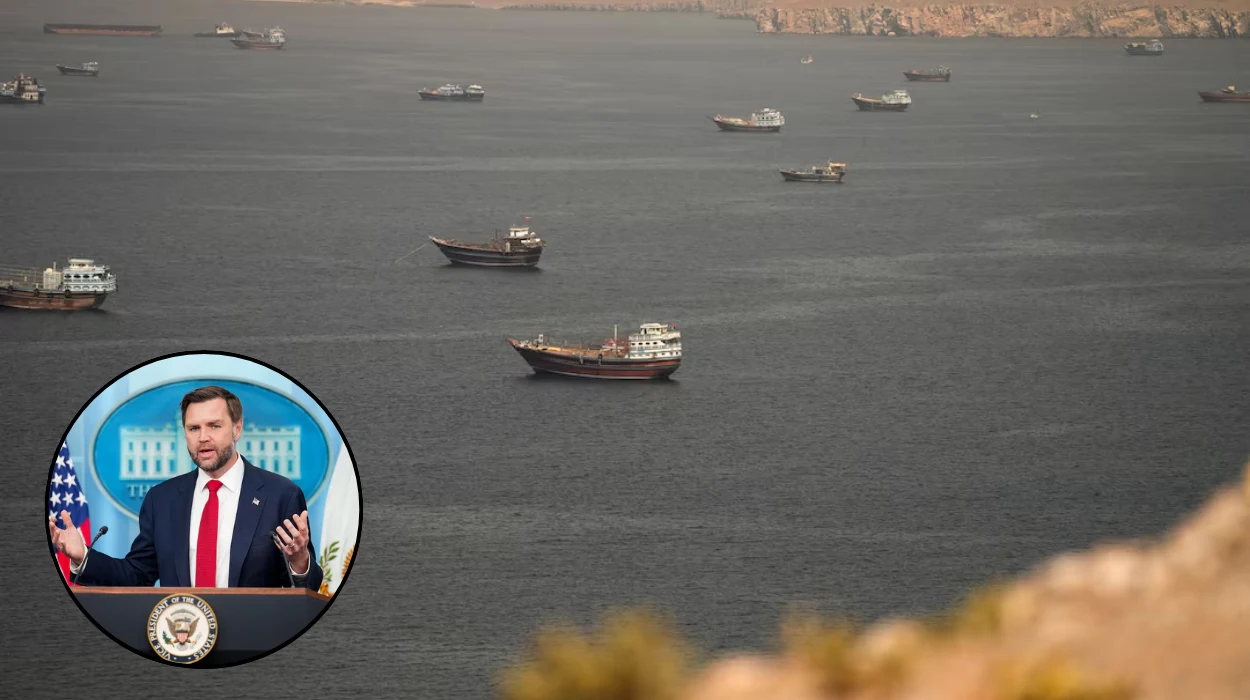
Speaking during a White House briefing, Vice President Vance stated unequivocally that the timetable had already begun, saying:
“I would say the 60-day period officially started today.”
The remarks signal the commencement of a high-stakes diplomatic phase agreed under an interim framework signed between the administration of President Donald Trump and Iranian authorities.
The announcement places immediate focus on one of the world’s most strategically significant maritime corridors, the Strait of Hormuz, through which a substantial portion of global oil and liquefied natural gas shipments pass. The corridor has long been considered a flashpoint in U.S.–Iran relations, particularly during periods of military escalation and sanctions pressure.
According to Vice President Vance, the next 60 days will determine whether the interim structure evolves into a more durable framework or collapses into renewed confrontation.
“The final negotiations can set the terms of what comes afterwards,”
he told reporters, underscoring the uncertainty that continues to define the process.
What did JD Vance say about the 60-day Iran deal window?
Vice President JD Vance was clear in his framing of the timeline, stating that the negotiation period has already officially begun. His remarks came during a scheduled White House briefing where journalists pressed for clarification on when the countdown would start and what enforcement mechanisms would follow its conclusion.
Vance responded:
“I would say the 60-day period officially started today.”
The statement was intended to remove ambiguity surrounding the start date of the diplomatic window, which forms part of an interim memorandum of understanding between Washington and Tehran. The agreement, described by officials as a temporary bridge toward longer-term negotiations, defers several major disputes to a later phase.
In particular, the arrangement appears to delay resolution on maritime governance issues in the Strait of Hormuz, a chokepoint that remains central to global energy security and regional power dynamics.
The Vice President emphasised that the current phase is not designed to produce final answers but rather to structure negotiations. This approach, he suggested, allows both sides to maintain engagement while avoiding immediate escalation over unresolved disputes.
What is the significance of the Strait of Hormuz in the negotiations?
The Strait of Hormuz is repeatedly identified by U.S. officials as the central strategic concern in the ongoing talks. Vice President Vance reaffirmed Washington’s position that the waterway must remain free of tolls or restrictions on commercial shipping.
He said the United States continues to view the corridor as a global public good, essential for uninterrupted energy flows. According to his remarks, any form of tolling or restrictive control would be unacceptable under U.S. policy.
The issue of maritime access has historically been a source of tension between the United States and Iran. U.S. officials claim that during periods of conflict, Iran has exerted pressure on navigation through the Strait, including actions that Washington describes as effectively limiting passage.
Vance referred to this directly, stating that Iran had “effectively closed the waterway during the war,” a claim reflecting longstanding U.S. concerns about maritime security in the region.
However, the current interim agreement does not resolve these disputes. Instead, it postpones them, allowing negotiators to revisit the issue during the 60-day window.
Why is the 60-day period important for U.S.–Iran relations?
The 60-day timeline is widely viewed as a structured diplomatic mechanism intended to prevent immediate escalation while keeping negotiations active. Under the memorandum of understanding approved by President Donald Trump and Iranian leaders, the period functions as a cooling-off phase in which both sides attempt to define parameters for longer-term stability.
Vice President Vance’s remarks suggest that the window is not merely procedural but politically significant, as it sets expectations for measurable progress within a defined timeframe.
Diplomatic analysts have long noted that time-bound negotiations can serve two purposes: they create urgency for compromise, while also providing political cover for leaders who need to demonstrate movement without committing to final concessions prematurely.
In this case, the 60-day period appears to perform both roles, offering a structured path forward while leaving core disputes unresolved.
What did the White House say about post-60-day outcomes?
During the briefing, Vice President Vance addressed questions about what would happen once the 60-day period concludes. He did not outline a definitive outcome but instead emphasised that the next steps would depend on the progress of negotiations.
He stated that
“the final negotiations can set the terms of what comes afterwards,”
signalling that the current framework is flexible and contingent on diplomatic developments.
The interim agreement effectively defers the most contentious issues, including governance arrangements for the Strait of Hormuz and broader energy transit rules. As a result, the end of the 60-day window may lead to one of several possible outcomes, including extension, revision, or breakdown of talks.
However, no formal guarantees have been provided that disputes will be resolved within the timeframe, raising questions about the enforceability of the schedule.
Is the Strait of Hormuz at risk of renewed restrictions?
Concerns about the Strait of Hormuz remain central to international attention. The waterway is one of the most critical maritime corridors in the world, linking major oil-producing regions of the Middle East with global markets.
Vice President Vance reiterated that the United States opposes any form of tolling or restriction on the passage of commercial shipping through the strait. This position reflects longstanding U.S. policy aimed at ensuring freedom of navigation in international waters.
The interim agreement, however, leaves open questions about enforcement and compliance mechanisms. While both parties have agreed to a temporary framework, the details of how maritime access will be guaranteed remain unresolved.
Iran’s position on the matter has not been fully detailed in the current public statements, but U.S. officials have indicated that previous conflicts have included disruptions to shipping routes.
The absence of a binding enforcement mechanism within the 60-day structure has led observers to describe the arrangement as fragile and dependent on continued diplomatic goodwill.
What role does President Donald Trump play in the agreement?
The interim memorandum of understanding was described as having been approved by President Donald Trump alongside Iranian leadership. The agreement reflects a negotiated attempt to manage tensions through phased diplomacy rather than immediate comprehensive settlement.
While Vice President Vance did not elaborate extensively on the President’s direct involvement during the briefing, the framework is understood to carry executive backing from the U.S. administration.
The agreement’s structure suggests a deliberate choice to prioritise incremental diplomacy, allowing sensitive issues to be addressed over time rather than through immediate resolution attempts that could risk collapse.
Could the 60-day negotiations change energy markets?
Energy markets are expected to closely monitor developments over the 60-day period, given the Strait of Hormuz’s importance to global oil and gas shipments. Any disruption or perceived instability in the region has historically influenced commodity pricing and supply chain expectations.
While Vice President Vance did not directly comment on market impacts, his remarks regarding the importance of free passage through the strait indirectly reinforce the economic stakes involved.
Analysts often view such diplomatic windows as periods of heightened volatility risk, particularly when outcomes remain uncertain and enforcement mechanisms are unclear.
The interim agreement may temporarily reduce escalation risk, but it does not eliminate underlying structural tensions that could affect energy security.
Explore More about World:
Lebanon’s Nabatiyeh Sees Limited Returns After US-Iran Ceasefire Amid Ongoing Clashes Nearby
Russian Warship Fires Warning Shots Near British Yacht in English Channel
What happens after the 60-day deadline expires?
The conclusion of the 60-day period represents a critical juncture in the diplomatic process. However, Vice President Vance did not confirm whether automatic consequences would follow if no agreement is reached.
Instead, he emphasised that negotiations would determine the structure of any subsequent arrangement. This leaves open the possibility of extension, renegotiation, or escalation depending on progress made during the allotted timeframe.
The lack of a predefined outcome underscores the flexible nature of the interim agreement, but also highlights its uncertainty.
How stable is the interim Iran–US framework?
The interim framework is designed as a transitional mechanism rather than a final settlement. Its stability depends largely on continued engagement from both sides and the absence of major incidents affecting maritime security or regional stability.
Vice President Vance’s comments suggest that both parties recognise the fragility of the arrangement, but are committed to using the 60-day period to explore possible pathways forward.
However, the deferral of core issues such as maritime governance and energy transit rules means that underlying tensions remain unresolved.
What are the broader geopolitical implications?
The announcement of a structured negotiation window carries wider geopolitical significance, particularly for global energy markets and regional security dynamics. The Strait of Hormuz remains one of the most strategically sensitive maritime chokepoints in the world.
Any agreement affecting its governance has implications far beyond the United States and Iran, influencing trade routes and energy security across multiple continents.
The interim framework may be viewed as an attempt to stabilise relations temporarily while avoiding immediate confrontation. However, the absence of a final resolution mechanism means uncertainty will persist beyond the 60-day window.
The commencement of a 60-day negotiation period between the United States and Iran marks a pivotal moment in ongoing diplomatic efforts to manage tensions over maritime access and energy security. Vice President JD Vance confirmed that the countdown has begun, while reaffirming U.S. opposition to restrictions in the Strait of Hormuz and emphasising the temporary nature of the agreement.
As the clock starts ticking, the outcome of these talks will likely shape not only bilateral relations but also broader global energy stability in the months ahead.