Key Points
- Two children have died in England this year as measles spreads, with one death from “acute measles” and another linked to “late effects of measles”
- London has recorded 404 confirmed laboratory cases so far in 2026, representing 55% of the 736 total cases across the whole of England
- More than half of all measles cases in England this year have been concentrated in London, with unvaccinated children under ten most affected
- Enfield has the highest number of cases in England at 111, followed by Birmingham with 79, then Haringey and Islington with 49 cases each
- North London boroughs including Enfield, Haringey, and Islington have seen the most cases in the capital
- Eight of the 12 local authorities with the highest measles cases this year are in London, including Barnet, Camden, Brent, Harrow, and Hillingdon
- Health Secretary James Murray stated these deaths are a “heartbreaking reminder that measles is not a harmless childhood illness”
- 91.8% of five-year-olds received one dose of MMR vaccine in England in 2024/25, the lowest level since 2010/2011
- The UK lost its WHO measles-free status in January 2026 due to rising deaths and fall in jab uptake
- Dr Vanessa Saliba from UKHSA urged all parents to ensure children are up to date with MMR or MMRV vaccines
- Measles can lead to serious complications including pneumonia, brain inflammation, and in rare cases long-term disability or death
- Helen Bedford from University College London noted largest numbers are in areas with lowest vaccine uptake, particularly in London districts
Enfield (Britain Today News) June 11, 2026 – Two children have died as measles spreads in England with a dramatic rise in the number of cases in London, where more than half of all infections this year have been concentrated, according to the latest data from the UK Health Security Agency.
- Key Points
- What Are the Latest Measles Cases in London 2026?
- Why Have Two Children Died from Measles This Year?
- What Are the Symptoms of Measles and How Dangerous Is It?
- Where Are the Most Measles Cases in London Boroughs?
- What Is the MMR Vaccine Uptake Rate in London 2026?
- What Are Health Officials Urging Parents to Do Now?
- Why Did UK Lose Measles-Free Status in 2026?
The tragic fatalities mark the first time since 2018 that two children have died from measles within a single year in England and Wales, as reported by a senior public health official speaking to The Guardian. London has recorded 404 confirmed laboratory cases so far in 2026, representing 55% of the 736 total cases across the whole of England, with North London boroughs including Enfield, Haringey, and Islington seeing the most cases in the capital.
What Are the Latest Measles Cases in London 2026?
The number of confirmed laboratory cases in London has risen to 404 so far this year, representing a significant increase compared to 493 for the whole of 2025, according to data published by the UK Health Security Agency. The real figure will be higher, say health experts, as not all cases are confirmed by laboratory tests, with measles now on the rise again in the capital with 63 cases, including ten in Harrow, out of 137 across the country in the four weeks to June 8.
Enfield, which was at the centre of an outbreak earlier this year, has seen the most cases in England in 2026 at 111, followed by Birmingham with 79, and then Haringey and Islington with 49 cases each, as reported in the London Standard. Most of those catching measles are unvaccinated children under ten, with the majority of cases involving unvaccinated children aged 10 and younger, according to the UKHSA’s findings.
Eight of the 12 local authorities with the highest number of measles cases this year are in London, including Barnet and Camden, both with 18 cases, Brent with 15, Harrow with 15, and Hillingdon with 14, demonstrating the widespread nature of the outbreak across the capital. Since the last report two weeks prior, an additional 106 laboratory-confirmed measles cases have been recorded, raising the total confirmed cases from January 1 to June 8 to 736, in contrast to 959 cases reported for the entirety of the year 2025.
Why Have Two Children Died from Measles This Year?
Public health chiefs said one child had died from “acute measles” and another child’s death was linked to the “late effects of measles,” according to the latest official data from UKHSA published on June 10, 2026. For confidentiality reasons, the UK Health Security Agency did not say where these fatalities took place, though the deaths occurred in England.
Health Secretary James Murray, MP for Ealing North, said:
“My thoughts are with the families who have suffered such unimaginable loss. These deaths are a heartbreaking reminder that measles is not a harmless childhood illness. Measles can lead to serious complications that can be fatal, and the MMR vaccine, which has saved countless lives, remains the best protection we have against this highly infectious disease,”
According to a senior public health official speaking to The Guardian, this marks the first instance since 2018 where two children have died from measles within a single year in England and Wales. Dr Vanessa Saliba, a consultant epidemiologist at UKHSA, expressed her condolences, stating:
“My thoughts are with the families who so tragically lost their children. She emphasized the ongoing circulation of measles in numerous areas and highlighted the potential severity of the disease, urging parents to ensure their children are current with their MMR or MMRV vaccinations for optimal protection against this highly contagious virus”.
What Are the Symptoms of Measles and How Dangerous Is It?
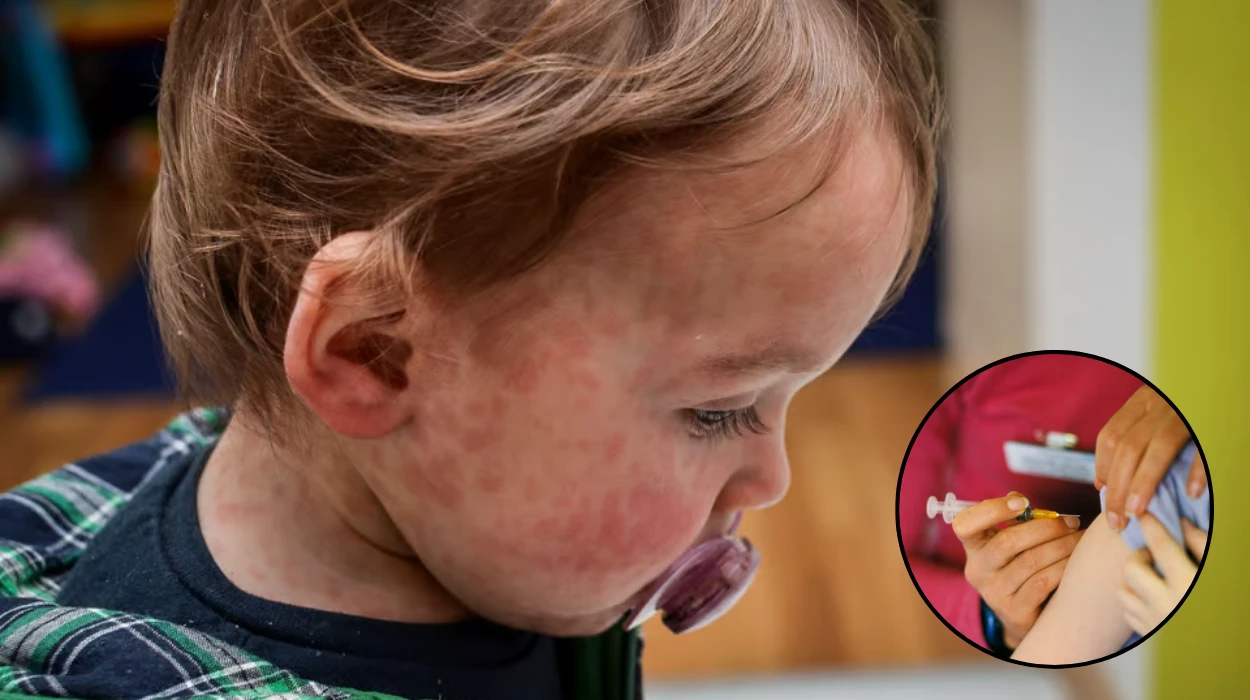
Catching the virus can feel like having a cold with a runny nose and a cough, sore red eyes (conjunctivitis) and a fever, but this is followed a few days later by a rash that spreads all over the body, says health bosses according to the UKHSA blog. The signs and symptoms of measles usually start 7–14 days after exposure to the virus, and include rash, fever, a runny nose, cough and conjunctivitis, as reported by The Independent.
Measles is a highly infectious viral illness that can spread very easily among people who are not fully vaccinated, according to public health officials. While many people recover, the illness can lead to serious complications such as pneumonia, brain inflammation and, in rare cases, long-term disability or death, as stated by health authorities.
Dr Yimmy Chow, London region deputy director for UK Health Security Agency, said in a statement to The Independent:
“The measles outbreak in north London continues and while children remain unvaccinated, the risk of it spreading to other areas remains a real threat. Some parents today will be unaware of the terrible harm measles caused to so many children before the introduction of a vaccine. Measles can cause pneumonia, meningitis, blindness, seizures and tragically sometimes death. Every year we see children in hospital suffering needlessly, sometimes leading to long term complications. With a disease as infectious as measles, it will find those unvaccinated – there is no room for complacency”.
Where Are the Most Measles Cases in London Boroughs?
North London boroughs including Enfield, Haringey and Islington have seen the most cases in the city, with Enfield having the highest number of cases in England in 2026 at 111, as reported by the London Standard. A measles outbreak in north London has infected more than 60 children, with cases linked to seven schools and a nursery in Enfield, according to the Association of Directors of Public Health London.
The outbreak is still mostly affecting unvaccinated children under 10 in schools and nurseries, according to Dr Vanessa Saliba, consultant epidemiologist at UKHSA, as reported by ITV News London. In February, UKHSA figures show that between January 1 and February 16, there have been 130 confirmed measles cases in England, an increase of 34 since the agency’s last report on February 12, with more confirmed cases of the virus in the borough of Enfield.
An internal report from the UK Health Security Agency shows there have been 340 suspected cases of measles in the capital since the start of 2026, with the report revealing that 34 confirmed cases have been from just one school in Enfield, north London, between 20 January and 7 February this year, according to The Independent’s exclusive reporting. According to the internal UKHSA report, the majority of cases detected in London between 27 January and 24 February were in children aged between one and four, with 37 cases confirmed for this age group, with 22 cases in children aged between 5 and 11.
Most of the cases – 42 – over the same period were in children living in the most deprived areas of London, highlighting the socioeconomic dimension of the outbreak. Dr Josephine Sauvage, local GP and chief medical officer of the North Central London Integrated Care Board, said:
“It is obviously concerning that cases are still rising, but there is something we can all do to protect our loved ones and ourselves, which is to get the vaccine. The vaccine is proven over decades to be safe, effective and the best way to protect your child and your wider family”.
What Is the MMR Vaccine Uptake Rate in London 2026?
The latest data shows that 91.8% of five-year-olds had received one dose of the MMR (measles, mumps and rubella) vaccine in England in 2024/25, unchanged from 2023/24 and the lowest level since 2010/11. Uptake of the MMRV vaccine in the UK is at record lows, with areas such as Hackney having just 65.3% of two-year-olds receive their jab and just 64.3% of five-year-olds in Enfield having received both doses of the vaccine in 2024/25 – one of the lowest rates in the country.
According to the report, 78 per cent of children aged 1 to 4 were unvaccinated, alongside 90 per cent of cases in children aged 5 to 11, according to internal UKHSA data seen by The Independent. Helen Bedford, professor of child public health at Great Ormond Street Institute of Child Health, University College London, said:
“There has been measles cases in all areas, but the largest numbers are in areas with lowest vaccine uptake, particularly in London districts,”.
The move is also a reflection of the fact vaccination rates are below the 95% threshold required to achieve herd immunity – when enough people are vaccinated to prevent the disease spreading, according to BBC News reporting on the WHO’s decision. By the end of 2024, vaccination rates were recorded at 92% for the first dose and slightly below 85% for the second dose, falling well below the WHO recommendation that at least 95 per cent of children should receive vaccine doses for each illness to achieve herd immunity.
Vaccination rates in 2024-25 among five-year-olds who had received both MMR jabs hit the lowest level in 15 years, with just 83.7% of five-year-olds having received both MMR vaccine doses, down year-on-year from 83.9%.
Explore More about London:
Daniel Krikler to Star in The Pianist Stage Production in London
Climate Crisis Puts Millions of Homes in London, Essex and Kent at Risk of Sinking
What Are Health Officials Urging Parents to Do Now?
Dr Vanessa Saliba, consultant epidemiologist at UKHSA, stressed:
“We urge all parents to ensure their children are up to date with their MMR or MMRV vaccines, giving them the best and safest protection against measles – which can spread very easily. Getting vaccinated also helps protect babies who are too young to be vaccinated and people unable to have the vaccine due to a health condition” .
Dr Josephine Sauvage added:
“If your child is not up to date, please contact your GP practice to book an appointment. If you’re not registered with a GP, you can do so quickly and easily, or attend one of the local catch-up vaccination clinics,”
according to The Independent. GP practices are continuing to contact unvaccinated patients, offering additional appointments, including out-of-hours clinics, to make it as easy as possible for families to get protected, as stated by Dr Sauvage.
Dr Ben Kasstan-Dabush, from the London School of Hygiene & Tropical Medicine, added:
“The immediate priority now is to ensure timely catch-up of undervaccinated children, and that school-age children are brought up to schedule as efficiently as possible with equitable pathways to vaccination through enhanced access. This is essential to avoid outbreaks in schools, and so that children can look forward to their summers free from the risk of being infected – or hospitalised”.
Currently, children in the UK are offered the first dose of the measles, mumps, rubella, and varicella vaccine (MMRV) at 12 months, and a second dose at 18 months, according to The Independent. The vaccine is proven over decades to be safe, effective and the best way to protect your child and your wider family, with the MMR vaccine preventing 95-98% of measles cases, as emphasized by health professionals.
Why Did UK Lose Measles-Free Status in 2026?
Earlier this year, the World Health Organisation (WHO) declared that the UK is no longer considered to have eliminated measles, underscoring the resurgence of the disease, as reported by The Independent. The United Kingdom has lost its designation as a measles-free nation due to an uptick in fatalities linked to the illness and a decrease in the percentage of children receiving the MMR vaccine in recent years, according to The Guardian.
The UK is among six countries in Europe and Central Asia that the WHO now identifies as no longer measles-free, alongside Spain, Austria, Armenia, Azerbaijan, and Uzbekistan, marking a significant public health setback for the country. From 2021 to 2023, the country was considered to have “eliminated” the disease, but global health officials say measles transmission was re-established in the UK in 2024, according to Sky News.
This determination was influenced by the emergence of cases in 2024, where approximately 3,600 instances were reported as suspected, leading to the WHO’s decision to remove the UK’s measles elimination status. The latest figures for England from the UK Health Security Agency show that in 2024-25, just 83.7% of five-year-olds had received both MMR vaccine doses, down year-on-year from 83.9%, representing the lowest level since 2009-2010.
A child also died with measles in Liverpool last year, while the UK recently lost its measles elimination status, according to The Independent’s reporting on the leaked report. Health officials have reported that two children in England have succumbed to measles this year, as the virus continues to spread in various regions of the country, with cases linked to outbreaks in London and the West Midlands mainly in unvaccinated children, according to BBC News.
Measles activity increased earlier this year, mainly due to outbreaks in London and the West Midlands, with the majority of cases in unvaccinated children aged 10 years and under, according to the official UKHSA government announcement. The latest measles figures published show that measles continues to circulate in many parts of the country, with sadly, to date in 2026, there having been 2 measles deaths in children in England.