Key Points
- The World Health Assembly has passed a definitive resolution strongly condemning the Islamic Republic of Iran for its military strikes against civilian populations and critical infrastructure in the Gulf region.
- The international resolution specifically denounces Tehran’s ongoing blockade of the Strait of Hormuz and its severe restrictions on regional airspace, which have collectively crippled international maritime transport.
- Drafted and tabled by the Gulf Cooperation Council alongside Jordan, the text received overwhelming backing from 91 member states, while 31 nations abstained and only Nicaragua voted to oppose it.
- Casualty data validated prior to the early April ceasefire reveals that at least 11 civilians were killed and 168 others sustained injuries due to targeted strikes on energy, oil, and water desalination facilities.
- Global humanitarian operations have been severely compromised, forcing the World Health Organization’s primary emergency logistics hub to temporarily halt operations, delaying aid to Gaza and Sudan.
- The Food and Agriculture Organization has issued an urgent warning that the prolonged maritime blockade is precipitating a systemic agrifood shock that could trigger a global food price crisis within six to 12 months.
- Dissenting and abstaining nations, including Iran, Indonesia, and South Africa, have criticized the resolution, arguing that the text presents a selective framing that ignores broader regional hostilities.
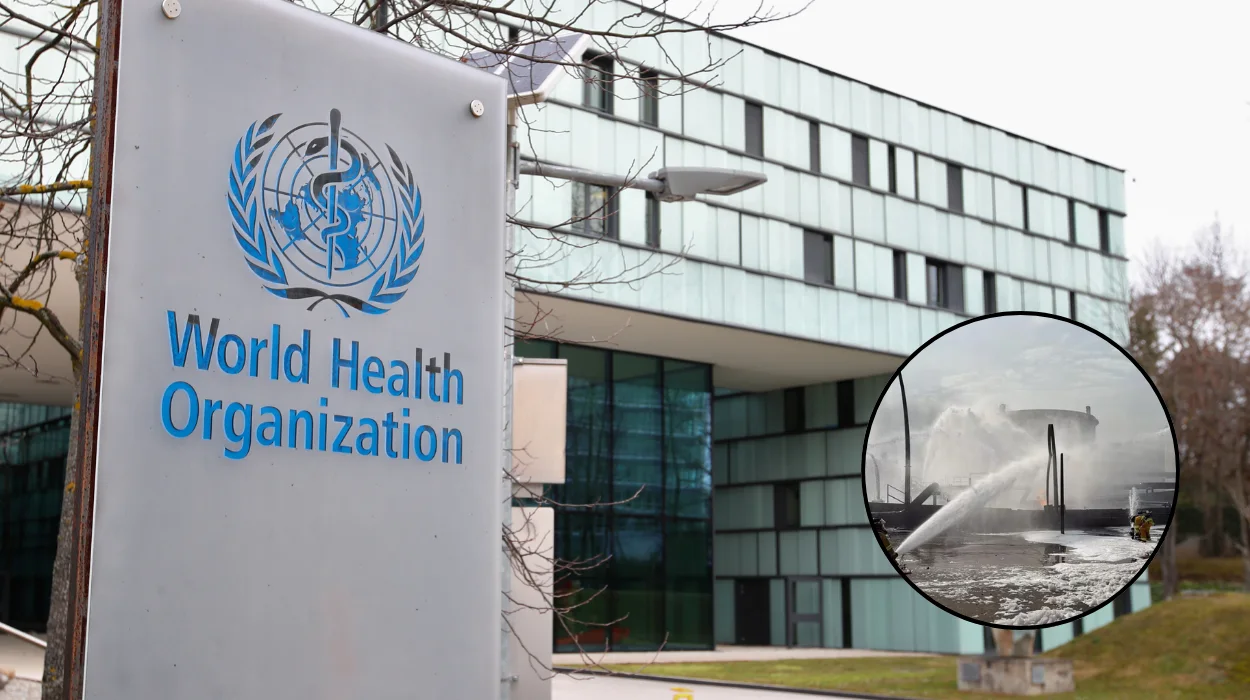
Geneva (Britain Today News) May 21, 2026 – A diplomatically isolated Islamic Republic of Iran has been strongly rebuked by the international community after the World Health Assembly voted overwhelmingly to pass a resolution condemning its military strikes against civilians and vital infrastructure in the Gulf, alongside its ongoing blockade of the Strait of Hormuz. The resolution, which achieved a decisive majority at the annual meeting of the World Health Organization in Geneva on Thursday, highlights mounting global alarm over severe disruptions to international medical supply chains, energy markets, and humanitarian aid distribution. Backed by dozens of European countries and introduced formally by the Gulf Cooperation Council and Jordan, the text secured 91 votes in favour, with 31 abstentions. Nicaragua stood alone as the sole nation to side with Tehran by voting against the measures, underscoring Iran’s widening geopolitical isolation as the wider economic and public health fallout of the conflict extends far beyond the borders of the Middle East.
- Key Points
- What Triggered the World Health Assembly’s Decisive Vote Against Iran?
- How Deeply Has Gulf Infrastructure Been Damaged by the Conflict?
- Why Are Global Humanitarian and Aid Operations Feeling the Ripple Effects?
- Will the Maritime Blockade Trigger a Systemic Global Food Crisis?
- What Are the Core Divisions Over the Resolution’s Political Framing?
What Triggered the World Health Assembly’s Decisive Vote Against Iran?
The diplomatic showdown in Switzerland comes after six consecutive weeks of intensified hostilities that have placed a profound strain on the domestic stability and critical infrastructure of the Gulf states. As reported by diplomatic correspondents covering the assembly, the military strategy pursued by Tehran has deliberately targeted non-combatant zones and essential resource facilities. The legal and moral rationale for the international community’s intervention was articulated clearly during the assembly floor debates, where state representatives details the human toll of the bombardment.
Addressing the assembly delegates gathered in Geneva, Jamal Al Musharakh, the United Arab Emirates ambassador to the United Nations in Geneva, stated that
“the Islamic Republic of Iran carried out for six consecutive weeks unlawful and unprovoked terrorist attacks against countries not party to any conflict, including my country, targeting civilians and civilian objects.”
This firm stance was quickly echoed by an array of international delegates, including representatives from Australia, the United Kingdom, and Israel, who joined in condemning the cross-border strikes.
The successful passage of this text represents a significant failure for Iranian diplomacy. Just two days prior to Thursday’s vote, officials from Tehran had attempted to introduce a parallel initiative designed to shift the focus of the assembly toward condemning American and Israeli actions against Iranian medical facilities. However, this retaliatory diplomatic maneuver failed to gain traction among member states, primarily because Iran’s recent barrages of drones and ballistic missiles against Gulf nations—justified by Tehran as retaliation for those states hosting United States military bases—had already alienated the majority of international observers.
Explore More about World:
World Court Rules Workers Cannot Be Denied Power to Strike: Landmark International Labour Organization Standoff Settled in The Hague 2026
US and Israel ‘hoped to install Ahmadinejad as Iran’s leader’ 2026
How Deeply Has Gulf Infrastructure Been Damaged by the Conflict?
The tangible consequences of the military campaign on the ground in the Gulf are extensive, with critical utilities bearing the brunt of the drone and missile strikes. Data compiled by human rights observers and health officials show a pattern of bombardment that directly threatens the fundamental conditions necessary to sustain human life in the region, particularly regarding power generation and clean water access.
As reported by independent researchers at Human Rights Watch, at least 11 civilians were killed and another 168 individuals were injured in the region before the implementation of the early April ceasefire. According to data published by the World Health Organization, the structural damage extends across vital oil refineries, critical gas hubs, central energy grids, and major water desalination plants. The targeting of these desalination facilities is particularly hazardous, given that Gulf nations depend entirely on these industrial sites for between 70 and 90 per cent of their domestic water supply.
The broader systemic dangers of these infrastructure attacks were detailed by Hanan Balkhy, the World Health Organization’s regional director for the Eastern Mediterranean, who told delegates at the meeting that
“the crisis has also heightened chemical, biological, radiological and nuclear risks.”
These anxieties were heightened further following a recent security incident reported by the government of the United Arab Emirates, which confirmed that a fire had broken out directly outside the Barakah nuclear power plant in Abu Dhabi following a cross-border strike. Commenting on the gravity of the facility breach, Jamal Al Musharakh described the incident as
“a directed criminal act and the direct violation of international law that is a risk to public health and civilian lives across the region.”
Why Are Global Humanitarian and Aid Operations Feeling the Ripple Effects?
While the direct physical destruction remains concentrated within the territories of the Gulf nations, the geopolitical consequences of Iran’s maritime policies have generated a severe logistics crisis that threatens humanitarian operations across multiple continents. The primary mechanism driving this secondary crisis is the ongoing naval blockade enforced by Iranian forces within the Strait of Hormuz, supplemented by stringent airspace restrictions across the wider region.
United Nations agencies have issued warnings regarding how these transport blockades are actively preventing the delivery of life-saving aid to some of the world’s most vulnerable populations. The operational impact is illustrated by the logistical hurdles forced upon the World Health Organization’s own Global Health Emergencies Logistics hub. This central facility holds an important position in international disaster relief, being solely responsible for managing 35 per cent of the total humanitarian aid response destined for Gaza, as well as 40 per cent of all emergency medical supplies earmarked for Sudan.
Because of the volatile security situation and maritime closures throughout the early part of March, this vital logistics hub was forced to completely pause its operations for two consecutive days. This brief cessation of activity directly delayed the processing of 50 urgent emergency supply requests originating from 25 different countries. Although the logistics hub has since managed to resume its core functions, and relief agencies have worked tirelessly to establish operational workarounds, the continued closure of the main maritime passage creates severe knock-on effects across the global medical supply network.
As reported by communications officials in Switzerland, Christian Lindmeier, a spokesperson for the World Health Organization, stated that
“transport costs have gone up, there are supply constraints on petrol-based medical supplies like gloves, IV bags and syringes.”
Commenting further on the ongoing efforts to bypass the blockaded waters, Christian Lindmeier added that
“alternative routes are being sought through Saudi Arabia, but that also increases the cost and takes time to develop.”
Will the Maritime Blockade Trigger a Systemic Global Food Crisis?
The economic ramifications of the maritime shutdown are radiating rapidly from medical logistics into global agricultural supply lines. The Strait of Hormuz serves as a critical choke point not only for petroleum products but also for chemical fertilizers and agricultural raw materials that are essential for sustaining global food production systems.
The Food and Agriculture Organization has raised the alarm regarding the long-term structural threats now facing international food security. Fertilizers move substantially through the contested waters of the Strait, and the current shipping bottlenecks have already resulted in a critical short supply of these commodities on the open market. Agricultural economists warn that this shortage will inevitably result in lower crop yields globally, worsening ongoing food shortages in crisis-hit nations later this year.
In an official public warning broadcast by the agricultural agency, the Food and Agriculture Organization stated that
“the closure of the Strait of Hormuz is not a temporary shipping disruption but the beginning of a systemic agrifood shock that could trigger a severe global food price crisis within six to 12 months.”
To prevent widespread deprivation, the agency recommended that countries find alternative trade routes and avoid export restrictions to ease the impact. Highlighting the immediate reality of this inflationary trend, the agency’s data indicates that the food price index, which tracks the market value of a specific basket of globally traded food commodities, rose for a third consecutive month during April.
In response to these compounding crises, the approved World Health Assembly resolution does more than offer diplomatic condemnation; it places clear operational mandates on international civil servants. Specifically, the text formally asks the World Health Organization director general to launch an immediate, comprehensive assessment to determine exactly how these regional disruptions have affected global health supply chains, while simultaneously offering technical guidance to member states on how to ease the economic blow.
What Are the Core Divisions Over the Resolution’s Political Framing?
Despite the overwhelming majority that carried the resolution through the assembly, the proceedings revealed deep diplomatic fractures regarding how international bodies frame complex geopolitical conflicts. A significant block of nations expressed discomfort with what they characterized as a one-sided approach that ignores the broader context of regional hostilities and the suffering of populations outside the immediate Gulf zone.
The Iranian delegation rejected the allegations leveled against Tehran, using its time on the assembly floor to criticize the document as a biased political instrument. In an official address to the assembly, the Iranian delegate stated that
“the proposed text deliberately ignores severe damage inflicted on Iran’s own health infrastructure as a result of military actions in the region.”
This sentiment was supported by several nations that chose to enter a vote of abstention rather than endorsing the joint GCC and Jordanian text. Sidharto Reza Suryodipuro, Indonesia’s ambassador to the United Nations in Geneva, cautioned against the long-term systemic dangers of using global health forums to achieve narrow political victories. Addressing the plenary session, Sidharto Reza Suryodipuro stated that
“public health concerns must not be exploited to justify politicised response.”
The Indonesian diplomat concluded his remarks by asserting that
“a credible public health response is possible only when all parties cease hostilities and return to the path of diplomacy.”
Similarly, the diplomatic delegation representing South Africa entered an abstention, noting that the resolution failed to account for the structural origins of the wider Middle Eastern conflict that continues to impact civilian populations across multiple borders. In a statement delivered before the final vote was tallied, the South African representative stated that
“we cannot afford to create a hierarchy of crises.”
This critique emphasizes the ongoing challenge facing the World Health Organization as it attempts to navigate its humanitarian mandates through an increasingly fragmented and polarized international political landscape.