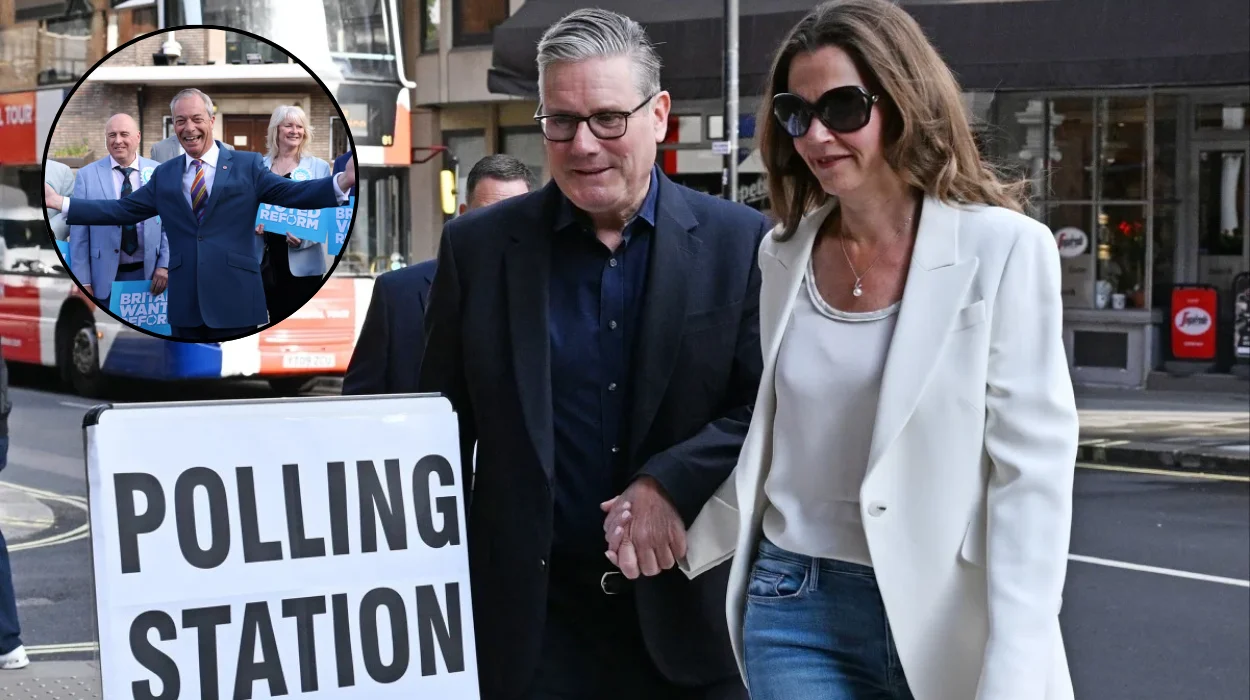
Key Points
- Keir Starmer said he would “fight on” after Labour suffered heavy losses in local elections across England, Scotland and Wales.
- Nigel Farage said Reform UK’s gains represented a “truly historic shift in British politics”.
- Early results showed Reform UK winning more than 350 council seats in England, while Labour lost 254 and the Conservatives lost 146.
- Labour lost control of Tameside and Wigan to Reform in early results, and Reform also took Havering in London for the first time.
- Analysts said the results reflected a wider fragmentation of Britain’s two-party system, with voters also moving to the Greens and nationalist parties.
- Starmer insisted he was “not going to walk away” and said voters were more concerned about the pace of change than his leadership.
- Defence Minister John Healey warned that a leadership contest would risk “chaos” and said Starmer could still deliver.
- Pollster John Curtice said the picture was “pretty much as bad as anyone expected for Labour, or worse”.
What happened to Labour?
London (Britain Today News) May 8, 2026 — Prime Minister Keir Starmer vowed to keep going after Labour suffered a bruising set of local election results that exposed growing voter anger and raised fresh questions about his authority in office. The results, declared across England while counting continued in Scotland and Wales, showed Labour losing seats in areas that had once been regarded as dependable parts of its political base.
As reported by Andrew MacAskill and Elizabeth Piper of Reuters, Starmer said:
“I am not going to walk away,”
making clear that he intended to stay in post and continue delivering the government’s agenda. He told reporters in Ealing, west London, that voters were more concerned about how quickly change was being delivered than about his leadership itself.
The local elections became the most significant test of public opinion since Labour’s landslide national victory in 2024, and the early picture was grim for the governing party. Labour suffered losses in former industrial regions in central and northern England, suggesting that parts of its traditional coalition remain unsettled less than two years after it returned to power.
Why did Reform gain so strongly?
Reform UK emerged as the main beneficiary of the discontent, with Nigel Farage’s party picking up support in seats Labour had defended for decades. Early tallies showed Reform adding 367 council seats in England, a result that signalled a significant shift in voter behaviour and strengthened Farage’s claim that British politics is changing fast.
Farage said the results so far represented a
“truly historic shift in British politics,”
presenting Reform’s advance as evidence that the old political order is weakening. The party’s gains also reflected the fragmentation of the traditional Labour-Conservative contest, with voters splitting towards Reform, the Greens, and nationalist parties in Scotland and Wales.
One of the clearest signs of Reform’s momentum came in Greater Manchester, where Labour lost control of Tameside for the first time in almost 50 years after Reform won all 14 seats Labour had been defending. In nearby Wigan, which Labour had controlled for more than half a century, the party lost every one of the 20 seats it was defending to Reform. Reform also captured Havering, becoming the first party of its kind to take control of a London borough.
How serious are Labour’s losses?
The scale of the defeat is politically damaging because it came in the first major electoral test after Labour’s 2024 general election landslide. The results suggested that Starmer’s government has not yet convinced enough voters that it is delivering the kind of change they were promised, especially in communities hit hardest by the cost-of-living crisis.
According to the early counts, Labour had lost 254 seats, while the Conservatives were down 146. Those figures placed Labour on course for one of its worst local election performances in years, and analysts said the result could end up among the largest seat losses for a governing party in a midterm-style contest.
John Curtice, Britain’s best-known pollster, said the picture had been
“pretty much as bad as anyone expected for Labour, or worse”.
His assessment underlined the scale of the challenge facing Starmer, whose popularity ratings have already fallen sharply since taking office.
Could Starmer face leadership pressure?
Starmer’s allies moved quickly to defend him, arguing that the party should not panic in the middle of a difficult result. Defence Minister John Healey said the last thing voters wanted was
“the potential chaos of a leadership election,”
adding that he believed Starmer could still deliver.
That support matters because some Labour lawmakers have already begun to ask how much more damage the party can absorb before pressure intensifies. While the worst outcome for Starmer would be a public leadership challenge, the immediate threat is less dramatic and more political: a slow erosion of confidence among MPs, activists and voters.
The Reuters report noted that possible successors are not yet in position to mount an immediate challenge, with Greater Manchester Mayor Andy Burnham and former deputy prime minister Angela Rayner both lacking the current standing to launch bids. Other potential rivals also appear reluctant to move against Starmer for now. That gives the prime minister some breathing space, but not much comfort.
What does this mean for British politics?
The election results point to a broader reshaping of British politics rather than a simple punishment of one government. For decades, Labour and the Conservatives dominated national and local contests, but the latest vote suggests that system is breaking down under pressure from smaller parties and regional movements.
Reform’s rise is particularly significant because it is not only pulling support from the Conservatives but also eating into Labour in working-class areas that once formed the backbone of the centre-left vote. At the same time, the Greens are drawing protest and progressive support, while nationalist parties remain powerful in Scotland and Wales.
This fragmentation could make the next general election in 2029 harder to predict than any recent contest. It may also force Labour to rethink how it communicates policy, how quickly it delivers promises, and which voters it needs to win back before the damage becomes lasting.
Why does the result matter now?
The timing matters because Labour is still early in its term, yet it is already being judged as if it were a tired incumbent. Local elections often punish governments midterm, but the scale of this backlash suggests deeper dissatisfaction with the pace and substance of change.
Starmer has tried to frame the contest as a message about delivery rather than leadership, saying voters are looking for faster progress. He has also signalled a further government reset in response to the poor results, indicating that No 10 understands the political danger.
The political stakes are high because Labour entered office with a huge parliamentary majority and a promise of stability after years of turmoil. Instead, it now faces criticism over policy U-turns, shifting advisers and the sense that its vision has not yet been translated into something voters can feel in daily life.
What happens next?
Most of the results, including those from Scotland and Wales, were still due later on Friday, so the final picture could become even more damaging or slightly less severe. Even so, the early signs already showed a deep warning for Labour and a major confidence boost for Reform.
The key issue now is whether Starmer can stabilise his party, improve delivery and rebuild trust before this local election setback turns into a lasting national problem. For now, he is refusing to retreat, and his message is simple: he intends to stay, reset and keep pushing his agenda.