Key Points
- The Terminally Ill Adults (End of Life) Bill will not become law after running out of parliamentary time in the House of Lords.
- The bill had already passed the House of Commons last June but needed approval from both chambers of Parliament to become law.
- More than 1,200 amendments were tabled in the House of Lords, creating a long delay and preventing final passage before the session ended.
- Supporters blamed what they described as deliberate delaying tactics by opponents in the upper chamber.
- Lord Charlie Falconer, who sponsored the bill in the Lords, called the situation “pure obstructionism”.
- Opponents of assisted dying welcomed the outcome and said the bill was unsafe and unworkable.
- Campaigners on both sides say the debate is not over and expect another attempt in the next parliamentary session.
- Kim Leadbeater, the MP who introduced the bill in the Commons, said supporters would “go again”.
- The issue remains active across the UK and in nearby jurisdictions, where some assisted dying measures have progressed further.
Can the assisted dying bill still return?
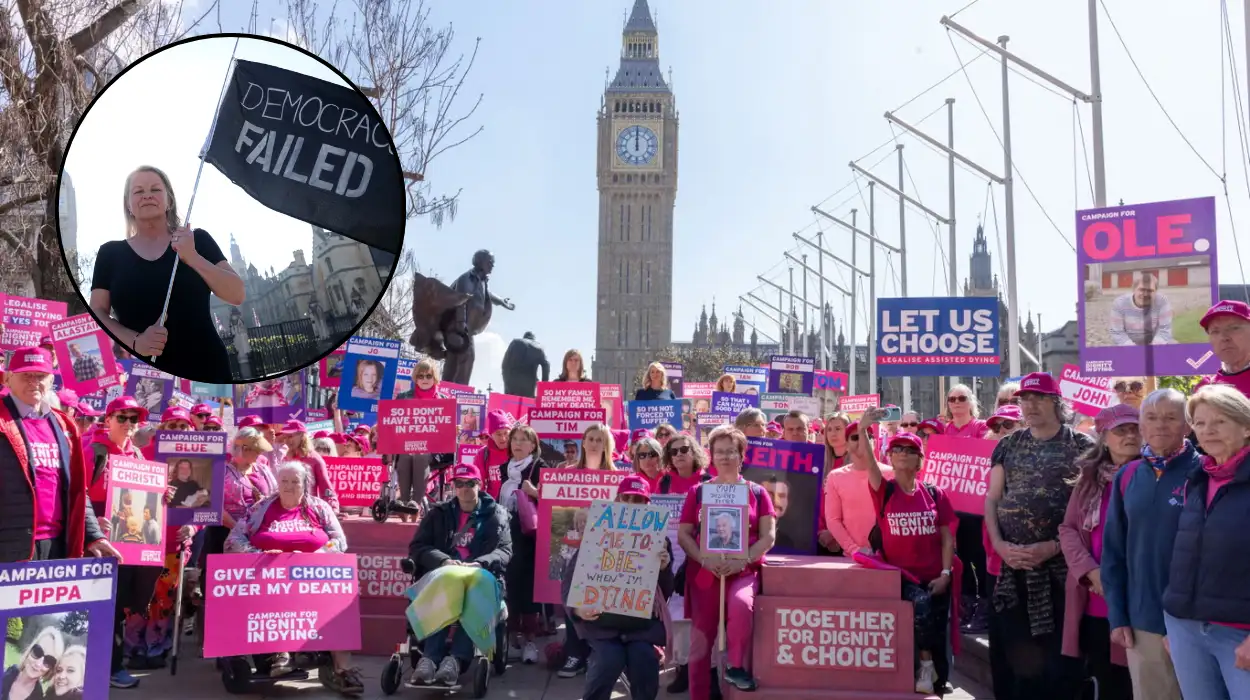
London (Britain Today News) April 24, 2026 – a UK bill to legalise assisted dying for terminally ill adults has failed to become law after time ran out in the House of Lords, but supporters have pledged to try again when Parliament returns for its next session. The Terminally Ill Adults (End of Life) Bill, which had already been approved by MPs in the House of Commons last June, was blocked after the upper chamber became mired in more than 1,200 amendments tabled by appointed lawmakers. Under UK parliamentary rules, both chambers must approve legislation for it to pass, and bills still unfinished when a session ends usually fall away.
The defeat marks a major setback for campaigners who had hoped the long-running debate over assisted dying in England and Wales would finally move into law. Yet it also shows how deeply divided Parliament remains on the issue, with supporters arguing for personal choice and dignity at the end of life, and opponents warning of risks to vulnerable people and the possibility of abuse. As reported by the original coverage, the bill was intended to allow euthanasia for adults with less than six months to live who had clearly expressed a wish to die.
What happened in the House of Lords?
The immediate reason for the bill’s collapse was time pressure in the upper chamber, where a large number of amendments slowed proceedings to the point that the legislation could not complete its journey before the session ended. More than 200 lawmakers signed a letter late on Thursday blaming what they described as
“deliberate delaying tactics pursued by a minority of peers opposed to its passage”.
That accusation framed the collapse not as a simple procedural failure, but as a deliberate political manoeuvre.
Lord Charlie Falconer, who was sponsoring the bill in the Lords, strongly condemned the process. He said the bill had been subjected to “pure obstructionism” and described the handling of it as
“an absolute travesty of our processes”.
His comments reflected a broader frustration among supporters who believed the legislation had been deprived of a fair hearing. The scale of the amendment process, combined with the limited parliamentary timetable, left the bill unable to clear its final hurdles.
Why was the bill so contested?
The bill was highly contentious because it sought to change a fundamental area of law and medical ethics. Supporters argued that terminally ill adults should be given more control over how they die, especially if they are already facing death within months. They said the proposal would provide compassion, choice and relief for people enduring pain and decline at the end of life.
Opponents, however, said the legislation was too risky and too vague. Gordon Macdonald of the Care Not Killing campaign group welcomed the failure of the bill and said the Lords had exposed it as “skeleton legislation” with “gaping holes”. A spokesperson for the Christian Medical Fellowship also said it was not possible to build an assisted suicide service that was safe, equitable and resistant to unacceptable pressure on vulnerable people. Their arguments centred on safeguards, coercion and the difficulty of ensuring protection in real-world cases.
What did supporters say next?
Backers of the bill reacted with anger but also determination. Campaigner Rebecca Wilcox, whose mother has a terminal diagnosis, said supporters were “incredibly angry” but “determined to get it through”. She said the fight was not over and that campaigners hoped a lawmaker would continue the effort when Parliament reconvenes in mid-May for its next term.
Kim Leadbeater, the MP who introduced the bill in the House of Commons in 2024, also signalled that supporters would return to the issue. She said they would “go again” in the next parliamentary session, though a different MP would likely need to introduce a new bill. Leadbeater added that the issue was not going away and suggested public support in the UK remained significant. Her remarks indicate that supporters still see a political path forward despite the current defeat.
How does this affect UK law?
At present, assisted dying remains illegal in England and Wales, and the collapse of this bill means no immediate change to the law. The proposal had moved further than many similar attempts because it had cleared the House of Commons, but it still required final approval from the Lords. Since the session ended before that could happen, the bill did not survive the parliamentary timetable.
The result also highlights a long-standing feature of the UK system: even when a bill has strong backing in one chamber, it can still fail if time runs out in the other. For backbench legislation in particular, limited debate days can make progress difficult. In this case, that procedural reality proved decisive, even as the political argument remained unresolved.
What is the wider picture?
The debate over assisted dying is not confined to Westminster. Lawmakers in Jersey and the Isle of Man have already approved euthanasia legislation, although those moves are still awaiting royal assent. In Scotland, lawmakers in Edinburgh rejected a separate bill on assisted dying in March. These developments show that the legal debate is advancing unevenly across the British Isles.
That wider context matters because supporters of reform often point to international and domestic momentum when arguing for change. Opponents, meanwhile, say the patchwork of outcomes shows how controversial and unsettled the issue remains. The failure of the UK bill does not end the discussion; it simply pushes it into the next parliamentary round.
What happens now?
The most likely next step is a renewed attempt in a future session, with supporters seeking a new route back into Parliament. Campaigners for the bill have already said they will continue pressing for reform, while opponents are likely to use the collapse as evidence that the current system should not be changed. The issue will remain politically sensitive, legally complex and emotionally charged.
For now, the bill is dead in procedural terms, but the argument behind it is very much alive. Supporters believe the public mood and parliamentary debate will eventually favour change, while critics insist the risks are too serious to ignore. The next session will show whether the issue returns in the same form or whether campaigners are forced to rethink their strategy.