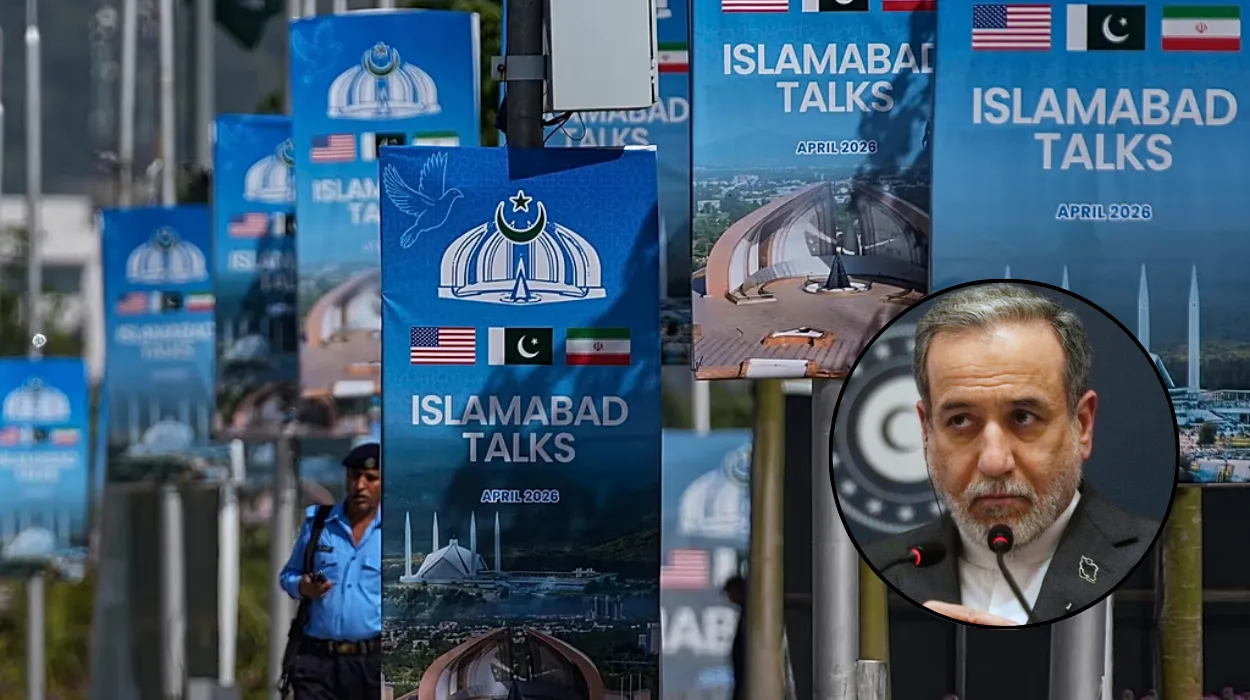
Key Points
- Iran’s Foreign Minister Abbas Araghchi is expected in Islamabad for talks with Pakistani officials.
- The visit is part of a wider diplomatic tour that also includes Oman and Russia.
- Araghchi has described regional neighbours as Iran’s priority, indicating a focus on diplomacy.
- The trip comes at a sensitive moment as US-Iran tensions remain high and negotiations appear stalled.
- The US has deployed a third aircraft carrier to the Middle East, a move that raises military pressure in the region.
- Washington says the deployment brings roughly 200 fighter jets into the area.
- The US is also enforcing a naval blockade near the Strait of Hormuz, disrupting shipping and energy flows.
- Iran has accused Washington of escalating tensions and violating international law.
- Pakistani officials have suggested there is a high likelihood of progress in talks.
- Violence in Gaza and southern Lebanon continues despite ceasefire efforts elsewhere in the region.
Will Araghchi’s Pakistan Visit Influence US-Iran Tensions?
Islamabad (Britain Today News) April 24, 2026 – Iran’s Foreign Minister Abbas Araghchi is due to arrive in Islamabad for talks with Pakistani officials at a time when the Middle East is under intense military and diplomatic pressure. His visit, described by Tehran as a “timely tour”, comes as Iran seeks coordination with regional allies while direct talks with the United States appear to be stalled.
Araghchi is expected to hold consultations in Pakistan before travelling on to Oman and Russia. The trip is being closely watched because it could help determine whether the current crisis moves towards negotiation or further confrontation. As reported by the relevant original source, Araghchi said,
“Our neighbours are our priority,”
underscoring Iran’s emphasis on regional diplomacy before broader engagement.
The visit comes against the backdrop of a sharp escalation in US military posture in the region. Washington has confirmed the deployment of a third aircraft carrier to the Middle East, the first such buildup since 2003, alongside around 200 fighter jets. The move signals that the US is preparing for a prolonged period of confrontation even as diplomatic channels remain open in theory.
Why Is Pakistan Important In These Talks?
Pakistan’s role matters because it sits between Iran and the wider regional diplomatic network that is trying to prevent the crisis from widening. Islamabad has kept communication channels open with Tehran and is also seen as a state capable of relaying messages at a delicate moment. Pakistani officials have indicated there is a “high likelihood” of progress, suggesting that both sides may still see value in diplomacy.
For Iran, Pakistan offers a useful stop on a tour designed to reassure neighbours and preserve options. For Pakistan, the visit is a chance to reinforce its relevance in regional diplomacy without becoming directly entangled in the confrontation. That makes the Islamabad talks significant not only for bilateral relations but also for the wider strategic environment.
The timing is important because the negotiations between Iran and the US are no longer moving smoothly. Instead, both sides are trading pressure while trying to avoid a direct military clash. In that climate, meetings in Islamabad may serve as a bridge, even if only temporarily, between public hostility and possible back-channel dialogue.
What Is Driving The US Military Build-Up?
The US deployment of a third aircraft carrier has sharpened fears that the confrontation could widen. According to the reported details, the buildup is the first of its kind in the region since 2003 and brings a substantial air power presence closer to the crisis zone. That scale of deployment is usually interpreted as a warning that Washington wants to deter escalation while keeping the option of force on the table.
At the same time, the US is maintaining pressure through maritime operations near the Strait of Hormuz. The strait is one of the world’s most important shipping routes, particularly for global oil supplies, and any disruption there has immediate economic consequences. The reported naval blockade has already forced dozens of vessels to change course, reducing traffic and putting strain on energy markets.
The result is a widening economic and security shock. The reduced movement of ships through the strait has affected oil shipments and contributed to losses estimated in the tens of billions of dollars. That makes the standoff more than a regional military dispute; it is now a global economic issue.
How Has Iran Responded?
Iran has accused Washington of intensifying the crisis rather than easing it. Tehran’s mission to the United Nations condemned the US seizure of an Iranian vessel carrying medical supplies, calling it a breach of international law and warning that civilians could be harmed. The accusation adds another layer to an already highly charged confrontation.
Iran’s public messaging has tried to balance defiance with diplomacy. On one hand, it is resisting US pressure and presenting the blockade and carrier deployment as acts of aggression. On the other hand, Araghchi’s regional tour suggests Tehran still wants to keep channels open with friendly states and possibly shape a more favourable diplomatic environment.
That dual approach reflects the reality of the current standoff. Iran knows that continued military pressure could worsen the crisis, but it also knows that appearing weak could reduce its leverage. As a result, Tehran is using both warning language and diplomatic movement to signal that it has not closed the door on negotiation.
Could Talks Still Restart?
There are still indications that diplomacy has not completely collapsed. Pakistani officials’ view that there is a high likelihood of progress suggests that some contacts may still be productive. Even if direct US-Iran talks remain frozen, regional intermediaries can sometimes keep the process alive until conditions improve.
Araghchi’s planned stops in Oman and Russia reinforce that point. Both countries have historically played roles in communication between Iran and Western powers or as influential regional actors. By visiting them alongside Pakistan, Iran is signalling that it wants to widen its diplomatic base rather than rely on a single route.
Still, the situation remains fragile. Military deployments, shipping disruptions and mutual accusations all reduce the margin for compromise. Any diplomatic opening would likely be narrow, conditional and vulnerable to being derailed by events on the ground or at sea.
What Is Happening Elsewhere In The Region?
The broader regional picture remains unstable despite efforts to secure ceasefires. Israeli strikes in Gaza and southern Lebanon have continued to cause casualties, adding to the sense that multiple flashpoints are feeding off one another. That violence makes it harder for any diplomatic initiative to gain momentum.
Lebanese leaders are pushing for international support to stabilise a fragile truce, but reported violations continue to undermine confidence. The persistence of fighting across different arenas means the Iran-US confrontation is unfolding in a wider regional environment already marked by conflict. That raises the stakes for every diplomatic move.
In this context, Araghchi’s Pakistan visit is not just a bilateral event. It is part of a wider contest over whether the Middle East drifts towards greater military confrontation or finds enough political space to de-escalate. The answer may depend as much on restraint by outside powers as on the talks themselves.
What Happens Next?
The immediate focus will be on the outcome of Araghchi’s meetings in Islamabad and whether they produce any sign of movement in the wider standoff. If Pakistan can help maintain communication, the visit may become an important stepping stone in a broader diplomatic effort. If not, the risk is that military pressure and maritime disruption continue to dominate the agenda.
The situation is also likely to remain volatile because the US naval and air build-up has changed the strategic balance. With more firepower in the region, the chance of miscalculation rises even if neither side wants a full-scale conflict. That leaves diplomacy under pressure to deliver quickly.
For now, the Tehran-Islamabad link is one of the few visible diplomatic channels still functioning in a tense and fast-moving crisis. Whether it becomes a turning point or just another stop on a regional tour will depend on how the next round of talks unfolds.