Key Points
- U.S. stocks regain most early losses after volatile trading Thursday.
- S&P 500 dips 0.1%, Dow Jones falls 0.3%, and Nasdaq composite slips 0.2%.
- Oil prices spike above $110 per barrel following renewed Middle East tensions.
- President Donald Trump vows continued attacks on Iran, dampening market optimism.
- Brent crude jumps 7.6% to $108.84; U.S. benchmark crude rises 11.6% to $111.77 per barrel.
- Airline and travel stocks slump; Tesla slides 5.5% on weaker sales report.
- Treasury yields nearly unchanged at 4.31%; inflation pressures rise from energy costs.
- Markets still heading for first weekly gain since outbreak of Iran conflict.
- Traders reassess expectations of Federal Reserve rate cuts amid surge in fuel prices.
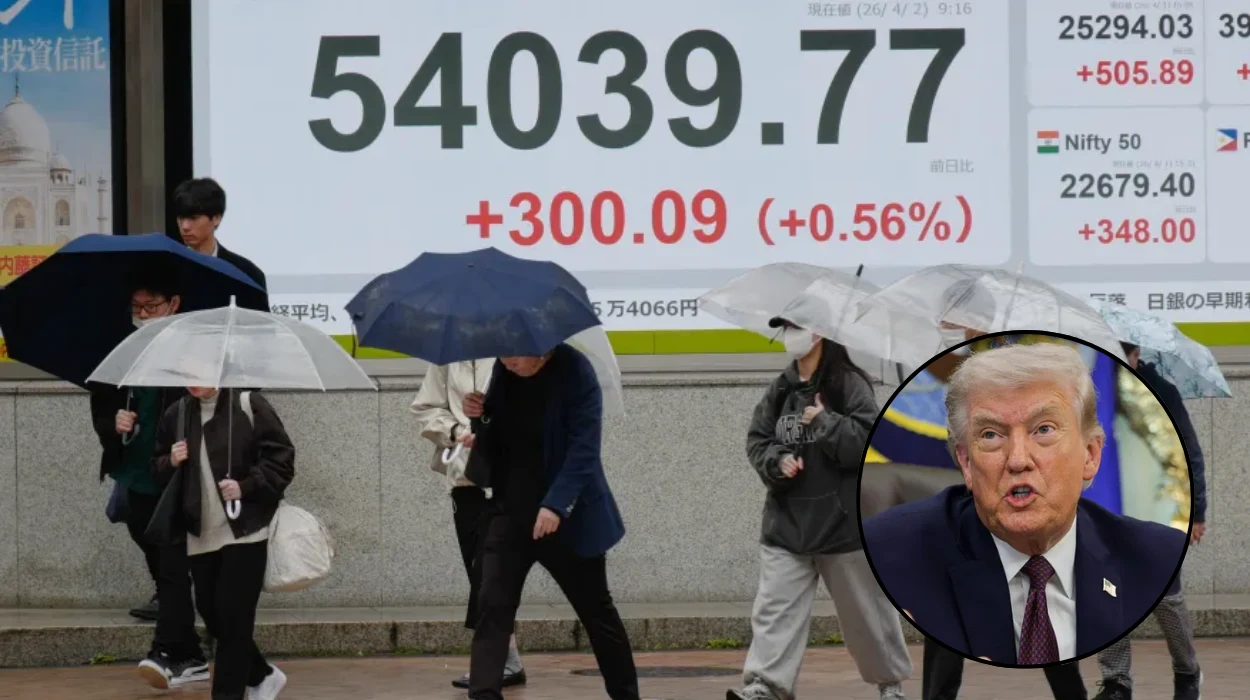
New York (Britain Today News) April 2, 2026 — Wall Street endured another roller-coaster session on Thursday as investors grappled with renewed geopolitical uncertainty and fluctuating energy prices that sent shockwaves through global financial markets. After an early plunge, major indexes managed to recover most of their losses, though jitters surrounding the U.S.-Iran conflict continued to weigh heavily on sentiment.
- Key Points
- Why did Wall Street see renewed volatility this week?
- How are energy prices influencing market behaviour?
- What industries are feeling the pinch most?
- Is inflation likely to worsen due to rising oil prices?
- How are bond markets and investor confidence reacting?
- What’s next for the U.S. economy and global outlook?
- What could calm markets moving forward?
Why did Wall Street see renewed volatility this week?
As reported by Associated Press journalist Stan Choe, the S&P 500 initially dropped as much as 1.5% in early trading but narrowed its decline to close just 0.1% lower. The Dow Jones Industrial Average fell 142 points, or 0.3%, while the Nasdaq composite dipped 0.2%. Markets across Europe and Asia ended Thursday’s sessions lower, reflecting continued global anxiety over oil supply disruptions.
The renewed volatility follows President Donald Trump’s national address Wednesday, in which he vowed that the United States would “continue its attacks on Iran” but offered no timeline for ending military operations in the region. Analysts say hopes for a swift resolution had supported a modest rally earlier in the week, but the speech reignited concerns of prolonging conflict and instability in oil markets.
How are energy prices influencing market behaviour?
Oil has been the primary driver behind dramatic market swings. U.S. crude briefly surged near $114 per barrel before settling around $111.77, marking an 11.6% increase for the day, according to data cited by Bloomberg and Reuters market analysts. International benchmark Brent crude rose 7.6% to $108.84 per barrel.
Consequences of shipping disruptions in the Strait of Hormuz—a crucial corridor for nearly one-fifth of the world’s oil trade—have amplified price pressures globally. Supply uncertainty stemming from heightened regional conflict is now compounding existing inflationary burdens in major economies.
“The commodity price volatility is directly feeding into investor sentiment,”
noted Adam Turnquist of LPL Financial in a statement received by MarketWatch.
“A prolonged conflict increases risks of sustained inflation, slower global growth, and subdued equity valuations,”
he said.
What industries are feeling the pinch most?
Airlines and travel companies bore the brunt of Thursday’s losses. United Airlines fell 3.3% and Carnival Corporation shed 4.3%, as investors factored in escalating fuel costs and potential declines in discretionary travel. Energy costs directly shape these sectors’ profitability, and Thursday’s price spikes renewed fears of tighter margins and higher ticket prices heading into summer.
Tesla shares slumped 5.5%, following reports—first published by Associated Press—that vehicle deliveries over the past quarter had missed analysts’ forecasts. In contrast, semiconductor stocks offered mild support to benchmarks: Intel rose 3.8% and AMD climbed 2.4%, helping offset deeper market declines.
Is inflation likely to worsen due to rising oil prices?
Wall Street economists remain wary that increasing energy costs will exacerbate already stubborn inflation pressures. The latest data from AAA shows the average U.S. gasoline price has jumped 36% in the past month, reaching $4.08 per gallon. Rising fuel costs ripple throughout consumer expenditure, making transport, logistics, and everyday goods more expensive.
Flights are becoming costlier, consumer products are pricier, and shipping expenses continue to climb—all fuelling inflation above the Federal Reserve’s 2% target. Analysts now believe the geopolitical shock will delay any near-term rate cuts anticipated to offset slowing jobs growth.
Traders entering 2026 had expected multiple rate reductions this year, but the market consensus has shifted. As reported by CNBC’s Steve Liesman, market pricing now implies the Fed will likely hold its benchmark rate steady through the remainder of the year as persistent energy-related inflation limits monetary policy flexibility.
How are bond markets and investor confidence reacting?
Despite the turbulence in equities, Treasury yields moved only slightly. The 10-year yield slipped from 4.32% to 4.31%, signalling cautious investor demand for safe-haven assets amid the uncertain backdrop. According to Reuters, this mild change suggests bond investors are balancing between inflation concerns and expectations of slower economic growth.
Market strategists at JPMorgan noted that the equity rebound late Thursday signalled “tentative confidence” among investors despite near-term risks.
“We’re seeing resilience, but with clear fragility underneath,”
wrote the bank’s chief economist, referencing the swings in intraday trading that have characterised the past fortnight.
What’s next for the U.S. economy and global outlook?
Economic data released this week paints a mixed picture. Consumer sentiment remains solid, as households continue spending despite rising prices. Nevertheless, housing affordability has worsened; mortgage rates have reached fresh highs, discouraging new buyers. Labour market data expected Friday will offer deeper insight into how underlying fundamentals are holding up under inflation strain and military uncertainty.
While the S&P 500 is poised to end its first winning week since the Iran conflict began, investors remain cautious. Volatility continues to shadow optimism, with global markets on edge about shipping disruptions and diplomatic developments in the Gulf. Thursday marked the final trading day before the Good Friday holiday, leaving traders with limited room for immediate portfolio adjustments.
As summarised by The Wall Street Journal’s economic correspondent Gunjan Banerji,
“The current environment reflects fragile confidence where economic indicators are strong enough to prevent panic but not stable enough to spark sustained rally momentum.”
What could calm markets moving forward?
Analysts agree the key variable remains geopolitical resolution. A ceasefire or reduction of hostilities in the Persian Gulf could ease energy supply concerns and stabilise inflation expectations, granting the Federal Reserve more leeway to consider policy adjustments. For now, oil continues to dominate the financial narrative, pulling equities, currencies, and bonds in unpredictable directions.
Technical strategists warn that traders should brace for heightened volatility through April, as sentiment fluctuates between optimism for peace talks and fear of further escalation. Until clarity emerges, investors are expected to maintain defensive positions while closely monitoring developments from Washington and Tehran.