Key Points
- Wacken Open Air 2026, the world’s largest heavy metal festival, has drawn approximately 85,000 fans to the village of Wacken in northern Germany.
- The event, running from 29 July to 1 August 2026, marks the festival’s 35th anniversary.
- All 85,000 tickets sold out ahead of the festival, with organisers confirming the sell-out status on 21 July 2026.
- Headline acts for the 2026 edition include Judas Priest, Sabaton, Def Leppard and Powerwolf.
- Nearly 200 bands are scheduled to perform across multiple stages during the four-day event.
- Wacken Open Air began in 1990 with fewer than 800 attendees and has grown into a global metal institution over 35 years.
- Festival co-founders Thomas Jensen and Holger Hübner both issued statements thanking fans for their long-term support.
- Arrivals for the 2026 edition began on Sunday, 26 July, with organisers reporting smooth traffic flow due to improved routing systems.
- Traditional festival-opening events took place, including a performance by the Wacken Firefighters at the historic Landgasthof and a DJ set from Holger Hübner, known to fans as DJ Hüby.
- Fans unable to attend were offered the option to resell unused tickets through the official Wacken Ticket Market.
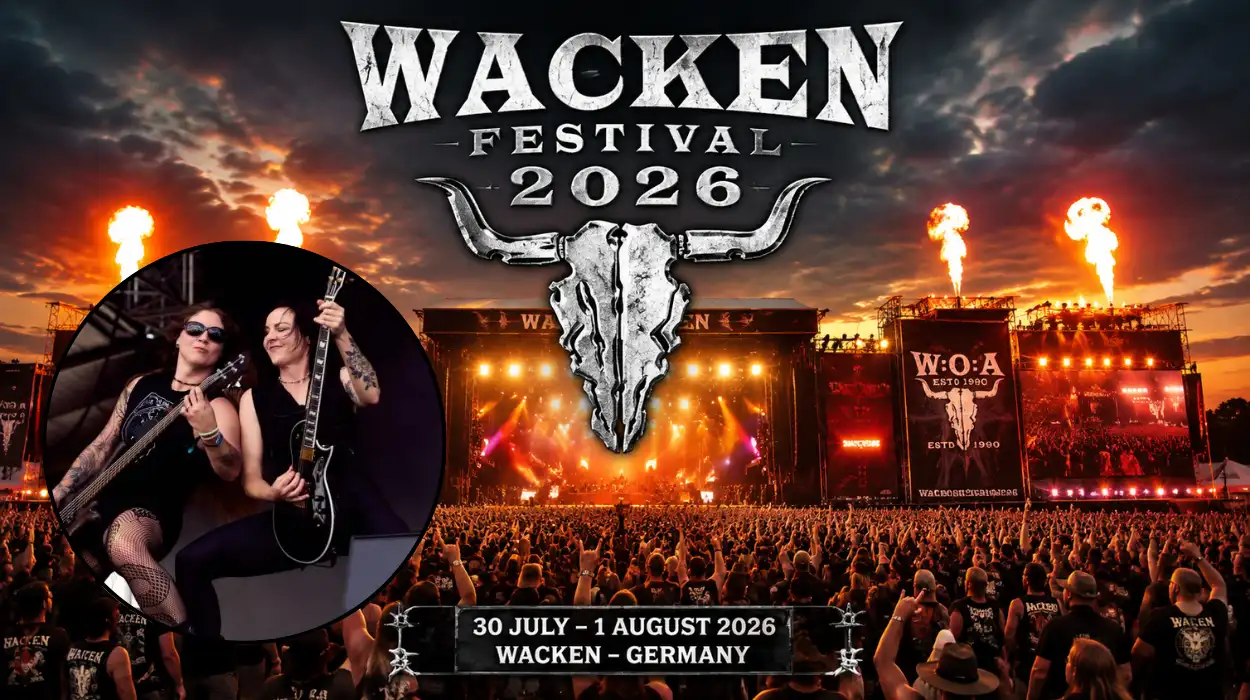
- Canadian band Kittie, featuring Ivana “Ivy” Jenkins and Tara McLeod, performed on stage during the festival, as captured in images distributed by DPA photographer Marcus Golejewski.
Wacken (Britain Today News) August 01, 2026 — The small village of Wacken in Schleswig-Holstein, northern Germany, has once again transformed into what organisers describe as the loudest place in the world, as Wacken Open Air 2026 brings together an estimated 85,000 heavy metal fans for the festival’s landmark 35th edition. The four-day event, running from 29 July to 1 August, has become the largest gathering of its kind on the planet, drawing visitors from dozens of countries to a location that, three and a half decades ago, hosted fewer than 800 people.
- Key Points
- What Is Wacken Open Air and Why Does It Matter to Metal Fans Worldwide?
- When Did Wacken Open Air 2026 Take Place and How Long Did It Run?
- How Many Tickets Were Sold and When Did the Festival Sell Out?
- Which Bands Headlined Wacken Open Air 2026?
- What Did the Festival’s Founders Say About the 35th Anniversary?
- How Did the Festival Begin Each Year — What Are the Opening-Day Traditions?
- What Was the Atmosphere and Logistics Like on the Ground?
- What Additional Digital and Community Features Did Wacken Open Air 2026 Offer?
- Which Artists Performed During the Festival, According to Photographic Coverage?
- How Has Wacken Open Air Grown Since Its Founding in 1990?
- What Is Planned for the Future of Wacken Open Air?
- What Does the Sold-Out 35th Edition Mean for the Festival’s Legacy?
What Is Wacken Open Air and Why Does It Matter to Metal Fans Worldwide?
Wacken Open Air is widely regarded as the world’s largest heavy metal festival, a title it has held for many years running. What began in 1990 as a modest gathering has expanded into a sprawling, multi-day celebration of metal music, culture and community. The festival is organised by WOA Festival GmbH, a company connected to a broader network that includes band management, the Wacken Foundation, tour booking, music publishing, travel and accommodation services, merchandising distribution and ticketing operations. According to organisers, this network allows the festival to continually develop new event concepts and technical innovations, cementing Wacken’s reputation as far more than a simple concert weekend.
When Did Wacken Open Air 2026 Take Place and How Long Did It Run?
This year’s festival ran from 29 July to 1 August 2026, though the broader festival experience extended well beyond those four days. Arrivals officially began on Sunday, 26 July, giving campers and festivalgoers nearly a full week on site before the main stages opened. The supporting programme also began that same day across several smaller stages, entertaining ahead of the main event. The much-anticipated Infield Opening, the traditional moment when the crowd of metalheads storms the festival’s main arena, known to regulars as the Holy Ground, took place on 29 July.
How Many Tickets Were Sold and When Did the Festival Sell Out?
All 85,000 tickets for the 2026 edition were sold, with festival organisers confirming the sell-out status on 21 July 2026. The scale of demand reflects the festival’s enduring popularity even as it approaches its fourth decade. For those who purchased tickets but were later unable to attend, organisers made provision for a safe and official resale mechanism. Fans could transfer unused tickets through the Wacken Ticket Market, a system designed to allow tickets to be resold directly to other festivalgoers rather than through unofficial or unsafe channels.
Which Bands Headlined Wacken Open Air 2026?
The 2026 line-up featured a roster designed to honour the festival’s history while showcasing its continued relevance within the metal scene. This year’s headliners included Judas Priest, Sabaton, Def Leppard and Powerwolf, four acts spanning different eras and subgenres of heavy metal, reflecting the festival’s broad appeal across generations of fans. Beyond the headline slots, organisers confirmed that the 2026 edition would feature performances from close to 200 bands across the festival’s various stages, alongside additional programming such as workshops, comedy performances, readings, panel discussions and other special events staged away from the main musical line-up.
What Did the Festival’s Founders Say About the 35th Anniversary?
Wacken Open Air’s two founders and promoters, Thomas Jensen and Holger Hübner, both offered public reflections on reaching the festival’s 35th year. As reported by Blabbermouth.net, Thomas Jensen stated:
“We’re delighted to celebrate this anniversary with such a huge crowd.”
He continued:
“Preparations here in the North are continuing at full speed, and we can’t wait to celebrate the metal party of the year with guests from all over the world in just a few days. Every year, it’s something truly special to welcome so many artists, crews and members of the community to Wacken from every corner of the planet.”
Holger Hübner, co-founder and promoter, added his own statement, as reported by Blabbermouth.net:
“Every year we’re humbled and deeply grateful that we get to do what we love — organising a great celebration for metalheads from around the world — and we’ve been doing it for more than 35 years now.”
Separately, as reported by Sinusoidal Music, Hübner also reflected on the milestone in more personal terms, stating:
“A very special festival lies ahead of us, and we’re excited to celebrate with this incredible community for the 35th time.”
He added:
“We’re deeply grateful for the loyalty our fans have shown us over the years. Their continued support is the reason we’ve been able to do what we love for more than three decades. We have the best fans in the world!”
How Did the Festival Begin Each Year — What Are the Opening-Day Traditions?
According to Sinusoidal Music, the 2026 celebrations began in traditional Wacken fashion. The Wacken Firefighters, a long-standing feature of the festival’s community-driven opening events, performed at the historic Landgasthof, the very venue where the festival’s story is said to have first begun back in 1990. Festival co-founder Holger Hübner, known affectionately to fans by his DJ moniker “DJ Hüby,” later welcomed arriving campers with a DJ set performed from atop a fire truck, a ritual that has become synonymous with the festival’s opening days. Hometown favourites Skyline were also reported to have featured among the early performances marking the start of festival week.
What Was the Atmosphere and Logistics Like on the Ground?
As reported by Sinusoidal Music, festivalgoers began arriving in the days leading up to the main event, with organisers reporting smooth traffic flow, which they attributed to improved routing systems put in place ahead of this year’s edition. Favourable weather conditions were also noted as contributing to what organisers and attendees alike described as one of the most memorable editions in the festival’s history. Fans travelling to the site were also encouraged by organisers to consult the festival’s “Festival ABC” guide to ensure they were properly prepared for their time on the Holy Ground, while those using public transport were directed to shuttle bus schedules made available ahead of the event.
What Additional Digital and Community Features Did Wacken Open Air 2026 Offer?
Organisers confirmed that a complete overview of programme highlights across every stage was made available via the festival’s official Running Order, as well as through the official Wacken Open Air mobile app, which is available free of charge on both iOS and Android platforms. The app has been positioned by organisers as a recommended companion for navigating the festival’s sprawling site and extensive schedule of performances and side events.
Beyond music, the festival’s official channels also referenced a range of community-oriented happenings tied to the 2026 edition, including what was described as the festival’s first official metal wedding, held in partnership with insurer CosmosDirekt on the Holy Ground. The festival’s traditions also extended to symbolic rituals such as the “Bullhead” ceremony, alongside the release of a new edition of the festival’s official magazine, The Bullhead, timed to coincide with the 35th anniversary celebrations.
Which Artists Performed During the Festival, According to Photographic Coverage?
Photographic coverage distributed via DPA and captured by photographer Marcus Golejewski documented performances throughout the festival, including a set from Canadian band Kittie. The images show band members Ivana “Ivy” Jenkins and Tara McLeod performing on stage at Wacken Open Air on Saturday, 1 August 2026, offering a visual record of the festival’s final day and the international character of its line-up, which drew performers from across the world to the German village for the anniversary edition.
How Has Wacken Open Air Grown Since Its Founding in 1990?
The scale of the 2026 edition stands in sharp contrast to the festival’s modest origins. Wacken Open Air began in 1990 as a small gathering of fewer than 800 people. Over the following 35 years, the event expanded steadily in both attendance and reputation, eventually becoming recognised as one of the world’s largest open-air heavy metal festivals. The growth from a few hundred attendees to roughly 85,000 ticket holders reflects both the enduring popularity of heavy metal music globally and the festival’s own reputation for community, tradition and consistent programming quality, according to organisers.
Explore More about World:
Qatar Rescue Team Joins Spain’s Ávila Wildfire Battle
WestJet Cancels 81 Flights as Strike Deadline Approaches on Sunday
What Is Planned for the Future of Wacken Open Air?
Even as the 2026 edition unfolded, organisers had already begun looking ahead. According to the festival’s official news channel, the first bands confirmed for Wacken Open Air 2027 have already been revealed, suggesting that planning for future editions continues in parallel with the current festival, a pattern consistent with the festival’s long-term approach to programming and fan engagement.
What Does the Sold-Out 35th Edition Mean for the Festival’s Legacy?
The sell-out of all 85,000 tickets, confirmed weeks in advance of the festival itself, together with the strength of a headline line-up featuring acts such as Judas Priest, Sabaton, Def Leppard and Powerwolf, points to a festival that continues to command significant global demand even after 35 years of operation. The comments from both founders, Thomas Jensen and Holger Hübner, emphasising gratitude towards fans and the sense of community built over more than three decades, suggest that Wacken Open Air’s organisers view the anniversary not simply as a milestone in scale, but as a reaffirmation of the relationship between the festival and the international metal community it has cultivated since 1990.
As the 2026 edition draws to a close, the small village of Wacken returns, for a few more days, to being one of the most talked-about destinations in the global music calendar — a transformation repeated annually since a gathering of fewer than 800 fans first took root there thirty-five years ago.