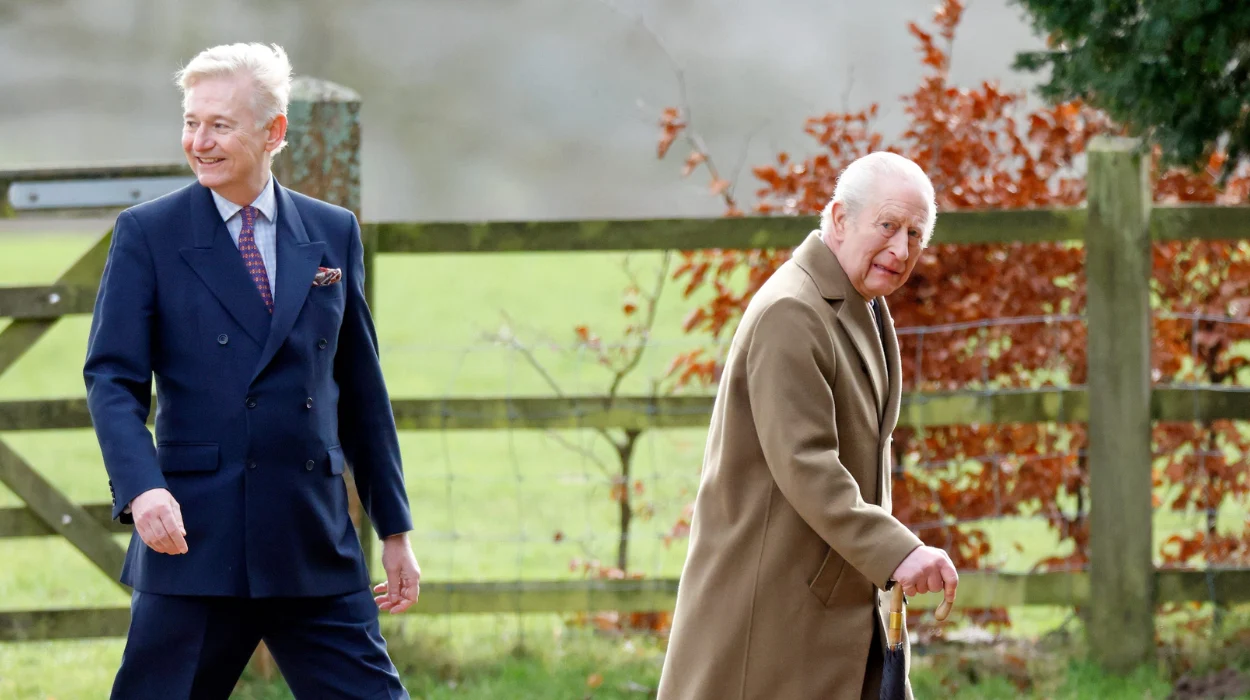
Sir Clive Alderton, Principal Private Secretary to King Charles III and Queen Camilla, announced his retirement in July 2026 after 20 years of royal service. His departure exposes long-standing concerns about staff turnover, pay, and institutional knowledge loss inside the Royal Household. This article examines the exit, its causes, and its implications for the monarchy’s future operations.
- Who Is Sir Clive Alderton And Why Does His Exit Matter?
- When Is Sir Clive Alderton Leaving And What Is The Timeline?
- What Role Did Alderton Play In Royal Household Operations?
- What Broader Staff Concerns Does This Exit Reveal?
- How Is The Royal Household Funded And Structured?
- What Historical Precedents Exist For Senior Courtier Departures?
- What Happens Next For The Royal Household’s Senior Staff?
Who Is Sir Clive Alderton And Why Does His Exit Matter?
Sir Clive Alderton is King Charles III’s most senior courtier, serving as Principal Private Secretary since 2015 after joining the Royal Household in 2006. His retirement, announced in July 2026, removes the King’s chief adviser and diary manager, triggering the most significant royal staffing change since the 2022 accession.
Alderton occupies the most powerful non-royal position within Buckingham Palace. The Principal Private Secretary manages the monarch’s official diary, coordinates communications between the Palace and government departments, and advises on constitutional matters. Alderton has held this role for the King and, before him, for the late Queen Elizabeth II in a related capacity.
His career inside the Royal Household spans two decades. He began in 2006 as Deputy Private Secretary to then-Prince Charles and Camilla, Duchess of Cornwall. In 2008, he became Private Secretary for Foreign and Commonwealth Affairs, a post he held until 2012. Between 2012 and 2015, he served as British Ambassador to Morocco, a diplomatic posting that broadened his experience before he returned to royal service as Principal Private Secretary.
Alderton oversaw the planning for the King’s accession following Queen Elizabeth II’s death in September 2022. He also chaired the committee that organised the first UK coronation in 70 years. These responsibilities placed him at the centre of the monarchy’s most consequential transitional moments in recent history.
His departure matters because it removes deep institutional memory at a moment when the Royal Household is managing multiple sensitive issues simultaneously, including the King’s cancer treatment, the ongoing rift with the Duke of Sussex, and a broader modernisation of royal finances and operations.
When Is Sir Clive Alderton Leaving And What Is The Timeline?
Alderton will retire around summer 2027, coinciding with his 60th birthday in May. Buckingham Palace confirmed the extended timeline is designed to allow a thorough recruitment process and a structured handover to his successor.
Alderton has decided to step aside from the position around the summer of 2027, according to Palace sources. His departure is set to coincide with his 60th birthday in May, marking a natural retirement point after two decades of continuous service.
A Buckingham Palace spokesperson stated that King Charles and Queen Camilla.
“are deeply grateful to Clive for his tireless support and wise counsel over the years and for the enduring loyalty that will ensure a smooth transition to his successor.”
This statement signals an institutional effort to frame the exit as a planned transition rather than an abrupt loss.
The extended notice period, spanning roughly ten months from the July 2026 announcement to the summer 2027 departure, reflects the seniority of the role. This timeline allows plenty of time to recruit his replacement and provides sufficient runway for an adequate handover to the incoming Principal Private Secretary. The Palace will begin the recruitment process for his successor, aiming for that person to start in spring or summer 2027. The Times has reported that the search for his replacement is likely to include existing palace staff and external candidates, indicating an open competitive process rather than an internal-only appointment.
What Role Did Alderton Play In Royal Household Operations?
Alderton managed the King’s official diary, coordinated cross-government royal engagements, and sat on RAVEC, the Home Office committee deciding police protection for royal family members. His portfolio combined administrative, diplomatic, and security-related responsibilities.
The Principal Private Secretary functions as the operational bridge between the monarch and the machinery of government. Alderton managed the king’s diary and organised his professional life, a role requiring coordination across multiple government departments, foreign missions, and royal patronages.
Beyond diary management, Alderton served as one of several palace aides sitting on RAVEC, the Home Office committee that decides who receives Metropolitan Police protection. RAVEC stands for the Royal and VIP Executive Committee. This body determines which members of the royal family and other high-profile individuals qualify for state-funded police security details.
This RAVEC role placed Alderton at the centre of one of the monarchy’s most publicised internal disputes. Because Alderton has been an important intermediary for Prince Harry’s relations with his father, his committee position became entangled in the ongoing conflict over Harry’s security arrangements following his move away from full-time royal duties in 2020.
Sources indicate that Prince Harry has been deeply suspicious of the Royal Household’s role on the RAVEC committee, with some in the Duke of Sussex’s camp believing Alderton could have secured the return of his police bodyguards. Palace insiders have disputed this characterisation. Prince Harry reportedly referred to Alderton by the nickname “The Wasp,” reflecting the tension between the two men over multiple years.
What Broader Staff Concerns Does This Exit Reveal?
Alderton’s exit follows a pattern of senior departures across royal institutions in 2026, including the resignation of The King’s Foundation’s chief executive. Analysts point to relatively modest pay, long hours, and high public scrutiny as recurring pressures on royal staff retention.
The Alderton announcement did not occur in isolation. In the same period, The King’s Foundation, King Charles’s flagship charitable organisation, experienced the resignation of its Chief Executive, Kristina Murrin, who departed after serving fewer than three years in the role. Her exit followed the earlier departure of Chair Dame Ann Limb in December, creating what The Sunday Times described as a leadership vacuum within the charity’s senior ranks.
These combined departures reportedly left King Charles “profoundly unhappy” and generated instability within the charity’s senior leadership. Murrin, who had previously worked as a civil servant at 10 Downing Street, stepped down weeks after the premiere of the King’s Amazon Prime documentary, “Finding Harmony: A King’s Vision.”
Pay structures within the Royal Household have drawn scrutiny for years. According to job listings and salary data, entry-level and mid-tier Royal Household positions pay considerably below comparable private-sector roles. Average Royal Household salaries range from approximately £19,944 per year for a Surveillance Officer role up to £62,450 per year for a Senior Facility Manager position, according to Indeed salary data. A 2025 recruitment posting for a Senior Correspondence Officer, a role responsible for drafting responses to letters addressed to the monarch and royal family, offered an annual salary of £32,000 for a two-year contract beginning in March 2026.
Senior courtier salaries have historically also lagged comparable government or private-sector executive pay. In 2013, Sir Christopher Geidt, then the Queen’s private secretary, had his salary frozen at roughly $204,000 per year, one of the highest salaries in the Royal Household at the time. This figure remains modest relative to equivalent chief-of-staff roles in large private organisations or multinational corporations, despite the extraordinary scope of responsibility and public exposure the role demands.
The Royal Household has taken steps to address cost-of-living pressures among lower-paid staff. During the 2022 cost-of-living crisis, the King used his private income to fund one-off bonus payments of up to £600 for staff earning less than £30,000 annually, with tiered payments of £400 for those earning between £30,000 and £40,000, and £350 for those earning between £40,000 and £45,000. Royal accounts for the 2020-2021 period recorded 491 full-time equivalent staff across the royal palaces funded through the Sovereign Grant.
How Is The Royal Household Funded And Structured?
The Royal Household operates through the Sovereign Grant, funded by a percentage of Crown Estate profits, covering official expenses including staff payroll, security, and property maintenance. This funding model directly shapes available compensation for courtiers and support staff.
The Sovereign Grant represents the primary public funding mechanism for royal operational costs. The Crown Estate generated over $377 million in profits during the 2021-2022 fiscal year, of which 25 percent is allocated to the Sovereign Grant, a fund earmarked for official expenses. Personal expenses of royal family members are paid from separate private funds, distinct from this public allocation.
Over $62 million from the 2021-2022 Sovereign Grant was designated specifically for funding operating costs of the Royal Household, with additional funds set aside for capital projects such as the reservicing of Buckingham Palace. This structure means staff payroll competes directly with maintenance, security, and ceremonial costs within a fixed and publicly scrutinised budget.
The Royal Household publishes a benefits package alongside base salary figures. Official Royal Household materials describe a rewards package that includes 25 days of annual leave rising to 27 days after three years, 28 days after five years, and 30 days after ten years of service, plus public and bank holidays for full-time roles. The Household states that it reviews basic pay rates annually and offers performance rewards, alongside a pension scheme and sick pay provisions.
This funding structure creates an inherent tension. Public accountability over Sovereign Grant spending limits how aggressively the Royal Household can raise salaries to compete with private-sector employers, even as the institution seeks to retain experienced staff in highly demanding, high-visibility roles.
What Historical Precedents Exist For Senior Courtier Departures?
Previous Principal Private Secretaries, including Sir Christopher Geidt and Edward Young, departed under differing circumstances tied to internal disagreements and institutional pressures. Alderton’s planned retirement contrasts with these earlier, less orderly transitions.
The role of Principal Private Secretary has seen turnover driven by internal conflict in the past. Sir Christopher Geidt served as the Queen’s private secretary before his departure, which Tatler reported followed his expression of strong opinions and warnings about both Prince Andrew and the Duke and Duchess of Sussex. Edward Young succeeded Geidt in 2017 and was later reported by The Times to have been blamed by senior courtiers and members of the royal family for failing to prevent the deterioration in relations that preceded Prince Harry and Meghan Markle’s departure from full-time royal duties.
These earlier transitions occurred amid controversy and internal disagreement, contrasting with Alderton’s departure, which the Palace has framed as a planned, dignified retirement after a full career. Alderton himself described his tenure as
“the greatest imaginable honour to serve The King and Queen in my present role through such historic times and with unforgettable humour along the way.”
He added that his support “will continue, in a less formal capacity, for all of my life.”
This distinction matters for understanding institutional stability. A negotiated, extended-notice retirement signals a functioning succession process, whereas abrupt or conflict-driven exits historically have coincided with periods of heightened public scrutiny of the monarchy’s internal governance.
Explore More about UK:
Explore Wales: Top Destinations, History and Travel Tips
Oxford City Travel Guide: History & Hidden Gems
What Happens Next For The Royal Household’s Senior Staff?
The Palace will conduct an open recruitment process for Alderton’s successor, drawing from internal and external candidates, with the new Principal Private Secretary expected to begin in spring or summer 2027. The King’s Foundation is separately managing its own leadership transition.
Town & Country magazine reported that the Palace will begin recruitment to have the successor start in spring or summer 2027. This dual-track candidate pool, combining internal palace staff with external applicants, reflects an effort to balance institutional continuity with fresh perspective at the most senior operational level of the monarchy.
Within The King’s Foundation, Deputy CEO Emily Cherrington LVO has been asked by the board to lead the organisation during its own transition period following Kristina Murrin’s departure. Acting Chair Michael Jary CBE praised Murrin’s tenure, highlighting her oversight of the charity’s expansion into Australia, the launch of a new Awards programme, and a rebranding initiative that saw the organisation renamed from the Prince’s Trust.
The parallel timing of these senior departures across two separate royal institutions, the Royal Household and The King’s Foundation, has intensified public and media attention on staff retention practices within royal organisations more broadly. Both transitions will test the monarchy’s capacity to maintain operational continuity while modernising its internal governance structures, a process likely to remain under scrutiny through 2027 as successors are appointed and settle into their roles.