Key Points
- The National Fire Chiefs Council (NFCC) has warned that fire services across the UK are under “extreme pressure” amid a prolonged heatwave.
- Around 19 wildfires remain active across the country.
- Major incidents were declared in Conwy, north Wales, and Glossop, Derbyshire, on Sunday, with crews still battling blazes on Tuesday.
- Wildfires also broke out over the weekend in Hampshire, Durham, West Sussex, East Sussex, Devon and Somerset.
- The Conwy wildfire has now been brought under control, though other fires continue to burn in north Wales.
- A large moorland fire at Tintwistle Moor near Dovestone Reservoir in the Peak District has burned around 260 hectares since it began on 24 June.
- A 20-year-old woman has been arrested on suspicion of arson in connection with the Peak District fire.
- Firefighters spent the night tackling a heathland blaze near Studland in Dorset.
- Natural England has warned of a “very high” or “exceptional” wildfire risk across much of England and Wales in the coming days.
- Experts say the dry, hot conditions are consistent with warnings from climate scientists about more frequent and intense UK heatwaves.
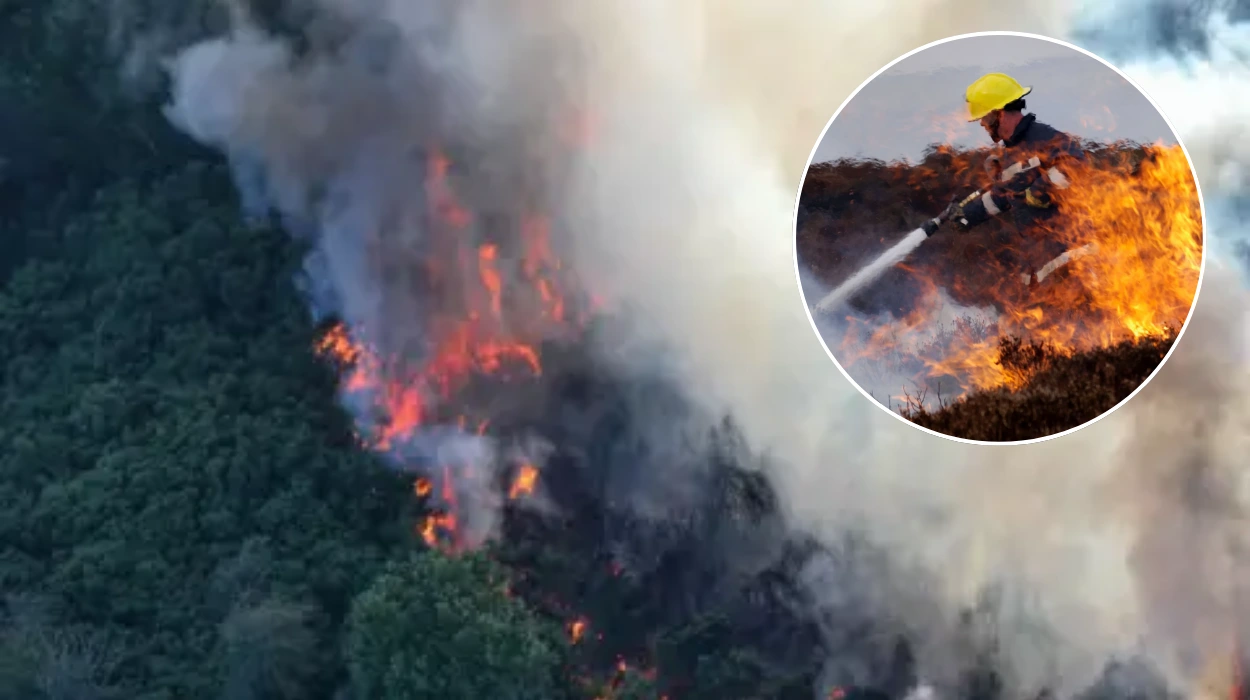
London (Britain Today News) July 14, 2026 – Firefighters across the United Kingdom are facing “extreme pressure” as wildfires continue to burn in multiple regions during a prolonged heatwave, the chair of the National Fire Chiefs Council has warned, with around 19 blazes still active, major incidents declared in Wales and Derbyshire, an arrest made on suspicion of arson, and further fires reported in Hampshire, Durham, Sussex, Devon, Dorset and Somerset over recent days.
- Key Points
- What Did the National Fire Chiefs Council Say About the Wildfires?
- Where Are Wildfires Currently Burning Across the UK?
- What Happened During the Conwy Wildfire in North Wales?
- What Is Happening at the Peak District Moorland Fire?
- What Precautions Have Fire Chiefs Urged the Public to Take?
- What Is the Situation With the Dorset Wildfire?
- What Warnings Have Been Issued for the Coming Days?
- Why Do Dry Conditions Increase Wildfire Risk?
What Did the National Fire Chiefs Council Say About the Wildfires?
Phil Garrigan, chair of the National Fire Chiefs Council, said fire and rescue services were under significant strain as they battled blazes fuelled by weeks of dry, hot weather. Speaking to BBC Breakfast, Mr Garrigan explained that the ongoing lack of rainfall was making conditions increasingly dangerous, saying:
“There’s no real respite… there doesn’t seem to be any rain forecast.”
He added that this absence of wet weather was becoming a serious problem for crews already stretched thin by the number of simultaneous incidents. Mr Garrigan confirmed that around 19 fires remained active across the country, underlining the scale of the challenge facing fire services during what has become one of the more demanding periods for UK crews this summer.
Where Are Wildfires Currently Burning Across the UK?
Beyond the headline incidents in Wales and Derbyshire, wildfires have broken out in a wide spread of English counties in recent days. Areas affected over the weekend included Hampshire, Durham, West Sussex, East Sussex, Devon and Somerset, reflecting how widely the dry conditions have taken hold across the country. The geographical spread of these incidents illustrates the pressure being placed on fire and rescue services nationally, rather than in any single region, with crews required to respond simultaneously to blazes hundreds of miles apart. The National Fire Chiefs Council’s warning reflects concern not just about individual fires, but about the cumulative strain of managing so many incidents at once during an extended period of hot, dry weather.
What Happened During the Conwy Wildfire in North Wales?
A major incident was declared in Conwy, north Wales, on Sunday after a significant wildfire broke out in the area. According to North Wales Fire and Rescue Service assistant chief fire officer Justin Evans, the blaze has since been brought under control. The fire caused alarm among residents and landowners in the surrounding area, given the speed and scale at which it spread across the mountainous terrain. While the major incident status has now been lifted for this particular fire, crews in the region remain on alert given the continuing risk posed by the dry conditions affecting much of Wales.
How Has the Wildfire Affected Local Farmers in Conwy?
Local farmer Gareth Wyn Jones, whose land borders the Conwy Mountain, described the scale of the blaze as something he had never witnessed before.
“It was unreal,”
he said, recalling the moment the fire swept across land near his farm. He explained that ponies grazing on the mountain had managed to escape the flames, but he had feared for the safety of a neighbour’s pigs as the fire moved through surrounding land. Mr Jones said his greatest concern had been that the animals might suffocate from smoke inhalation, though he later confirmed that the smoke had carried away from them and the pigs had survived unharmed. His account offers a rare first-hand perspective on how quickly wildfires can threaten livestock and agricultural land during periods of extreme dryness.
What Is Happening at the Peak District Moorland Fire?
Firefighters remain at the scene of a significant moorland fire at Tintwistle Moor, near Dovestone Reservoir in the Peak District. The blaze, which began on 24 June, has now burned through approximately 260 hectares (642 acres) of moorland and woodland, making it one of the most substantial wildfires affecting England this summer. Between 30 and 40 firefighters have been engaged in tackling the fire, working in demanding conditions as they attempt to bring the blaze under control. Greater Manchester Fire and Rescue Service senior fire chief Ben Levy said crews were facing “a very challenging and gruelling day ahead,” pointing to a combination of high temperatures, strong winds and persistently dry ground conditions that continue to fuel the fire’s spread.
Has Anyone Been Arrested Over the Wildfires?
Yes. A 20-year-old woman was arrested on Monday on suspicion of arson in connection with the Peak District fire, after police received reports that fireworks had been set off in the area. The arrest highlights concerns among fire chiefs that human activity, whether deliberate or accidental, continues to play a significant role in triggering wildfires during periods of extreme dryness. Officers are understood to be continuing their enquiries into the circumstances surrounding the incident, and further updates are expected as the investigation progresses.
What Precautions Have Fire Chiefs Urged the Public to Take?
Ben Levy urged members of the public to exercise extra caution when spending time in the countryside, given the heightened risk of further wildfires breaking out. His comments echo broader guidance from fire services across the country, who have repeatedly stressed that everyday activities such as barbecuing, smoking or discarding cigarettes can easily spark fires in the current conditions. With so many crews already stretched thin dealing with existing blazes, fire chiefs have been keen to emphasise that prevention remains one of the most effective tools available to reduce further strain on emergency services this summer.
What Is the Situation With the Dorset Wildfire?
In Dorset, firefighters spent the night tackling a wildfire that broke out on heathland near Studland. Smoke was first reported at Agglestone at around 17:00 BST on Monday, prompting a response from crews drawn from seven different fire stations. Firefighters worked to control the blaze until around 20:00 that evening, with relief teams expected to remain on site throughout Tuesday to monitor the situation and prevent any resurgence of the fire. The incident adds to the growing list of wildfires that have broken out across southern England in recent days, further illustrating the widespread nature of the current risk.
What Warnings Have Been Issued for the Coming Days?
Natural England has issued a warning of a “very high” or “exceptional” risk of wildfires across much of England, as well as Wales, over the coming days. The warning reflects growing concern among environmental and fire safety bodies that the current conditions could lead to further outbreaks if the dry, hot weather persists without significant rainfall. Fire services have been placed on heightened alert as a result, with additional resources reportedly being made available in areas considered most vulnerable to fresh wildfire outbreaks.
Explore More about UK:
Covid Inquiry Finds Johnson Government Wasted Billions on PPE
England and Wales Heatwave Deaths Reach 2,700 Amid Climate Crisis
Why Do Dry Conditions Increase Wildfire Risk?
Dry weather alone does not cause wildfires; a source of ignition is also required, such as a spark from a barbecue or a discarded cigarette. However, prolonged dry conditions remove moisture from vegetation, making it far more susceptible to burning and providing ready fuel for fires to take hold and spread rapidly once ignited. This combination of parched vegetation and ignition sources, whether accidental or deliberate, is understood to be a key factor behind the scale and frequency of the wildfires currently affecting the UK. Fire chiefs have pointed to this dynamic as one of the central reasons behind their repeated calls for public caution during the ongoing heatwave.
Is Climate Change Linked to the Rise in UK Wildfires?
The conditions being experienced across the UK this summer are consistent with warnings previously issued by climate scientists, who have long cautioned that human-induced climate change is likely to bring more frequent and intense heatwaves, along with the possibility of summer droughts. While individual weather events cannot always be attributed directly to climate change, the broader pattern of prolonged dry spells and rising temperatures aligns with projections made by researchers studying the UK’s changing climate. Fire chiefs and environmental bodies alike have suggested that the current wildfire activity may become a more regular feature of UK summers if these trends continue.
As the heatwave shows little sign of easing, fire and rescue services across the UK are continuing to monitor the situation closely, with crews remaining on standby in areas identified as being at greatest risk. With no significant rainfall currently forecast, officials have indicated that the coming days are likely to remain challenging, both for those tackling existing fires and for communities in areas newly identified as being at “very high” or “exceptional” risk. Fire chiefs have reiterated their appeal for public vigilance, stressing that even small, seemingly minor actions can have significant consequences during periods of extreme dryness such as this.