Key Points
- Exceptionally hot weather in May and June 2026 was linked to at least 2,700 heat-related deaths in England and Wales.
- June alone accounted for roughly 2,200 of the fatalities, as temperatures climbed as high as 99.9°F against average highs of 68°F.
- Researchers from Imperial College London, the London School of Hygiene & Tropical Medicine and the Met Office modelled the excess deaths using historical mortality data.
- Almost six in ten deaths during the May heatwave were attributed to human-caused climate change, compared with under four in ten during June.
- Scientists said daytime maximum temperatures were around 7°F higher than they would have been without human-induced climate change.
- Both heatwaves broke records that had stood since May 1944 and June 1976, according to the Met Office.
- The UK Health Security Agency warned that heat risks to public wellbeing are set to grow as the climate continues to warm.
- Continental Europe has faced a near-continuous heatwave since May, straining health systems and triggering deadly wildfires.
- The World Health Organization linked 1,300 excess deaths across Europe since 21 June to the high temperatures.
- France’s Health Ministry recorded 1,000 extra deaths in a single four-day period over the weekend.
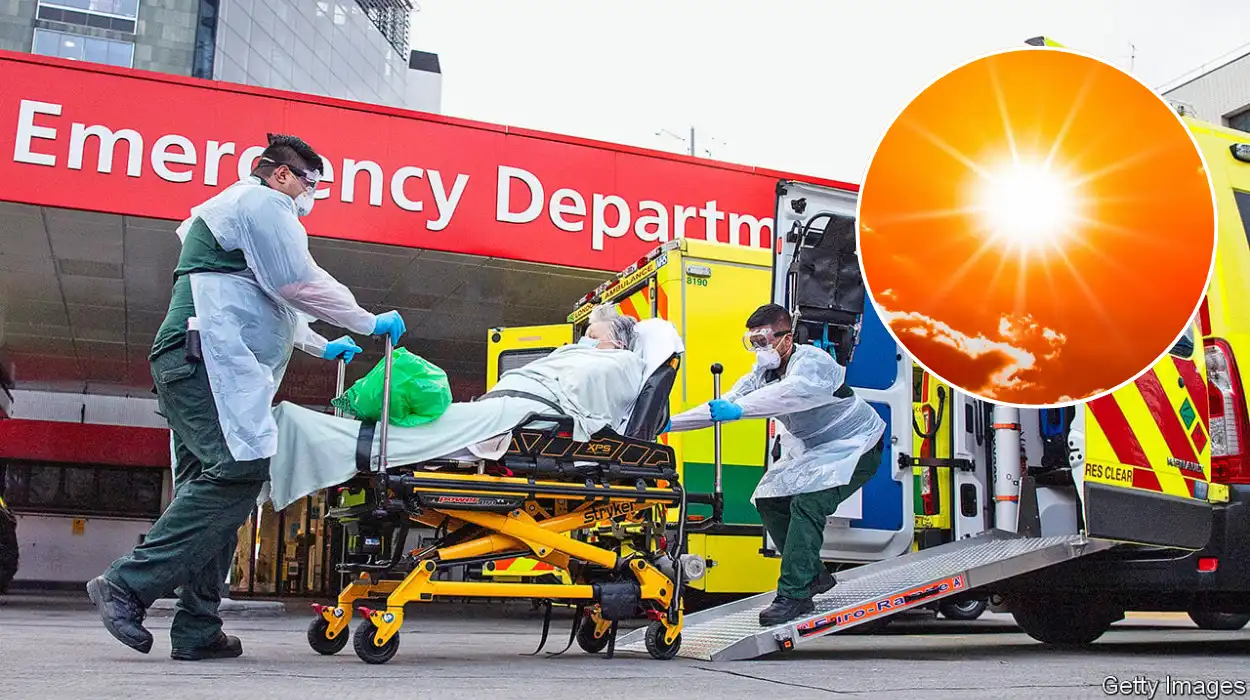
London (Britain Today News) July 13, 2026 – Exceptionally hot weather that gripped England and Wales through May and June has been linked to the deaths of at least 2,700 people, according to research published this week, with scientists concluding that human-caused climate change was a decisive factor in pushing temperatures to record-breaking and, at times, lethal levels.
- Key Points
- How many people died as a result of the heatwaves?
- How did scientists calculate the number of excess deaths?
- Why was the May heatwave more closely linked to climate change than June’s?
- How much hotter did climate change make these heatwaves?
- What are climate scientists saying about the findings?
- What has the Met Office said about this year’s records?
- What does this mean for public health planning in the UK?
- How is the rest of Europe coping with the heat?
- What has the World Health Organization said about deaths across Europe?
- How badly has France been affected by the heat?
- What needs to happen next to protect people from future heatwaves?
- How does this summer compare with previous extreme heat events?
- What has been the wider economic and social impact of the heat?
The findings, compiled by a team of researchers from Imperial College London, the London School of Hygiene & Tropical Medicine and the Met Office, add fresh urgency to warnings that the UK’s summers are becoming increasingly dangerous. The two heatwaves examined in the study ran from 21 to 29 May and 18 to 28 June, with temperature records falling in both months.
How many people died as a result of the heatwaves?
The research team estimated that the May and June heatwaves combined caused at least 2,700 excess deaths across England and Wales. The overwhelming majority of these fatalities, around 2,200, occurred during the June heatwave, when temperatures soared to as high as 99.9°F. That compares with the average daytime high for the month of just 68°F, according to figures released by the Met Office. The scale of the death toll underlines how quickly a run of hot days can translate into a serious public health emergency, even in a country not traditionally associated with extreme heat.
How did scientists calculate the number of excess deaths?
To arrive at their figures, the researchers modelled excess deaths, meaning fatalities recorded above and beyond what would normally be expected for the time of year, by drawing on historical mortality records and established, peer-reviewed scientific methods. This approach allows scientists to isolate the additional deaths that can reasonably be attributed to a specific weather event, rather than relying on anecdotal reports or hospital admissions alone. The methodology has previously been used to assess the toll of earlier European heatwaves and is widely regarded within the scientific community as a robust way of measuring the hidden cost of extreme heat.
Why was the May heatwave more closely linked to climate change than June’s?
One of the more striking findings of the research was the differing role that climate change played in each of the two heatwaves. Almost six in ten deaths during the May heatwave were attributed to the additional heat contributed by human-caused climate change. By contrast, a little less than four in ten deaths during the June heatwave were linked to the same cause, even though the June event was both hotter and longer-lasting than the one in May. This suggests that the May heatwave was, in relative terms, far more unusual and far more dependent on the influence of a warming climate than the more prolonged June episode.
How much hotter did climate change make these heatwaves?
According to the research team, daytime maximum temperatures during the heatwaves were approximately 7°F higher than they would otherwise have been in the absence of human-induced climate change. Without that additional warming, the researchers say, the extreme temperatures recorded in both May and June would have been far less likely to occur at all. This margin, while it may sound modest, was enough to push already hot conditions into a range that becomes significantly more hazardous to human health, particularly for those who are older, very young, or living with existing health conditions.
What are climate scientists saying about the findings?
Dr Clair Barnes, a Research Associate in Extreme Weather and Climate Change at Imperial College London, said:
“We all love the sun, but people need to be aware that we are now seeing dangerous climate-change-fuelled heat that is claiming lives, disrupting schools and hospitals and shutting down transport and infrastructure.”
She added:
“It’s time we woke up to the fact that we now live in a country with dangerously hot summers. To protect people during future extremes, we must urgently adapt to the reality of the climate we now have, and double down on global efforts to reach net zero emissions to stop this from getting worse.”
Dr Malcolm Mistry, an Assistant Professor in Climate and Geo-spatial Modelling at the London School of Hygiene & Tropical Medicine, said he was concerned that England and Wales had already experienced two record-breaking heatwaves only a few weeks into summer. He warned that as spikes of extreme hot weather become more frequent and more intense as a result of human activity, summer heatwaves are
“rapidly evolving into a major health risk for people in the United Kingdom.”
Dr Mistry also said it was critical that changes to homes, workplaces and critical infrastructure keep pace with rising health risks linked to extreme heat, in order to protect elderly people, children, babies and other vulnerable groups.
What has the Met Office said about this year’s records?
The Met Office confirmed that 2026 has been an exceptional year for heat, with the two heatwaves breaking records that had stood since May 1944 and June 1976 respectively. Dr Mark McCarthy, the Met Office’s Climate Attribution Manager, said:
“For the time of year these events were extreme, even in our warmer climate.”
His comments reflect a growing consensus among meteorologists that events once considered rare outliers are becoming a more regular feature of the British summer.
What does this mean for public health planning in the UK?
The climate division of the UK Health Security Agency said that with periods of heat likely to become more intense, longer and more frequent as the world continues to warm, the study illustrates the
“scale of risk associated with extreme heat and the growing threat climate change poses to our wellbeing.”
The agency’s assessment points to the need for long-term planning across the health and social care sectors, including how hospitals, care homes and schools respond when temperatures rise sharply over a short period.
How is the rest of Europe coping with the heat?
The extreme conditions have not been confined to England and Wales. Continental Europe has experienced a more or less continuous heatwave since May, placing health systems under significant strain. The prolonged heat has also triggered deadly wildfires that have burned through tens of thousands of hectares of woodland and scrubland, while crippling power grids in several countries and forcing schools to close in others. The scale of disruption illustrates how a single sustained weather pattern can ripple across borders, affecting everything from emergency services to energy supply.
What has the World Health Organization said about deaths across Europe?
The World Health Organization said that 1,300 excess deaths reported across Europe since 21 June were linked to the high temperatures. Its Director-General, Tedros Adhanom Ghebreyesus, said that Europe was warming twice as fast as the rest of the world, with some 150 million people suffering the negative impacts of the extreme heat. His remarks add to a body of evidence suggesting that Europe, more than most other regions, is experiencing the effects of climate change at an accelerated pace, with consequences that extend well beyond temperature records into everyday public health.
How badly has France been affected by the heat?
France’s Health Ministry said there were 1,000 extra deaths recorded between Wednesday and Saturday of the previous week alone, compared with figures from previous months. The sharp rise over such a short period underscores how quickly extreme heat can translate into a measurable public health toll, even in a country with considerable experience of managing hot summers. It also reinforces the wider pattern seen across the continent, where excess mortality has climbed sharply during periods of sustained high temperatures.
What needs to happen next to protect people from future heatwaves?
Taken together, the findings from England and Wales, and the wider picture across Europe, point to a consistent message from scientists and health officials: the summers of the past can no longer be treated as a reliable guide to the summers of the future. Researchers have repeatedly stressed the need to adapt homes, workplaces, schools and hospitals to cope with extreme heat, alongside continued efforts to reduce greenhouse gas emissions in order to limit further warming. For now, health authorities are focusing on protecting the most vulnerable groups, including elderly people, young children and those with underlying health conditions, as the risk of further extreme heat events remains high for the remainder of the summer.
The repeated breaking of long-standing temperature records, some dating back more than eighty years, has also prompted renewed debate about how quickly infrastructure built for a cooler climate can realistically be upgraded. Hospitals designed decades ago, schools without adequate ventilation, and transport networks that were never engineered to withstand sustained extreme heat are all now being tested under conditions that would have been considered exceptional even a generation ago. Officials involved in the research have suggested that without significant investment in adaptation measures, the human cost of future heatwaves is likely to rise further, even if global efforts to curb emissions eventually succeed in limiting the pace of warming.
Explore More about UK:
UK Proscribes Iran’s IRGC and Islamic Movement Over Antisemitic Attacks
UK and EU Sanction Russian Cyber Hackers Over Poland Attack
How does this summer compare with previous extreme heat events?
The scale of disruption seen this year, spanning transport delays, school closures and pressure on hospitals, has drawn comparisons with previous extreme heat episodes recorded in the UK over the past decade. What sets the May and June 2026 heatwaves apart, according to the research team, is not simply the peak temperatures reached but the clarity of the link to human-caused climate change established through formal attribution modelling. Rather than treating each hot spell as an isolated event, scientists say the pattern now emerging, of records falling in quick succession across different months, reflects a broader and more permanent shift in the country’s climate rather than a temporary anomaly.
What has been the wider economic and social impact of the heat?
Beyond the direct toll on human life, the heatwaves have carried a wider social cost, with transport networks disrupted, school timetables altered and hospitals reporting increased pressure on emergency services during the hottest days. Similar disruption has been reported across continental Europe, where wildfires have destroyed large areas of woodland and scrubland, and power grids have come under strain as demand for cooling has surged. Taken together, these knock-on effects illustrate how extreme heat, once viewed mainly as a health issue, is increasingly being treated by officials as a cross-cutting challenge that touches energy policy, education and national infrastructure planning alike.