Key Points
- Donald Trump said King Charles agrees that Iran must never be allowed to obtain nuclear weapons.
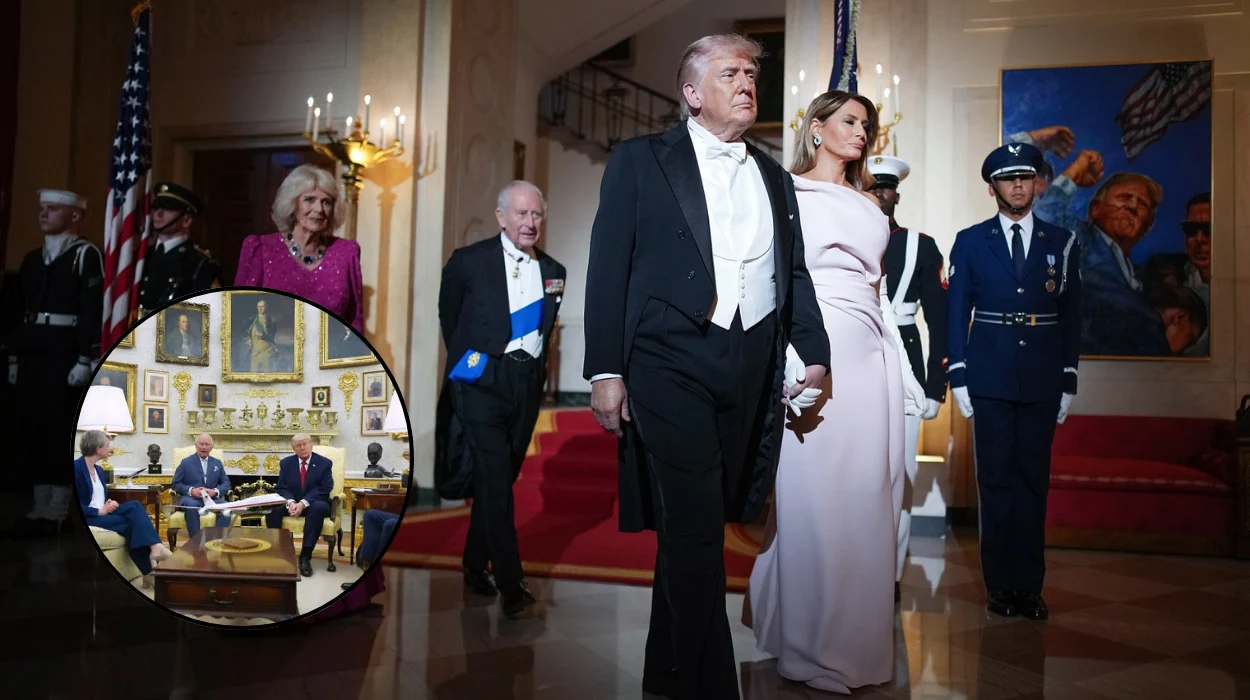
- The claim was made during a White House state dinner honouring King Charles and Queen Camilla.
- Trump made the remark after private bilateral talks with the King earlier the same day.
- Buckingham Palace said the King is mindful of the UK government’s long-standing position on nuclear proliferation.
- The King is expected to remain politically neutral, so Trump’s comments are likely to create embarrassment for royal aides.
- Charles used his state dinner speech to speak about the importance of the “special relationship” between the UK and the US.
- He also referred to historical parallels with Queen Elizabeth II’s 1957 US visit after the Suez crisis.
- The visit came against the backdrop of tensions between Trump and UK Prime Minister Keir Starmer over the Iran war.
- Trump praised the UK-US relationship and said Americans have had no closer friends than the British.
- Charles is also set to mark the forthcoming 25th anniversary of the 11 September attacks during the visit.
Washington (Britain Today News) April 29, 2026 – Donald Trump has claimed that King Charles agrees with him that Iran should never be allowed to develop a nuclear weapon, in remarks made during a White House state dinner that could place the British monarch’s aides in an awkward position. The comments came after the King and Queen Camilla were welcomed to the US for a state visit marked by ceremonial pageantry, private talks and carefully staged public diplomacy.
The issue has injected fresh sensitivity into an already delicate visit because the British monarch is expected to remain above party politics and avoid any suggestion of taking sides on a major international conflict. Trump’s language, however, appeared to present the King as aligning with Washington’s position on Iran, even though Buckingham Palace did not publicly endorse any such view. In a political and diplomatic setting where every word matters, the claim risked turning a routine state dinner line into a potential protocol problem.
What exactly did Trump say?
Trump raised the subject while speaking at the formal dinner held in honour of the royal visit, according to Reuters and The Guardian. He said:
“We’re doing a little Middle East work right now … and we’re doing very well. We have militarily defeated that particular opponent, and we’re never going to let that opponent ever, Charles agrees with me even more than I do, we’re never going to let that opponent have a nuclear weapon.”
He added that
“they know that, and they’ve known it right now, very powerfully.”
The remark was notable not only for its substance but also for the way Trump framed a supposedly private view as a shared position with the King. Trump has a long record of describing private conversations in public in ways that sometimes conflict with what the other party later says, and this latest claim fits that pattern. Because the British monarch is constitutionally neutral, even an unverified suggestion of agreement on such a politically charged issue can cause diplomatic discomfort.
Why is the remark sensitive?
The King’s constitutional role makes neutrality especially important, particularly on matters of foreign policy and war. By stating that Charles agreed with him on Iran, Trump effectively pulled the monarch into a geopolitical argument that the Palace would normally avoid. That is why the comment was widely seen as potentially embarrassing for royal aides, who must preserve the Crown’s non-partisan standing.
Buckingham Palace responded by stressing that the King is aware of the Government’s
“longstanding and well-known position on the prevention of nuclear proliferation.”
That wording carefully avoids confirming Trump’s version of events while reaffirming Britain’s public policy. In royal terms, it is a measured reply that signals caution without open confrontation.
What did Charles say at dinner?
Charles used his dinner speech to highlight the importance of the relationship between the UK and the US, rather than speak directly about Iran. He suggested the purpose of the visit was to
“put the ‘special’ back into our relationship,”
echoing the diplomatic language used by Queen Elizabeth II decades earlier. He also referred to the post-Suez era, when the monarchy helped repair British ties with Washington after a period of strain.
The King’s speech was deliberately broad and diplomatic, stressing alliance, continuity and shared history. He made no direct mention of the Iran war, but he did speak about Nato, Ukraine, and the dangers of isolationism in a contested world. That placed the focus on collective security rather than on any one conflict or leader.
How did Trump and Charles interact?
Trump praised the “special relationship” and told the King that Americans had “no closer friends than the British.” He also said after the bilateral meeting that it had been “a really good meeting” and described Charles as “a fantastic person” and the royals as “incredible people.” Those remarks suggested warmth in the public setting even as the Iran issue remained an obvious source of tension in the broader political background.
The timing matters because Trump had earlier been openly critical of UK Prime Minister Keir Starmer over the Iran war. Relations between Trump and Starmer have reportedly been strained, with Trump describing Britain’s approach as “terrible” and attacking Starmer personally. Against that backdrop, Trump’s attempt to present the King as agreeing with him carried added political force.
How did the state visit unfold?
The visit opened with a ceremonial welcome on the White House south lawn, setting the tone for a formally choreographed diplomatic occasion. Later, Charles became only the second British monarch to address Congress, following Queen Elizabeth II in 1991. That address was seen as another major moment in the visit, reinforcing the depth of the transatlantic relationship.
Charles’s speech to Congress focused on alliance politics, democratic values and the need for continued international cooperation. Commentators noted that the speech also carried subtle warnings about the rule of law, checks and balances and Britain and America’s broader role in the world. In that sense, the visit combined royal symbolism with clear strategic messaging.
Why does the Iran issue matter now?
The Iran war has become a major foreign policy fault line between Washington and London, especially given Trump’s aggressive language and Starmer’s more cautious stance. By linking Charles to his own position, Trump dragged the monarchy into an issue already charged with political and military significance. That makes the comment more than a casual dinner line; it becomes part of the wider diplomatic story surrounding the visit.
The remark may also be read as part of Trump’s broader habit of using public events to assert political authority and personal rapport. In this case, however, the subject was not merely a policy dispute but the private views of a monarch who must not appear partisan. That is why the incident drew attention well beyond the dinner itself.
What happens next in the visit?
Charles and Camilla are due to mark the approaching 25th anniversary of the September 11 attacks in New York by laying flowers at one of the memorial pools. That moment will likely return the visit to themes of remembrance, solidarity and transatlantic friendship. It also ensures the royal trip remains closely tied to public symbolism as well as political messaging.
For now, though, the focus remains on Trump’s claim that the King shares his position on Iran. Whether intended as praise, diplomacy or political theatre, the remark has already added another layer of sensitivity to a visit designed to project unity. In royal diplomacy, that is often where the real story begins.