Key Points
- Donald Trump criticises UK Prime Minister Sir Keir Starmer, claiming the UK-US relationship was “the best” until Starmer took power, adding “He doesn’t produce.”
- Trump repeats jibe that Starmer is “no Winston Churchill” during Oval Office meeting with Irish premier Micheál Martin.
- Britain collaborates with US, European, and Gulf allies on plans to escort tankers through Strait of Hormuz once fighting stops.
- Jonathan Powell, Starmer’s national security adviser, works closely with Trump’s envoy Steve Witkoff to de-escalate Iran crisis.
- Starmer refuses to send British warships to the strait while US-Israel war with Iran continues, but open to international mission post-war.
- French President Emmanuel Macron states France ready for escort operations once bombings cease.
- Experts warn of ongoing IRGC threats to shipping, even after war ends.
- Lord Peter Ricketts and Sidharth Kaushal highlight risks from IRGC small boats, missiles, and drones.
- Micheál Martin defends Starmer as an “earnest, sound person” who reset UK-Irish ties.
- Downing Street confirms talks at all levels with US administration.
London (Britain Today News) March 17, 2026 – Donald Trump has lashed out at Prime Minister Sir Keir Starmer amid Britain’s diplomatic efforts with allies to de-escalate the Iran crisis, accusing the British leader of failing to “produce” results in the strained UK-US relationship.
- Key Points
- Who Is Driving UK-US De-Escalation Talks on Iran?
- Why Has Trump Targeted Starmer Personally?
- What Is the UK’s Stance on Strait of Hormuz Escorts?
- How Serious Are Post-War Threats in the Strait?
- What Broader Context Fuels Trump-Starmer Tensions?
- Could an International Naval Force Stabilise the Region?
- How Has Starmer Responded to Trump’s Attacks?
- What Role Do Gulf and European Allies Play?
- Will the Powell-Witkoff Channel Succeed?
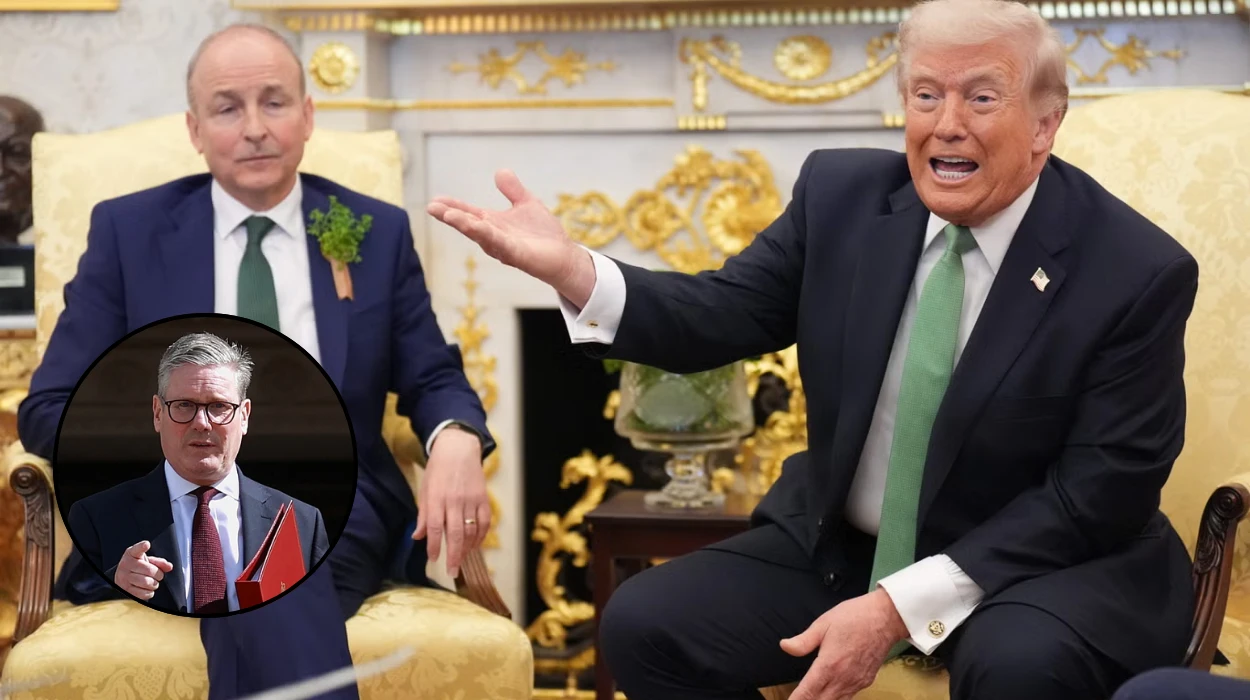
As reported in the Financial Times, Trump’s remarks came during an Oval Office meeting with Irish premier Micheál Martin, where he stated:
“We have a tremendous long-term relationship with the UK. I mean, people would say it’s the best. We’ve had the longest, the oldest — and should be the best. Always was the best until Keir came along. I like him. He’s a nice man with a beautiful family, everything’s perfect — but he doesn’t produce.”
The US president’s criticisms underscore tensions as the UK works behind the scenes with America, European partners, and Gulf states on a plan to escort tankers through the Strait of Hormuz, but only after fighting in the region ceases. Starmer has refused to join what he calls the “wider war” and is seeking political gains from resisting Trump’s pressure.
Who Is Driving UK-US De-Escalation Talks on Iran?
Jonathan Powell, Starmer’s national security adviser and architect of the Northern Ireland peace process, has been coordinating closely with Steve Witkoff, Trump’s special envoy. One person briefed on the discussions, as cited by the Financial Times, said the pair had been
“texting and talking all the time.”
A British official described this channel as “very significant” for London-Washington dialogue.
Downing Street declined to comment on specifics but confirmed:
“We are speaking at all levels of the US administration.”
This backchannel remains crucial amid high-level strains between Trump and Starmer, as the US-Israel conflict with Iran rages on.
Why Has Trump Targeted Starmer Personally?
Trump repeated his earlier jibe that Starmer is “no Winston Churchill,” highlighting perceived weaknesses in leadership. The outburst occurred as Britain prioritises de-escalation over military involvement. People briefed on Starmer’s thinking indicate he is open to deploying British ships for an international escort mission in the strait, but not while active hostilities persist.
Irish premier Micheál Martin defended Starmer during the meeting, calling him an “earnest, sound person” who helped “reset” UK-Irish relations. Martin’s intervention provided a counterpoint to Trump’s barbs.
What Is the UK’s Stance on Strait of Hormuz Escorts?
British officials reveal planning at a military level with the US, European allies, and Gulf partners to secure the strait post-war. Starmer has explicitly refused to send British warships during ongoing combat, aiming to avoid escalation.
France’s President Emmanuel Macron echoed this cautious approach on Tuesday, stating:
“Once the heart of the bombings have ceased, we along with other nations are prepared to take responsibility for an escort system.”
Macron’s comments signal broader European willingness to stabilise shipping lanes once feasible.
How Serious Are Post-War Threats in the Strait?
Even in a “most benign” scenario where the war ends by mutual agreement between Washington and Tehran, challenges persist. Lord Peter Ricketts, former UK national security adviser, warned that insurers would remain wary of sending cargoes through the strait until stability is proven. He noted:
“Insurers will be very wary of sending cargoes through the strait for some time until they see the situation has genuinely calmed down, because of the risk of local initiatives and local Islamic Revolutionary Guard Corps operatives.”
Sidharth Kaushal, senior research fellow in sea power at the Royal United Services Institute (RUSI), detailed IRGC capabilities. Despite US degradation of Iran’s navy, the IRGC retains threats including:
“a range of small boats to buzz ships or from which, in theory, they could launch rocket-propelled grenades. They also have short-endurance submarines, cruise missile-carrying boats, ground-based coastal defence batteries, heavier-duty anti-ship ballistic missiles and even small drones that might not sink a ship but can kill someone on board.”
These asymmetric tools could disrupt merchant shipping long after major combat ends, necessitating an international naval protection force.
What Broader Context Fuels Trump-Starmer Tensions?
The personal feud plays out against the backdrop of the intensifying US-Israel war with Iran, where Trump seeks an “off ramp” from escalation. Starmer’s strategy of non-involvement in the “wider war” positions him to claim diplomatic victories at home, contrasting Trump’s aggressive posture.
The UK-US alliance, historically the “longest, oldest” special relationship, now faces tests. Trump’s Oval Office comments suggest frustration with Starmer’s perceived inaction, yet backchannels like Powell-Witkoff keep lines open.
Could an International Naval Force Stabilise the Region?
Experts like Ricketts advocate for a multinational effort to reassure insurers and counter IRGC remnants. British planning with allies focuses on this post-conflict phase, aligning with Macron’s offer. Gulf states’ involvement could further bolster security, given their stake in oil transit.
However, IRGC’s dispersed, low-tech arsenal poses enduring risks. Kaushal’s analysis underscores why a robust, coordinated response is essential to restore safe passage through this vital chokepoint, which handles 20% of global oil trade.
How Has Starmer Responded to Trump’s Attacks?
Prime Minister Starmer has not publicly retaliated, focusing instead on quiet diplomacy. His refusal to commit warships signals independence, potentially boosting his domestic standing. Advisors portray him as pragmatic, prioritising de-escalation over confrontation.
Martin’s praise during the Oval Office exchange offers indirect support, framing Starmer as a steady hand in turbulent times.
What Role Do Gulf and European Allies Play?
Gulf partners, vulnerable to strait disruptions, join military planning. European coordination, exemplified by Macron, ensures burden-sharing. This coalition aims to prevent a vacuum that IRGC could exploit.
The Financial Times reporting highlights Britain’s pivotal role, leveraging Powell’s expertise to bridge divides.
Will the Powell-Witkoff Channel Succeed?
This duo’s constant communication provides a rare stable link amid Trump-Starmer friction. As a veteran diplomat, Powell’s peacemaking credentials complement Witkoff’s influence. Success hinges on translating talks into action, potentially averting wider conflict.
Downing Street’s broad confirmation of US engagement underscores optimism in these channels.
In summary, Trump’s barbs at Starmer mask deeper alliance strains, yet collaborative de-escalation efforts persist. The UK’s measured approach, backed by allies, navigates the Iran crisis towards potential stability, with the strait’s security as a key prize. As events unfold, backchannels and expert warnings will shape outcomes.