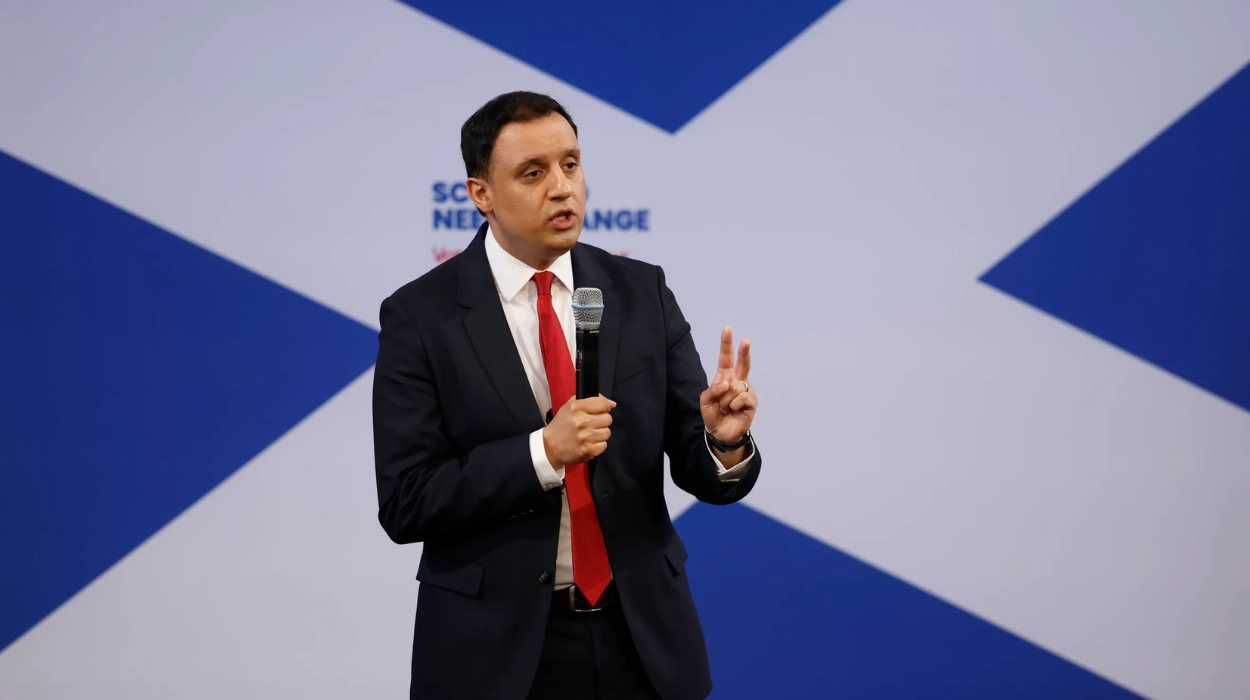
Anas Sarwar became a central figure in Scottish and UK politics through his leadership of Scottish Labour, his campaign for the office of First Minister, and his July 2026 move into Andy Burnham’s UK government. His career spans dentistry, Westminster, Holyrood, and now the House of Lords. This article defines his background, tracks his rise to party leadership, explains the 2026 Scottish Parliament election, and outlines his current role in UK politics.
- Who Is Anas Sarwar?
- What Is Anas Sarwar’s Political Background?
- How Did Anas Sarwar Become Scottish Labour Leader?
- What Happened in the 2026 Scottish Parliament Election?
- Why Did Anas Sarwar Concede Defeat in the 2026 Holyrood Election?
- What Is Anas Sarwar’s Role in Andy Burnham’s Government?
- Who Will Succeed Anas Sarwar as Scottish Labour Leader?
- What Is Anas Sarwar’s Political Legacy in Scotland?
- What Does Anas Sarwar’s Departure Mean for Scottish Labour’s Future?
Who Is Anas Sarwar?
Anas Sarwar is a Scottish politician who led the Scottish Labour Party from February 2021 to July 2026 and represented Glasgow as a Member of the Scottish Parliament (MSP). He is the son of Mohammad Sarwar, Britain’s first Muslim Member of Parliament. Anas Sarwar became the first person from an ethnic minority background to lead a major UK political party.
Sarwar was born in Glasgow in 1983. He trained as a dentist before entering full-time politics. His entry into national politics followed a family political tradition, since his father represented Glasgow Govan and later Glasgow Central at Westminster between 1997 and 2010. Anas Sarwar inherited the Glasgow Central constituency seat in the 2010 UK general election, making him a Member of Parliament (MP) at Westminster for five years.
Sarwar’s political identity centers on three consistent positions: opposition to Scottish independence, support for the Labour Party’s pro-devolution stance, and advocacy for public service investment, particularly in the National Health Service (NHS) and education. These positions defined his campaigns from 2014 through the 2026 Holyrood election.
Early Career and Family Background
Mohammad Sarwar served as MP for Glasgow Govan from 1997 and later for Glasgow Central until 2010, when he stepped down to allow his son to contest the seat. Mohammad Sarwar subsequently became Governor of Punjab, Pakistan, from 2013 to 2015. This family history gave Anas Sarwar early exposure to constituency politics, campaign organization, and public office, distinguishing his career path from many contemporaries who entered politics through party staff roles or local government.
What Is Anas Sarwar’s Political Background?
Anas Sarwar served as MP for Glasgow Central from 2010 to 2015, lost that seat to the Scottish National Party (SNP), then rebuilt his career at Holyrood as an MSP from 2016, holding the health portfolio before winning the Scottish Labour leadership in 2021.
Sarwar lost the Glasgow Central Westminster seat to the SNP’s Alison Thewliss in the 2015 general election, part of a wider collapse in Labour’s Scottish representation that year. The SNP won 56 of Scotland’s 59 Westminster seats in 2015, reducing Labour to a single seat. Following this defeat, Sarwar redirected his political career toward Holyrood, winning a Glasgow regional list seat in the 2016 Scottish Parliament election.
As an MSP, Sarwar served as Scottish Labour’s health spokesman. In this role, he raised concerns about infection control and safety failures at the Queen Elizabeth University Hospital in Glasgow, contributions that led to a formal public inquiry into hospital-acquired infections. This period established his public profile as a policy-focused opposition politician ahead of his first leadership bid.
Sarwar contested the Scottish Labour leadership in 2017 against Richard Leonard following Kezia Dugdale’s resignation. Leonard won that contest. Sarwar ran again in 2021, after Leonard resigned amid poor poll ratings just ten weeks before the scheduled Holyrood election.
How Did Anas Sarwar Become Scottish Labour Leader?
Anas Sarwar won the Scottish Labour leadership election on 27 February 2021, defeating health spokeswoman Monica Lennon by 57.6% to 42.4% of the vote, becoming leader ten weeks before the 2021 Holyrood election.
The leadership contest followed Richard Leonard’s resignation in January 2021. At the time of Sarwar’s victory, Scottish Labour polled in third place, with Ipsos MORI survey data putting the party at 15% in the constituency vote and 14% in the regional list vote, behind both the SNP and the Scottish Conservatives.
Sarwar led Scottish Labour into the May 2021 Holyrood election with limited preparation time. The party won 22 seats, a drop of two from its 2016 total and the lowest number for Scottish Labour since devolution began in 1999. Despite the seat loss, Sarwar was returned to Holyrood through the Glasgow regional list after losing the Glasgow Southside constituency contest to then-First Minister Nicola Sturgeon.
Building Toward the 2024 and 2026 Campaigns
Between 2021 and 2024, Sarwar positioned Scottish Labour as the primary alternative to continuous SNP government, which had held power at Holyrood since 2007. A pivotal moment came in October 2023, when Labour’s Michael Shanks won the Rutherglen and Hamilton West by-election, taking the seat from the SNP. This victory signaled a shift in voting intentions ahead of the July 2024 UK general election.
In the July 2024 general election, Scottish Labour won 37 of Scotland’s 59 Westminster seats, a dramatic increase from the single seat the party held before the vote. This result gave Sarwar’s party its strongest electoral foundation in over a decade and set expectations that Labour could unseat the SNP at the following Holyrood election in 2026.
What Happened in the 2026 Scottish Parliament Election?
The 2026 Scottish Parliament election, held on 7 May 2026, returned the SNP as the largest party with 58 seats, seven short of the 65-seat majority threshold, while Labour and Reform UK tied for second place with 17 seats each.
The election was the seventh general election to the Scottish Parliament since devolution began in 1999. Voters elected all 129 members of the Scottish Parliament (MSPs): 73 constituency MSPs and 56 regional list MSPs across eight electoral regions. Registered voters totaled 4,320,981, with turnout recorded at approximately 53% for both the constituency and regional votes.
First Minister John Swinney’s SNP secured a fifth consecutive term in government but fell short of an outright majority. The Scottish Greens won a record 15 seats, including two constituency wins, strengthening the pro-independence bloc at Holyrood alongside the SNP. Reform UK entered the Scottish Parliament for the first time, winning 17 regional list seats despite failing to win a single constituency outright. The Scottish Conservatives won 12 seats, and the Scottish Liberal Democrats won 10 seats, including three constituencies gained directly from the SNP in the Highlands.
2026 Scottish Parliament Election Results
| Party | Seats Won | Change from 2021 |
|---|---|---|
| Scottish National Party (SNP) | 58 | -6 |
| Scottish Labour | 17 | -5 |
| Reform UK | 17 | New party, +17 |
| Scottish Greens | 15 | +7 |
| Scottish Conservatives | 12 | -19 |
| Scottish Liberal Democrats | 10 | +6 |
Scottish Labour won just three constituency seats outright, a result widely described by commentators as the party’s worst performance since devolution. Sarwar personally lost the Glasgow Cathcart and Pollok constituency contest to SNP candidate Zen Ghani by a margin exceeding 5,000 votes. Deputy leader Jackie Baillie held her Dumbarton seat with an increased majority of roughly 2,000 votes over her SNP challenger, one of the few positive results for the party on election night.
Following the election, the Scottish Parliament reconvened within seven days, as required by law, and elected SNP MSP Kenneth Gibson as Presiding Officer. John Swinney was re-elected First Minister on 19 May 2026, twelve days after the vote, leading a minority SNP government that requires case-by-case support from other parties to pass legislation and budgets.
Why Did Anas Sarwar Concede Defeat in the 2026 Holyrood Election?
Anas Sarwar conceded defeat on 8 May 2026 while acknowledging Scottish Labour’s result reflected a “national disappointment” tied to UK Labour’s unpopularity, though he initially stated his intention to remain party leader.
Scottish Labour’s 2026 campaign asked voters to give the party five years to address problems following nearly two decades of SNP government. Sarwar urged undecided voters to support Labour despite reservations about the wider UK Labour government, a strategy that included publicly calling on Prime Minister Keir Starmer to resign in February 2026 and asking him not to campaign in Scotland during the election period.
Sarwar’s distancing strategy reflected broader difficulties facing UK Labour heading into May 2026. The party suffered significant losses in English local council elections held the same day, falling into third place behind Reform UK, the Liberal Democrats, and the Conservatives in projected national vote share. In Wales, Labour First Minister Eluned Morgan lost her own seat and resigned as Welsh Labour leader on the same day.
At the Glasgow count, Sarwar told reporters that Labour had argued the case for change in Scotland but had ultimately lost that argument. He confirmed no immediate intention to resign, stating that his focus remained on holding the party together during a period of internal disappointment. Pollsters and party figures, including deputy leader Jackie Baillie, described the result as the worst for Scottish Labour since the Scottish Parliament’s creation in 1999.
What Is Anas Sarwar’s Role in Andy Burnham’s Government?
Anas Sarwar is set to resign as Scottish Labour leader and take up a ministerial role, reportedly covering business policy, in Prime Minister Andy Burnham’s UK government after entering the House of Lords.
This development followed a leadership change at the top of UK Labour. Keir Starmer announced his resignation as Labour leader and Prime Minister on 22 June 2026, following sustained pressure from Labour MPs after poor results in the 2026 local and Holyrood elections. Andy Burnham, the former Mayor of Greater Manchester, won the Makerfield by-election on 18 June 2026, returning him to the House of Commons and clearing the path for a leadership bid. Burnham became Labour leader on 26 June 2026 and formally became Prime Minister on 20 July 2026, following Starmer’s resignation to King Charles III at Buckingham Palace.
Sarwar’s move to the Lords requires him to resign his MSP seat, since rules agreed in the previous parliamentary session prevent dual membership of the Scottish Parliament and the House of Lords in ministerial roles of this kind. Because Sarwar held a Glasgow regional list seat rather than a constituency seat, his departure does not trigger a by-election. Instead, the next candidate on Scottish Labour’s Glasgow regional list, former MSP Monica Lennon, is set to take the vacant seat.
Reaction to the Appointment
The appointment drew criticism from opposition figures in Scotland. SNP depute leader Keith Brown characterized the move as evidence of Westminster patronage following an electoral defeat, arguing that a House of Lords appointment sent a poor signal after Scottish Labour’s historically weak 2026 result. Within Scottish Labour, reaction was mixed. One former MSP described feeling “surprised but not surprised,” while another senior party figure said they would have preferred Sarwar to remain in place until the 2027 Scottish local government elections.
Who Will Succeed Anas Sarwar as Scottish Labour Leader?
Scottish Labour will hold its eleventh leadership contest since devolution, with deputy leader Jackie Baillie serving as interim leader while MSPs Michael Marra and Paul Sweeney are named as likely contenders.
Jackie Baillie has represented Dumbarton since 1999 and has served as deputy leader of Scottish Labour throughout Sarwar’s tenure. Her interim leadership provides continuity while the party organizes a formal contest. Michael Marra represents the North East Scotland region and has served as Scottish Labour’s finance spokesperson. Paul Sweeney represents the Glasgow region and previously served briefly as an MP for Glasgow North East before returning to Holyrood politics.
The incoming leader inherits a parliamentary group reduced to 17 MSPs, opposition status behind the SNP, and a tied position with Reform UK as joint second-largest party at Holyrood. The new leader must also navigate the party’s relationship with the UK Labour government under Andy Burnham, whose approach to devolved politics and public spending will shape Scottish Labour’s policy positioning ahead of the 2027 Scottish local government elections.
What Is Anas Sarwar’s Political Legacy in Scotland?
Anas Sarwar’s legacy includes rebuilding Scottish Labour’s Westminster representation from one seat to 37 seats in 2024, becoming the first ethnic minority leader of a major UK party, and leading the party through its lowest-ever Holyrood seat total in 2026.
Sarwar’s tenure produced contrasting outcomes across different electoral contests. His leadership coincided with Scottish Labour’s strongest Westminster result in decades during the July 2024 general election, driven by collapsing SNP support following internal controversies, including the police investigation into SNP finances connected to former chief executive Peter Murrell. However, this Westminster success did not transfer to the 2026 Holyrood election, where Labour’s vote share fell across most regions and the party secured only three constituency wins.
As the first person from an ethnic minority background to lead a major UK political party, Sarwar’s 2021 election carried symbolic significance beyond Scottish politics. His identity as a Glasgow-born Muslim politician, following his father’s pioneering role as Britain’s first Muslim MP, positioned his career within a broader narrative about representation in UK political leadership.
Sarwar’s five-year leadership period also included his consistent opposition to a second Scottish independence referendum, a position that placed Scottish Labour clearly against both the SNP and the Scottish Greens, whose 2026 seat gains reinforced a pro-independence majority within the Scottish Parliament despite the SNP’s own seat losses.
Explore More about Politics:
Louise Haigh Fraud Conviction Raises Major UK Debate
Lord Timpson and Britain’s Prison Reform Agenda
What Does Anas Sarwar’s Departure Mean for Scottish Labour’s Future?
Sarwar’s departure to Westminster government leaves Scottish Labour without permanent leadership during a period of reduced parliamentary representation, requiring the party to rebuild direction ahead of the 2027 local elections and the 2031 Holyrood election.
The timing of Sarwar’s exit, roughly two months after the party’s worst Holyrood result since devolution, has prompted internal debate about sequencing and party stability. Critics within Scottish Labour noted that an interim leadership period, combined with a contested succession battle, arrives at a moment when the party needs a clear public message to differentiate itself from both the SNP-led Scottish Government and Andy Burnham’s UK government in Westminster.
The broader context includes a significant realignment in Scottish party politics following the 2026 election. Reform UK’s arrival as a 17-seat party, tied with Labour for second place, introduces a new competitor for opposition votes that did not exist in the 2021 parliament. The Scottish Conservatives, historically the main opposition party at Holyrood, fell to 12 seats, while the Scottish Greens’ growth to 15 seats consolidated a stronger pro-independence bloc alongside the SNP’s 58 seats.
Scottish Labour’s next leader inherits responsibility for rebuilding the party’s Holyrood standing while managing its relationship with a UK Labour government under new leadership. The outcome of the succession contest, expected to be decided among the named contenders, will shape whether Scottish Labour can recover ground before voters next go to the polls for Scottish local government elections in 2027.