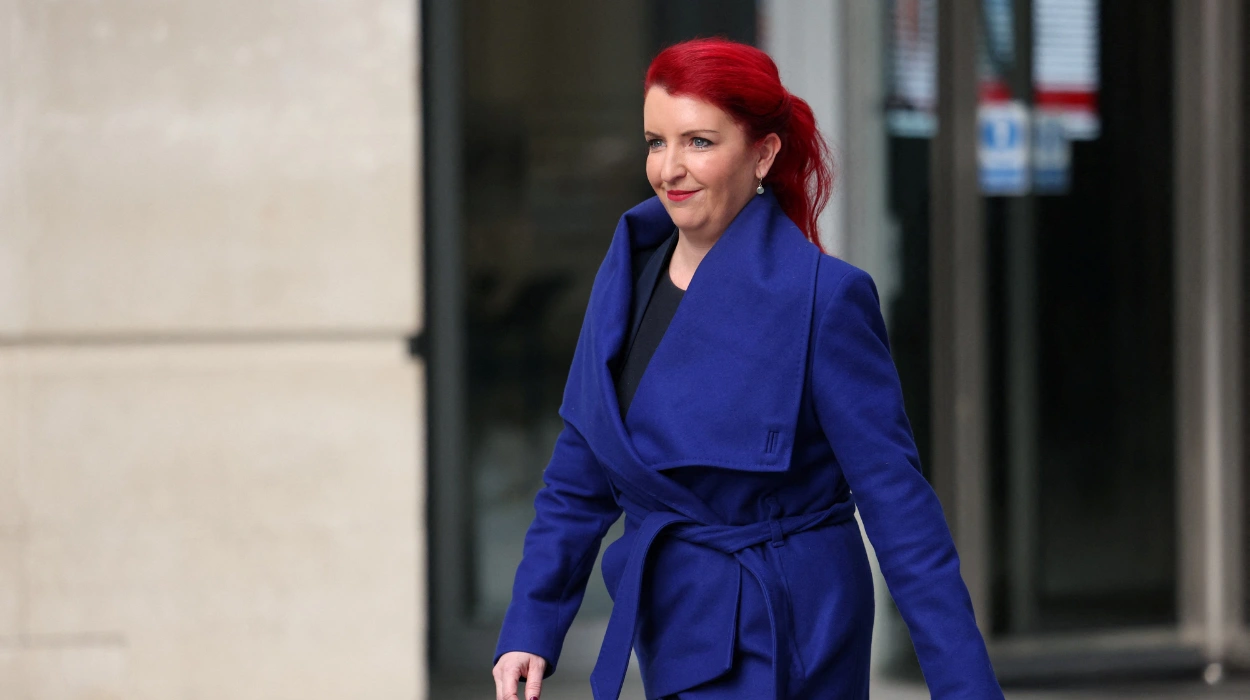
Louise Haigh, a British Labour politician and Member of Parliament for Sheffield Heeley since 2015, resigned as UK Transport Secretary on 29 November 2024 after a fraud conviction from 2014 became public. The conviction relates to a false report she made to police about a stolen mobile phone. Her case has become a reference point in UK debates on ministerial ethics, criminal record disclosure, and rehabilitation of offenders. It resurfaced prominently after her return to a senior government role in 2026, reigniting national discussion about accountability standards for elected officials.
- Who Is Louise Haigh?
- What Was Louise Haigh Convicted Of?
- Why Did Louise Haigh Resign From the Transport Secretary Role?
- What Is Fraud by Misrepresentation Under UK Law?
- What Is a Spent Conviction Under the Rehabilitation of Offenders Act 1974?
- Why Has the Louise Haigh Case Resurfaced in 2026?
- What Has Been the Political and Public Reaction to Haigh’s Return?
- What Does the Louise Haigh Case Reveal About UK Cabinet Vetting?
- What Are the Long-Term Implications for UK Political Ethics?
Who Is Louise Haigh?
Louise Margaret Haigh is a British Labour Party politician, born 22 July 1987 in Sheffield, who has served as Member of Parliament for Sheffield Heeley since May 2015 and held Cabinet and shadow Cabinet roles between 2015 and 2026.
Haigh was educated at Sheffield High School before studying at the University of Nottingham for her undergraduate degree and later at Birkbeck, University of London, where she completed an LLM. Before entering Parliament, she worked at Aviva, a private insurance company, and served as a special constable with the Metropolitan Police. She was first elected to Parliament in the 2015 general election, succeeding Meg Munn, with a majority that later grew to 15,304 votes, representing 39.8% of the vote share in her constituency.
Between 2015 and 2024, Haigh held a series of shadow ministerial posts. These included Shadow Minister for Civil Service and Digital Reform from 2015 to 2016, Shadow Minister for the Digital Economy from 2016 to 2017, and Shadow Policing Minister from 2017 to 2020 under Jeremy Corbyn’s leadership. She then became Shadow Secretary of State for Northern Ireland from 2020 to 2021, followed by Shadow Transport Secretary from 2021 to 2024. Following Labour’s victory in the July 2024 general election, Prime Minister Keir Starmer appointed her as Secretary of State for Transport, making her the youngest member of his Cabinet at the time.
What Was Louise Haigh Convicted Of?
Louise Haigh pleaded guilty in 2014 to fraud by misrepresentation after failing to inform police that she had found a work mobile phone she had earlier reported as stolen following a 2013 mugging.
The case originated in 2013, when Haigh was mugged during a night out and reported to police that her work-issued mobile phone had been stolen. Her employer at the time, Aviva, issued her a replacement device. Some time later, Haigh found the original phone in a drawer. According to accounts from her allies, she switched the phone on to check messages but did not notify police that the device had been recovered. When the phone’s signal was detected by the network provider, the company alerted police, who then interviewed Haigh and asked her to provide a statement.
Haigh gave a “no comment” response during her police interview. She subsequently pleaded guilty to fraud by misrepresentation in 2014, roughly six months before she was first elected to Parliament in May 2015. The court imposed a discharge, meaning no further punitive action, such as a fine or custodial sentence, was applied. Haigh has described the episode as a “genuine mistake” rather than a deliberate attempt at financial gain, noting there was no direct personal profit from the replacement phone.
Why Did Louise Haigh Resign From the Transport Secretary Role?
Haigh resigned as Transport Secretary on 29 November 2024, four months into the role, after journalists obtained and published details of her decade-old fraud conviction, which had not been publicly disclosed before her Cabinet appointment.
The resignation followed a leak of information about the 2014 conviction to two news outlets. Haigh delivered a speech in Leeds on the day the story broke and resigned the following morning, submitting a letter to Prime Minister Keir Starmer. In the letter, she stated she remained “totally committed” to the Labour government’s political project but believed she could better serve from outside the Cabinet. She expressed regret over the circumstances of her departure while emphasizing her record in the role, which included securing £1 billion in bus investment and £500 million allocated for road repairs, alongside work on rail renationalisation legislation.
Reports at the time indicated that Haigh had disclosed the conviction to Starmer in 2020, before he appointed her to his shadow Cabinet. However, the information was not made public when she joined the actual Cabinet in July 2024, and Downing Street did not clarify whether ethics vetting procedures had accounted for the conviction. Heidi Alexander, previously a justice minister, was appointed as her replacement as Transport Secretary. The episode drew comparisons to earlier controversies involving lawbreaking by public officials, including criticism that echoed Starmer’s own past statements about lawmakers being held to legal standards.
What Is Fraud by Misrepresentation Under UK Law?
Fraud by misrepresentation is a criminal offence under Section 2 of the Fraud Act 2006, involving a person knowingly making a false statement to gain an advantage or cause loss to another party, whether or not actual financial gain occurs.
The Fraud Act 2006 consolidated several fraud-related offences in England and Wales into a single statute. Section 2 covers situations where an individual dishonestly makes a false representation, knowing the representation is untrue or misleading, with intent to make a gain for themselves or another, or to cause loss or risk of loss to someone else. The offence does not require the false statement to succeed in producing a financial benefit; the dishonest intent behind the representation is the central element assessed by courts.
In Haigh’s case, the relevant conduct was the continued omission of information, namely failing to correct the earlier stolen-phone report after recovering the device. This falls under the “false representation by omission” principle recognised in UK fraud law, where silence or failure to update authorities can constitute misrepresentation if it sustains an earlier false claim. Sentencing for fraud by misrepresentation ranges widely, from discharges and fines for lower-level cases to custodial sentences of up to ten years for large-scale or aggravated fraud, depending on the value involved and the offender’s intent.
What Is a Spent Conviction Under the Rehabilitation of Offenders Act 1974?
A spent conviction under the Rehabilitation of Offenders Act 1974 is a criminal conviction that, after a defined rehabilitation period, no longer needs to be disclosed for most employment or public purposes in England, Wales, and Scotland.
The Rehabilitation of Offenders Act 1974 establishes rehabilitation periods that vary according to the severity of the sentence. A discharge, whether conditional or absolute, typically becomes spent quickly, often immediately for an absolute discharge or at the end of the conditional discharge period, which is usually up to twelve months. Once spent, a conviction generally does not need to be declared on standard job applications and cannot usually be used as grounds for dismissal or refusal of employment, except in specific roles requiring enhanced background checks, such as those involving work with children or vulnerable adults.
Haigh’s 2014 conviction is legally spent under this framework. Legal commentary following her resignation noted that spent status does not create an automatic bar against holding political office, since Members of Parliament and ministers are not subject to the same disclosure rules as regulated professions. However, the conviction still carries practical consequences. Individuals with fraud convictions, even spent ones, can face travel restrictions to countries that do not recognise the concept of spent convictions, including the United States, where standard visa waiver eligibility may not apply, requiring a diplomatic or standard visa route instead for government travel.
Why Has the Louise Haigh Case Resurfaced in 2026?
The case returned to national attention in July 2026 after Andy Burnham became UK Prime Minister and appointed Haigh as First Secretary of State, the most senior ministerial role beneath the Prime Minister, alongside Chancellor of the Duchy of Lancaster and Minister for the Cabinet Office.
Following Keir Starmer’s resignation as Prime Minister, Andy Burnham took office and began forming his Cabinet. Haigh had played a significant role in Burnham’s rise, having helped manage his successful campaign, and was reported to be one of the first figures called into Downing Street for a Cabinet role discussion. Burnham appointed her First Secretary of State, a position that had been vacant since it was last held in 2021 and that carries seniority over other Secretaries of State. This appointment came approximately twenty months after her November 2024 resignation.
Other appointments in Burnham’s new Cabinet included John Healey as Chancellor, replacing Rachel Reeves, and Ed Miliband as Foreign Secretary. Shabana Mahmood was reappointed as Home Secretary, providing continuity in one of the traditional great offices of state. Burnham told his MPs that all Cabinet appointments were made on merit. Haigh’s elevation to one of the government’s most senior posts, despite her fraud conviction, made her return a focal point of political commentary and public discussion within hours of the announcement.
What Has Been the Political and Public Reaction to Haigh’s Return?
Reaction has divided along partisan lines, with critics arguing a convicted fraudster should not hold a senior government post and supporters describing the conviction as a minor, decade-old error that has already been legally resolved through a discharge and spent-conviction status.
Opposition commentary has characterised the appointment as inappropriate, arguing that placing someone with a fraud conviction in one of the most senior roles in Whitehall, effectively acting as a close aide to the Prime Minister, requires a fuller public explanation. Critics have also raised practical concerns, such as the potential impact of a fraud conviction on international travel arrangements for a minister representing the UK government abroad.
Supporters of Haigh, including some Labour-aligned commentators, have pointed to the disproportionate scrutiny applied to her case relative to other political controversies. They note the offence involved no direct personal financial gain, resulted in the lowest possible court outcome of a discharge, and is now legally spent under rehabilitation law. Some have also highlighted that a substantial share of the UK adult population holds some form of criminal record, arguing that Haigh’s case illustrates a broader need to reform how criminal record disclosure interacts with public and professional life, including Disclosure and Barring Service checks used across many sectors.
What Does the Louise Haigh Case Reveal About UK Cabinet Vetting?
The case exposed gaps in how the UK government’s propriety and ethics processes handle previously disclosed but not publicly declared criminal convictions among ministers, since Haigh’s 2014 conviction was known to Starmer privately from 2020 but not disclosed to the ethics team upon her 2024 Cabinet appointment.
The UK does not operate a single, standardised public vetting checklist for Cabinet ministers equivalent to background check systems used in some other democracies. Ministerial appointments rely heavily on a combination of party leader discretion, informal disclosure between senior figures, and internal propriety and ethics functions within the Cabinet Office. Haigh’s case demonstrated that information shared privately with a party leader years before a Cabinet appointment does not automatically transfer into formal ethics review processes at the point of appointment.
This gap became a point of scrutiny in late 2024, when Downing Street was unable to clarify publicly whether ethics vetting procedures had accounted for Haigh’s conviction before her Transport Secretary appointment. The absence of a clear answer contributed to questions about Starmer’s judgement in Cabinet selection. Analysts have since referenced the case when discussing potential reforms to ministerial code enforcement and pre-appointment disclosure requirements, arguing that formal, documented disclosure processes could reduce the risk of similar controversies affecting future governments.
Explore More about Politics:
Lord Timpson and Britain’s Prison Reform Agenda
Council Tax Bands Explained: Save Money on Your Bills
What Are the Long-Term Implications for UK Political Ethics?
The Haigh case has become a recurring reference point in debates over how the UK balances rehabilitation principles with public accountability standards for elected officials and ministers, influencing discussions on disclosure reform, criminal record stigma, and ministerial code enforcement.
The case sits at the intersection of two competing principles in UK public life. The first is the rehabilitation principle embedded in the Rehabilitation of Offenders Act 1974, which is designed to allow individuals to move past minor, resolved criminal matters without indefinite professional consequences. The second is the accountability principle applied to holders of public office, which generally demands higher transparency than that expected of private citizens, given the public trust and authority attached to ministerial roles.
Haigh’s return to one of the most senior positions in Andy Burnham’s 2026 government indicates that, in practice, a spent fraud conviction resulting in a discharge does not present an absolute barrier to high office in the UK. At the same time, the repeated public re-litigation of her case, first in November 2024 and again in July 2026, shows that legal resolution of a conviction does not eliminate political and media scrutiny. Future ministerial appointments involving individuals with disclosed criminal histories are likely to be assessed against the precedent set by the Haigh case, both in terms of how governments manage disclosure internally and how the public and opposition parties respond when such histories become known.