Key Points
- UK agrees to £660m deal with France: £500m three-year baseline plus £162m “payment by results” for trialling new approaches to curb Channel small boat crossings.
- 200 French officers funded by UK to detain and deport asylum seekers from top 10 nationalities: Eritrea, Afghanistan, Iran, Sudan, Somalia, Ethiopia, Iraq, Syria, Vietnam, Yemen.
- New removal site in Dunkirk (140-person capacity) to hold people targeting UK via small boats; operational by end of 2026, under construction since 2023 pledge by Rishi Sunak’s government.
- Trial starts next month using existing Coquelles removal centre; funding withdrawable after first year if no value or results.
- Detainees deported to safe home countries (e.g., Vietnam) or safe EU countries transited through, per EU migration pact.
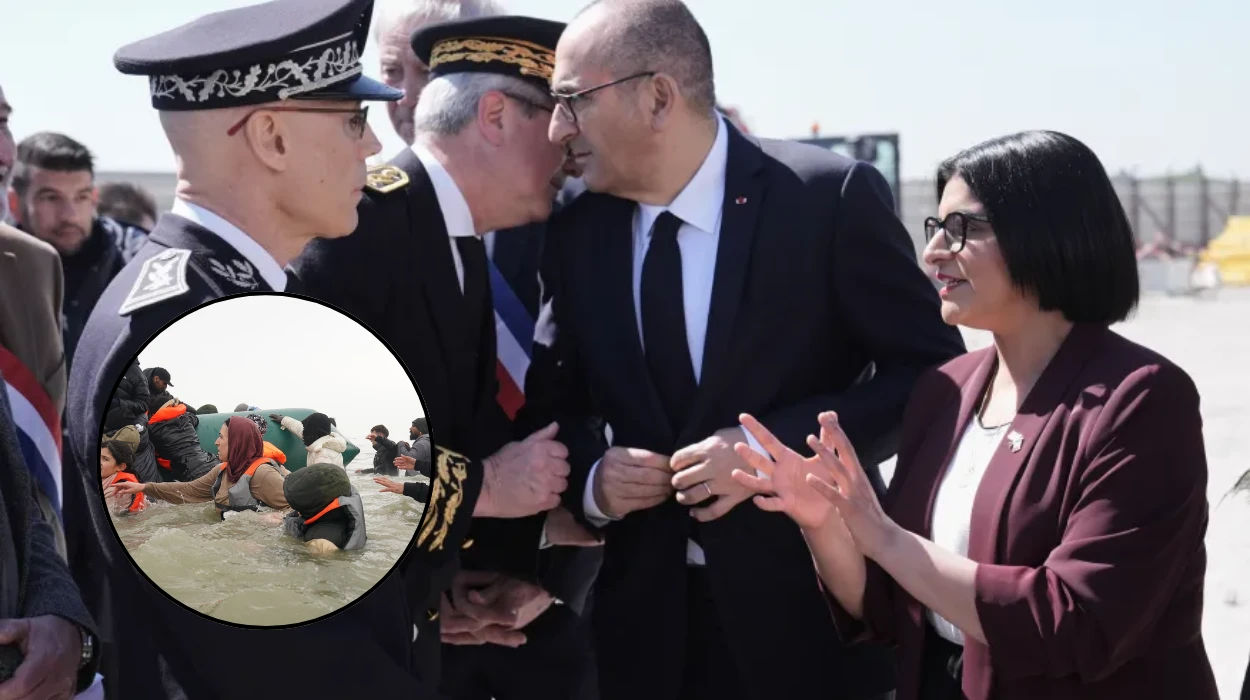
- Deal signed Thursday by UK Home Secretary Shabana Mahmood and French counterpart Laurent Nuñez in Dunkirk.
- Additional UK funding for 50-strong French riot squad trained in crowd control with batons, shields, teargas to stop “illegal migrants.”
- Previous £478m three-year deal collapsed 31 March after protracted negotiations.
- Critics like Jo Cobley of Safe Passage International call it “disgraceful and unlawful,” especially for war zones.
- Sile Reynolds of Freedom from Torture condemns funding detention of torture survivors, highlighting mental health risks.
- Home Office insists collaboration essential; dismisses Nigel Farage’s no-payment stance as “fundamentally unserious.”
United Kingdom (Britain Today News) April 23, 2026 – UK-France Deal Targets Channel Crossings with Dunkirk Detention Site – In a landmark agreement aimed at slashing small boat arrivals across the Channel, the United Kingdom has committed £660 million to fund French officers who will detain and deport asylum seekers from 10 war-torn and oppressive nations. The deal, signed in Dunkirk, introduces the first targeted French action against those heading specifically for Britain, using a new removal centre to hold individuals from Eritrea, Afghanistan, Iran, Sudan, Somalia, Ethiopia, Iraq, Syria, Vietnam, and Yemen—the top nationalities crossing last year, according to Home Office data.
This detain-and-deport strategy forms the core of a £162 million “payment by results” package, layered atop a £500 million three-year baseline commitment running to March 2029. Officials anticipate detaining hundreds, if not thousands, though past EU efforts under the Dublin agreement have faltered. The approach hinges on deporting only to verified safe destinations, with flexibility to redirect to other EU states if prior processing occurred there.
What Does the £660m UK-France Deal Entail?
The comprehensive package bolsters French enforcement on northern beaches while pioneering inland interception. UK funds will employ 200 officers dedicated to detaining small boat aspirants at source. A key feature is the Dunkirk removal site, boasting 140-person capacity and slated for completion by late 2026—despite construction delays since its 2023 announcement under former Prime Minister Rishi Sunak.
As reported by Home Office officials, interim operations launch next month at the adjacent Coquelles centre, leveraging existing infrastructure. The £162 million pot finances this trial; failure to deliver measurable reductions in crossings triggers funding cuts after year one. This results-based model underscores Whitehall’s push for accountability in cross-border policing.
Complementing detention, £500 million over three years ramps up beach patrols. A 50-strong French riot squad receives UK-backed training in crowd control tactics, equipped with batons, shields, and teargas to counter “hostile crowds and violent tactics” from smuggling networks. Home Office sources emphasise these measures will “stop illegal migrants in their tracks,” targeting organised crime facilitating crossings.
Which Nationalities Face Detention and Deportation?
The scheme zeroes in on the top 10 small boat nationalities from last year: Eritrea, Afghanistan, Iran, Sudan, Somalia, Ethiopia, Iraq, Syria, Vietnam, and Yemen. These nations span active conflict zones, authoritarian regimes, and persecution hotspots, driving desperate Channel bids.
Home Office sources clarify deportations proceed only to “safe” home countries, citing Vietnam as an exemplar. For unsafe origins like Afghanistan or Sudan, returns pivot to EU transit nations where fingerprints confirm prior claims—aligning with the EU’s new migration and asylum pact. French processing typically spans 30 days from detention to removal, officials note.
Speaking in Dunkirk, Home Secretary Shabana Mahmood defended the policy:
“If safe, they can be returned to their home country. And if not safe, then to a safe country from Europe that those people have transited through. That is where the French want to go and that is why we have invested in the detention centre.”
She stressed UK-France collaboration as indispensable, countering Reform UK leader Nigel Farage’s “fundamentally unserious” demand to withhold payments entirely:
“This is a shared problem. It has a joint response… our collaboration with the French is critical to our ability to deal with the boats crossing the Channel.”
When and How Will the Dunkirk Site Become Operational?
Construction persists on the Dunkirk facility, none of its buildings yet complete despite the 2023 pledge. Full rollout targets end-2026, with the 140-capacity site drawing from the £162 million flexible fund. Until then, Coquelles handles the nationality-targeted trial from next month, testing efficacy before scaling.
The deal’s Thursday signing by Shabana Mahmood and Laurent Nuñez in Dunkirk caps months of tense haggling over costs, succeeding a £478 million pact that imploded on 31 March. Protracted talks highlighted burdensharing disputes, with Britain now footing most enforcement bills to reclaim border sovereignty.
Why Are Critics Calling the Plan Unlawful?
Humanitarian groups decry the initiative as punitive and illegal. Jo Cobley, chief executive of Safe Passage International, labelled it “disgraceful and unlawful” to deport to unsafe realms:
“With no accessible safe routes and the government’s suspension of refugee family reunion, the only way to reach the UK to ask for protection is across the Channel – punishing people with detention, deportation threats and police violence does not change that.”
She highlighted likely UK protection grants for many targeted nationalities, slamming returns to
“active war zones or where they face persecution, in countries like Afghanistan, Sudan and Iran.”
Sile Reynolds, head of asylum advocacy at Freedom from Torture, voiced outrage over taxpayer funds detaining “survivors of torture and war”:
“Caring people across the country will be outraged to discover their money is funding the detention of survivors of torture and war in France; people like the survivors we support who have fled unimaginable atrocities from conflicts in Sudan, Iran and Eritrea; people whose only ‘crime’ was hoping the UK would offer them sanctuary.”
She warned:
“Even the briefest period in detention can cause profound damage, increasing the risk of suicide and self-harm. The idea that they will be swiftly returned to their home country is grossly misleading, bearing in mind the risk of persecution that so many of these people face on return.”
These voices underscore ethical flashpoints: lack of safe legal pathways funnels vulnerable people into perilous boats, while detention exacerbates trauma without addressing root causes.
How Does This Fit Broader UK Migration Strategy?
The pact signals Labour’s pragmatic pivot post-election, blending deterrence with European alliances amid record crossings. Officials project substantial detentions, though EU deportation hurdles persist—France’s 30-day timeline offers optimism, yet historical data tempers expectations.
Mahmood’s Dunkirk remarks framed it as mutual imperative:
“The UK would not be able to stop the boats without paying France hundreds of millions of pounds.”
This counters isolationist critiques, prioritising joint ops over unilateralism. The riot squad’s kit—batons, shields, teargas—equips France to dismantle “violent tactics” by gangs, per Home Office briefings.
Yet challenges loom: EU pact implementation varies, safe-country designations spark disputes, and construction delays test timelines. Success hinges on results metrics; underperformance risks fiscal clawback, pressuring French delivery.
What Happens Next in UK-France Border Cooperation?
Immediate steps include Coquelles trial activation and riot squad deployment. Dunkirk’s build accelerates toward 2026, with £162 million as performance leverage. The £500 million baseline secures beach enforcement to 2029, embedding long-term gains.
This deal eclipses prior failures, forging a detain-deport nexus unprecedented in French-UK pacts. Proponents hail it as crossing breakthrough; detractors decry moral compromises. As boats persist, outcomes will gauge efficacy—potentially reshaping European migration dynamics.