Key Points
- Sergi Polo, a Barcelona-born comedian, moved to London in 2016 unable to speak English and has since become a leading name on the UK comedy circuit.
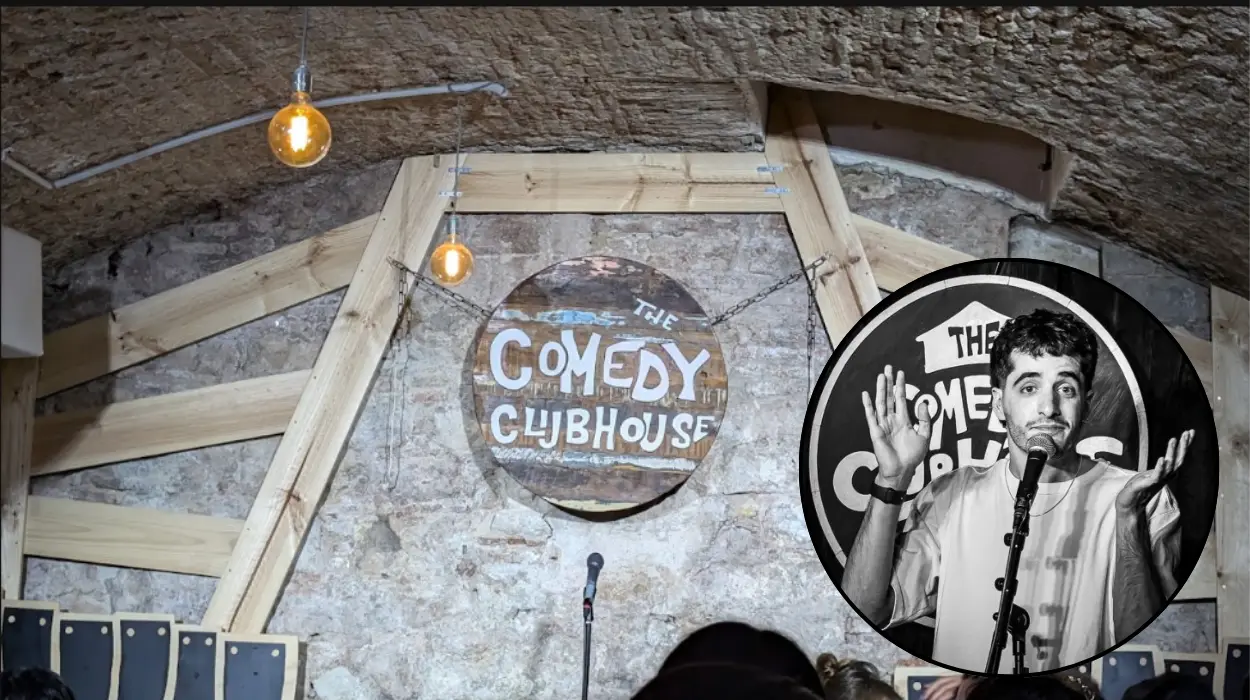
- He now performs sold-out shows in English, Spanish and Catalan, including a recent run at the Comedy Clubhouse in Barcelona.
- Polo draws a sharp distinction between “expats” and “immigrants,” arguing the difference lies in whether newcomers make an effort to learn the local language and culture.
- He has been nominated for Leicester Square New Comedian of the Year, the Beat The Frog World Series and Leicester Mercury Comedian of the Year.
- He has shared stages with Jerry Seinfeld and Jim Gaffigan at New York’s Comedy Cellar and Gotham Comedy Club.
- His Instagram following has grown from under 100,000 to 224,000 in six months.
- Polo took two solo shows to the Edinburgh Fringe in 2025, following a two-hander performed in 2023 and 2024.
- His upcoming tour includes a stop in Estepona on Spain’s Costa del Sol, an area with a large British expatriate population.
- He says his stage material is not intended to lecture audiences but to encourage empathy around language and integration.
Barcelona (Britain Today News) July 11, 2026 – A Catalan comedian who arrived in London a decade ago without a word of English has built a following across three languages and two continents, and says his shows are aimed squarely at immigrants rather than expats who never learn the local tongue.
- Key Points
- Who is Sergi Polo and how did his comedy career begin?
- What did Sergi Polo say about the difference between an expat and an immigrant?
- Why does Sergi Polo believe integration matters so much?
- What personal story does Sergi Polo tell on stage about learning a language?
- How has Sergi Polo’s career developed in the UK comedy scene?
- How does Sergi Polo manage performing the same show in three languages?
- How has Sergi Polo’s public profile grown recently?
- Where can audiences see Sergi Polo perform next?
Sergi Polo, born in the Catalan capital in 1996, left for London in 2016 with no English at all. Ten years on, he has become one of the most talked-about names on the UK comedy circuit, filling venues with material that moves fluidly between English, Spanish and Catalan and leans into the cultural friction between his home city and his adopted one.
Who is Sergi Polo and how did his comedy career begin?
Polo’s rise has been steady rather than sudden until the past twelve months, when he has played sold-out shows internationally. He arrived in the UK in 2016 with no functional English, having twice failed the subject at school in Spain, and spent his early months working at a Spanish restaurant in London where his colleagues were, like him, Spanish speakers. Progress came later, when he took a front-of-house job selling ice cream in London’s West End. Watching musicals between serving customers, and working alongside English colleagues who helped correct his pronunciation, he has described the role as the best job he has ever had, and it was there that the language began to take hold.
What did Sergi Polo say about the difference between an expat and an immigrant?
At a recent run of shows at Barcelona’s Comedy Clubhouse, performed in Catalan, Spanish and English, Polo told the outlet that had interviewed him that his material is aimed at English-speaking immigrants living in the city, adding that expats are welcome too because part of his set addresses the importance of learning a new language. Asked to define the difference between the two terms, he set out a clear line: those who make the effort to learn the local language, in his view, are immigrants, however long they have lived somewhere. Those who arrive on high salaries, drive up rents locals cannot afford, and make no attempt to learn the language or engage with the culture are, in his words, people who “f***s the city up.” He was blunt in his assessment of those he considers unwilling to integrate, describing them in the interview as lazy.
Why does Sergi Polo believe integration matters so much?
Polo said he wants audiences to leave his shows more conscious of the harm that can come from failing to learn the language of the place they have chosen to live. He argued it is disrespectful to settle in another country and make no effort to adapt to it, a view he said applies not only to Barcelona but to Spain’s coastal regions more broadly, extending as far as Gibraltar. At the same time, he was careful to draw a distinction between what is possible and what he considers desirable: living in a Spanish city while speaking only English is entirely achievable, he said, but doing so comes at the cost of the friendships, respect and sense of belonging that come from making an effort with the local tongue.
Does Sergi Polo’s tour take him to Spain’s expat communities?
It does. Polo’s current tour schedule includes a date in Estepona on the Costa del Sol, a coastal town with a significant and growing British expatriate population, alongside further dates in Barcelona, Madrid, Valencia and Zaragoza. Despite his outspoken views on integration, he was clear that the intention behind his shows is not to hector audiences but to entertain them, describing his approach as one rooted in empathy rather than judgement, and saying he has no wish to impose his opinions on anyone who comes to watch.
What personal story does Sergi Polo tell on stage about learning a language?
Among the anecdotes he shares in his sets is one about a former partner who was learning Catalan and would walk into busy shops announcing, in Catalan, that she was still a learner and asking for patience. Polo has recounted how shopkeepers and customers responded warmly to the small gesture, taking the time to help her communicate rather than switching to another language, a story he uses to illustrate his broader point that willingness, rather than fluency, is what tends to earn goodwill from locals.
Are there any topics Sergi Polo avoids in his stand-up?
Very few, according to the comedian. He has said he believes almost any subject can be made into a joke, including material involving transgender identity that he has performed in front of audiences in Islington, an area of London he has described as a notably progressive neighbourhood, and which he says has been well received.
How has Sergi Polo’s career developed in the UK comedy scene?
Since establishing himself in London, Polo has performed at some of the city’s best-known comedy venues, including the Comedy Store and Up the Creek. His profile has been underlined by a run of award nominations, including Leicester Square New Comedian of the Year in 2021, the Beat The Frog World Series in 2022, and Leicester Mercury Comedian of the Year in 2023. In 2025 he took two solo shows, one in English and one in Spanish, to the Edinburgh Fringe, building on a two-hander titled “2 Funny Feckers” that he performed in both 2023 and 2024.
Has Sergi Polo performed outside the UK and Spain?
Yes. His touring has taken him across Europe, including dates in France, Ireland, the Netherlands and Switzerland, as well as across the Atlantic to New York, where he has appeared at the Comedy Cellar and the Gotham Comedy Club on bills alongside Jerry Seinfeld and Jim Gaffigan. He has said Switzerland left a particular impression on him, given how commonplace multilingualism is there, to the point where speaking three languages himself felt unremarkable by comparison.
Explore More about London:
All Train Services Disrupted After Fire Shuts Stratford Station
Minister Criticises London Councils Over Evictions
How does Sergi Polo manage performing the same show in three languages?
Polo writes his material once, in English, and translates it live on stage into Spanish and Catalan rather than preparing separate scripts. He has said he does not actually know his own shows in Spanish or Catalan in a fixed sense, relying instead on translating in the moment during performances.
How has Sergi Polo’s public profile grown recently?
His online following has expanded rapidly over the past six months, with his Instagram audience rising from under 100,000 to 224,000, a reflection of the broader surge in bookings and international dates that have defined his past year on the circuit.
Where can audiences see Sergi Polo perform next?
Polo’s touring schedule runs from mid-August through to December, taking in venues across Spain:
- 15 August — Estepona, Teatro Felipe VI, 10pm, English
- 4 September — Barcelona, Teatre Borrás, 8pm, English
- 5 September — Barcelona, Teatre Borrás, 8pm, Catalan
- 12 September — Madrid, Teatro Fígaro, 10.30pm, Spanish
- 31 October — Madrid, Teatro Fígaro, 10.30pm, English
- 7 November — Zaragoza, Belushi Club de Comedia, 9pm, English
- 14 November — Madrid, Teatro Fígaro, 10.30pm, Spanish
- 4 December — Barcelona, Teatre Borrás, 10pm, English
- 13 December — Valencia, Teatro La PlaZeta, 6pm
- 18 December — Barcelona, Teatre Borrás, 10pm, Catalan
- 19 December — Madrid, Teatro Fígaro, 10.30pm, English