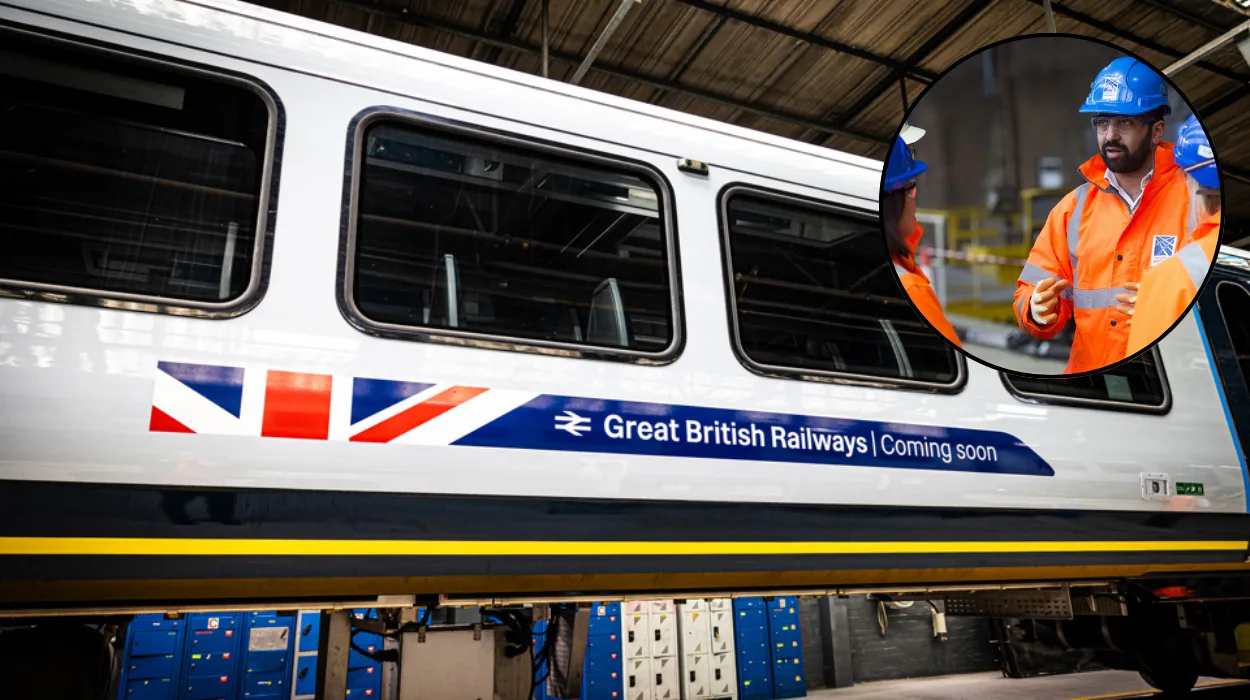
Key Points
- Great British Railways will need to continue with standardised nationwide processes and decision-making, whilst ensuring local managers have the power to address both freight and passenger customers.
- Operating staff must be trained, authorised and trusted to make operating decisions, says the Chartered Institution of Railway Operators.
- CIRO emphasises that reform of the structure is not enough to ensure a successful railway.
- The organisation needs to be well led, well managed and have a good decision-making process and culture.
- The focus of the development of Great British Railways should be on operational excellence and professional capability.
- According to CIRO, the needs of the customers should be prioritised over single performance measures.
- The institution sees the occasion to integrate the track and train functions by working under one organisation.
- The reform was a ‘once in a generation opportunity ‘, said Railway Operations Director Ben Rule, of East West Rail and Chair of the CIRO Policy Panel.
- CIRO’s policy paper is a distillation of the expertise of senior operational leaders from around the railway industry.
- Great British Railways must strike a balance between national consistency and local devolution and regional needs.
- The envisioned solution is designed to enable a systems perspective, rather than a silo mentality.
- Whether front-line railway staff have the confidence, competence and authority to represent passengers and their interests will be key to the success of GBR.
- The recommendations follow the UK making further preparations for new laws and institutions related to Great British Railways.
London (Britain Today News) August 11, 2026: Great British Railways should give local managers the authority to respond to operational challenges while ensuring that decisions remain aligned with national priorities, according to a new policy paper from the Chartered Institution of Railway Operators.
- Key Points
- Why does local empowerment matter to railway reform?
- How would national consistency work under GBR?
- What did Ben Rule say about the reform?
- Why are leadership and culture important?
- Why should customers come before isolated performance measures?
- What role will railway staff play in GBR?
- How could GBR balance devolution with one national railway?
- What opportunities could an integrated railway create?
- What risks could prevent Great British Railways from succeeding?
- What does the paper mean for the future of GBR?
- When could these recommendations influence GBR?
- Why will staff empowerment be central to GBR’s success?
Argues that GBR must avoid replacing fragmentation with excessive centralisation. Instead, the future organisation should establish consistent national principles while enabling decisions to be made closer to the passengers, freight customers and railway staff affected by them.
CIRO’s recommendations focus on the practical conditions required for rail reform to succeed. These include effective leadership, a supportive organisational culture, clear methods of decision-making and investment in the skills and confidence of staff.
The institution recognises that the creation of GBR could bring significant benefits by placing responsibility for infrastructure and passenger services within a more integrated framework. However, it says the advantages of structural integration will only be realised if the people operating the railway are given the authority and support to improve performance.
CIRO’s central message is that Great British Railways must enable consistent decision-making nationally while continuing to empower local managers. That balance is likely to become one of the most important questions surrounding the organisation’s design.
Why does local empowerment matter to railway reform?
Railway operations are affected by local conditions that cannot always be understood through national performance data alone. Passenger flows, station environments, infrastructure constraints, weather conditions, regional economies and connections with other forms of transport can vary significantly from one part of the country to another.
A centrally determined policy may provide consistency, but it may not always offer the flexibility required to deal with a problem at a particular station or on a specific route. Local managers and frontline staff are often closer to the operational reality and may be able to identify solutions more quickly.
CIRO’s position is that staff should not simply be expected to follow instructions. They should have the training, information and confidence needed to make responsible decisions when circumstances change.
The principle does not mean that every railway area would operate independently. National standards would still be required for safety, reliability, accessibility, customer service and financial management. The proposed model would instead give local leaders room to apply those standards in ways that reflect local conditions.
This distinction is important because consistency and local flexibility are sometimes treated as opposing objectives. CIRO’s recommendations suggest that GBR should seek both: common national expectations combined with decision-making authority at the appropriate local level.
How would national consistency work under GBR?
National consistency would provide a shared framework for how Great British Railways plans, manages and evaluates the railway. It could cover safety procedures, passenger rights, performance standards, workforce development, data systems and the management of major operational risks.
A national framework could also help passengers experience a more coherent railway when they travel across different regions. Integrated information, clearer accountability and common service principles would make it easier for passengers to understand where to seek assistance when services are disrupted.
However, consistency should not be confused with uniformity. A railway serving a major city may face different challenges from one operating through rural communities. Freight routes may also have requirements that differ from those of commuter or intercity services.
The challenge for GBR will be to define which decisions must be taken nationally and which should be delegated. If too many matters are controlled centrally, local managers may lack the ability to respond promptly. If too many decisions are devolved without clear coordination, the railway could become fragmented again.
CIRO’s recommendation therefore points towards a structured form of devolution. National leaders would set the direction and protect the interests of the whole system, while local managers would have the freedom to make operational decisions within agreed boundaries.
What did Ben Rule say about the reform?
Ben Rule, Railway Operations Director at East West Rail and chair of the CIRO Policy Panel that produced the paper, said Great British Railways represented a “once-in-a-generation opportunity” to reshape the way the railway operates. His remarks were reported by Railnews and reproduced in search coverage of the CIRO recommendations.
“The direction of travel is positive, but successful reform will depend on much more than organisational structures,”
Rule said.
“It will rely on the people who operate the railway every day being equipped, empowered and trusted to make the right decisions for customers,”
He added.
The statement places operational staff at the centre of the reform debate. It suggests that the creation of a single organisation, by itself, will not solve longstanding problems such as poor coordination, inconsistent passenger experiences or weak accountability.
Rule also said:
“This paper brings together the experience of some of the most senior operational leaders in our profession.”
He described the document as
“a constructive contribution to the ongoing development of Great British Railways”,
adding that it placed
“operational excellence, professional capability and whole-system thinking at the heart of reform”.
The comments underline CIRO’s view that rail reform must be judged by how effectively the railway operates for customers, rather than by the creation of a new institutional structure alone.
Why are leadership and culture important?
CIRO says leadership and culture will influence whether GBR can convert its structural ambitions into practical improvements. An organisation may have clear legal powers, but its effectiveness will depend on how those powers are used and how employees are encouraged to work.
A culture based on trust could allow staff to report problems earlier, share ideas and challenge decisions when they believe customer interests are at risk. By contrast, a culture dominated by fear or excessive bureaucracy could discourage initiative and delay action.
Leadership will also be required to connect national objectives with local delivery. Senior executives must explain the purpose of reform in language that is meaningful to employees working in stations, signalling centres, depots, maintenance teams and train operations.
The transition to GBR will involve workers from different organisations and professional backgrounds. Bringing those groups together will require more than new branding or reporting lines. Employees will need to understand how their responsibilities fit within the wider railway and how their decisions contribute to passenger and freight outcomes.
A strong culture could also help reduce the risk of departments pursuing separate targets without considering the effect on the whole system. CIRO’s emphasis on whole-system thinking reflects the need to assess how infrastructure, operations, rolling stock, timetables, stations and customer services interact.
Why should customers come before isolated performance measures?
CIRO says customers should come first rather than being treated as secondary to isolated performance measures. This is a significant point because railway performance can be assessed through many separate indicators, including punctuality, cancellations, safety incidents, costs, capacity and revenue.
Individual targets can provide useful information, but they may not always reflect the complete passenger experience. A service could meet one punctuality measure while passengers still face poor information, difficult connections or inadequate assistance during disruption.
Similarly, a decision that improves one part of the railway could create problems elsewhere. Reducing a delay on one route may affect connections on another. Cutting a local service could produce short-term savings while reducing access to employment, education or healthcare.
A customer-focused approach would require GBR to examine the combined effect of operational decisions. Managers would need access to reliable data, but they would also need professional judgement and an understanding of what passengers and freight customers are experiencing.
The emphasis on customers does not mean that safety or financial responsibility would be reduced. Instead, it suggests that performance measures should support the wider purpose of the railway rather than becoming objectives in isolation.
For passengers, this could mean a stronger focus on the full journey: buying a ticket, reaching the station, boarding the train, receiving information, changing services, completing the trip and obtaining assistance where required.
What role will railway staff play in GBR?
Railway staff will be responsible for turning the new organisation’s policies into daily services. Their decisions can affect safety, punctuality, passenger confidence and the handling of disruption.
Station employees may be required to respond to overcrowding, missed connections, accessibility needs or sudden changes to train services. Train crew may need to communicate clearly with passengers during disruption. Signalling and infrastructure teams must manage complex operational risks, often under time pressure.
CIRO’s recommendations indicate that these employees should be treated as professionals with valuable knowledge, rather than simply as the final stage in a chain of instructions.
Empowerment would need to be supported by proper training and clear accountability. Staff cannot be expected to make difficult decisions without knowing the limits of their authority or having access to accurate information.
The organisation would also need to learn from decisions that do not produce the expected result. If every mistake leads to blame, employees may become reluctant to act. If decisions are reviewed fairly, GBR could use operational experience to improve its procedures.
The focus on capability is therefore as important as the focus on authority. Empowerment without training could create confusion. Training without authority could leave staff unable to respond. CIRO’s approach calls for both.
How could GBR balance devolution with one national railway?
The balance between devolution and national coordination is likely to be a continuing issue for Great British Railways. CIRO says GBR will need to respect local devolution while maintaining a consistent approach across the country.
Local and devolved authorities often have specific transport priorities. They may seek better links between rail services, buses, trams, airports, cycling routes and local development. National railway planning, meanwhile, must consider long-distance services, freight capacity, infrastructure investment and network resilience.
A successful model would allow regional priorities to influence decisions without weakening the national network. It would also require clear processes for resolving disagreements between local and national interests.
The government’s Railways Bill factsheet says the proposed framework would give devolved governments and mayoral strategic authorities a statutory role in GBR decision-making. It also says the arrangement is intended to ensure that national and local strategies are considered when rail services are planned.
That approach is consistent with CIRO’s warning that local needs must be respected. It also highlights why decision-making powers need to be defined clearly. Managers, authorities and national leaders must know who is responsible for a decision and how different interests will be reconciled.
For passengers, the practical test will be whether devolution leads to more responsive services without creating confusing differences in standards or information.
What opportunities could an integrated railway create?
The creation of Great British Railways is intended to bring infrastructure and passenger services closer together under one organisation. CIRO recognises the significant opportunities that could result from greater integration.
A more integrated structure could improve coordination between track maintenance, train planning and service delivery. It could make it easier to identify the causes of delays and assign responsibility for resolving them.
Integration could also support better long-term planning. Decisions about infrastructure investment, rolling stock, timetables and passenger demand could be considered together rather than through separate organisational priorities.
The model may also improve communication during disruption. If infrastructure and train operations are managed within a more coherent framework, passengers could receive clearer information about what has happened and what is being done to restore services.
However, integration will not automatically remove every problem. A large national organisation could become difficult to manage if responsibilities are unclear or if local knowledge is overlooked.
That is why CIRO emphasises leadership, culture and decision-making methods. The opportunity created by integration will depend on whether GBR can build an organisation that is both coordinated and responsive.
What risks could prevent Great British Railways from succeeding?
The first risk is that institutional change could be mistaken for operational reform. Establishing GBR may alter ownership, governance and accountability, but passengers will judge the organisation by the service they receive.
The second risk is excessive centralisation. If local managers are required to refer routine decisions to national offices, the organisation could become slower and less responsive. Staff may also feel that their professional judgement is not valued.
The third risk is unclear accountability. A system that distributes responsibility across national, regional and local bodies could make it difficult to determine who must act when performance deteriorates.
The fourth risk is a failure to invest in people. New systems and structures will not work effectively if railway staff lack the skills, information and confidence required to use them.
The fifth risk is an overreliance on narrow targets. If managers focus on isolated measurements, they may miss the broader effect of decisions on passengers, freight users and the wider network.
CIRO’s policy paper addresses these risks by making operational capability and employee empowerment part of the reform conversation. Its recommendations suggest that the organisation’s success should be assessed through practical outcomes and the quality of decision-making.
What does the paper mean for the future of GBR?
The CIRO paper adds an operational perspective to the debate about Great British Railways. Its recommendations are not limited to the formal structure of the organisation. They focus on the people, behaviours and methods required to make reform work in practice.
The central message is that GBR must be nationally coherent without becoming distant from the communities and customers it serves. It should establish common standards while allowing managers and staff to respond to local conditions.
Ben Rule’s comments make clear that CIRO regards the reform as an opportunity, but not an automatic solution. The institution’s position is that the railway’s workforce must be trusted to contribute to improvement and make decisions in the interests of customers.
The policy paper also indicates that the railway should be managed as one connected system. Infrastructure, train operations, passenger information, freight, stations and local transport links should not be treated as unrelated parts of the network.
For GBR, the next challenge will be turning these principles into specific arrangements. That means deciding how powers are delegated, how performance is measured, how staff are trained and how national and local priorities are balanced.
The organisation’s credibility will ultimately depend on whether those decisions produce a railway that is safer, more reliable, more responsive and easier for passengers to use.
Explore More about the UK:
Meta Glasses Banned From England and Wales Courts
North Devon Doctors Get Crash Course After Maternity Closure
When could these recommendations influence GBR?
The recommendations arrive as the government continues developing the legislative and organisational framework for Great British Railways. The Department for Transport has described GBR as the future body responsible for overseeing the railway and has published plans connected with rail reform and public ownership.
The government’s framework also includes a statutory role for devolved governments and mayoral strategic authorities, alongside measures intended to simplify processes and give GBR greater ability to provide services for railway users.
CIRO’s contribution is therefore relevant to the next stage of implementation. Decisions taken during the design of GBR could determine whether the organisation is able to act quickly at local level while maintaining national oversight.
The institution’s recommendations may also influence discussions about workforce planning, leadership development and the professional standards expected within the future railway.
Although the paper does not by itself determine government policy, it provides a sector-based contribution from operational leaders. Its importance will depend on whether decision-makers use those recommendations when designing the organisation’s governance and working practices.
The immediate test will be whether the principles of empowerment and trust are reflected in the powers given to local managers and frontline employees.
Why will staff empowerment be central to GBR’s success?
Great British Railways will be expected to improve coordination across a complex national network. That objective cannot be achieved solely through legislation, new management structures or central targets.
The railway depends on people making decisions every day, often in circumstances that cannot be predicted in advance. Giving those employees the right training, information and authority could help GBR respond faster and learn more effectively from operational experience.
CIRO’s recommendations place that human element at the centre of reform. The institution says staff should be equipped, empowered and trusted, while national leaders should provide a consistent direction for the whole system.
The approach also offers a way to connect organisational reform with the passenger experience. When decisions are made by people who understand local conditions and have a clear responsibility to customers, problems may be resolved more quickly, and services may become more responsive.
The final measure of success will be whether the new railway can combine the strength of national coordination with the practical intelligence of its workforce. If GBR achieves that balance, staff empowerment could become one of the foundations of a more reliable and customer-focused railway.