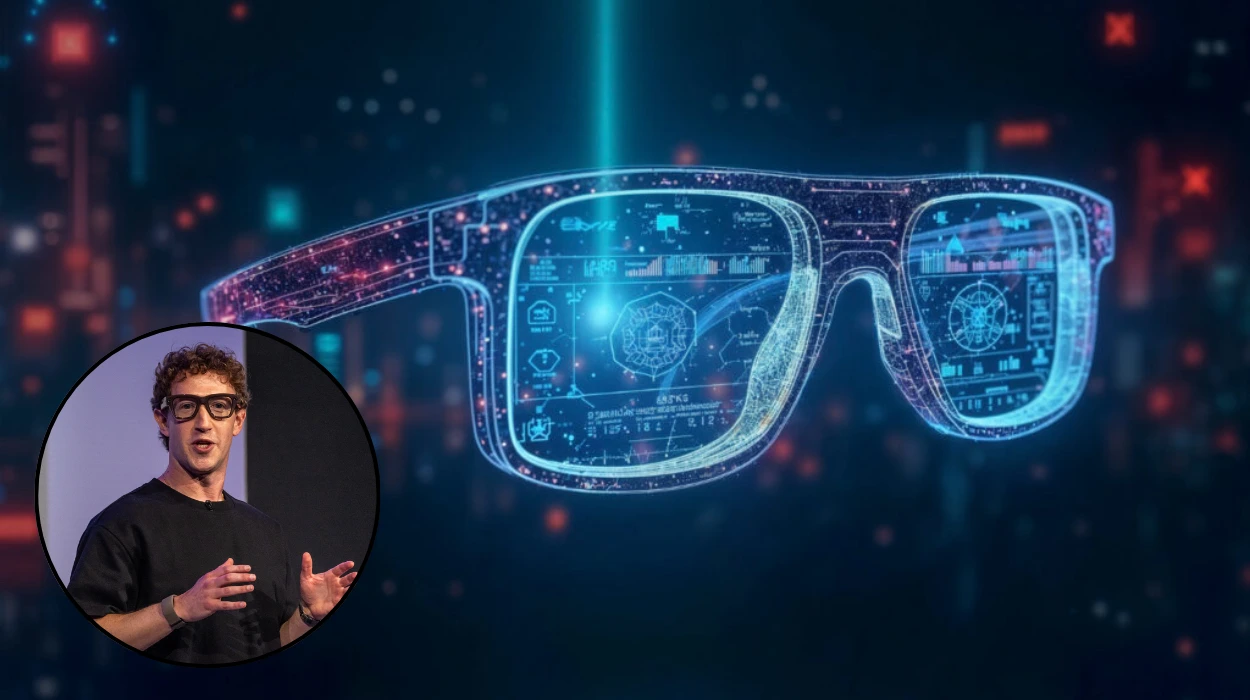
Key Points
- Meta Glasses banned in all criminal, civil and family courts in England & Wales by His Majesty’s Courts & Tribunals Service (HMCTS).
- The device will be confiscated on entry to a court/tribunal building and returned on exit.
- It comes after a similar ban by the New York court system last month.
- The ban has been put in place due to “clear restrictions on taking images or videos of courts and tribunals,” said the spokesperson in a statement.
- Smartphones are still allowed in courtrooms, but must not be used to record court proceedings.
- The ban comes after a High Court judge accused a claimant of being “coached” in his evidence, after earlier this year he was sold smart glasses that allowed him to get instructions throughout the proceedings.
- Judge Raquel Agnello KC said Jakštys was “assisted or coached in his answers to questions put to him” during cross-examination, but denied the suggestion.
- In February, Zuckerberg’s security team were spotted using the Meta glasses during an extremely high-profile trial in California, leading to a warning from the presiding judge.
- Concerned about how they can be used to record people, especially women, without their knowledge, Meta glasses have been dubbed “pervert glasses.”
- Many restaurants, pubs and theatres in the UK have already made the decision to prohibit the device, including Wetherspoons.
- Meta did not provide a direct comment on the court ban but noted that there is a “visible light indicator” and a “tamper detection technology” in place when the glasses are recording.
London (Britain Today News) August 11, 2026 – Courts across England and Wales have banned Meta glasses from their premises, joining a growing list of restaurants, pubs and theatres that have imposed similar restrictions amid mounting concern that the device amounts to little more than “spyware” worn on the face. His Majesty’s Courts & Tribunals Service (HMCTS), the body responsible for administering criminal, civil and family courts throughout the two nations, confirmed that anyone attempting to enter a judicial building while wearing the smart eyewear will have it confiscated at the door.
- Key Points
- What has HMCTS announced about Meta glasses?
- Why are Meta glasses being banned from courts?
- What did the HMCTS spokesperson say about the ban?
- How will the ban be enforced at court entrances?
- What happened in the Laimonas Jakštys case?
- How did the judge respond to the smart glasses incident?
- Why has New York also banned smart glasses in courts?
- Why have Meta glasses been dubbed “pervert glasses”?
- How popular are Meta glasses and what do they cost?
- What has Meta said in response to the court ban?
- What happens next for Meta glasses in public buildings?
What has HMCTS announced about Meta glasses?
HMCTS has made clear that Meta glasses will not be permitted inside any of its buildings, regardless of the reason for a person’s visit. The organisation, which oversees the day-to-day running of courts and tribunals in England and Wales, confirmed that the device falls foul of long-standing rules that prohibit the recording of images or video within judicial premises. Staff at court entrances have been instructed to identify and remove the glasses from visitors before they are allowed further into the building, in the same way that other prohibited recording equipment might be intercepted at security checkpoints.
Why are Meta glasses being banned from courts?
The central concern driving the ban is the covert recording capability built into Meta glasses. Unlike a handheld camera or a smartphone held up in plain sight, the device is designed to be worn like an ordinary pair of spectacles, meaning a person filming or photographing others in a courtroom might do so without anyone noticing. Given that taking images or video inside a court building without official permission is already a criminal offence in the UK and can be prosecuted as contempt of court, the authorities have decided the risk posed by discreet, camera-equipped eyewear cannot be tolerated in an environment built around the fair and unrecorded administration of justice.
What did the HMCTS spokesperson say about the ban?
An HMCTS spokesperson set out the reasoning behind the policy in blunt terms. They told:
“There are clear restrictions on taking images or videos within courts and tribunals, which is why the use of Meta glasses is prohibited.”
The statement leaves little room for ambiguity: the ban is not framed as a new or experimental measure but as a straightforward application of existing rules that govern recording equipment of any kind inside a judicial setting.
How will the ban be enforced at court entrances?
The mechanics of the ban were outlined by a source familiar with the policy, who explained the process visitors can expect to encounter. The source said:
“Users who bring Meta glasses into courts or tribunals will have them confiscated on entry, and they will be returned when the owner leaves the building.”
In practice, this means that anyone wearing the device will be asked to hand it over at the point of entry, much as some venues require visitors to check large bags or other prohibited items, with the glasses held securely by court staff until the individual’s business at the building has concluded.
Are smartphones treated differently to Meta glasses?
Notably, the new policy does not extend to smartphones, despite the fact that virtually all modern handsets are equally capable of recording both video and audio. Lawyers and members of the public are still permitted to bring their phones into court buildings, but only under the strict condition that the devices are not used to record proceedings while inside. The source explained that smartphones were allowed on this conditional basis, drawing a clear distinction between a device that can be visibly monitored and put away, and one that is worn on the face and can capture footage without any obvious external sign that recording is taking place. HMCTS has confirmed it does not hold specific figures on how many incidents of smart glasses being used or brought into courts have occurred to date, suggesting the ban is as much a precautionary measure as a response to a documented wave of misuse.
What happened in the Laimonas Jakštys case?
The catalyst for renewed scrutiny of smart glasses in British courtrooms came earlier this year, during a High Court case concerning the directorship of a property company. The claimant in that case, Laimonas Jakštys, was accused by the presiding judge of wearing smart glasses while giving evidence and of receiving “coaching” through the device during questioning. He was subsequently told to remove the glasses so that the hearing could continue. Jakštys has denied using the smart glasses to receive answers during his testimony, and has also denied that the device was in any way connected to his phone at the time.
How did the judge respond to the smart glasses incident?
Raquel Agnello KC, sitting as a judge of the High Court, addressed the incident directly in her remarks on the case. She said that Jakštys had been
“assisted or coached in his replies to questions put to him during cross-examination.”
The comments from the bench underscored a concern that goes beyond simple recording: that smart glasses, connected to an earpiece or a paired device, could theoretically allow someone giving evidence to receive real-time prompts from a third party, undermining the integrity of the cross-examination process itself. Although Jakštys disputes that account of events, the episode has been cited as one of the clearest illustrations yet of why courts might wish to keep such devices out of their buildings altogether.
Did Meta glasses cause problems in other high-profile trials?
The Jakštys case is not the only instance in which Meta glasses have caused difficulty inside a courtroom. In February, members of the security detail protecting Meta’s own chief executive, Mark Zuckerberg, were seen wearing the glasses during a closely watched trial in California concerning allegations of social media addiction. The presiding judge in that case, Carolyn B Kuhl, warned the security guards that they could be held in contempt of court if it emerged that any part of the proceedings had been recorded using the devices. The episode was widely noted at the time as somewhat ironic, given that the individuals wearing the glasses were employed to protect the very executive whose company manufactures them.
Why has New York also banned smart glasses in courts?
England and Wales are not the first jurisdiction to move against Meta glasses in a judicial setting. Last month, New York’s court system announced its own ban on smart glasses, framing the decision as necessary to ensure that “individuals cannot surreptitiously record court proceedings.” In a statement explaining the policy, the New York authorities added:
“No individual possessing smart glasses will be permitted to enter a UCS [unified court system] facility unless they voucher the smart glasses for safekeeping by uniformed personnel while the individual remains in the facility.”
The approach closely mirrors the one now being adopted by HMCTS, with devices held by court staff for the duration of a visitor’s time in the building rather than being banned from the premises outright.
Why have Meta glasses been dubbed “pervert glasses”?
Beyond the courtroom, Meta glasses have become the subject of a broader and increasingly heated debate about privacy in public spaces. Concerns that the device could be used to film people, particularly women, without their knowledge or consent have led to it being labelled “pervert glasses” in some quarters. The nickname reflects a wider unease about a product that looks, to the casual observer, like an ordinary pair of glasses but is in fact capable of discreetly capturing video and photographs of anyone nearby. That unease has translated into concrete action well beyond the justice system: some restaurants, theatres and pubs across the UK, including the Wetherspoons chain, have already introduced their own bans on the device, citing similar privacy concerns.
How popular are Meta glasses and what do they cost?
Despite the backlash, Meta glasses have proven commercially successful. The company sold seven million pairs of the device last year, with prices ranging between £269 and £469 depending on the model and specification chosen. That level of demand helps explain why the growing pattern of bans, from courtrooms to pubs, has attracted such attention: the glasses are no longer a niche gadget but a mainstream consumer product that a significant number of people are now bringing into everyday public settings, including, on occasion, some of the country’s most sensitive institutional buildings.
Explore More about the UK:
North Devon Doctors Get Crash Course After Maternity Closure
Children to travel free on Staffordshire buses in August
What has Meta said in response to the court ban?
Approached for comment on the decision by HMCTS, a spokesperson for Meta said the company did not wish to comment on the court ban specifically. However, the spokesperson did address the broader privacy concerns that have driven bans of this kind, pointing to safeguards built into the product. They said that when the glasses are recording, a pulsing light is visible to people in the vicinity, intended to signal to anyone nearby that they may be being filmed. The spokesperson added that Meta deploys frequently updated tamper-detection technology designed to prevent users from covering or disabling that light while recording is taking place, a feature the company presents as a key safeguard against covert use of the device.
What happens next for Meta glasses in public buildings?
With HMCTS now added to the growing list of institutions restricting Meta glasses, attention is likely to turn to whether other public bodies in England and Wales follow suit. The pattern so far, court systems in New York and now across England and Wales, alongside a widening group of hospitality venues, suggests that operators of public buildings are increasingly treating smart glasses as a distinct category of recording device requiring its own dedicated policy, separate from the rules that already govern smartphones and cameras. For now, HMCTS has confirmed that its approach will be consistent: the glasses will be confiscated on entry to any of its buildings and handed back to the owner only once they leave, a policy the organisation says is a direct and necessary extension of the recording restrictions that have long applied within courts and tribunals across England and Wales.