Key Points
- Two East Midlands Railway (EMR) trains collided near Bedford on Friday afternoon
- One train driver was killed in the incident
- 89 passengers were injured, including 11 in very serious condition and 22 seriously injured
- Collision occurred at around 17:15 when one train reportedly struck another that had stopped on the tracks
- Passengers described violent impact, with people “flying from their seats” and “blood everywhere”
- Multiple eyewitnesses reported broken limbs, head injuries, and passengers unable to move
- Emergency services, including air ambulance and fire crews, declared a major incident
- British Transport Police launched a formal investigation into the cause
- East Midlands Railway confirmed involvement of two London St Pancras-bound services
- Transport Secretary said it was too early to speculate on the cause
- Passengers raised concerns about signalling, braking, and railway safety
- Some survivors described difficulties in accessing injured passengers due to remote crash location
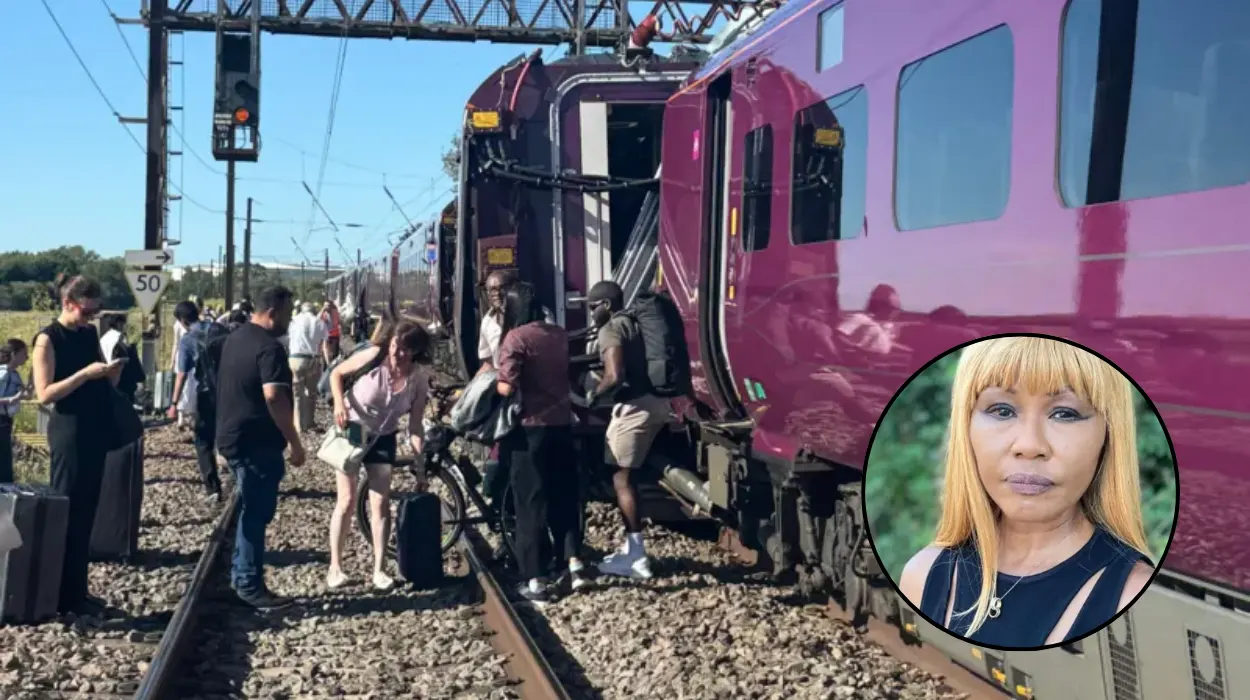
Bedford (Britain Today News) June 20, 2026 – A devastating rail collision involving two passenger trains near Bedford has left one train driver dead and dozens of passengers injured, triggering a major emergency response and renewed scrutiny of Britain’s rail safety systems.
- Key Points
- What happened in the Bedford train collision near Bedford?
- Who was affected in the Bedford train collision?
- What did passengers say about the moment of impact?
- What injuries were reported on board the trains?
- How did emergency services respond to the Bedford train crash?
- Why was access to the crash site so difficult?
- What caused the Bedford train collision?
- What did witnesses say about the condition of the trains?
- How did passengers escape after the collision?
- What are officials saying about railway safety?
- What happens next in the investigation?
- What impact has the Bedford train collision had on passengers?
- Could this incident change UK rail safety policy?
What happened in the Bedford train collision near Bedford?
When and how did the train crash occur?
Passengers and officials confirmed that the collision took place on Friday afternoon at around 17:15, when two East Midlands Railway (East Midlands Railway) services collided just south of Bedford.
As reported by BBC News, one of the trains had reportedly stopped on the tracks when another train struck it from behind at speed.
A passenger, Simon Bentley, described the moment before impact:
“We felt the train brake really hard which seemed odd.”
Another passenger, Brett Byatt, told the BBC:
“I knew something was up because the train never slows down… and then I felt it brake.”
The two services involved were confirmed as the 16:40 departure from Corby and the 15:50 service from Nottingham, both travelling towards London St Pancras.
Who was affected in the Bedford train collision?
How many people were injured or killed?
According to the East of England Ambulance Service and confirmed through BBC reporting, the crash resulted in:
- One fatality (the train driver)
- 89 injured passengers
- 11 people with very serious injuries
- 22 passengers seriously injured
Emergency services said the remaining injured suffered minor to moderate injuries, including fractures, head trauma, and cuts.
A spokesperson for emergency responders stated that the scale of injuries required a “major incident” declaration.
What did passengers say about the moment of impact?
“People flew from their seats”: What did eyewitnesses experience?
Passengers gave harrowing accounts of what they experienced inside the carriages at the moment of impact.
Shola Mene told BBC News:
“People flew from their seats… someone flew across and hit my husband in the face. There was a lot of blood.”
Another passenger, Dr Peter Knapp, said:
“It felt like I’d been in a bomb explosion. I saw bloodied faces and broken legs everywhere.”
Teresa Itabor, who was travelling to London for her birthday, described the crash:
“There was a massive bang. My head hit the seat in front. When I opened my eyes, I saw blood everywhere.”
These accounts reflect widespread panic, confusion, and immediate physical trauma inside the carriages.
What injuries were reported on board the trains?
How severe were passenger injuries?
Eyewitness Brett Byatt, speaking to BBC News, described the extent of injuries in his carriage:
“A woman had completely snapped her leg… another couldn’t move because of her back. A man couldn’t move his neck.”
He added:
“About 90% of people in my carriage had injuries.”
Passengers reported a range of serious conditions, including:
- Broken limbs and suspected spinal injuries
- Facial trauma and heavy bleeding
- Neck and rib injuries
- Unconscious or immobile passengers
- Panic-induced shock and distress
Emergency responders confirmed that several passengers required urgent extraction from carriages due to their condition.
How did emergency services respond to the Bedford train crash?
What happened after the collision?
The British Transport Police (British Transport Police) declared a major incident shortly after the crash.
Fire crews, paramedics, and air ambulance teams arrived within minutes, but access to the crash site proved difficult due to its rural location.
Justin Rivett, a passenger on board, told BBC News:
“Emergency services had to cut through undergrowth and cross a rough field to reach us.”
He added:
“Getting injured passengers over that terrain must have been very difficult.”
Emergency responders were seen treating passengers at the scene before transporting the most seriously injured to hospital.
Why was access to the crash site so difficult?
Did location impact rescue operations?
Passengers and responders described the crash site as difficult to reach, with uneven terrain slowing down evacuation efforts.
Dr Peter Knapp said:
“I saw smoke everywhere and people spitting out blood while we waited.”
The remote nature of the collision site meant emergency teams had to carry injured passengers across fields to waiting ambulances.
This logistical challenge is now expected to form part of the official investigation.
What caused the Bedford train collision?
Are authorities investigating signalling or human error?
The cause of the crash has not yet been confirmed.
East Midlands Railway said it will fully cooperate with the investigation.
Transport Secretary Heidi Alexander stated it was too early to draw conclusions, adding that UK railways remain “among the safest in the world.”
However, passengers have already raised concerns.
Brett Byatt told BBC Radio 4:
“I’m wondering why it wasn’t signalled properly… and why the driver lost his life.”
Investigators are expected to examine:
- Signalling system performance
- Train communication systems
- Track control operations
- Driver response and braking data
- Possible technical or human failure
What did witnesses say about the condition of the trains?
How badly were the trains damaged?
Passengers described severe structural damage to the rear carriage of one train.
Paul Calvin told BBC News:
“The driver’s cab behind was pretty badly mashed up.”
He also noted seeing injured passengers exiting carriages with visible trauma, including facial injuries.
Brett Byatt added:
“It felt like first-class passengers were thrown into tables causing stomach and rib injuries.”
How did passengers escape after the collision?
Were train doors stuck after the crash?
Several passengers reported difficulties leaving the train immediately after impact.
Teresa Itabor said:
“The doors in my carriage jammed and would not open.”
Others had to wait for emergency responders to force access points or guide evacuations through broken sections of the train.
Some passengers were evacuated via fields adjacent to the railway line.
Explore More about UK:
Train Collision Near London Leaves Several Injured, Emergency Response Underway
King Charles Offers Prince Harry, Meghan Royal Accommodation for July 2026 UK Visit
What are officials saying about railway safety?
Is the UK rail system still safe?
Transport Secretary Heidi Alexander reiterated official confidence in the rail network despite the tragedy.
She said investigations must run their course before any conclusions are drawn.
However, passengers involved in the crash expressed growing frustration and concern over repeated safety failures.
Byatt said:
“Signal failures happen a lot… I’m now wondering why this happened.”
His comments reflect wider public concern about infrastructure ageing and system reliability.
What happens next in the investigation?
Who is leading the inquiry?
The investigation is being led by British Transport Police alongside rail safety experts.
Authorities will examine:
- Train black box data
- Signal system records
- Track monitoring logs
- Driver communication history
East Midlands Railway has pledged full cooperation.
Officials are expected to produce an initial findings report in the coming weeks, though a full investigation could take months.
What impact has the Bedford train collision had on passengers?
How are survivors coping after the crash?
Many passengers described emotional trauma alongside physical injuries.
Witnesses reported shock, confusion, and distress immediately after the collision.
Dr Peter Knapp said:
“I saw people’s bloodied faces… it felt like a bomb had gone off.”
Survivors are now receiving medical treatment and psychological support.
Could this incident change UK rail safety policy?
Will rail procedures be reviewed?
While no formal policy changes have been announced yet, transport experts suggest that a major incident of this scale will likely prompt:
- Review of signalling systems
- Review of emergency response procedures
- Infrastructure safety audits
- Potential upgrades to collision prevention systems
Any conclusions will depend on the final findings of the ongoing investigation.