Key Points
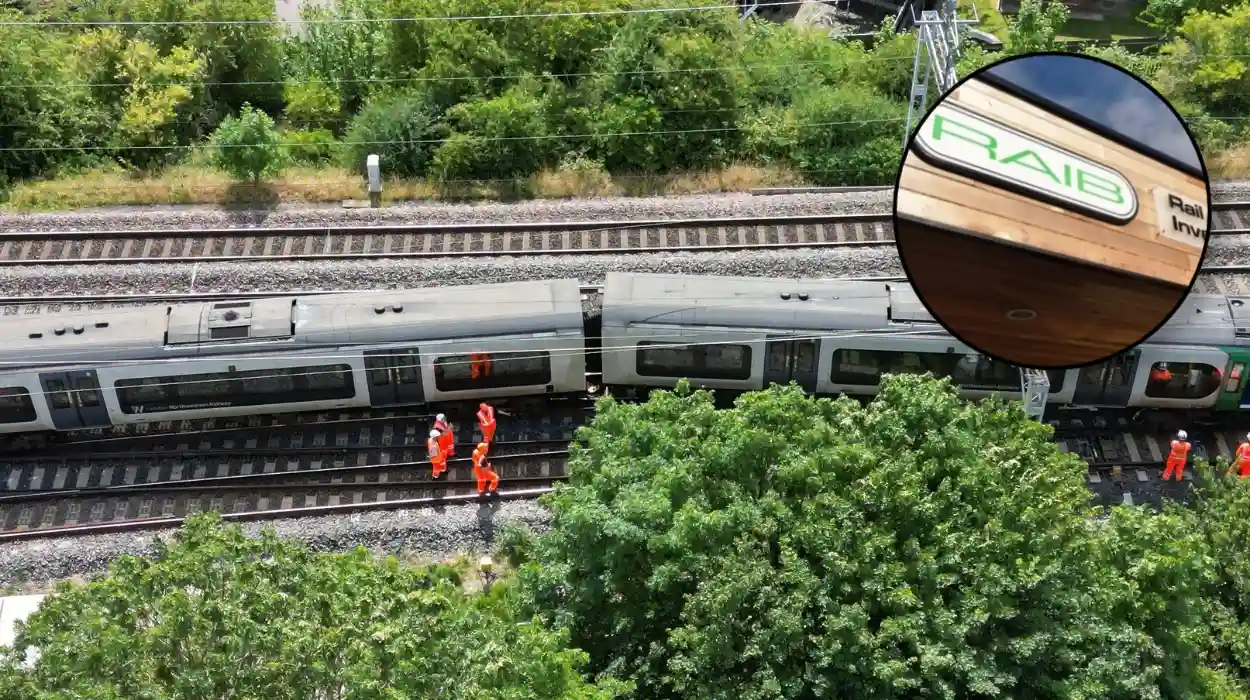
- A Greater Anglia passenger train derailed at about 77mph near Wickford, Essex, on Friday, August 14, 2026, shortly after the driver reported seeing a kink in the track.
- The Rail Accident Investigation Branch (RAIB) confirmed that the track was misaligned at the exact point where the train derailed, based on on-train data and forward-facing CCTV.
- None of the estimated 62 passengers on board was injured, and the train remained upright throughout the incident.
- The rearmost vehicle travelled along sleepers and ballast for about 1.5 miles, causing extensive damage to the track, signalling and overhead electrification equipment.
- Services between Southend Victoria and London Liverpool Street resumed this week after a partial line closure, but passengers are facing longer journeys because of ongoing speed restrictions.
- Network Rail attributed the track problems to record-breaking summer heat and low rainfall, which dried and shrank the clay beneath long stretches of railway in Essex.
- Amended c2c timetables came into effect on Tuesday, August 25, while changes to Greater Anglia services will begin on Tuesday, September 1, adding between two and eight minutes to journey times.
- Speed restrictions will remain until ground conditions recover, and there is no confirmed date for a return to normal services.
Wickford (Britain Today News) August 28, 2026: A London-bound Greater Anglia train derailed at around 77mph moments after its driver spotted a kink in the track near Wickford station in Essex, prompting an urgent investigation and weeks of disruption for commuters travelling between Southend Victoria and London Liverpool Street.
- Key Points
- What happened during the Wickford train derailment?
- How did investigators determine the cause of the derailment?
- What damage did the derailment cause to infrastructure?
- Why were rail services suspended and then resumed with delays?
- When did amended timetables and speed restrictions take effect?
- How did extreme weather contribute to the track failure?
- What did the driver report in the moments before derailment?
- How many passengers were on board and were there any injuries?
- What are the next steps in the RAIB investigation?
- How long will speed restrictions and timetable changes last?
What happened during the Wickford train derailment?
At approximately 14:08 BST on Friday, August 14, 2026, a passenger service operated by Greater Anglia left the tracks about 2.1 miles (3.4km) south-east of Wickford station while en route from Southend Victoria to London Liverpool Street. The train, formed of two coupled Class 720 electric multiple units with ten vehicles in total, remained upright throughout the incident, and no injuries were reported among the estimated 62 people on board.
According to the Rail Accident Investigation Branch (RAIB), preliminary analysis of the on-train data recorder — often referred to as the “black box” — showed the train was travelling at around 77mph (124km/h) at the moment of derailment. The driver reported seeing a kink in the track that rocked the driving cab as the train passed over it, and forward-facing CCTV recovered from the train corroborated this account by showing a misalignment at the same location.
How did investigators determine the cause of the derailment?
The RAIB’s early findings point to a track misalignment — described by investigators as a “kink” — as the immediate cause of the derailment. In its initial update, the RAIB stated:
“The driver reported seeing a kink in the track which rocked the driving cab as the train passed over it.”
adding that
“Forward-facing CCTV recovered from the train involved shows a misalignment in the track at the same location as the driver’s report and the point of derailment.”
As reported by BBC News, the RAIB confirmed that the rearmost vehicle derailed and its wheels subsequently ran on the sleepers and ballast for around 1.5 miles (2.4km) before the train came to a stop. The branch said its investigation would continue to examine the sequence of events, track condition and maintenance, hot-weather mitigation measures, and any underlying management factors.
What damage did the derailment cause to infrastructure?
The incident caused extensive damage along roughly 1.5 miles of track and associated infrastructure. According to ITV News London, around 3,700 sleepers were damaged, and the track, signalling, and overhead electrification equipment all required significant repairs. Another service travelling in the opposite direction sustained minor damage from flying ballast, the RAIB noted.
Network Rail deployed a response team to carry out a full investigation and assess the condition of the route, while RAIB inspectors gathered evidence on site. The scale of the damage meant the line was partially shut for more than a week as engineers worked around the clock to restore services.
Why were rail services suspended and then resumed with delays?
Following the derailment, the line between Southend Victoria and London Liverpool Street was partially shut to allow for emergency repairs and safety inspections. Services resumed this week, but passengers have been warned to expect slower journeys due to temporary speed restrictions designed to reduce the risk of further derailments.
Network Rail explained that record-breaking heat this summer, combined with low rainfall, had dried out and shrunk the clay that sits under long stretches of railway in Essex, affecting track stability. As a result, amended timetables were introduced to accommodate the slower speeds and ensure safe operations while ground conditions recover.
When did amended timetables and speed restrictions take effect?
Amended timetables came into effect on the c2c route on Tuesday, August 25, 2026, and along the Greater Anglia line between Southend Victoria and London on Tuesday, September 1, 2026. Network Rail said journeys would take between two and eight minutes longer than usual, leading to adjusted departure and arrival times.
While speed restrictions are not currently planned for the Elizabeth line, passengers are still advised to check the TfL Go app before travelling due to the potential for further service alterations as track conditions are monitored. The restrictions will remain in place until ground conditions have recovered, though no specific timeline has yet been given for when services will return to normal.
How did extreme weather contribute to the track failure?
Network Rail has linked the track issues to exceptional summer weather conditions. In a statement cited by The Independent, the operator said record-breaking temperatures and low rainfall had “dried out and shrunk” clay beneath long stretches of the railway in Essex, causing track quality issues.
This geotechnical effect — where clay shrinks as it loses moisture — can lead to subsidence and misalignment of the track bed, increasing the risk of kinks and other defects. Speed restrictions are a standard mitigation in such conditions, allowing trains to pass safely while the ground rehydrates and stabilises.
What did the driver report in the moments before derailment?
According to the RAIB, the driver reported seeing a kink in the track which rocked the driving cab as the train passed over it. The branch added that the driver was in the process of reporting the track condition to the signaller when they received an emergency call from another train passing in the opposite direction, prompting them to apply the brakes.
This sequence — observation, reporting, and emergency braking — was captured in part by on-train systems and CCTV, helping investigators reconstruct the events leading up to the derailment.
How many passengers were on board and were there any injuries?
An estimated 62 people were on board the derailed train, according to the RAIB and emergency services. Despite the severity of the incident, no injuries were reported, and the train remained upright throughout.
More than 60 passengers were checked over by ambulance crews at the scene, but all were discharged without requiring hospital treatment, the East of England Ambulance Service said. British Transport Police confirmed the rear carriages derailed “in an upright position” and that there were no reported injuries.
Explore More about London:
The Choir Of Man Returns To London’s West End This Christmas
London engulfed in smoke following massive outbreak of fire near Amazon distribution centre
What are the next steps in the RAIB investigation?
The RAIB’s investigation will continue to examine multiple lines of enquiry, including the sequence of events, track condition and maintenance records, hot-weather mitigation measures, and any underlying management factors. A detailed report is expected in due course, which may include safety recommendations for Network Rail, Greater Anglia, and the wider industry.
Network Rail has also said it will conduct its own investigation to “look at all possible causes and factors,” as reported by ITV News. Martin Frobisher, Group Safety and Engineering Director at Network Rail, noted that RAIB investigators were on scene at Wickford, alongside the separate investigation into a derailment at Lewes in East Sussex the previous day.
How long will speed restrictions and timetable changes last?
Network Rail has stated that speed restrictions will need to remain in place until ground conditions have recovered, but has not provided a specific timeline for when services will return to normal. Passengers are advised to check before they travel, as further service alterations may be introduced as track conditions are monitored.
The amended timetables on c2c and Greater Anglia routes are expected to remain in force for the foreseeable future, with journey times extended by two to eight minutes to accommodate the slower speeds. Until the clay subgrade rehydrates and stabilises following the summer’s extreme heat and dryness, the risk of further track defects will persist, necessitating continued caution.