Key Points
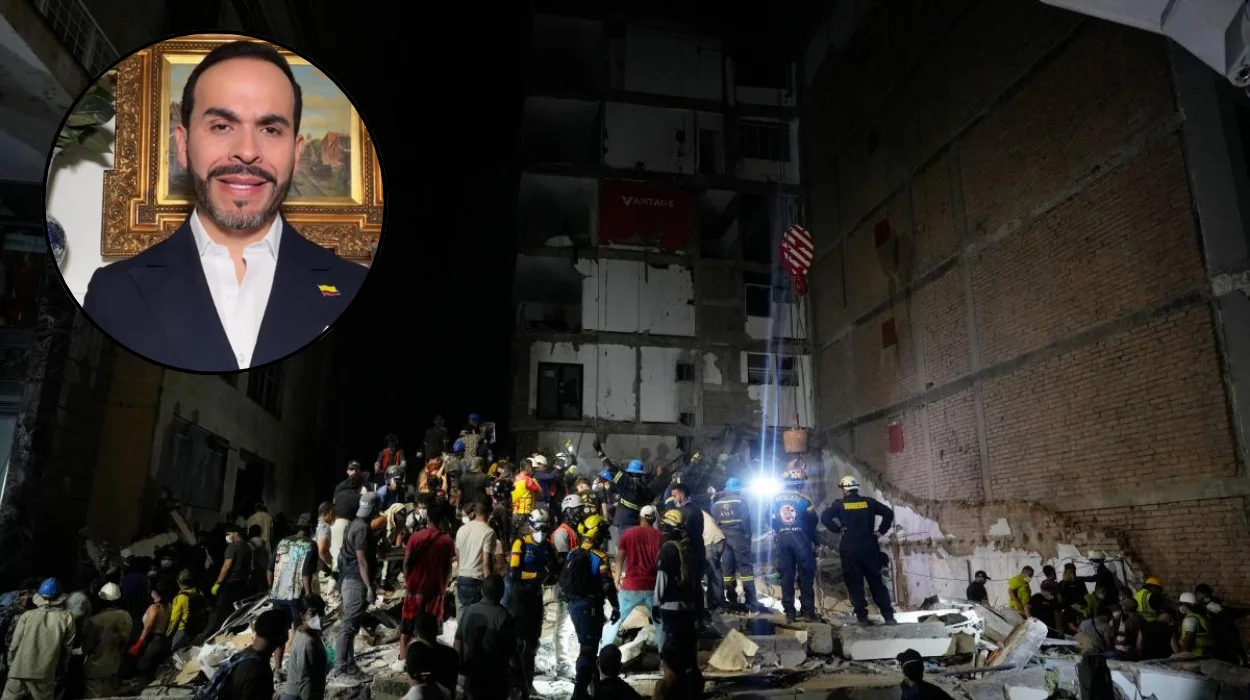
- The search and rescue (SAR) efforts have been restarted in Colombia following a magnitude 7.4 earthquake in the western region of the country that hit last week.
- Over 3,000 people are reported missing, including many people who are thought to be under collapsed buildings and debris.
- At least 111 people have been killed in Colombia by the federal government, and local authorities in several impacted areas have reported 179 deaths.
- There have been reports of 1,600 buildings being damaged or destroyed throughout western Colombia.
- Accessibility is hindered in Chocó, the region that is closest to the epicentre of the earthquake, due to the presence of jungle, rivers, few roads and isolated communities.
- President Abelardo De la Espriella has said the country is in emergency and wants to mobilise soldiers and police, engineers, rescue personnel and search dogs.
- Pereira, Cali, Manizales and Chocó are some of the worst affected areas.
- In some cities, a curfew has been put in place due to looting and fears of public safety.
- Runways, terminals, and other airport infrastructure are being inspected at several western Colombian airports, which are temporarily closed.
- The United States has pledged 15.5 million dollars (around £11.5 million) in emergency shelter, food and humanitarian assistance.
- The death toll will not be finalised until rescue teams have gone to communities far and near and assessed the damage.
- The United States Geological Survey estimated the magnitude of the tremor at 7.4, close to San José del Palmar, and with a depth of around 110 kilometres.
Chocó (Britain Today News) August 11, 2026 – Colombia has resumed large-scale search and rescue operations after a powerful magnitude 7.4 earthquake struck the west of the country, killing at least 111 people according to the federal government and leaving more than 3,000 people missing.
- Key Points
- What happened in western Colombia?
- Why are more than 3,000 people missing?
- What is the situation in Chocó?
- How badly were Pereira, Cali and Manizales affected?
- What has Colombia’s president ordered?
- Why have curfews been imposed?
- What rescue efforts are under way?
- How is the international community responding?
- What does the earthquake mean for President De la Espriella?
The earthquake caused widespread destruction in Chocó, Valle del Cauca, Risaralda and Caldas, with around 1,600 buildings reported damaged or collapsed. Soldiers, emergency workers, police officers, engineers, volunteers and relatives have been searching through concrete, timber and twisted metal in the hope of finding survivors.
The national death toll remains disputed because local authorities have reported higher figures than the central government. Mayors and governors in Cali, Pereira, Chocó and Manizales said on Tuesday that at least 179 people had died across the four areas. The federal government’s most recent national estimate, however, remained at 111 fatalities.
Officials have warned that the numbers are provisional. Communications remain difficult in remote areas, particularly in Chocó, where many communities can be reached only by boat, through dense jungle or by aircraft. Rescue teams have not yet been able to establish the full scale of the damage in several rural districts.
What happened in western Colombia?
The earthquake struck early on Monday near San José del Palmar in the department of Chocó. The United States Geological Survey recorded the tremor at magnitude 7.4 and placed its depth at approximately 110 kilometres. Its records identified the earthquake near San José del Palmar in western Colombia.
The Colombian Geological Service described the earthquake as the strongest recorded in the country during the 21st century, according to reports carried by international media. The tremor was felt across a wide area, including Bogotá, Cali, Pereira, Manizales and other cities in the country’s western and central regions.
The depth of the earthquake did not prevent extensive damage. Multi-storey buildings collapsed, homes were reduced to piles of rubble, hospitals were damaged, and roads and other infrastructure were affected. The force of the shaking also caused parts of historic buildings to fall into streets.
The earthquake struck Colombia’s coffee-growing heartland, a densely populated region that includes several large cities and towns. Although the epicentre was located in a relatively remote part of Chocó, the effects spread across urban areas where thousands of people were inside homes, workplaces, hospitals and public buildings.
The Colombian Geological Service recorded a series of aftershocks following the main earthquake. Scientists have warned that further tremors remain possible, increasing the danger for residents, rescue workers and people living near damaged structures.
Why are more than 3,000 people missing?
More than 3,000 people have been reported missing, although authorities have stressed that the figure may include people who are safe but unable to contact relatives because telephone and internet services have been disrupted.
Many of those missing are believed to be in buildings that collapsed during the earthquake. Rescue teams have been working with heavy machinery where possible, but in some locations families and volunteers have been removing debris by hand to avoid injuring people who may still be alive underneath.
Lines of volunteers have formed beside damaged buildings. Large pieces of concrete have been passed from person to person while police and emergency workers search for signs of life. In some places, rescue teams have used dogs trained to detect people trapped beneath rubble.
The situation is especially challenging in rural Chocó. The department is one of Colombia’s poorest and most neglected regions and has long suffered from weak transport links, limited public services and the presence of competing armed groups.
Large parts of Chocó do not have reliable road connections. Communities are often linked by rivers, narrow jungle paths or small aircraft routes. This has slowed the movement of rescue teams, medical supplies, fuel, food and heavy equipment.
Officials have also faced difficulties obtaining reliable information from villages around the epicentre. Some communities have been unable to communicate with municipal authorities, meaning that the official assessment is likely to remain incomplete until emergency teams reach the affected areas.
What is the situation in Chocó?
Chocó surrounds the earthquake’s epicentre and is expected to contain some of the most serious damage. However, the full consequences remain unclear because several communities are isolated.
Local officials said that 80 per cent of El Cairo, a town with a population of about 7,000 people, had been damaged. The town is located not far from San José del Palmar, where the earthquake was centred.
Dana Carolina Zamora said her 60-year-old uncle, Miguel Angel Zamora, was missing from a rural area of El Cairo. She shared a photograph of him holding his dog and appealed for information about his whereabouts.
Ms Zamora said her uncle lived in a traditional house built from sticks and mud. She told reporters that the family feared the worst but hoped that the lack of contact was caused by a communications failure.
“We are afraid. We hope that is not the case, that he is all right and that it is only a communication failure. But we haven’t heard anything from him,”
She said.
The account reflects the uncertainty affecting thousands of families. People have been searching for relatives through community groups, social media posts and local emergency centres. In some areas, lists of missing people are being compiled manually because digital systems have been damaged or overloaded.
Authorities have urged families to report missing relatives through official channels and to avoid entering unstable buildings. Emergency officials have also warned that damaged walls, gas leaks, electrical faults and aftershocks could create additional risks.
How badly were Pereira, Cali and Manizales affected?
Pereira was among the worst-hit cities. The municipal government reported that at least 58 buildings had collapsed, while rescue workers continued to search residential and commercial structures.
Monica Sanchez, who owns a small company producing work uniforms, said she and 12 workers escaped from her factory shortly before a wall collapsed. She described the earthquake as a moment when the city appeared to disintegrate around them.
“It was shocking — the city fell around us,”
She said.
Pereira’s streets were filled with rubble, damaged vehicles and residents who had left their homes because they feared further collapses. Rescue teams used cranes and excavators to remove sections of buildings, while volunteers cleared smaller pieces of debris by hand.
Cali, Colombia’s third-largest city, also sustained extensive damage. Mayor Alejandro Eder said at least 40 buildings had collapsed, while other officials reported deaths, injuries and people trapped beneath rubble.
President Abelardo De la Espriella said 35 people had died in Valle del Cauca, the department in which Cali is located, and that hundreds of people had been injured. Other local estimates were higher, contributing to the difference between the federal death toll and the combined figures released by local authorities.
A hospital in Cali was among the buildings affected. Several upper floors reportedly collapsed, including areas used for paediatric care. Patients were moved outside as emergency workers treated people in the streets and assessed the structural safety of the facility.
Footage from the city showed rescue workers helping people out through hospital windows. In another rescue operation, workers recovered a six-month-old baby and the child’s mother from beneath the remains of a five-storey building.
Manizales, in the department of Caldas, also reported serious damage. Part of a tower of the city’s landmark neo-Gothic cathedral collapsed, sending debris into nearby streets. Local authorities urged residents to remain away from damaged buildings and to follow evacuation instructions.
What has Colombia’s president ordered?
President Abelardo De la Espriella travelled to Quibdó, the capital of Chocó, on Monday night before visiting other affected areas. He said the government had mobilised the country’s military and police resources to support the emergency response.
“Chocó will never again be the ‘land of the forgotten’,”
He said.
The president’s response is being closely watched because the earthquake occurred only days after he was sworn into office. It represents the first major national crisis of his administration and has placed pressure on the new government to coordinate an effective rescue and relief operation.
The government has deployed soldiers, police officers, military engineers, firefighters, medical teams, rescue specialists and search dogs. Additional security personnel have also been sent to Cali after local authorities reported concerns about looting.
In a national address, the president said the government’s full capabilities had been mobilised to protect lives, assist affected communities and deliver aid. He said the priority was rescuing people trapped beneath collapsed buildings.
“The priority is rescuing the people trapped under the rubble,”
He said.
The president also announced measures to support people whose homes had been destroyed. These included rent assistance for displaced families and emergency support for communities unable to return to damaged buildings.
The government declared a national state of emergency to speed up the release of resources and allow agencies to coordinate more directly. Emergency authorities have established command centres to assess damage, direct rescue operations and organise the distribution of food, water, medicine and temporary shelter.
Why have curfews been imposed?
Cali and Pereira imposed curfews on Monday night after reports of looting and concerns that damaged buildings and abandoned neighbourhoods could become targets for criminals.
Manizales also introduced restrictions as authorities worked to secure vulnerable areas. Police and military personnel were deployed to streets, hospitals, warehouses and public buildings.
In Pereira, the municipal government temporarily banned privately owned vehicles from circulating. Officials said the measure was intended to clear roads for ambulances, police vehicles, rescue equipment and humanitarian deliveries.
The restrictions have created additional difficulties for residents who need to travel to hospitals, find relatives or obtain food and water. Authorities have said that emergency workers, medical staff and people with urgent needs will be allowed to move under the relevant exemptions.
The security response is particularly significant in Chocó, where armed groups have competed for control of territory and illegal economies. Local officials have to manage both the natural disaster and the possibility that insecurity could restrict access to affected communities.
The government has said that security measures will not prevent humanitarian teams from reaching people in need. Officials are also urging residents not to spread unverified reports about missing people, aid deliveries or alleged attacks, as misinformation could obstruct rescue operations.
What rescue efforts are under way?
Search teams have worked through the night using excavators, cranes, cutting equipment and trained dogs. Where heavy equipment cannot reach a site, families and volunteers have been using shovels, sticks and their bare hands.
Emergency workers have reported hearing sounds from beneath some collapsed buildings. In Cali, rescue volunteer Carmen Yasmin Garcia said her group had helped seven people out of a fallen structure while four people and a dog remained trapped.
“A moment ago there was scratching, but now we can’t hear anything; we still have faith that the dog is alive and we can get these people out,”
She said.
The rescue operation is dangerous because many buildings have become unstable. Engineers must examine structures before teams can enter, while aftershocks could cause further collapses.
Firefighters in Cali said they had rescued two women and two children from a collapsed building. Mauricio Andrade, a firefighter involved in the operation, said the team was making space to reach additional survivors.
“They are alive,”
He said.
“We are making space so we can free them and get them out.”
Rescue workers have also been checking schools, hospitals, apartment blocks, bakeries, factories and public offices. Temporary medical points have been established in areas where hospitals are overcrowded or structurally unsafe.
Authorities have asked residents to preserve clear access routes and avoid gathering near rescue sites. Volunteers have been encouraged to register with local emergency authorities so that they can be assigned tasks safely.
Which infrastructure has been damaged?
Around 1,600 buildings have been reported damaged or destroyed, although the number is expected to rise as officials inspect rural settlements.
Residential buildings have suffered collapsed walls, cracked foundations and damaged roofs. Commercial premises, factories and public buildings have also been affected. In several cities, residents have been told not to return home until engineers complete inspections.
Airports in Pereira, Manizales, Quibdó, Armenia, Cartago and Buenaventura were temporarily closed or restricted while aviation authorities assessed runways, terminals and control systems.
The closures have complicated the transport of emergency workers and supplies, particularly to Chocó. Aircraft remain one of the quickest ways to reach some communities, but flights can resume only when safety checks are completed.
Hospitals have faced pressure from a large number of injured people and the loss of usable treatment areas. Some patients have been moved outdoors or transferred to facilities in neighbouring cities.
Roads and bridges are also being inspected. Landslides, fallen masonry and damaged surfaces have slowed ground transport. In remote areas, boats and aircraft are expected to play a central role in delivering aid.
The earthquake has also disrupted electricity, telephone networks and water services in parts of western Colombia. Repair teams have been sent to restore essential services, but access remains difficult in communities close to the epicentre.
How is the international community responding?
The United States State Department said it would provide 15.5 million dollars, or approximately £11.5 million, for emergency shelter, food and other humanitarian assistance.
Governments across Latin America have also offered support. International assistance is expected to include emergency supplies, medical equipment, search-and-rescue specialists and financial aid.
The priority for international partners is helping Colombia locate survivors and provide immediate support to displaced families. Humanitarian agencies are also preparing for longer-term needs, including temporary housing, clean water, sanitation, medical treatment and psychological support.
The scale of the disaster is likely to become clearer over the coming days. Aid agencies must work with Colombian authorities to ensure that assistance reaches remote areas and is not concentrated only in larger cities.
Chocó’s limited transport network means that the distribution of relief supplies will be particularly challenging. Food, bottled water, blankets, medicines and fuel may need to be transported by river or air.
International assistance will also be important after the rescue phase ends. Thousands of people may need help repairing or rebuilding their homes, replacing documents, returning to work and caring for injured relatives.
Explore More about the World:
Infineon Technologies Shuts Mesa Chip Plant, Cuts 98 Jobs
Iraqi PM Al Zaidi, French President Macron Hold Phone Talks On Ties, Region 2026
What does the earthquake mean for President De la Espriella?
The disaster has created an immediate test for President De la Espriella, who took office only days before the earthquake.
He has been a divisive political figure because he pledged to launch an aggressive crackdown on criminal groups operating in Colombia. His administration must now demonstrate that it can manage a complex national emergency while maintaining security in areas affected by armed conflict.
The president’s decision to visit Chocó was intended to signal that the region would receive direct attention from the national government. His statement that Chocó would no longer be “the land of the forgotten” addressed longstanding complaints about poverty, isolation and limited state presence.
However, the success of the response will be measured by practical results: how many survivors are rescued, how quickly aid reaches isolated communities, how accurately missing-person lists are compiled and whether displaced families receive shelter.
The difference between the federal and local death tolls has also highlighted the difficulty of coordinating information during a major disaster. Officials will need to publish regular, consistent updates so families can obtain reliable information and the public can understand the scale of the emergency.
Could the death toll rise further?
Authorities have warned that the death toll may rise as rescue workers reach remote communities and inspect more collapsed buildings.
The federal government’s figure of 111 deaths is lower than the combined total announced by local authorities in Cali, Pereira, Chocó and Manizales. The discrepancy may reflect different reporting periods, incomplete information from rural areas and local figures that have not yet been reconciled nationally.
More than 3,000 people remain unaccounted for, making the continuing search operation urgent. Some may be found alive, while others may have left affected areas without informing their families.
The number of injured people is also expected to change. Some residents with minor injuries may not have reached hospitals, while others may require medical treatment for trauma, fractures and respiratory problems caused by dust and debris.
The earthquake has brought back memories of the 1999 earthquake in Colombia’s coffee region, which killed more than 1,000 people, particularly around Armenia and Pereira. Authorities are now trying to prevent a second wave of deaths caused by unsafe buildings, disrupted healthcare, shortages of clean water and inadequate shelter.
For now, rescue workers remain focused on the rubble. Families are waiting for information, volunteers are clearing debris and emergency officials are attempting to connect isolated communities with the national response.
The final human cost of the earthquake will not be known until search teams complete their work. Until then, Colombia remains in a race against time to locate the missing, protect survivors and deliver assistance to the communities closest to the epicentre.