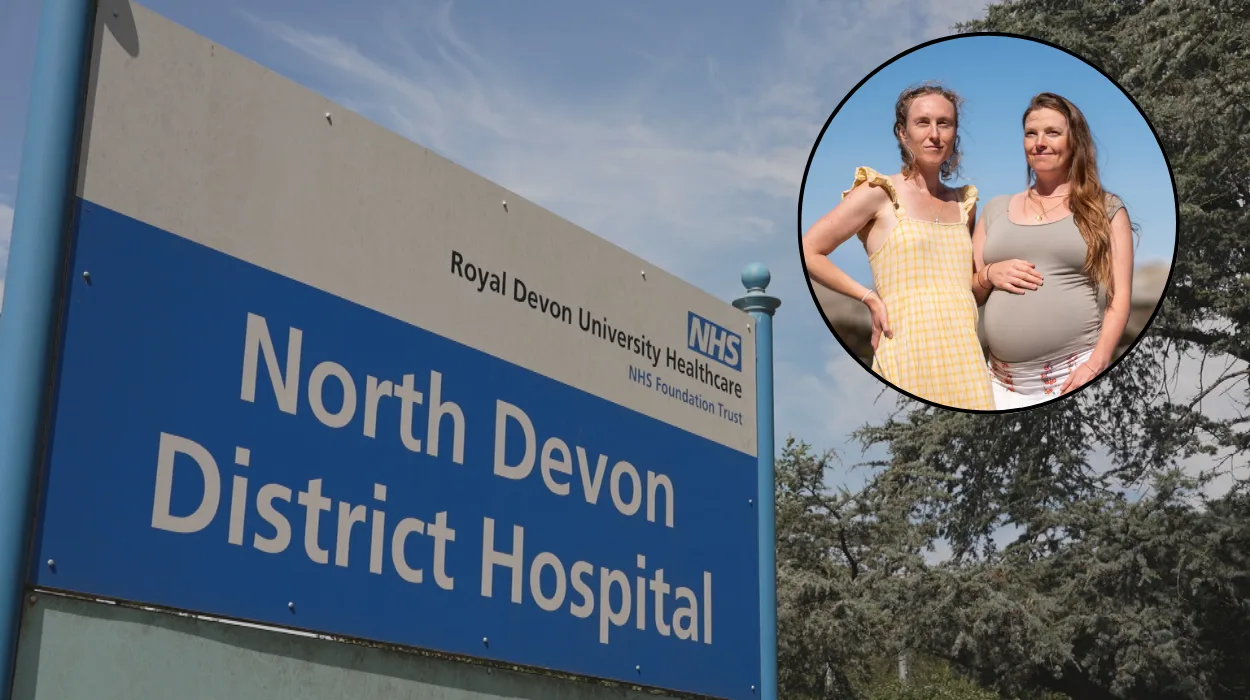
Key Points
- There is no longer any idea that the maternity unit at North Devon District Hospital (NDDH) in Barnstaple will be able to resume operations indefinitely from Tuesday, due to staffing issues.
- Doctors at the hospital’s emergency department have been given a “crash course” in managing birth emergencies, such as shoulder dystocia and postpartum haemorrhage, should women not be able to make it to Exeter in time.
- In the area, now, pregnant women are required to travel at least 1.5 hours to the nearest maternity unit, 50+ miles from Exeter.
- Some pregnant women report that they may be required to deliver at home or in a layby without medical help while en route to hospital in the peak summer traffic.
- Jemima Knight, 18 weeks pregnant, revealed she was thinking about moving to Bristol to be with relatives before her baby is born.
- Staff morale has been impacted, with one doctor saying a “sense that services are being slowly withdrawn from the hospital” has been created.
- A council meeting is to be held in Devon this month to review the closure, which Julian Brazil, council leader, described as “extremely concerning.
- The closure is temporary and safety-related, says Royal Devon University Healthcare NHS Foundation Trust, and the Trust is on the move to recruit more consultants and doctors.
- The trust states that it has implemented support measures for the affected women, including transport and financial support, and has made a commitment that there will be no further services withdrawn from the hospital.
- There’s been no date announced yet for when maternity services will resume at NDDH.
Devon (Britain Today News) August 11, 2026 – Doctors at one of England’s most remote hospitals have been given emergency training in handling difficult births after its maternity unit was shut, amid growing concern that the safety of mothers and babies could be put at risk. From Tuesday, maternity services at North Devon District Hospital in Barnstaple were suspended indefinitely owing to a shortage of staff, forcing many pregnant women in the region to face a journey of at least ninety minutes to reach the nearest alternative unit in Exeter. Some women say they may now be forced to give birth without medical help, either at home or in a layby, while stuck in summer traffic on the long route south, and several are said to be considering leaving the area altogether to ensure a safer birth.
- Key Points
- Why has the maternity unit at North Devon District Hospital been suspended?
- What training have doctors received to cope with the closure?
- How far will pregnant women now have to travel to give birth?
- What have mothers-to-be said about the risks they face?
- Why are some families considering leaving Devon to give birth safely?
- What impact is the closure having on staff morale?
- How is the local council responding to the closure?
- What has the hospital trust said about the suspension?
- What support is being offered to affected women?
- When might maternity services return to North Devon?
Why has the maternity unit at North Devon District Hospital been suspended?
The maternity service at NDDH has been suspended indefinitely because of ongoing staff shortages, according to Royal Devon University Healthcare NHS Foundation Trust, which runs the hospital. The trust, which oversees care across North Devon, said the decision was not taken lightly but was ultimately driven by patient safety concerns. A spokesperson for the trust said:
“The safety of women, babies and families is our top priority. We carefully considered all options but the greatest risk was continuing to provide births without sufficient medical staffing.”
The suspension means that women who would previously have given birth at NDDH must now travel to Exeter, a journey that, under normal traffic conditions, takes upwards of an hour and a half. During peak summer months, when the region’s roads become congested with holidaymakers, that journey time can increase considerably, raising fears that some women may not reach hospital in time.
What training have doctors received to cope with the closure?
With the maternity unit no longer operational, emergency department staff at NDDH have had to prepare for the possibility that some women may arrive at the hospital in labour, unable to reach Exeter in time. A doctor at the hospital, who asked not to be named, confirmed that staff have undergone intensive preparation for exactly this scenario.
The doctor said:
“I’m hoping that we won’t see such emergencies and women will birth their babies without a problem, and both will be fine, but there is a potential that we will see women who can’t make it to a maternity unit who have to be diverted to the hospital.”
They added:
“There’s been a crash course in learning how to deal with emergencies such as shoulder dystocia or postpartum haemorrhage. It’s been an intense time, and we’re all pretty shocked. We’re capable, but they’ve thrown us into a potentially very serious situation. There’s a physical risk to the public.”
The doctor went on to describe how emergency staff, while experienced in general crisis medicine, are now having to prepare for a category of emergency that would usually be handled by specialist obstetric teams.
“The emergency department and its staff are familiar with dealing with emergencies without the direct help of specialities, but it’s the unfamiliarity of an obstetric emergency or neonatal collapse and having no one nearby on site to assist that is confronting,”
The doctor said.
Responding to questions about the preparation given to staff, the trust said clinical pathways had been agreed in advance of the closure. A spokesperson explained:
“We have worked closely with colleagues in our urgent and emergency department, maternity services and SWAST [the ambulance trust] to agree clinical pathways for managing emergency presentations.”
How far will pregnant women now have to travel to give birth?
With the Barnstaple maternity unit closed, women across North Devon must now travel to Exeter to give birth, a distance of more than 50 miles from parts of the catchment area. The journey, which can take at least ninety minutes in good conditions, is expected to lengthen considerably during the summer tourist season, when roads across Devon become heavily congested.
The unnamed doctor said the added pressure of the closure is likely to be felt across the wider hospital, not solely in relation to maternity care.
“This has the potential to put a lot of strain on the emergency department. It has to deal with a high volume of patients, especially over the summer when the tourists come. It also has to deal with a large elderly population,”
The doctor said.
What have mothers-to-be said about the risks they face?
Several women in the area have voiced serious concerns about their own safety and that of their babies under the new arrangements. Jemima Knight, who is 18 weeks pregnant and lives two hours from the nearest maternity hospital, said her previous labour lasted only two hours from start to finish, raising fears about what could happen if she is unable to reach hospital in time this time around.
Knight said:
“This is my third baby. My first required a hospital transfer in an ambulance, and luckily that transfer was only 20 minutes. I do not know what the outcome of that birth would have been if the transfer time had been two hours. My second baby was born in two hours.”
She continued:
“Even if I knew this labour would be longer than two hours, anyone who has ever had a baby knows that being strapped into a car seat in August heat in the holiday traffic whilst in active labour would be a horrific, dangerous and traumatising experience akin to torture. No woman should ever have to go through that, and that is what the hospital trust are asking us to do.”
Knight said she is also worried for her sister, Harriet Knight, who is 34 weeks pregnant and facing the same lengthy journey should she go into labour before the unit reopens.
Why are some families considering leaving Devon to give birth safely?
Faced with the prospect of a long and potentially dangerous journey to Exeter, some women say they are weighing up whether to relocate temporarily, or even permanently, to access safer maternity care. Jemima Knight said she is considering moving her family to Bristol, where relatives could support her around the time of the birth.
She said:
“The travel time proposed for us is like suggesting that it would be appropriate to close a hospital in Bristol and tell the pregnant women they have to go and give birth in London.”
Knight described the situation as a matter of basic rights, saying:
“A safe and respectful birth is a fundamental human right, and that right has been removed for hundreds, potentially thousands, of women in Devon.”
What impact is the closure having on staff morale?
Beyond the immediate clinical concerns, hospital staff say the closure has taken a toll on morale, with some fearing it signals a broader downgrading of services at NDDH. The doctor who spoke about the emergency training said:
“It feels like they are slowly stripping away services and moving them. It’s like they’re dismantling our hospital. That’s not fair on the public or on staff. This has hit staff morale as people are questioning what this means for the future of our hospital.”
Asked directly about the impact on staff, the trust acknowledged the strain the closure has placed on its workforce. A spokesperson said:
“We recognise the impact this has had not only on women and birthing people, but also on our colleagues. We are actively supporting our colleagues through these temporary changes alongside our focus to reopen birthing services in North Devon as quickly as possible.”
How is the local council responding to the closure?
The closure has prompted political scrutiny at a local level, with Devon County Council announcing a special meeting later this month specifically to examine the decision. Council leader Julian Brazil described the situation as unacceptable for a region of the country to face. He said:
“This closure is extremely concerning. It is not a decision which would be countenanced in other parts of the country, and we should not accept second-rate NHS provision here.”
The meeting is expected to bring together councillors, health officials and members of the public to discuss both the immediate safety implications of the closure and the longer-term future of maternity provision in North Devon.
Explore More about London:
Councillors Rail Against Cuts to One of London’s Busiest Bus Routes
London Braces for Fifth Heatwave as Yellow Warning Issued
What has the hospital trust said about the suspension?
Royal Devon University Healthcare NHS Foundation Trust has maintained that the closure is a temporary measure taken solely for reasons of patient safety, and not the beginning of a wider reduction in services at NDDH. The trust said it is actively trying to recruit additional consultants and doctors, but has so far been unable to secure enough staff to safely reopen the unit.
Addressing concerns that further services could be removed from the hospital, a spokesperson firmly rejected the suggestion. They said:
“This is not the case. We are committed to providing the core acute hospital services that people in North Devon rely on. Most services continue as normal, and millions of pounds are being invested in North Devon.”
What support is being offered to affected women?
The trust says it is aware that the closure places a significant burden on some of the most vulnerable women in its care, and has introduced measures intended to ease the impact. A spokesperson said the trust recognised that some women were vulnerable and had
“put in place a range of support, including help with transport and finances”
for those affected by the change.
Despite these measures, women such as Jemima Knight say the practical and emotional toll of the closure remains substantial, particularly for those without the means or family support to relocate or arrange alternative travel during labour.
When might maternity services return to North Devon?
At present, the trust has not been able to provide a timeline for when maternity services at NDDH will resume. While officials have repeatedly stressed that the suspension is intended to be temporary, the ongoing difficulty in recruiting sufficient consultants and doctors means there is no confirmed date for reopening.
For now, pregnant women across North Devon remain reliant on a hospital more than 50 miles away, emergency department staff trained to manage complications they would not normally expect to face alone, and a community anxiously awaiting news of when normal maternity services might return to Barnstaple.