Key Points
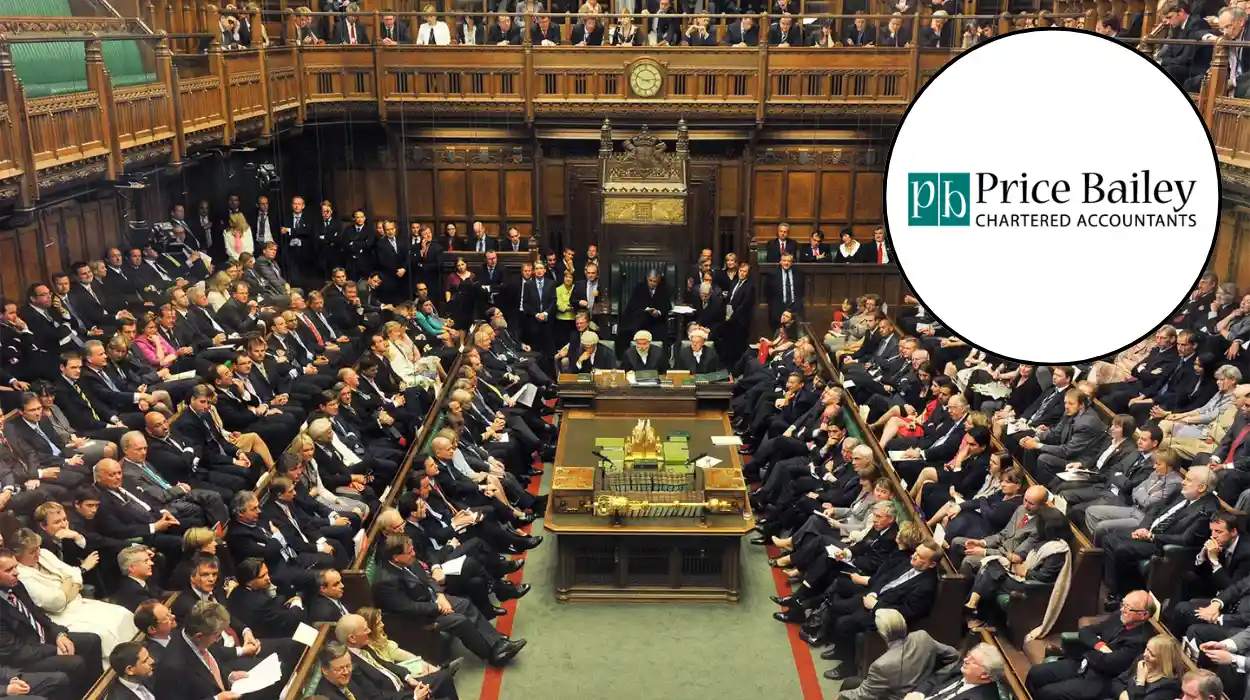
- A new report from accountancy firm Price Bailey reveals mid-market British businesses trust Parliament more than MPs trust it themselves.
- The findings arrive as Prime Minister Andy Burnham makes economic growth and business investment central pillars of his government’s agenda.
- Price Bailey’s Bridging the Divide 2026 report surveyed 500 mid-market business leaders and more than 100 MPs.
- 83% of business leaders believe Parliament understands the needs of British business, compared with only 60% of MPs.
- 76% of business leaders say Parliament delivers on business needs, versus just 47% of MPs.
- MPs’ confidence in Parliament has fallen since 2025, while business leaders’ confidence has risen.
- Retail leaders feel the most misunderstood by Parliament, while healthcare, finance and travel leaders are the most confident.
- Chand Chudasama of Price Bailey says the gap raises “important questions about alignment and effectiveness”.
- Pricing flexibility appears to be a key factor separating confident sectors from struggling ones.
Westminster (Britain Today News) August 03, 2026 — British mid-market businesses have significantly more confidence in Parliament’s ability to understand and support them than MPs have in Parliament itself, according to new data obtained by leading accountancy firm Price Bailey. The findings emerge at a politically sensitive moment, with Prime Minister Andy Burnham having placed economic growth and business investment at the heart of his government’s priorities.
- Key Points
- What Does the Report Reveal About Business Confidence in Parliament?
- How Do MPs’ Views Compare to Those of Business Leaders?
- Has MPs’ Confidence in Parliament Declined Since Last Year?
- Are Business Leaders Becoming More Confident in Parliament?
- Which Business Sectors Feel Most Misunderstood by Parliament?
- Which Sectors Are Most Confident in Parliament’s Understanding?
- What Has Price Bailey’s Chand Chudasama Said About the Findings?
- What Does Price Bailey Say Needs to Happen Next?
- What Does This Mean for Prime Minister Andy Burnham’s Growth Agenda?
- How Was the Bridging the Divide 2026 Report Compiled?
- What Are the Wider Implications of the Confidence Gap?
The research, published in Price Bailey’s report Bridging the Divide 2026, surveyed 500 mid-market business leaders alongside more than 100 sitting MPs, comparing how each group views Parliament’s grasp of, and response to, the challenges facing British business. The results expose a striking disconnect between those making policy and those affected by it, with elected representatives appearing considerably less confident in their own institution than the businesses it is meant to serve.
What Does the Report Reveal About Business Confidence in Parliament?
According to the report, 83% of business leaders say Parliament understands the needs of British business, while 76% say Parliament actually delivers on those needs. These figures paint a picture of cautious optimism among the mid-market business community, suggesting that despite ongoing economic pressures, many firms still see Parliament as broadly attuned to their concerns.
How Do MPs’ Views Compare to Those of Business Leaders?
The contrast becomes clear when comparing these figures to the views of MPs themselves. Just 60% of MPs believe Parliament understands the needs of British business, and only 47% believe Parliament delivers on these needs. This represents parliamentary confidence rates that are 23% and 29% lower, respectively, than those recorded among business leaders — a substantial gap that suggests MPs hold a far more sceptical view of Westminster’s effectiveness on business issues than the businesses being represented.
Has MPs’ Confidence in Parliament Declined Since Last Year?
Yes. The data shows a marked erosion in MPs’ faith in Parliament’s ability to support business compared with Price Bailey’s 2025 report. There has been a 9% drop in the number of MPs who feel Parliament understands the needs of businesses, alongside a further 2% decline in those who believe Parliament delivers on those needs. This downward trend among parliamentarians stands in sharp contrast to the sentiment recorded among the business community.
Are Business Leaders Becoming More Confident in Parliament?
The evidence suggests they are. Business leaders have become notably more confident in Parliament since last year’s survey, with increases of 6% and 5% respectively in their views on how well Parliament understands and delivers on their needs. This upward trajectory among business leaders, set against the declining confidence of MPs, underlines the widening gap between the two groups’ perceptions of Westminster’s performance.
Which Business Sectors Feel Most Misunderstood by Parliament?
The report highlights significant polarisation between sectors when it comes to business leader confidence in Parliament. Retail emerged as the sector feeling most overlooked, with 34% of retail business leaders saying they feel misunderstood by Parliament — a figure 17% higher than the average across all businesses surveyed. This suggests retail continues to face distinct structural and economic pressures that are not being adequately addressed by policymakers, at least in the view of those running such businesses.
Which Sectors Are Most Confident in Parliament’s Understanding?
By contrast, business leaders in healthcare, finance and travel emerged as the most positive about Parliament’s grasp of their sector’s needs. Just 8% of healthcare leaders, 10% of finance leaders and 11% of travel leaders reported that Parliament does not understand the needs of their business. These figures suggest that sectors with clearer regulatory relationships with government, or greater capacity to adapt to policy change, may feel better served by current parliamentary engagement.
What Has Price Bailey’s Chand Chudasama Said About the Findings?
Chand Chudasama, strategic corporate finance partner and chairman at Price Bailey, who oversaw the research, offered his assessment of what the figures mean for the relationship between Westminster and the business community. He said:
“While it is encouraging that mid-market businesses continue to show confidence in Parliament, MPs themselves are notably more cautious about its ability to support business, raising important questions about alignment and effectiveness.”
Why Are Some Sectors Performing Better Than Others, According to Price Bailey?
Addressing the sectoral divide revealed in the report, Chudasama pointed to pricing power as a decisive factor separating stronger performers from those under greater strain. He said:
“Sector analysis once again suggests that the strongest performers are businesses with the ability to protect or increase prices, while those with limited pricing flexibility are more likely to see growth eroded by inflationary pressures. This is something we identified earlier this year in our Mid-Market Index, and it serves to highlight how different sectors experience the current economic climate.”
This observation echoes a wider theme in economic commentary around resilience during periods of sustained inflationary pressure, where businesses with stronger brand positioning or less price-sensitive customer bases are typically better placed to protect margins than those competing primarily on cost.
What Does Price Bailey Say Needs to Happen Next?
Looking ahead, Chudasama argued that closing the gap between Parliament and the business community will require policymakers to develop a more detailed understanding of how different pressures affect different types of firms. He said:
“Closing the gap between Parliament and business will require a more nuanced understanding of these pressures, particularly how policy affects sectors in different ways and at different stages of growth.”
His comments suggest that a one-size-fits-all approach to business policy may be contributing to the sectoral disparities highlighted in the report, and that more tailored engagement between Westminster and specific industries could help narrow the confidence gap identified between MPs and business leaders.
What Does This Mean for Prime Minister Andy Burnham’s Growth Agenda?
The findings land at a pivotal moment for the government. Prime Minister Andy Burnham has repeatedly signalled that economic growth and business investment sit at the centre of his administration’s priorities. The Price Bailey data presents something of a mixed picture for this agenda: on one hand, business leaders’ rising confidence in Parliament could be read as a positive signal that efforts to engage the business community are having some effect. On the other, the sharp decline in MPs’ own confidence in Parliament’s ability to support business raises questions about whether Westminster’s internal machinery is keeping pace with the ambitions being set out at the top of government.
The gap between how MPs and businesses perceive Parliament’s effectiveness may prove significant in shaping how forthcoming policy is received. If MPs themselves harbour doubts about Parliament’s capacity to deliver for business, this could translate into caution or hesitancy when it comes to legislating on issues that matter most to the mid-market economy — even as the businesses affected remain, for now, comparatively optimistic.
How Was the Bridging the Divide 2026 Report Compiled?
Price Bailey’s Bridging the Divide 2026 report was compiled from a survey of 500 mid-market business leaders and more than 100 MPs, offering a direct comparison between the perceptions of those in government and those running businesses across the country. The methodology allows for year-on-year tracking, with this year’s results benchmarked directly against Price Bailey’s 2025 findings, giving the report added weight as a longitudinal study of shifting sentiment rather than a single snapshot in time.
By surveying both sides of the policy relationship — the elected representatives responsible for shaping business legislation and the business leaders directly affected by it — the report offers a rare, direct comparison of perception versus self-assessment within Westminster.
Explore More about Business:
Bank of England Holds Interest Rates at 3.75% Amid Inflation Fears
Energy UK Warns Industrial Strategy Fails to Cut Power Costs
What Are the Wider Implications of the Confidence Gap?
The report’s findings raise broader questions about the relationship between government and the business community heading further into 2026. A scenario in which the electorate — or in this case, the business community — holds more confidence in an institution than its own members do is unusual, and could suggest either an information gap among MPs about the practical effects of their policies, or a genuine and growing unease among parliamentarians about Westminster’s capacity to legislate effectively for business in a challenging economic climate.
For business leaders, the data may offer some reassurance that their confidence in Parliament is not misplaced, even as MPs privately express greater doubt. For policymakers, however, the findings could serve as a signal that further engagement, sector-specific policy development, and clearer communication with the business community may be required to maintain the confidence currently being placed in Parliament by mid-market businesses.
As the Burnham government continues to position business investment and growth as central to its economic strategy, the Price Bailey findings suggest that success will depend not only on policy design but on bridging the internal confidence gap now evident among the very MPs tasked with delivering that agenda.