Key Points
- Scottish Labour MSP Katy Clark has ruled herself out of the contest to replace Anas Sarwar as party leader.
- Ms Clark announced her decision on Monday as nominations officially opened
- She has urged the eventual winner to push for a more diverse range of candidates in future selections
- Her withdrawal could benefit returning MSP Monica Lennon, who heads back to Holyrood in September
- Ms Lennon claimed the contest “reeks of misogyny and male entitlement” amid reports of insufficient support
- Candidates Michael Marra and Joe Fagan remain in the race alongside Ms Lennon
- Each candidate requires backing from three MPs and three MSPs to progress
- Voting takes place between August 28 and September 17
- The new Scottish Labour leader will be announced on September 19
- All three contenders have written pitches for the Scotland on Sunday newspaper
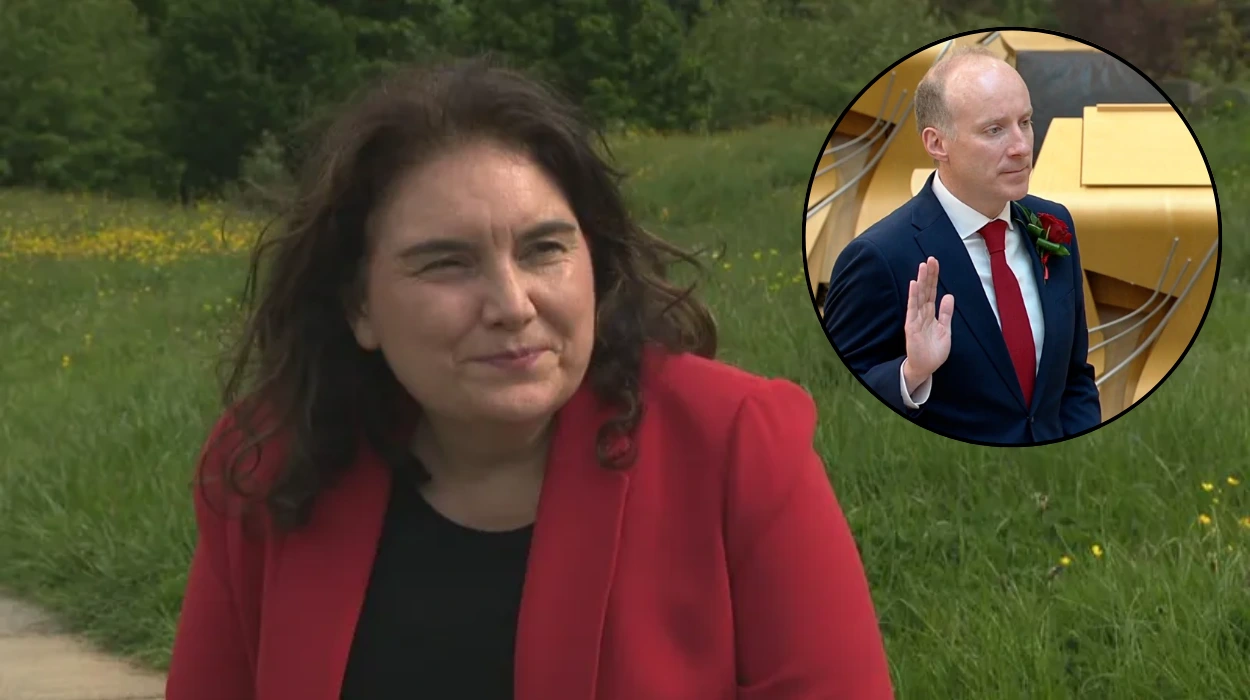
Glasgow (Britain Today News) August 03, 2026 – Scottish Labour MSP Katy Clark has confirmed she will not be entering the race to succeed Anas Sarwar as party leader, ending speculation that had built in recent weeks as nominations for the contest formally opened on Monday.
- Key Points
- Why Did Katy Clark Decide Not to Run?
- What Changes Has Clark Called For Within the Party?
- How Could Clark’s Withdrawal Benefit Monica Lennon?
- What Did Monica Lennon Say About the Contest?
- What Are the Nomination Requirements for Candidates?
- What Has Michael Marra Said About His Campaign?
- What Has Joe Fagan Said About His Bid?
- How Have the Candidates Set Out Their Pitches to Members?
- When Will Scottish Labour Announce Its New Leader?
Ms Clark, who represents Glasgow, had reportedly been weighing up a bid for the top job but used her announcement to instead call on whoever does win to prioritise a broader and more representative range of candidates for future selections, spanning class, gender and ethnicity.
Why Did Katy Clark Decide Not to Run?
Announcing her decision, Ms Clark pointed to the founding principles of the Labour movement as central to her thinking. She said:
“We need to remember that we are a socialist party. We were created by the trade unions and others to be a voice for working-class people.”
She is understood to be concerned about the prospect of a “continuity candidate” emerging victorious from the contest, a factor that appears to have weighed heavily on her decision not to stand.
Rather than pursuing the leadership herself, Ms Clark used her statement to set out a broader vision for what she believes the contest should achieve. She said:
“This leadership contest is the opportunity to discuss how we turn this idea of a Parliament which delivers for working-class communities and regenerates our local economies into a reality.”
What Changes Has Clark Called For Within the Party?
Ms Clark was explicit in calling for structural changes to how Scottish Labour selects its candidates going forward. She added:
“That means selecting more candidates from working-class communities and more women, as well as a much better representation of those from ethnic minority backgrounds.”
Her remarks reflect a wider concern within sections of the party that its candidate pool does not sufficiently reflect the communities it seeks to represent, particularly in working-class areas where Labour has traditionally drawn its strongest support.
Did Clark Comment on Public Services?
Beyond candidate selection, Ms Clark also used her statement to urge the eventual leader to pursue the return of key public services to public ownership. She specifically highlighted social care and buses as services she believes should be brought back under public control, reinforcing the socialist positioning she outlined earlier in her remarks.
How Could Clark’s Withdrawal Benefit Monica Lennon?
Ms Clark’s decision to step back from the race is being seen as potentially advantageous for Monica Lennon, who is set to return to Holyrood in September after Mr Sarwar vacated his seat following his elevation to the House of Lords.
With one fewer contender vying for support and profile within the party, attention has shifted towards how the remaining field, Ms Lennon included, will now compete for the necessary backing to secure a place on the ballot.
What Did Monica Lennon Say About the Contest?
Ahead of nominations opening on Monday, Ms Lennon was highly critical of the process, claiming she did not yet have the support required to make it onto the ballot paper. She said the contest “reeks of misogyny and male entitlement” amid reports of a shortfall in the backing she needs.
Posting on social media on Sunday, Ms Lennon went further, stating there should be no “coronation or a contest without women.” She said:
“This ‘contest’ reeks of misogyny and male entitlement. That’s the road to nowhere.”
She continued, framing the party’s purpose in stark terms:
“We’re not here for a social life or to win an occasional debate. We were created to win power for working-class communities and lead in government, not from the gutter.”
What Are the Nomination Requirements for Candidates?
Under the rules of the contest, Ms Clark, along with fellow contenders Michael Marra and Joe Fagan, was required to secure the backing of three of the party’s MPs and three MSPs to continue in the process. This threshold is designed to ensure candidates demonstrate a baseline level of support from elected colleagues before proceeding to the wider membership vote.
With Ms Clark now out of contention, the focus turns to whether Ms Lennon, Mr Marra and Mr Fagan will each be able to meet this nomination threshold before the process moves forward.
What Has Michael Marra Said About His Campaign?
Before nominations opened, Mr Marra set out his rationale for standing, framing his campaign around party unity. He said:
“I’m running in this contest to unite and renew the Scottish Labour Party.”
He went on to reflect on conversations held across the party in the run-up to his announcement, saying:
“Having spoken to and listened to colleagues across our movement it is clear we have to rediscover our sense of moral purpose.”
Mr Marra added that the party needed to present a clearer, more positive message to voters, stating:
“To offer hope again and to spell out what Scottish Labour is for, not simply who and what we are against.”
He concluded by emphasising the need to draw on the party’s full breadth of talent, saying:
“That means drawing on the strength and talent of all of our movement.”
What Has Joe Fagan Said About His Bid?
Mr Fagan, the former leader of South Lanarkshire Council, entered the contest having earlier secured the backing of MSP Paul Sweeney. Reflecting on that support, Mr Fagan set out his own vision for the party’s direction, arguing that Scottish Labour needed to look beyond its parliamentary base.
He said:
“Paul understands that Scottish Labour cannot be a party of the Holyrood bubble.”
Mr Fagan went on to stress the importance of reconnecting the party with its grassroots and the wider public, saying:
“We have to bring our party back to the service of our movement and the people of Scotland.”
How Have the Candidates Set Out Their Pitches to Members?
All three remaining leadership contenders, Ms Lennon, Mr Marra and Mr Fagan, have written articles for the Scotland on Sunday newspaper in which they set out their respective pitches to party members ahead of the vote. This has given each candidate a public platform to outline their priorities and vision for the party beyond the immediate contest, as they seek to build support among the membership and affiliated supporters who will ultimately decide the outcome.
Explore More about Politics:
Burnham Urges Cross-Party Talks On Social Care And NHS Reform
Healey Sets October Budget Date, Unveils Devolution Plan
When Will Scottish Labour Announce Its New Leader?
Party members and affiliated supporters are due to cast their votes between August 28 and September 17, giving the contest several weeks to run before a result is declared. The new Scottish Labour leader is scheduled to be announced on September 19, at which point the party will have clarity on who will lead it into the next phase of Scottish politics following Mr Sarwar’s departure to the House of Lords.
The contest comes at a significant moment for Scottish Labour, with the party seeking to define its direction and leadership under new stewardship. Whoever wins the vote will inherit not only the responsibilities of leading the party at Holyrood but also the various calls for reform raised during the contest, including Ms Clark’s appeal for more diverse candidate selection and Ms Lennon’s criticism of the process itself.
With nominations now open and the field narrowed following Ms Clark’s withdrawal, attention turns to whether Ms Lennon, Mr Marra and Mr Fagan can each secure the required backing from MPs and MSPs to progress to the membership ballot, and how the debates raised in the early stages of the contest, from representation to public ownership of services, will shape the campaign in the weeks ahead.