Key Points
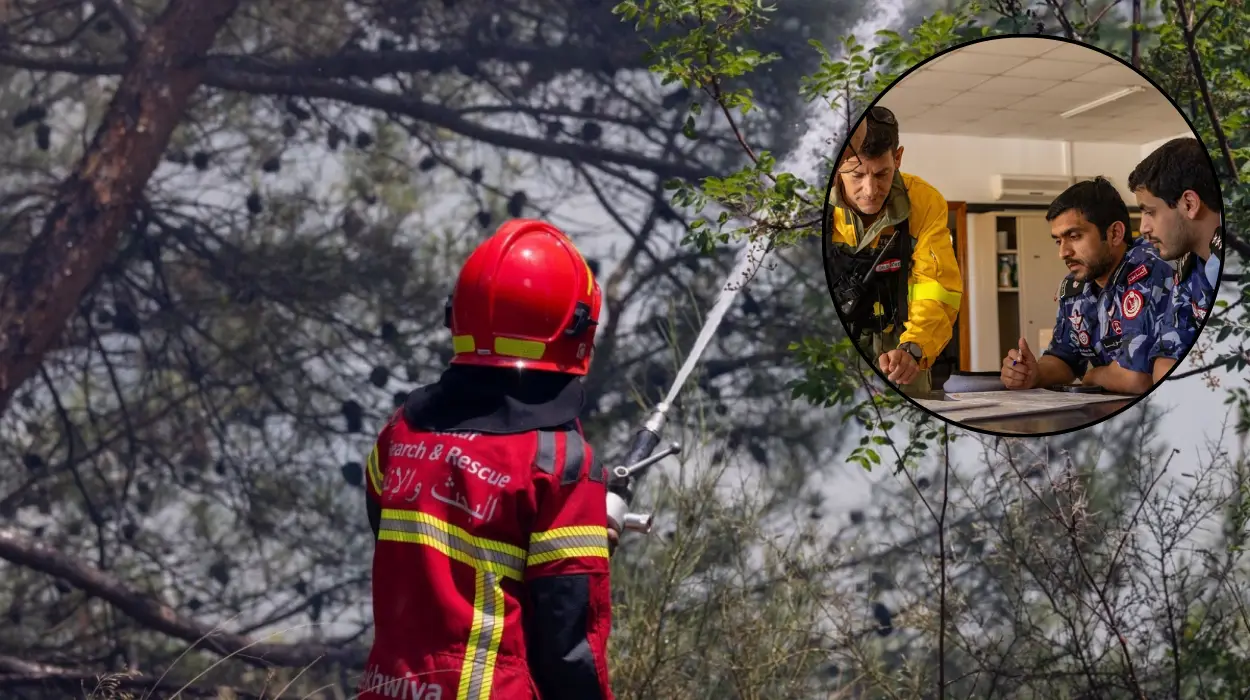
- The International Qatari Search and Rescue Group, affiliated with Qatar’s Internal Security Force (Lekhwiya), has begun field operations to help tackle the wildfires devastating parts of Spain.
- The deployment follows directives from Qatar’s Amir, Sheikh Tamim bin Hamad Al Thani, and was formally announced by the Minister of Interior, Sheikh Khalifa bin Hamad bin Khalifa Al-Thani.
- The Qatari team is working in close coordination with Spain’s Ministry of the Interior and its Secretary General for Civil Protection and Emergencies.
- Field operations are centred on the municipality of Pedralba de la Pradería, in the province of Ávila, within Spain’s Castile and León region.
- A strategic operational meeting has already taken place between Qatari officials and Spanish local authorities to plan deployment across affected sites.
- The mission forms part of Qatar’s wider humanitarian diplomacy, reinforcing its role in supporting friendly nations during emergencies.
- Ávila has been at the centre of one of Spain’s most severe wildfire seasons in years, with vast areas of woodland affected.
Ávila (Britain Today News) August 01, 2026 – A team from the International Qatari Search and Rescue Group, which operates under Qatar’s Internal Security Force (Lekhwiya), has commenced field missions in Spain to assist in combating the widespread wildfires that have broken out across the country’s forests. The deployment is being carried out in close cooperation with the competent authorities of the Spanish Ministry of the Interior, according to an official statement issued by Qatari authorities. The Qatari contingent has already held discussions with Spanish civil protection officials to establish how best to support ongoing suppression efforts in the country’s worst-affected regions.
- Key Points
- What is the International Qatari Search and Rescue Group?
- Why was the Qatari team sent to Spain?
- What did the Qatari Interior Minister say about the deployment?
- Where exactly is the Qatari team operating in Spain?
- What talks took place with Spanish civil protection officials?
- How severe are the wildfires in Ávila province?
- What is Qatar’s history of international disaster relief?
- How is Spain coordinating with international partners on the wildfires?
- What happens next for the Qatari rescue mission?
- Why does this deployment matter for Qatar-Spain relations?
What is the International Qatari Search and Rescue Group?
The International Qatari Search and Rescue Group is a specialised unit affiliated with Qatar’s Internal Security Force, more widely known by its Arabic name, Lekhwiya. The Group is tasked with responding to natural disasters and emergencies both domestically and internationally, and has previously taken part in humanitarian and relief missions abroad. Its personnel are trained in emergency response, field logistics and coordination with foreign civil protection agencies, allowing Qatar to project a rapid, organised humanitarian presence whenever a friendly nation requests assistance during a crisis. The unit’s involvement in Spain reflects a continuation of this mandate, with the team mobilised specifically to contribute technical and operational support to wildfire suppression efforts rather than to lead independent operations, working instead within the structure already established by Spanish emergency services.
Why was the Qatari team sent to Spain?
The despatch of the Qatari rescue team follows a period of intense and destructive wildfire activity across Spain, which has strained the country’s domestic firefighting resources and prompted an international response. Under cooperation frameworks that allow friendly states to request specialist assistance during large-scale emergencies, Spain’s Ministry of the Interior engaged with Qatari authorities to coordinate the deployment. The mission is explicitly framed as one of cooperation rather than replacement, with the International Qatari Search and Rescue Group working “in cooperation with the competent authorities of the Spanish Ministry of the Interior” to support existing suppression operations. This approach allows Spanish commanders to retain overall operational control while benefiting from additional trained personnel and equipment contributed by the visiting Qatari team.
What did the Qatari Interior Minister say about the deployment?
The departure of the team was formally announced by Qatar’s Minister of Interior and Commander of the Internal Security Force (Lekhwiya), Sheikh Khalifa bin Hamad bin Khalifa Al-Thani. Confirming the mission publicly, the Minister said the deployment had taken place under the directives of Qatar’s Amir, Sheikh Tamim bin Hamad Al Thani, and that the mission was reaffirming the State of Qatar’s commitment to supporting disaster response efforts in nations facing crisis. In his statement, the Minister described the initiative as part of Qatar’s continuing humanitarian role in assisting friendly countries during times of difficulty, framing the mission as both a practical contribution to firefighting efforts and a demonstration of solidarity between the two nations. Officials have not indicated a fixed timeframe for how long the Qatari team will remain in Spain, with the duration of the mission likely to depend on how the wildfire situation develops in the coming days.
Where exactly is the Qatari team operating in Spain?
According to the official statement, the team’s field operations are based in the municipality of Pedralba de la Pradería, located in the province of Ávila within the Castile and León region of central Spain. Ávila province, which lies to the west of Madrid, has emerged as one of the areas hardest hit by this year’s wildfire season, with hilly and densely forested terrain that has made containment efforts particularly challenging for ground crews. By basing operations in Pedralba de la Pradería, the Qatari team is positioned close to some of the most active fire fronts in the province, allowing for a swifter response as conditions on the ground change. The choice of this specific municipality as an operational base reflects coordination with Spanish authorities, who have directed international resources towards the areas judged to be most in need of reinforcement.
What talks took place with Spanish civil protection officials?
Before beginning field operations, the Qatari team held a meeting with the Secretary General for Civil Protection and Emergencies at the Spanish Ministry of the Interior. Representatives from local authorities in the affected region also took part in the discussions. The purpose of the meeting was to review the latest developments on the ground and assess the current state of the wildfires, before developing a strategic plan for how the Qatari team would be deployed and how its operations would be structured across the affected sites. This kind of coordination meeting is a standard feature of international disaster response missions, ensuring that visiting teams are integrated efficiently into the host country’s existing command structure rather than operating in isolation. It also allows Spanish officials to direct Qatari personnel and equipment towards the locations where they are likely to have the greatest impact.
How severe are the wildfires in Ávila province?
The wildfires affecting Ávila this year have been among the most destructive in the region’s recent history. A fire burning through hilly, rural terrain in Ávila, west of Madrid, has become Spain’s largest on record, scorching more than 500 square kilometres, according to figures released by the Spanish government. The scale of the blaze has placed significant pressure on emergency services, with large numbers of residents forced from their homes and firefighting crews battling difficult terrain and shifting weather conditions. More than 25,000 people have been evacuated from the province, with a further 8,700 confined to their homes as a precaution while crews work to bring the flames under control. The severity of the situation has been compounded by extreme heat and prolonged dry conditions across much of Spain this summer, factors that have allowed fires to spread rapidly once ignited and have made containment efforts considerably harder for ground and aerial crews alike.
What is Qatar’s history of international disaster relief?
Qatar has, in recent years, positioned itself as an active contributor to international disaster response, deploying specialist teams to assist countries facing earthquakes, floods and wildfires. The involvement of the International Qatari Search and Rescue Group in Spain follows a pattern of similar missions in which Qatari personnel have been sent abroad at short notice to support host nations during periods of acute strain on their own emergency services. These missions are typically framed by Qatari officials as an extension of the country’s foreign policy of humanitarian engagement, allowing Doha to build and strengthen bilateral ties with the countries it assists. The Spain deployment adds to this record, reinforcing Qatar’s stated ambition to be seen as a reliable partner willing to contribute meaningfully during international emergencies rather than merely offering symbolic support.
How is Spain coordinating with international partners on the wildfires?
Spain’s wildfire season this year has drawn attention and, in some cases, direct assistance from a number of international partners, with the country’s Ministry of the Interior overseeing coordination between domestic emergency services and any foreign teams offered in support. The involvement of the Qatari Search and Rescue Group illustrates how Spanish authorities have sought to draw on outside expertise and manpower where domestic resources are stretched, particularly in provinces such as Ávila where the scale of the fires has outpaced what local crews alone can manage. Officials at the Ministry of the Interior have emphasised the importance of structured cooperation, ensuring that any international personnel operating within Spain do so under a clear command framework agreed with local authorities, as reflected in the strategic planning meeting held with the Qatari delegation.
Explore More about World:
WestJet Cancels 81 Flights as Strike Deadline Approaches on Sunday
New York City’s Flatiron Building Begins New Era With $58.5M Luxury Apartments
What happens next for the Qatari rescue mission?
With field operations now under way in Pedralba de la Pradería, attention will turn to how the situation on the ground develops in the days ahead. The Qatari team’s continued presence, and the scope of its activities, is likely to be shaped by the trajectory of the wildfires in Ávila province and the wider demands placed on Spanish emergency services elsewhere in the country. Should conditions worsen, further coordination between Doha and Madrid may be required to determine whether additional resources are needed. Conversely, should containment efforts prove successful, the mission’s duration in Spain could be relatively short. Qatari officials have indicated that the team will continue to operate under the strategic plan agreed with Spanish civil protection authorities, adapting its activities as circumstances on the ground evolve.
Why does this deployment matter for Qatar-Spain relations?
Beyond its immediate operational value, the deployment of the International Qatari Search and Rescue Group carries symbolic weight for relations between Doha and Madrid. Humanitarian missions of this kind are often cited by Qatari officials as evidence of the country’s broader diplomatic strategy, in which practical assistance during crises is used to reinforce ties with partner nations. For Spain, the arrival of an international team during one of its most severe wildfire seasons in years offers tangible reinforcement at a moment of significant strain on domestic resources, while also signalling the value it places on international cooperation during emergencies. As both governments continue to monitor the situation, the mission stands as a concrete example of how bilateral relationships can translate into direct, on-the-ground support during moments of national difficulty.